
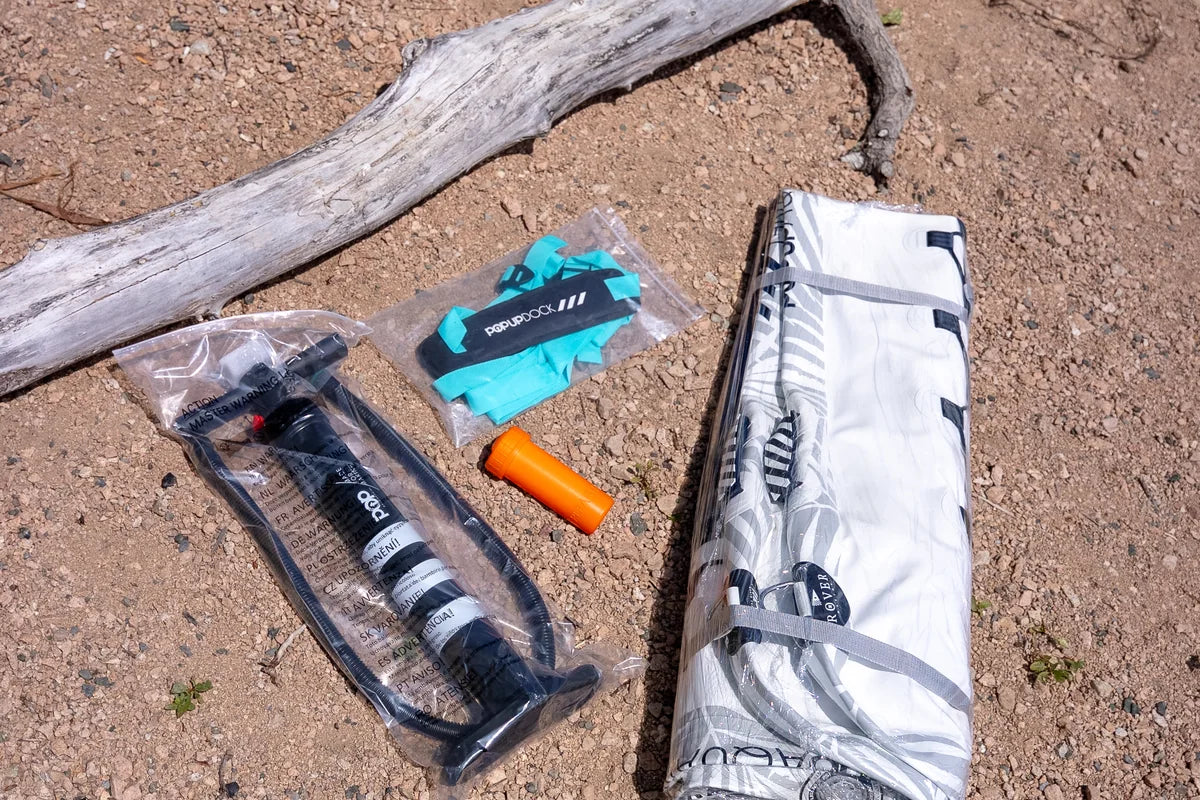
The best way to winterize an inflatable dock in Canada is simple: remove it before ice, rinse it clean, dry it fully, deflate it carefully, and store it somewhere dry and protected. A little end-of-season care helps your dock come out fresh, clean, and ready for the first warm weekend next year.
One of the biggest advantages of an inflatable dock in Canada is that it does not have to fight the winter. A permanent dock has to deal with ice, freeze-thaw cycles, shifting water, hardware stress, and spring repairs. An inflatable dock can come out of the water before the cold weather does any damage.
That does not mean you should just pull it out, roll it wet, and forget about it until May. Proper off-season storage is what helps an inflatable dock stay clean, firm, and reliable for more summers.
Canadian Board Co. is a Canadian owned and operated shop based in Kelowna, BC. This guide explains how to store and winterize an inflatable dock for Canadian winters, including cleaning, drying, deflating, rolling, accessory storage, and spring inspection.

The off-season routine starts before winter arrives. Remove the dock, clean it, dry it, and store it properly before ice forms.
Why winter storage matters in Canada
Canadian winters are hard on water gear. Ice, frozen shorelines, snow load, wind, sharp debris, and long periods of moisture can all shorten the life of gear that is left exposed.
The good news is that an inflatable dock is removable. That is the advantage. Instead of hoping a fixed structure survives winter, you can clean your dock, roll it up, and store it indoors until next season.
Simple rule: do not leave an inflatable dock in the water through winter. Remove it before ice forms, dry it fully, and store it somewhere protected.
Step 1: Remove the dock before ice forms
Do not wait until the lake starts freezing. Pull the dock before overnight temperatures are consistently cold, before ice begins forming near shore, and before fall storms start moving debris around the lake.
Remove the dock earlier if:
- The lake starts getting strong fall winds
- Water levels are changing quickly
- The dock is rubbing on rocks, metal, concrete, or shoreline debris
- You are no longer using it regularly
- The forecast shows freezing temperatures
- The cottage is closing for the season
Do not use winter as a strength test
An inflatable dock is designed to be removable. That is one of its biggest benefits. If winter weather is coming, pull it out, clean it, dry it, and store it.
Step 2: Clean the dock before you store it
Whatever is on the dock when you pack it is what you may find in spring. Sand, weeds, grit, sunscreen, spilled drinks, lake scum, mud, salt, and organic debris can all sit on the material for months if you store it dirty.
Start with a fresh-water rinse. Use a soft cloth or soft brush for stubborn spots. If needed, use mild soap and water. Avoid harsh solvents, strong chemicals, abrasive pads, or pressure washing too close to the material.
Sand and grit
Small abrasive particles can sit against the traction pad and material all winter if they are packed into the roll.
Weeds and lake debris
Organic material can smell, stain, and hold moisture if it is rolled into the dock for months.
Salt and minerals
If you used the dock in salt water or mineral-heavy water, rinse it with fresh water before storage.
Harsh cleaners
Stick with gentle cleaning. Harsh chemicals and rough scrubbing can be harder on the material than normal lake use.
Step 3: Dry it completely
This is the step people are most tempted to rush. It is also one of the most important steps for off-season storage.
Moisture trapped inside a rolled dock can lead to mildew, odours, and a rough start next season. Let the dock dry fully before you roll it for long-term storage. Dry the top, underside, edges, D-rings, straps, and any areas where water can hide.
If the weather is sunny, let it dry outside on a clean surface. If the weather is cold or damp, use a garage, covered area, or well-ventilated indoor space. Turn the dock so both sides can dry.
Storage tip: if you had to pack the dock wet at the cottage, unpack it at home and dry it properly before winter storage. Do not leave a wet dock rolled all winter.
Step 4: Deflate and roll with care
Once the dock is clean and dry, deflate it fully. Open the valve, let the air release, and give the dock time to settle flat before rolling.
Roll the dock evenly and avoid forcing hard creases. If the dock is still holding too much air, it will resist rolling and may not fit cleanly in the storage bag. Rolling toward the valve helps push remaining air out as you go.
Open the valve
Let the air release naturally before forcing the dock into a roll.
Flatten the dock
Smooth the platform so it is easier to fold, roll, and fit into storage.
Roll toward the valve
This helps push out remaining air as the dock tightens into a manageable roll.
Do not force it
If the dock will not roll cleanly, let more air out and try again rather than stressing the material.
Step 5: Store it somewhere dry and protected
The best storage spot is dry, stable, and away from direct sunlight, standing water, sharp objects, pests, and heavy items that could compress or damage the roll.
Good storage spots include:
- A dry garage shelf
- A basement storage area
- A closet or utility room
- A sealed storage bin if pests are a concern
- An elevated shelf away from damp concrete
Avoid leaving the rolled dock on a damp floor, near sharp tools, beside chemicals, under heavy equipment, or in direct sunlight for long periods.
Watch for pests
Rodents can damage stored outdoor gear. If your garage, shed, or cottage storage area has mice, use an elevated shelf, sealed bin, or protected storage area.
Keep the accessories together
A dock is only easy to relaunch when all the pieces are still together. Store the pump, hose, repair kit, straps, anchor lines, and any dock hardware with the platform or in a clearly labeled tote.
Pump and hose
Check that the hose and fittings are still with the pump before you put everything away for winter.
Repair kit
Make sure the repair kit is complete and stored where you can find it before the first launch next season.
Anchor lines and straps
Dry rope, straps, and tie-off lines before storage so they do not bring moisture into the bag or tote.
Sharp hardware
Store anchors, metal hardware, and anything sharp in a separate bin so it cannot rub against the dock material.
What customers notice after seasons of use
Good storage is not exciting, but it is what helps the dock feel ready every time summer comes back. Customer reviews on Canadian Board Co. often mention stability, family use, and how quickly the dock becomes part of everyday lake life. Proper care helps keep that experience going season after season.
“Rock solid.”
That steady feel starts with proper inflation, clean material, good anchoring, and a dock that has been stored correctly.
“Grandkids were constantly playing on it.”
Family use is exactly why off-season care matters. The dock needs to be ready when the kids are back at the lake.
“These docks are the best!”
Customers use these platforms hard during summer, so a good winter routine protects the gear for the next season.
Read more Canadian Board Co. customer reviews here: https://www.canadianboardco.com/pages/reviews.
Spring check before you launch
Before the dock goes back in the water next season, give it a full check. It is much easier to catch a missing part, loose fitting, or pressure issue in the driveway than after the family is already at the lake.
Unroll and inspect
Look over the deck, underside, seams, D-rings, valves, and traction pad before inflating.
Inflate to recommended PSI
Inflate the dock to the recommended pressure for your model and let it sit before launch.
Confirm it holds pressure
Let the dock sit inflated long enough to confirm that it stays firm and ready for use.
Check accessories
Confirm that the pump, hose, repair kit, anchor lines, straps, and safety items are ready for the season.
Read the anchoring guide here: https://www.canadianboardco.com/blogs/water-sports-guide/how-to-anchor-an-inflatable-dock.
Browse dock hardware here: https://www.canadianboardco.com/collections/hardware.
Storage tips by dock type
The same basic winter routine applies to both AquaDock and YachtDock: remove, rinse, dry, deflate, roll, and store protected. The main difference is how each dock is typically used during summer.
14' POPUP AquaDock
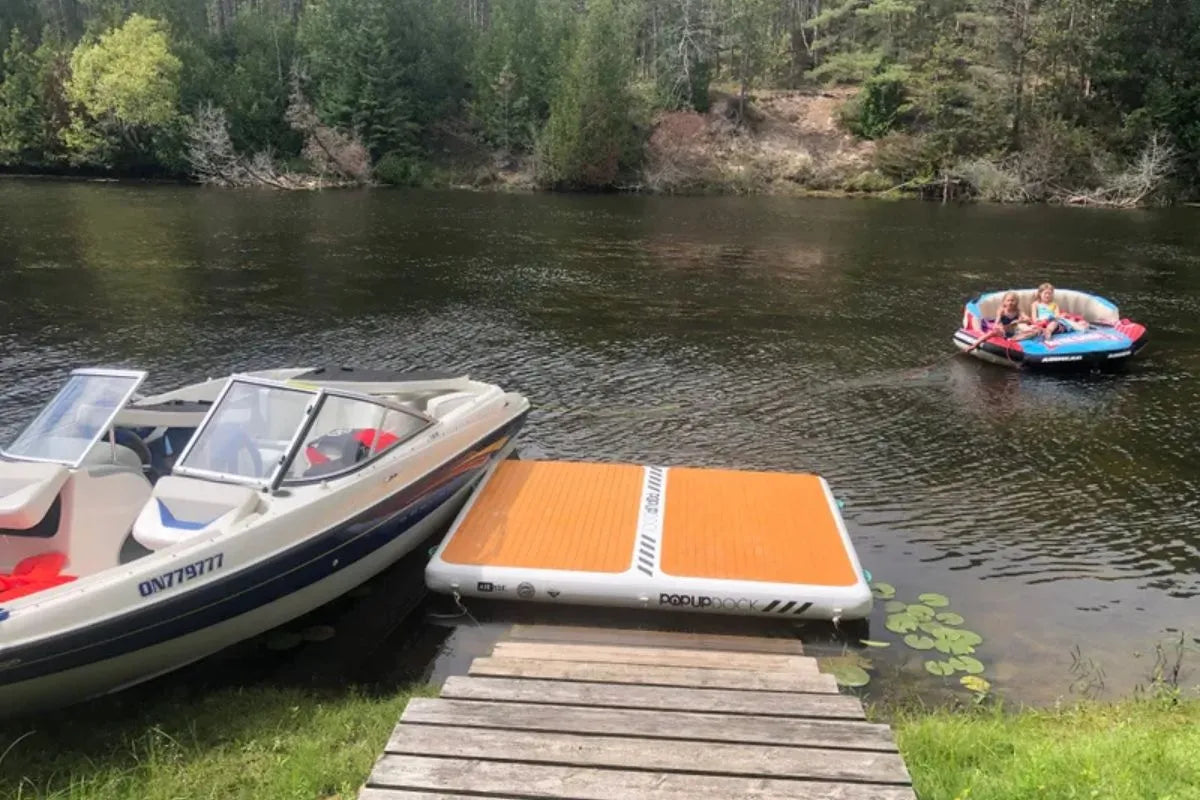
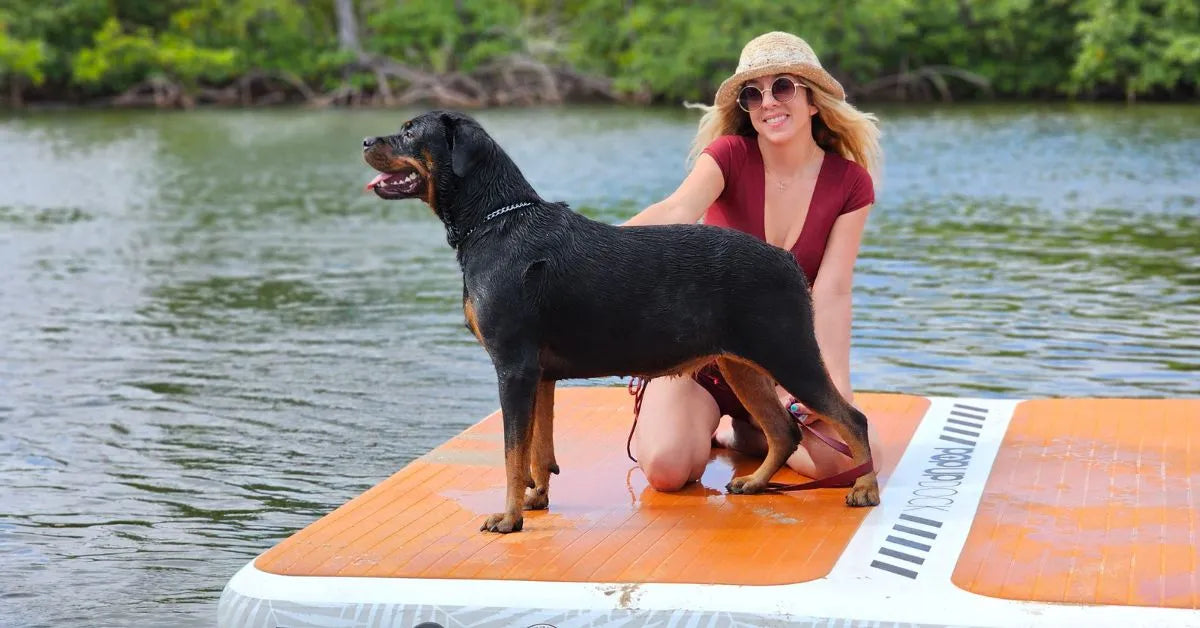
The AquaDock is often used for kids, swimming, cooling off, dogs, and paddleboard launches. Pay extra attention to cleaning sand, weeds, sunscreen, and lake debris before storing.
- Centre wet zone
- Best family swim platform
- Great for cottage weekends
- Clean and dry the wet zone carefully
14' POPUP YachtDock
The YachtDock is often used with chairs, coolers, dry bags, boats, and heavier setups. Pay extra attention to areas where gear, hardware, or boat-side contact may have left marks.
- Solid full deck
- Best for chairs and gear
- Great boat-side option
- Rinse after saltwater or boat-side use
Common winter storage mistakes
Storing it wet
Moisture trapped in a roll can lead to odours, mildew, and a messy spring setup. Dry the dock fully before long-term storage.
Leaving it in the lake
Ice, debris, storms, and freeze-thaw cycles are not worth the risk. Remove inflatable docks before winter.
Rolling sharp debris inside
Sand, small stones, sharp twigs, shells, and grit can sit against the material all winter if the dock is packed dirty.
Losing the pump or kit
Store the pump, hose, straps, repair kit, and lines together so your first spring setup is easy.
The bottom line
Learning how to store an inflatable dock for winter is simple, and it is one of the reasons inflatable docks make so much sense in Canada.
Remove it before ice. Rinse off sand, weeds, salt, and lake debris. Let it dry completely. Deflate and roll it carefully. Store it in a dry, protected place away from pests, sunlight, sharp objects, and damp floors. Keep the pump and accessories together. Inspect it before launching next season.
That routine helps your dock come back clean, fresh, and ready for another summer on the water.
Shop the 14' POPUP AquaDock here: https://www.canadianboardco.com/products/popup-aquadock-14-x-7-x-6.
Shop the 14' POPUP YachtDock here: https://www.canadianboardco.com/products/popup-yatchdock-14-x-7-x-8.
Browse inflatable docks here: https://www.canadianboardco.com/collections/inflatable-docks.
Read the traveling with an inflatable dock guide here: https://www.canadianboardco.com/blogs/water-sports-guide/traveling-with-an-inflatable-dock.
Read where inflatable docks work best here: https://www.canadianboardco.com/blogs/water-sports-guide/where-to-use-an-inflatable-dock.
Read the anchoring guide here: https://www.canadianboardco.com/blogs/water-sports-guide/how-to-anchor-an-inflatable-dock.
Warranty details are here: https://www.canadianboardco.com/pages/3-year-warranty.
Call 1-800-399-5260 if you want help choosing the right inflatable dock or care routine for your cottage, boat, lake, shoreline, or winter storage setup.
FAQ
How do you store an inflatable dock for winter?
Remove it from the water, rinse it clean, let it dry fully, deflate it, roll it carefully, and store it in a dry protected place away from sunlight, pests, sharp objects, and damp floors.
Do you have to take an inflatable dock out of the water for winter?
Yes. Inflatable docks should be removed before ice forms. Ice, storms, debris, and freeze-thaw conditions can damage gear left in the water.
Can I store an inflatable dock in a garage?
Yes, a dry garage can work well. Store the dock off damp concrete, away from sharp tools, out of direct sunlight, and protected from rodents.
Should an inflatable dock be stored inflated or deflated?
Most owners store an inflatable dock deflated and rolled because it saves space and protects the dock through the off-season. Follow the storage guidance for your specific model.
Do I need to dry the dock before storing it?
Yes. Drying is one of the most important winter storage steps. Moisture trapped in a rolled dock can cause odours, mildew, and a rough spring setup.
How do I clean an inflatable dock before winter?
Rinse with fresh water, use mild soap and a soft cloth or soft brush for stubborn spots, and avoid harsh cleaners, solvents, or abrasive scrubbing.
What should I do before using the dock next spring?
Unroll it, inspect the deck, underside, seams, D-rings, and valve, inflate it to the recommended PSI, confirm it holds pressure, and check that the pump and accessories are ready.
Can rodents damage a stored inflatable dock?
Yes. If pests are a concern, store the dock on an elevated shelf, in a protected area, or in a sealed storage bin that keeps rodents away from the material.

Leave a comment
All comments are moderated before being published.
This site is protected by hCaptcha and the hCaptcha Privacy Policy and Terms of Service apply.