
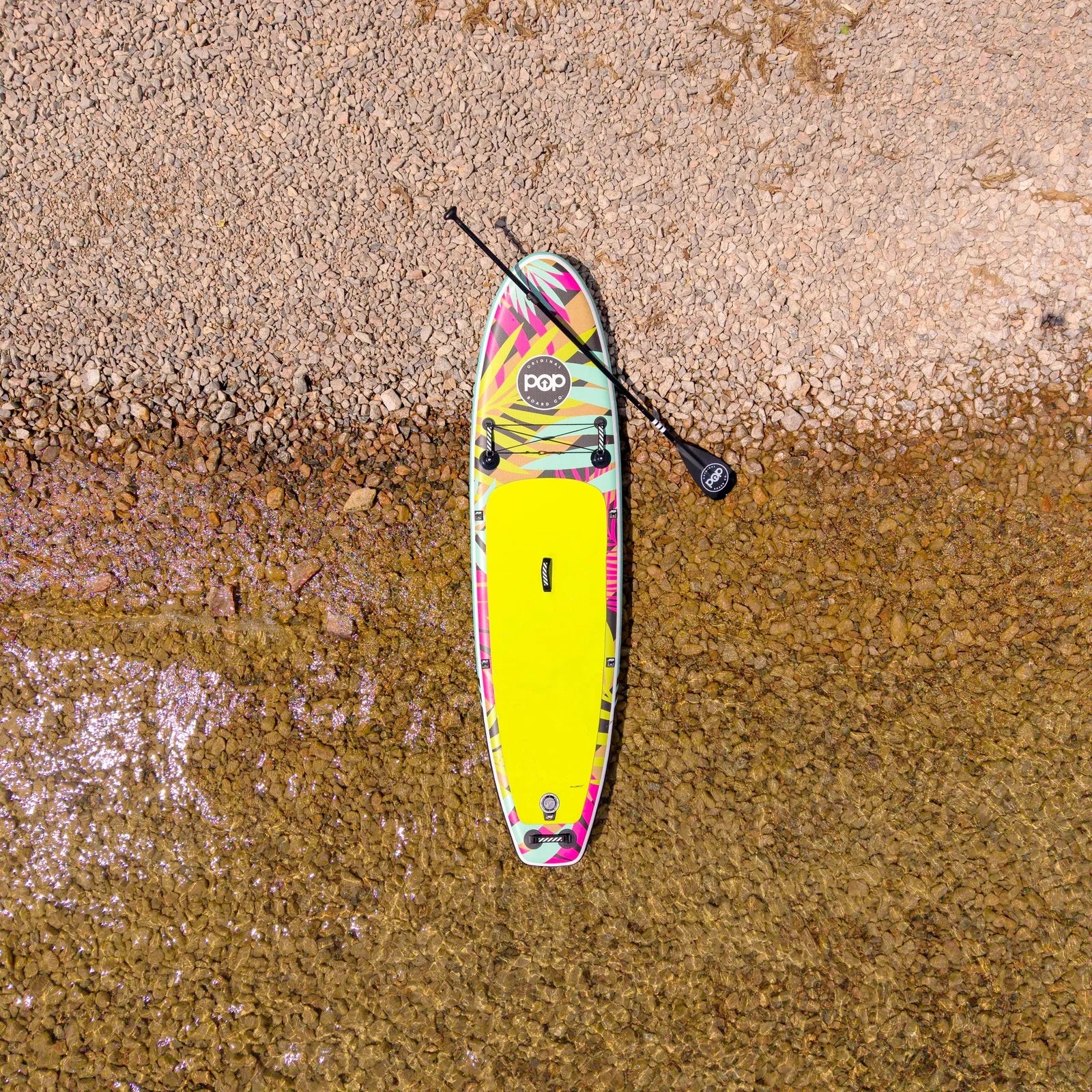
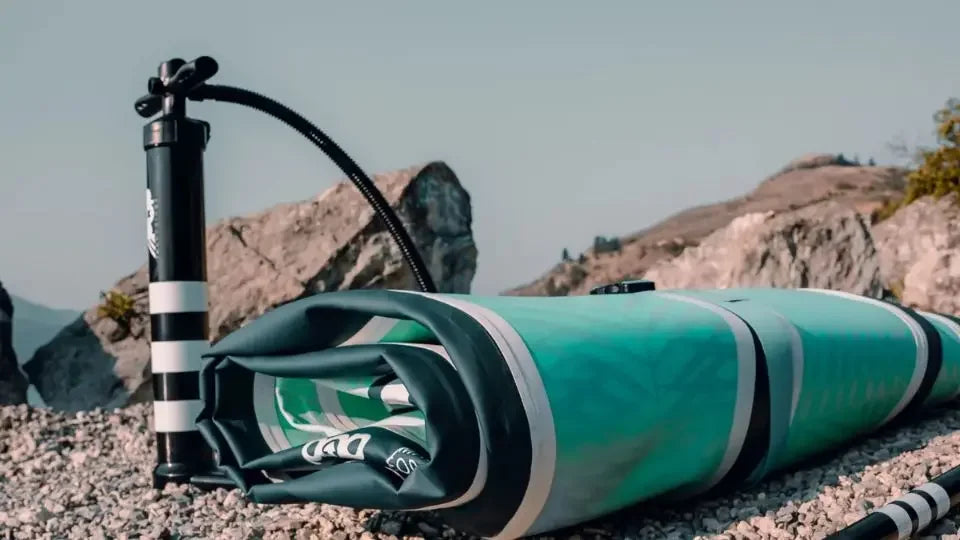
Rinse the board with fresh water, let it dry completely, take the fin off, then deflate it and roll it loosely from the nose toward the valve. Store it in its bag, off the floor, somewhere dry that stays between -5°C and 27°C all winter. That range matters: our warranty excludes damage from storage outside it, and most unheated garages and closed-up cottages in Canada drop below -5°C.
Inflatable boards are tough on the water and surprisingly easy to hurt in storage. The damage almost never happens in one dramatic moment. It is a damp roll that grows mildew by March, a mouse that finds the bag in the shed, or a board left at a cottage that sat at -25°C for a month.
Here is how the Kelowna shop crew puts boards away for winter, plus a ten-minute inspection to do before you roll it, so May starts with paddling instead of patching.

Where to store it: the honest list
| Spot | Verdict | Why |
|---|---|---|
| Basement storage room | Best | Stable temperature, dark, usually dry. Keep it off a bare concrete floor. |
| Closet or under a bed | Good | Warm, dry and out of the sun. The bag fits where a hard board never could. |
| Heated or insulated garage | Good, with care | Up on a shelf, away from tools, mower blades and anything sharp. |
| Unheated garage or shed | Risky | Likely to fall below -5°C in a normal Canadian winter, and the favourite spot for mice. |
| Closed-up cottage | No | Weeks below freezing with nobody checking on it. Bring the board home. |
| Outdoor deck box or under a tarp | No | Cold, damp and an open invitation to rodents. |
| Car trunk | No | Freezing all winter and very hot on a sunny spring day. |
The temperature limit is not a guess. Our warranty terms exclude damage from storage over 27°C or under -5°C, and from overexposure or storage in direct sunlight. Glue, seams and PVC all prefer a boring room.
Step by step: putting the board away
Rinse it with fresh water
Hose off sand, weeds, sunscreen and lake film, including the fin box, handles, bungees and valve area. For grime, use mild soap and a soft cloth. Skip solvents, pressure washers and scrub pads.
Dry it completely, then dry it again
Towel both sides, then leave it inflated in the shade or indoors until every seam, handle and the underside of the deck pad is bone dry. This is the step people rush. A roll that is damp in October smells in March.
Do the inspection while it's still inflated
Leaks and weak spots are easier to find on an inflated board. Use the checklist below and fix small things now while the repair kit glue can cure in a warm room.
Remove the fin
Take the fin out, clear sand and small stones from the fin box, and put the fin screw and plate in a labelled zip bag inside the board bag. Store the fin flat so it cannot bend.
Drain and check the valve
Water left in the valve can freeze and damage the seat. Open it, let any water out, wipe the seat, make sure the cap is there and screw it back on once the board is deflated.
Deflate and roll loosely
Open the valve slowly. Roll from the nose toward the valve end so the last air escapes as you go. Keep the roll loose, with no hard creases, and shift the fold lines a little from year to year.
Bag it, lift it, leave nothing on top
Strap the roll, slide it into the carry bag and put it on a shelf, a pallet or in a hard-sided bin. Concrete floors pull moisture and cold. Don't stack paint cans or boxes on it.


The ten-minute check before you roll it
October is the cheapest time to find a problem. A slow leak you notice now is a patch and a cup of coffee. The same leak found on the May long weekend is a missed weekend.
- Hull and rails: look for abrasions, cuts and any seam starting to lift. Light scuffs are cosmetic. Deep gouges need a patch.
- Deck pad: peeling edges, bubbles, worn patches.
- D-rings and handles: tug each one. Loose stitching or cracked plastic gets worse over winter.
- Valve: press around the base and listen for a hiss. A little soapy water shows bubbles at a leak.
- Fin and fin box: cracks in the fin, sand in the box, the screw and plate accounted for.
- Leash: nicks or stretched sections mean replace it, not repair it.
- Repair kit: restock anything you used over the summer and check old patches still hold.
If you find something you cannot sort out, call us before you store it. Warranty coverage for inflatable paddleboards runs 3 years from purchase, and it is much easier to deal with a defect in the fall than to explain in spring how long it has been there.
Inflated or deflated?
| Deflated and rolled | Stored inflated | |
|---|---|---|
| Space | A closet shelf | A wall rack or a long, clear spot in a heated room |
| Risk | Creases if rolled tight or stacked on | Pressure changes with temperature, and the board is exposed to knocks and sun |
| Spring setup | Unroll, inflate, inspect | Top up and go |
| Best for | Most Canadian homes | People with a heated garage and a proper rack |
If you store it inflated, keep it out of the sun and away from heaters, and let some air out rather than leaving it at riding pressure, following your board's instructions. Never lean it against a wall where it can slide and get stepped on.
The rest of the kit

- Pump: flex the hose along its length and look for cracks near the fittings. Check the gauge reads zero at rest and the valve adapters seat properly. A cracked hose is cheaper to replace from the pumps collection now than in May.
- Paddle: rinse sand out of the adjustment clamps and store it flat or hanging, not leaning in a corner.
- PFD: let it dry fully, check buckles and fabric, and hang it somewhere airy. Test the whistle.
- Electric pump and power bank: follow the manufacturer's storage instructions, and keep them inside the house rather than in a cold garage.
- The broken pile: decide now. Repair it, replace it, or recycle it. Broken gear stored "for later" is still broken in May.
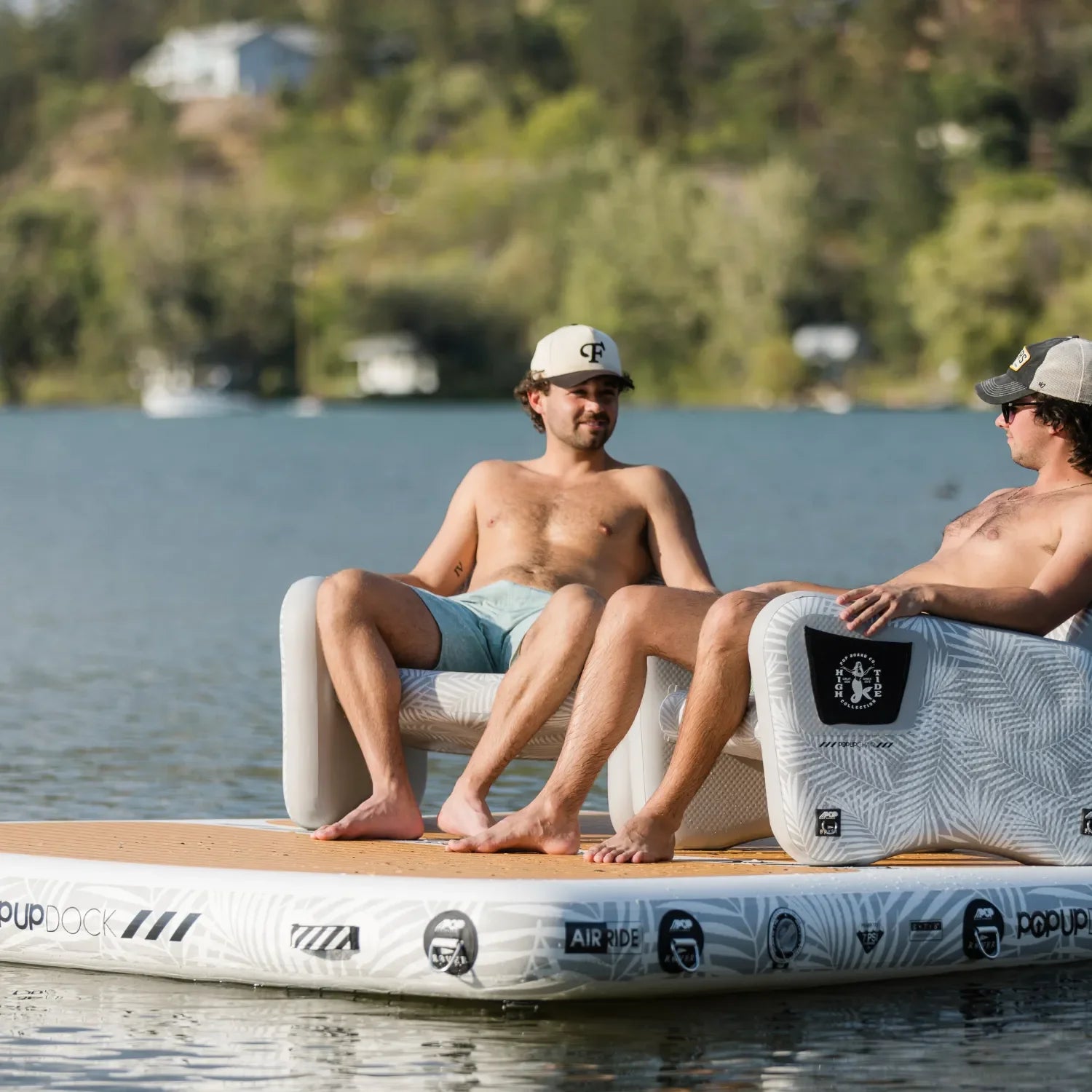
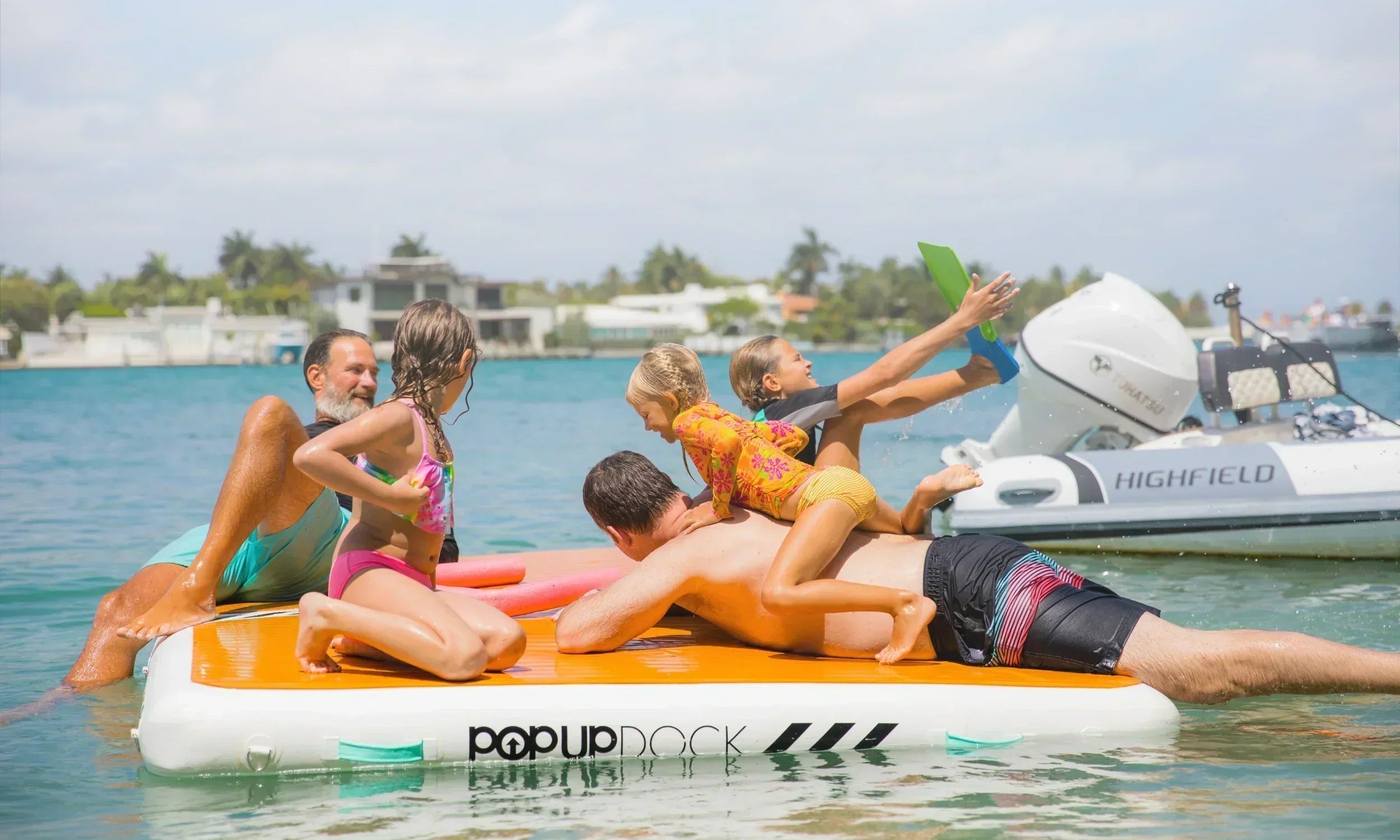
Storing a floating dock as well? The same rules apply, with more drying time for the platform and attention to anchor points and straps. Our dock winterizing guide covers it.
Spring wake-up

- Bring the board into a warm room the day before so the PVC is flexible when you unroll it.
- Unroll it fully and look over the valve, rails and seams.
- Inflate to the recommended pressure on the board and leave it for a few hours. Check it has held.
- Install the fin and make sure it locks in place.
- Check the leash, paddle and PFD are ready to go.
- Dress for the water temperature, not the air, on that first paddle. Spring water is cold.
"These boards are quality, real sturdy and built for real rec life in Canada."Kurt Jory, Google review
Questions about a specific board, or found something on your fall inspection? Call the Kelowna shop at 1-800-399-5260.
Frequently Asked Questions
Can I store an inflatable paddle board in a cold garage?
Only if it stays above -5°C. Our warranty excludes damage from storage below -5°C or above 27°C, and most unheated Canadian garages get colder than that. A basement, closet or heated garage is safer.
Should I store my paddle board inflated or deflated?
Either works if it is clean and dry. Deflated and loosely rolled in its bag is the easiest for most homes. Inflated storage needs a rack, a heated room, no sun and some air let out, following your board's instructions.
Can I leave my paddle board at the cottage over winter?
We don't recommend it. A closed cottage sits well below freezing for weeks, which is outside the storage range our warranty covers, and mice move in when people move out.
Should I take the fin off for storage?
Yes. Remove the fin before rolling, clean sand out of the fin box, and keep the fin screw and plate in a labelled bag with the board.
How do I stop mildew on a stored paddle board?
Dry everything completely before you roll it, including seams, handles and under the deck pad. If you think the roll was packed damp, unroll it in a warm room after a day or two and let it air out.
Does the warranty cover storage damage?
No. The warranty terms exclude damage from inappropriate storage, including temperatures over 27°C or under -5°C and overexposure to direct sunlight. Check the warranty page for the terms on your product.
What should I check before using the board in spring?
Unroll it in a warm room, inspect the valve, rails and seams, inflate to the recommended pressure and leave it a few hours to confirm it holds. Then check the fin, leash, paddle and PFD.
Related Canadian Board Co. guides and gear
Restock the kit before spring
Replace a cracked pump hose, a nicked leash or a lost fin now, and the first paddle of the season starts on time.
Shop fins, leashes and hardware

Leave a comment
All comments are moderated before being published.
This site is protected by hCaptcha and the hCaptcha Privacy Policy and Terms of Service apply.