The short answer: paddle board weight capacity is not just the number printed on the board. For the best ride, add the rider, dog, cooler, dry bag, and any extra gear, then choose a board with enough extra capacity to stay stable in real Canadian lake conditions. For most recreational paddlers, start with the 11' Yacht Hopper. For larger riders, families, dogs, and shared cottage use, start with the 11'6 El Capitan.
Weight capacity matters because it affects how a paddle board sits in the water. A board that is overloaded will sit lower, feel slower, flex more, track less cleanly, and feel less steady when wind, boat wake, or kids moving around are part of the day.
Canadian Board Co. carries inflatable paddle boards for different riders and different water days. A light solo paddler does not need the same board as a cottage family, a dog owner, or someone carrying fishing gear. The goal is to choose the board that feels stable, not just the board with the biggest number.

Capacity feels different in real water. Rider weight, gear, ability level, wind, chop, and board width all affect stability.
What paddle board weight capacity really means
Paddle board weight capacity is the maximum load a board is designed to support, but that does not mean every rider will feel equally stable at the top of that range. The closer you get to the listed limit, the less forgiving the board usually feels.
Start with the person paddling
Use the rider's real body weight as the starting number. If the board will be shared by guests, size for the heaviest regular rider, not the lightest.
Add everything on board
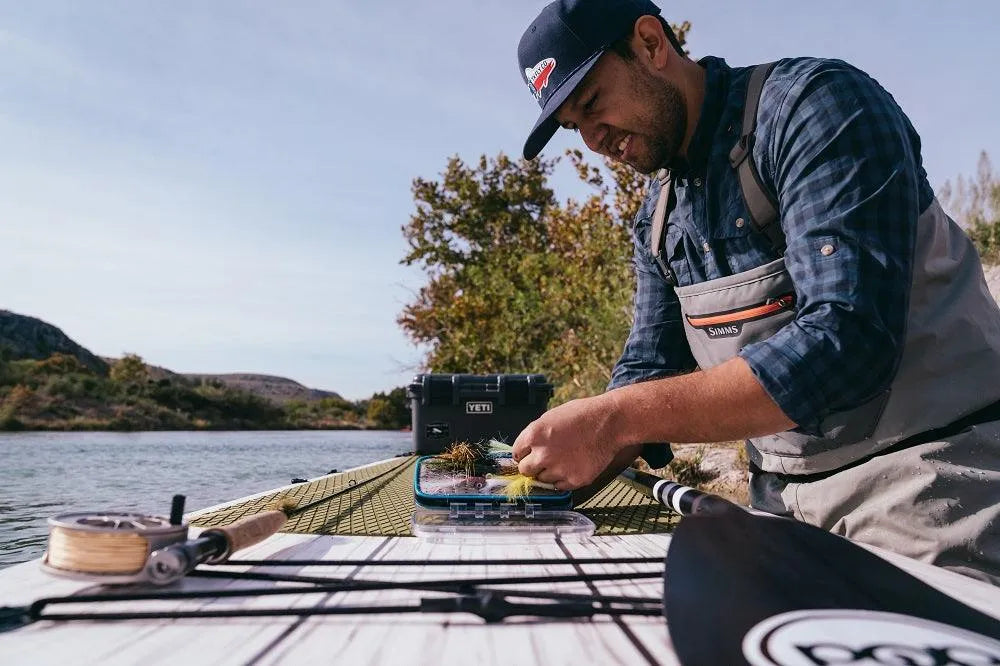
Dry bags, coolers, fishing gear, dogs, kids, cameras, and extra layers all count. A few small extras can quickly add 20 to 50 lb.
Leave room below the max
A good practical rule is to leave a buffer when possible. A board that is not maxed out will usually feel more stable and easier to paddle.
Calm water is easier than chop
Wind, current, boat wake, cold water, and nervous beginners all make stability more important. Size up when the paddler needs extra confidence.
Simple rule: if two boards can technically hold your weight, choose the wider and more stable board when the rider is new, nervous, larger, carrying gear, paddling with a child, or bringing a dog.
How much capacity do CBC paddle boards have?
Current product pages list different weight ranges for different boards. Always check the live product page before buying, especially if you are near the upper range or choosing for a family cottage where multiple people will share the board.
10'6 Royal Hawaiian
The Royal Hawaiian is the compact, lighter-feeling option for casual lake days, lighter riders, and paddlers who want a smaller board package.
- Currently listed around 10'6 x 30 x 6
- Currently listed around 250 lb max rider weight
- Best for lighter recreational paddlers
- Easy cottage and beach-day board
11' Yacht Hopper
The Yacht Hopper is a great starting point for recreational paddlers who want a stable, responsive board for calm lake cruising.
- Currently listed around 11' x 32 x 6
- Currently listed around 325 lb max rider weight
- Good for confident beginners and solo cottage cruising
- Available in Mint and Neon styles
11'6 El Capitan
The El Capitan is the better fit when stability matters most, especially for beginners, families, dogs, larger riders, and shared cottage use.
- Currently listed around 11'6 x 36 x 6
- Currently listed around 420 lb max rider weight
- Wide platform for extra confidence
- Strong choice for guests, kids, and dogs
11'6 Adventure Ark
The Adventure Ark is for paddlers carrying more gear, fishing accessories, extra dry bags, or a longer lake-day setup.
- Currently listed around 11'6 x 36 x 6
- Currently listed for a broad rider range up to about 425 lb
- Extra D-rings and bungee storage
- Better for gear-heavy paddling
Board width matters as much as the number
Two boards can have similar capacity numbers but feel very different on the water. Width, thickness, outline shape, inflation pressure, and how weight is spread across the deck all affect stability.
A narrower board can feel faster and easier to paddle for a confident rider. A wider board gives more side-to-side stability, which is why the El Capitan is such a strong fit for families, dogs, and beginners.

A wider board like the El Capitan gives families, dog owners, and beginners a more forgiving platform.
Do dogs, kids, and coolers count toward capacity?
Yes. Everything on the board counts. A 180 lb rider with a 45 lb dog and a 15 lb dry bag is carrying 240 lb before adding water bottles, sandals, snacks, or a child sitting near the nose.
That does not automatically mean the setup is unsafe, but it does mean the board should be chosen with the full load in mind. Dogs and kids also move, which changes balance. That is another reason families usually do better with a wider, more stable board.
PFD reminder for Canadian paddlers
When a stand-up paddleboard is used as a human-powered vessel for a trip or circuit, Transport Canada requires a Canadian-approved lifejacket or PFD on board and immediately available. Wearing it is the best choice for beginners, kids, cold water, and paddling away from shore. Read Transport Canada's lifejacket and PFD guidance here: https://tc.canada.ca/en/marine-transportation/marine-safety/boating-safety/choosing-lifejackets-personal-flotation-devices-pfds.
Customer feedback: stability is the theme
Capacity numbers help narrow the list, but customer feedback often comes back to one practical question: does the board feel stable enough to relax and enjoy the day?
"Stable, quality made and cute."
That is the kind of feedback that matters when a paddler wants confidence without giving up a fun board design.
"Fast and versatile."
For lighter riders and confident paddlers, a board can still feel lively while giving enough capacity for lake-day gear.
"Love this board."
Good capacity, the right size, and a comfortable ride are what turn a first board into the board people actually use.
Read more Canadian Board Co. customer reviews here: https://www.canadianboardco.com/pages/reviews.
The bottom line
Choose a paddle board by the total load, not just the rider's weight. Add the rider, gear, dog, child, and anything else on deck, then pick a board with a comfortable buffer.
Choose the Royal Hawaiian for lighter casual paddlers. Choose the Yacht Hopper for all-around solo lake cruising. Choose the El Capitan for maximum stability, families, dogs, larger riders, and shared cottage use. Choose the Adventure Ark for gear-heavy paddling and fishing setups.
Browse all inflatable paddle boards here: https://www.canadianboardco.com/collections/inflatable-paddleboards-canadas-best-isup.
Warranty details are here: https://www.canadianboardco.com/pages/3-year-warranty.
Call 1-800-399-5260 if you want help choosing the right paddle board size for your weight, gear, cottage guests, dog, or family setup.
FAQ
What size paddle board do I need for my weight?
Start with your body weight, add any gear or passengers, then choose a board with a comfortable buffer below the listed capacity. You can also read the full size guide here: https://www.canadianboardco.com/blogs/water-sports-guide/what-size-paddleboard-do-i-need-canada.
Is it okay to be close to the maximum paddle board capacity?
It may float, but it usually will not feel as stable or efficient. If you are near the limit, size up to a wider or higher-capacity board.
What is the best CBC paddle board for larger riders?
The El Capitan is usually the better fit for larger riders because it is wider and currently listed with a higher rider capacity than the smaller recreational boards.
What is the best paddle board for paddling with a dog?
The El Capitan is the better starting point for most dog owners because the wider deck gives more stability when the dog moves.
Do coolers and dry bags count toward capacity?
Yes. Any item on the board counts toward the total load, including coolers, dry bags, fishing gear, dogs, kids, and extra clothing.
Should beginners choose a higher-capacity board?
Beginners should usually choose a more stable board, which often means more width and a comfortable capacity buffer. Stability is more important than chasing the smallest board.
Do I need a lifejacket or PFD on a paddle board in Canada?
When a stand-up paddleboard is used as a human-powered vessel for a trip or circuit, Transport Canada requires a Canadian-approved lifejacket or PFD on board and immediately available. Read the guidance here: https://tc.canada.ca/en/marine-transportation/marine-safety/boating-safety/choosing-lifejackets-personal-flotation-devices-pfds.

Leave a comment
All comments are moderated before being published.
This site is protected by hCaptcha and the hCaptcha Privacy Policy and Terms of Service apply.