
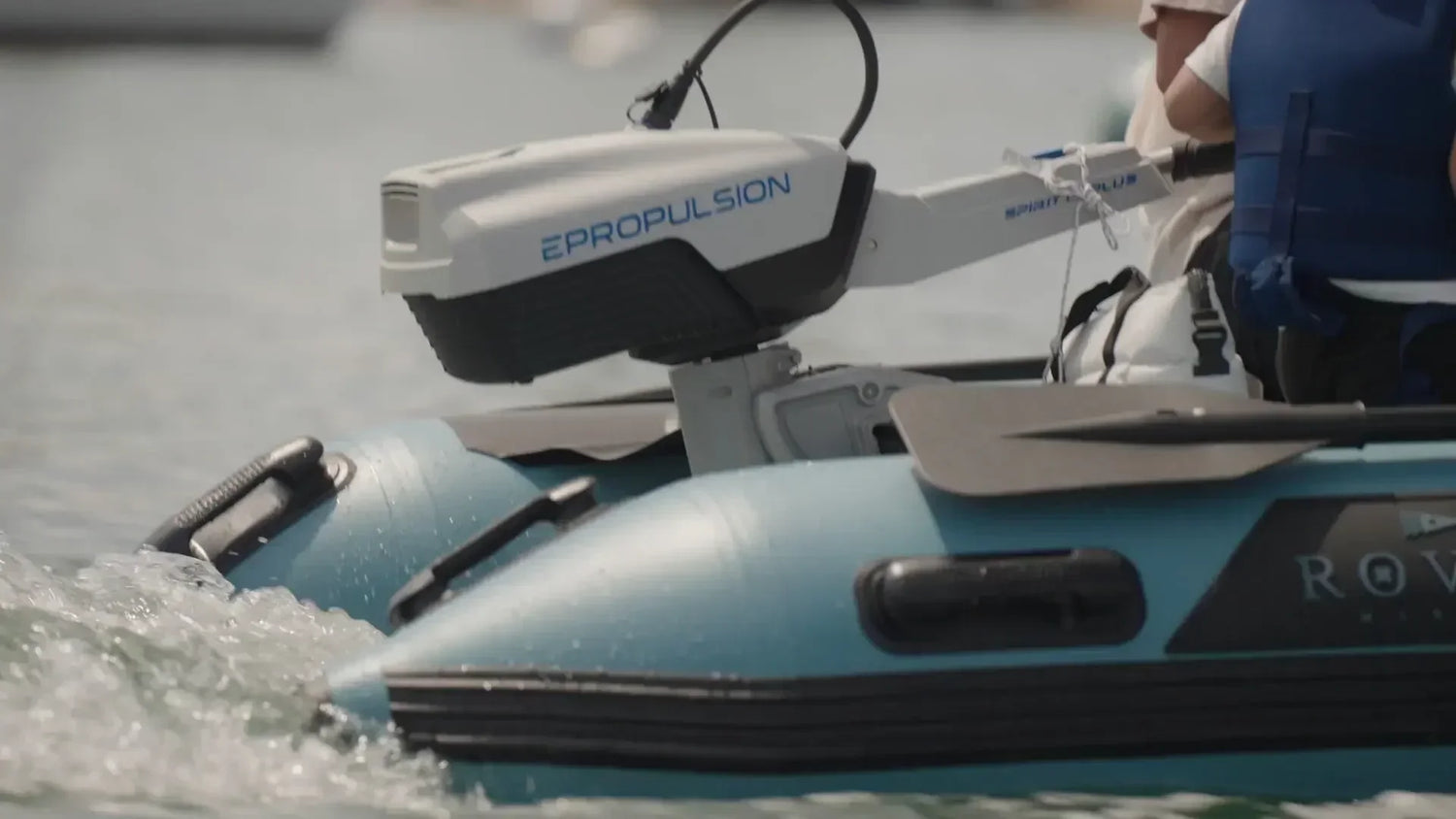
The short answer: choose a traditional inflatable dinghy if you want a familiar tender feel, choose an inflatable catamaran if you want more platform stability, choose a RIB if you need hard-hull performance and have storage space, and choose a compact roll-up style only if portability matters more than deck comfort. CBC shoppers should start by comparing the Rover Marine Battle Boat and Battle Cat.
“Inflatable dinghy” can mean a lot of different things. Some are compact roll-up tenders. Some have rigid floors. Some use catamaran hulls. Some are designed for yacht tender use, while others are better for fishing, cottage cruising, or short shoreline runs. Picking the right type matters more than chasing a generic best boat list.
This 2026 update keeps the advice practical for Canadian boaters. It avoids outdated motor claims and links to Transport Canada for proof of competency and licensing details. If you plan to add any motor, confirm current Canadian requirements and the live CBC product specs before buying.

Different inflatable dinghy types fit different launch sites, storage spaces, and water conditions.
The main inflatable dinghy types
Single-hull inflatable
Best for yacht tenders, cottage runs, marina errands, light fishing, and familiar handling. This is the category the Battle Boat fits.
Twin-pontoon inflatable
Best for boaters who want more deck stability, fishing room, easier movement, and a wider platform feel. This is the category the Battle Cat fits.
Rigid inflatable boat
Best for higher performance and rougher water handling, but heavier and less packable. Usually needs more storage and transport planning.
Compact portable tender
Best when storage is the top priority. It may not feel as rigid or comfortable underfoot as a high-pressure floor setup.
Battle Boat vs Battle Cat
Rover Marine Battle Boat
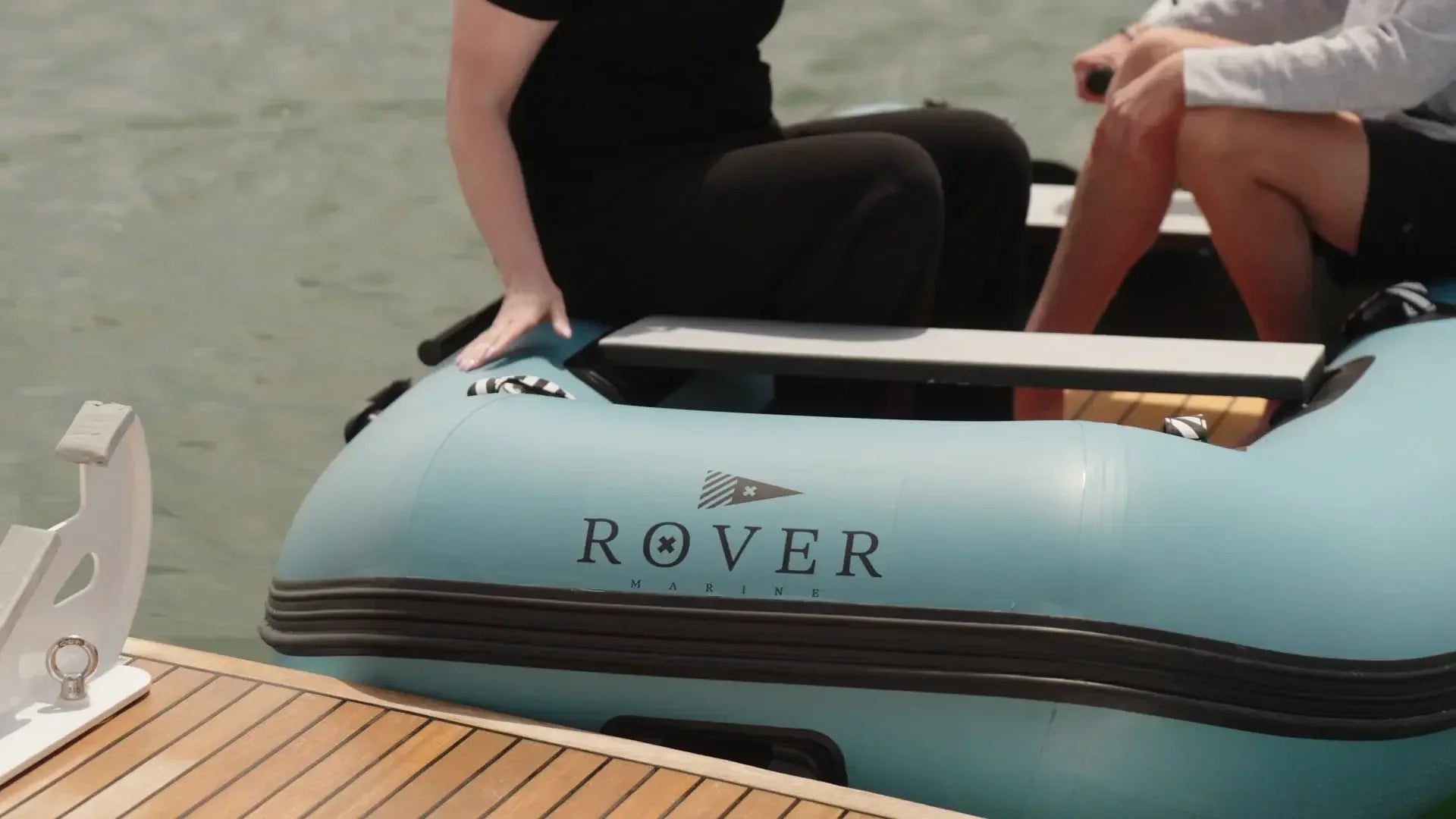
The Battle Boat is the right place to start if you want a traditional inflatable dinghy and yacht tender feel. It is built for practical cruising, short runs, tendering, light fishing, and portability without a trailer.
- Single-hull dinghy design
- High-pressure drop-stitch floor
- 8 ft, 10 ft, and 12 ft options
- Electric or gas outboard ready with short-shaft motor compatibility
Rover Marine Battle Cat
The Battle Cat is the better fit if you want a wider platform feel for fishing, diving support, relaxed cruising, or family use. Its twin-pontoon layout prioritizes deck stability.
- Twin-pontoon catamaran hull
- High-pressure drop-stitch floor
- 8 ft, 10 ft, and 12 ft options
- Good fit for stability-first boaters

Inflatable catamarans can feel wider and more stable than traditional dinghy shapes.
How to choose the right type
Start with the job. A tender that lives on a yacht swim platform has different needs than a cottage fishing boat or a compact RV boat. Use the questions below before choosing.
- For tender runs: prioritize easy handling, enough room, and a motor plan that matches the boat.
- For fishing: prioritize stability, deck space, gear storage, and less crowding.
- For families: prioritize stability, capacity, seating, safety gear, and calm-water use.
- For storage: prioritize total packed size, dry storage room, and how much weight one person can move.
- For coastal use: prioritize weather checks, conservative conditions, and equipment suitable for the water.
Motor and legal basics in Canada
In Canada, operators of power-driven pleasure craft need proof of competency, with the Pleasure Craft Operator Card being the most common. Transport Canada also explains that a Pleasure Craft Licence is required for recreational boats that have one or more engines totalling at least 10 horsepower or 7.5 kW, even temporarily.
Use these official references before choosing a motor: Transport Canada Pleasure Craft Operator Card and Transport Canada Pleasure Craft Licence information.
Do not guess motor compatibility
Always check the live product page for current motor guidance, shaft length, pressure, capacity, and package details. If timing, motor setup, or legal requirements matter, call before ordering.
Accessories that matter
A dinghy is not complete without the right support gear. Browse electric outboard motors, boating accessories, water safety gear, and pumps to build a setup that is easier to launch and safer to use.
Customer feedback: practical ownership matters
For inflatable boats, useful customer feedback usually comes down to portability, easy setup, stable footing, and whether the boat fits the owner’s actual storage space. Those are the details that make a boat easy to use more than once.
“Stable on the water.”
A steady inflatable boat makes fishing, tender runs, and family cruising feel more controlled in calm, protected conditions.
“Easy to store.”
Portability is one of the biggest reasons people choose a Battle Boat or Battle Cat instead of a trailer boat.
“Great setup for the cottage.”
The right size boat can handle short runs, fishing gear, shoreline exploring, and light family cruising without needing a permanent slip.
Read more Canadian Board Co. customer reviews here: https://www.canadianboardco.com/pages/reviews.
The bottom line
Choose the dinghy type around your real use. Battle Boat is the traditional tender-style fit. Battle Cat is the stability-first catamaran fit. Larger or rigid-hull boats may be right for some boaters, but they require more storage and transport planning. If you are unsure, start with where you launch, how many people ride, how much gear you carry, and how you will store it dry.
Browse inflatable boats here: https://www.canadianboardco.com/collections/boats.
Shop Battle Boat here: https://www.canadianboardco.com/products/rover-marine-battle-boat-inflatable-boat.
Shop Battle Cat here: https://www.canadianboardco.com/products/rover-marine-battle-cat-inflatable-catamaran.
Call 1-800-399-5260 if you want help choosing the right dinghy type.
FAQ
What type of inflatable dinghy should I buy?
Choose a traditional single-hull inflatable for tender use and general cruising. Choose an inflatable catamaran if stability and platform feel matter more.
Is Battle Boat or Battle Cat better?
Battle Boat is better for a familiar tender feel. Battle Cat is better for stability-first use, fishing, and wider deck feel.
What is a RIB?
A rigid inflatable boat uses inflatable tubes with a hard hull. It can perform well, but it is heavier and less packable than a fully inflatable boat.
Can I use an inflatable dinghy for fishing?
Yes, in suitable conditions. Choose a stable setup, keep gear organized, wear PFDs, and avoid overloading.
Do inflatable dinghies need motors?
Not always. Some can be rowed, but many buyers add an electric or gas outboard. Confirm compatibility before buying.
Do I need proof of competency for a motorized dinghy?
In Canada, operators of power-driven pleasure craft generally need proof of competency. Check Transport Canada for current rules.
What size dinghy is best for a cottage?
For most cottage owners, 10 ft is a practical middle ground. Choose 8 ft for compact storage and 12 ft for more room.
How should I store an inflatable dinghy?
Clean it, dry it fully, deflate or lightly inflate depending on space, and store it away from UV, pests, chemicals, and sharp objects.

Leave a comment
All comments are moderated before being published.
This site is protected by hCaptcha and the hCaptcha Privacy Policy and Terms of Service apply.