Inflatable Paddle Board Buying Guide for Beginners

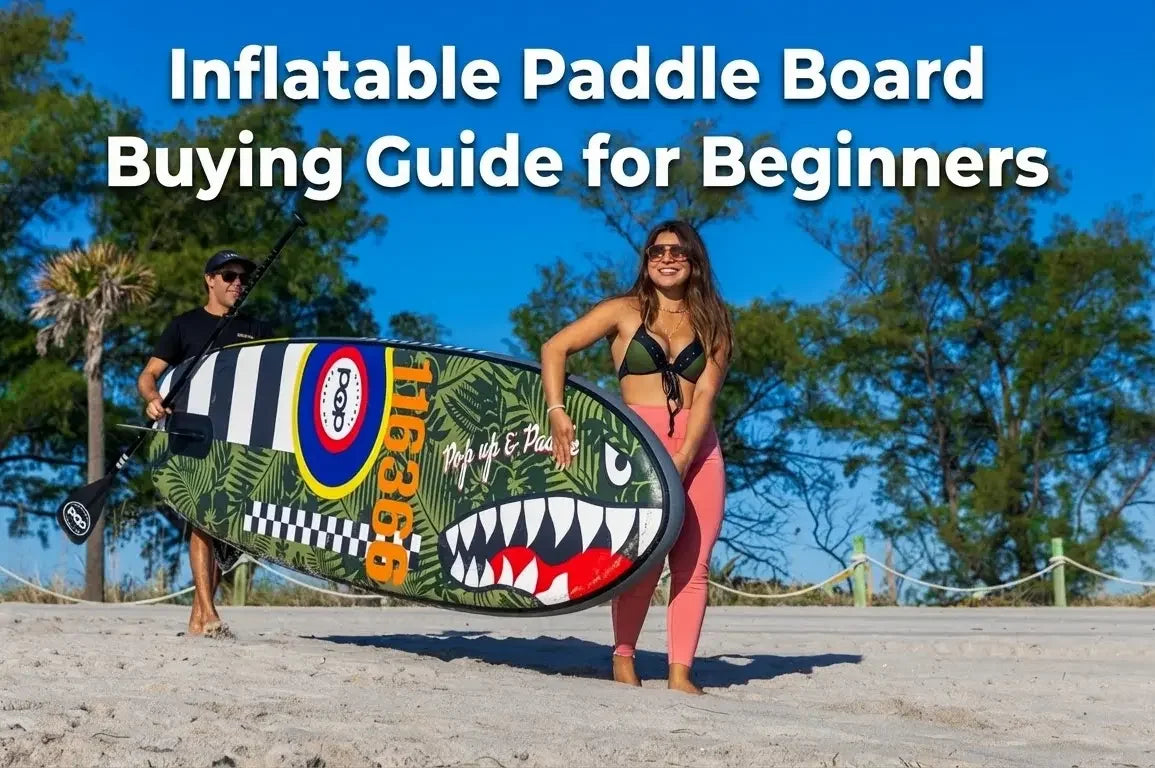
Two beginners paddleboarding on an inflatable SUP in calm water, demonstrating stable stance and on-water balance.

Best Inflatable Paddle Board Buying Guide for Beginners: How to Choose the Right iSUP for Stability and Performance

Inflatable paddle boards (iSUPs) blend packable convenience with surprising on-water performance, making them the smart choice for new paddlers who want confidence without the fuss. This guide walks you through how to pick an iSUP that’s stable, stiff, and suited to your weight and plans. We break down size, shape, construction, accessories, setup, safety and care into clear, actionable steps — and demystify terms like drop-stitch, PSI, and tracking, empowering you to make an informed choice. You’ll learn how length, width and thickness affect balance and glide, how inflatables compare with hardboards, which accessories matter, and simple inflation, paddling and maintenance routines tailored to Canadian conditions. The sections below cover what an iSUP is and why it’s great for beginners. We'll also discuss how to size and shape your board, key construction details, essential gear, practical setup and upkeep, and recommended Canadian Board Co. models for people just starting out.

Two beginners preparing an inflatable paddle board at the beach, adjusting gear in shallow water before paddling

What Is an Inflatable Paddle Board and Why Is It Ideal for Beginners?

An inflatable paddle board — an iSUP — uses an internal drop-stitch core with reinforced PVC or laminated outer layers to create a hull that, when inflated, becomes surprisingly stiff and buoyant while still packing down to a compact bag for easy transport. This combination of portability and forgiving stability makes iSUPs an excellent learning platform. The wider, cushioned deck helps you find your balance while you practice stance and basic strokes. Modern drop-stitch construction and robust laminates have narrowed the performance gap with hardboards, so today’s inflatables work well on lakes, rivers and protected coastal waters.

A key factor making iSUPs beginner-friendly is their low barrier to entry: lighter to move, tougher around docks and rocks, and easier to store than a hardboard. Below, we list the main benefits and compare inflatables to hardboards, helping you decide which trade-offs matter most as you progress.

What Are the Key Benefits of Inflatable SUPs for New Paddlers?

Inflatable SUPs offer practical advantages that speed up learning and make paddling more accessible for many people. They’re easy to transport, resilient in everyday use, and naturally stable. These attributes are all helpful when you’re getting comfortable on the water. Here are the main beginner benefits and what they mean in real life.

  • Portability: iSUPs pack into a wheeled bag for simple transport and storage — no roof racks or big storage spaces needed.
  • Stability: Wider profiles and thicker decks give a more forgiving platform for stance, turns, and getting back on board after a fall.
  • Durability: Reinforced PVC and drop-stitch cores resist dings and abrasions from docks, rocks and frequent use.
  • Affordability and versatility: Inflatables often cost less than equivalent hardboards and work for everything from casual paddles to light touring.

With those benefits in mind, it helps to see how an iSUP stacks up against a hardboard so you can choose the right path for your goals.

How Does an Inflatable SUP Compare to a Hard Paddle Board?

The inflatable vs. hardboard decision comes down to convenience versus peak performance. Inflatables win on storage, transport and toughness in rough launches, while hardboards usually give crisper tracking and faster top-end speed for advanced touring or racing. For the majority of beginners, the stable, low-maintenance nature of an iSUP is the better starting point. Surf-focused riders or racers, however, may eventually prefer a hard hull. The next section explains how to pick the proper size and shape, a choice that significantly impacts how a board handles.

inflatable-paddle-board-carrying-to-beach-beginner-sup

How Do You Choose the Right Inflatable Paddle Board Size and Shape?

Choosing an iSUP starts with matching board dimensions to your weight, intended use and desired stability. Length controls glide and speed; longer boards track and cover distance better, while shorter boards turn more easily. Width and thickness, on the other hand, drive primary stability and carrying capacity. Volume and the manufacturer’s weight rating ensure the board rides high with you and your gear on board. Always give yourself a safety margin for items like a cooler, a dog, or extra kit. Below, we provide practical sizing rules and activity-based shape guidance to help you pick a board that supports steady progress.

What Board Length, Width, and Thickness Are Best for Beginners?

For most beginners, stability is paramount. This usually translates to an all-around shape between about 10'6" and 11'6", with widths ranging from roughly 32" to 36", depending on rider size. Thickness (typically 4–6") affects how stiff the board feels at a given PSI. Thicker boards carry more volume and feel firmer under load, which is beneficial if you plan to bring gear or a pet. Match your total loaded weight to a board that leaves comfortable freeboard without needing extreme pressure. Choose a model rated above your expected load to ensure consistent performance. The chart below shows common rider profiles and recommended dimensions.

This size-and-weight guide helps you pick a spec that balances stability and handling.

Rider Profile Recommended Length Recommended Width/Thickness
Lightweight solo rider (under 140 lbs) 10'0"–10'6" 30"–32" width, 4"–5" thickness
Average rider (140–200 lbs) 10'6"–11'0" 32"–34" width, 4"–6" thickness
Heavy rider or gear/pet load (200+ lbs) 11'0"–11'6"+ 34"–36"+ width, 5"–6" thickness

That chart shows how length and width trade off between tracking and stability. Next, think about shape for the activities you want to do.

Which Paddle Board Shapes Suit Different Activities Like Touring, Yoga, and Fishing?

Shape dictates how a board behaves for specific uses: all-around boards offer stable handling for mixed use; touring boards favor a pointed nose and longer waterline for efficient straight-line paddling; yoga and fishing boards prioritize wide, flat decks and extra attachment points for stability and gear. Most beginners do best with an all-around board, as it allows you to try several activities without committing to a niche hull. If you plan long-distance paddling, lean toward a touring shape. For on-board workouts or fishing, pick a wide deck with extra D-rings.

What Construction Features Affect Inflatable Paddle Board Stability and Durability?

Features like drop-stitch cores, outer laminates, seam bonding and material grade determine how stiff a board feels, how well it tracks, and how it stands up to real-world use. Dense drop-stitch allows a board to hold higher PSI and maintain a flat planing surface, which improves speed and response. Canadian Board Co.’s Air Ride Construction mixes tight drop-stitch patterns with military-grade PVC to boost stiffness and puncture resistance while keeping the board packable. Below, we explain how these technologies work and why they matter for beginners seeking a dependable board.

Two people fishing from an inflatable paddle board on calm water, showing SUP stability for recreational activities.

How Does Air Ride Construction and Drop-Stitch Technology Improve Board Rigidity?

Drop-stitch construction uses thousands of fine threads to join the top and bottom layers inside the board, allowing it to be inflated to high pressure and become very flat and rigid — much closer to a hardboard feel. Air Ride Construction refers to a specific lamination and fiber pattern that raises stiffness per PSI and cuts down on centerline flex under load, improving both tracking and stability. Higher PSI with a dense drop-stitch core means more efficient energy transfer from your stroke and a steadier platform when turning. These benefits are all useful as you refine your technique.

For a quick comparison of construction features and what they deliver in practice, see the table below.

Construction Feature What It Affects Practical Benefit
Drop-stitch interior Rigidity/PSI tolerance Flatter deck surface and improved tracking
Air Ride Construction Stiffness per weight More responsive feel under load
Military-grade PVC Abrasion resistance Reduced puncture risk in rough launches
Welded seams Seal integrity Lower delamination and longer life

Understanding those trade-offs helps you prioritize boards that stay rigid under weight and deliver consistent performance on the water.

Why Are Military-Grade PVC and Welded Seams Important for Longevity?

The outer materials and seam methods determine how well a board resists UV, abrasion and the wear of repeated inflation cycles. Military-grade PVC adds abrasion resistance, while welded seams reduce the risk of glue failure and leaks that cheaper boards sometimes suffer. Boards built with higher-grade materials and thermal welding tolerate rocky launches and frequent use better. Warranty policies often reflect that confidence; for example, multi-year warranties or short trial guarantees help new buyers feel secure. Once you’ve evaluated construction, the next step is picking the right accessories to stay safe and comfortable on the water.

What Essential Accessories Should Beginners Use with Their Inflatable Paddle Board?

A small, well-chosen kit ensures you stay safe, comfortable, and ready to enjoy the water. Essentials include a paddle sized for your height, a reliable pump with a PSI gauge, an appropriate leash, a PFD and a basic repair kit. Match accessories to your board’s valve and pressure specs. Consider convenient upgrades like electric pumps with gauges or adjustable paddles with secure collars. If you prefer a ready-made setup, Canadian Board Co. offers accessory bundles and beginner kits that guarantee compatibility with their boards.

Beyond the basics, some paddlers add extras that make outings more fun — for example, an inflatable pop-up dock creates a stable lounge area for groups, making long days on the water more comfortable. The sections below cover the best paddle, pump and leash choices for beginners and PFD considerations for Canadian paddling conditions.

Here’s a checklist of core items every beginner should have before their first launch.

  • Paddle: Pick an adjustable paddle that locks securely and can be shortened roughly 8–10 inches from your standing height for efficient strokes.
  • Pump: Use a reliable hand or dual-action pump with an accurate gauge; inflate to the manufacturer’s recommended PSI for proper stiffness.
  • Leash: Choose a coiled or straight leash based on water type — coiled for calm lakes, straight for surf — so your board stays close if you fall in.
  • PFD & Safety Kit: Wear a comfortable, paddle-appropriate PFD and carry a whistle, light and a basic repair kit for small punctures.

Those essentials reduce risk and shorten the learning curve. The table below clarifies recommended specs for each accessory.

Accessory Feature/Type Recommended Spec/Why
Paddle Adjustable aluminum or fiberglass Adjustable length to fit multiple users and easy replacement
Pump Dual-action hand pump with gauge Faster inflation and accurate PSI reading
Leash Coiled or straight Keeps board nearby and matches water conditions
PFD Type approved for paddling Required for safety; choose comfortable, low-profile styles
Repair Kit Patch and adhesive Quick fixes for small punctures to avoid premature trips home

With accessories covered, the next section explains which paddle, pump and leash choices work best for beginners and what safety gear is required in Canada.

Which Types of Paddles, Pumps, and Leashes Are Recommended for Beginners?

Beginners do well with adjustable paddles that have comfortable grips and sturdy shafts — one paddle can fit multiple users and supports proper technique development. Pumps come as manual or electric. Dual-action hand pumps are reliable and fast, while electric pumps save effort but require a power source. Always use a pump with a clear gauge and inflate to the board’s recommended pressure. Leashes are available in coiled and straight styles. Coiled leashes reduce drag on calm water and keep length tidy, while straight leashes are stronger for surf and rough conditions. Choosing the right paddle, pump and leash improves comfort, safety and learning speed.

What Personal Flotation Devices and Safety Gear Are Required for Paddleboarding?

A suitable PFD is essential and, in many areas, required by law. Pick a low-profile PFD designed for paddle sports so it doesn’t restrict your stroke. Carry a whistle and a light for low visibility. Consider quick-release options on leashes to reduce entanglement risk. For Canadian waters, prepare for sudden weather changes and cold-water immersion. Wear thermal protection when needed and bring a communication device on larger lakes or coastal trips. Good local knowledge paired with the right gear keeps outings safe and enjoyable.

How Do Beginners Set Up, Use, and Maintain Their Inflatable Paddle Board?

Consistent setup and maintenance extend the life of your board, making trips quicker and safer. Follow a simple inflation routine, practice basic strokes and balance on calm water, and adopt cleaning and storage habits that protect valves and laminates. Proper PSI gives the board its intended stiffness. Rinse after saltwater use and dry fully before storing to prevent corrosion or mildew. Small repairs are usually manageable with the supplied patch kit. Long-term storage in a cool, shaded place preserves materials. Below we cover inflation steps, core paddling techniques with Canadian safety tips, and simple upkeep and repair guidance.

What Is the Step-by-Step Guide to Inflating and Deflating Your iSUP?

Start on a clean, flat surface with the valve cap open and the pump attached securely. Use the pump’s dual-action mode to quickly reach about 60% of the target PSI, then switch to high-pressure single-action strokes to finish. Aim for the manufacturer’s recommended PSI (commonly 12–18 PSI for modern iSUPs) and use the pump gauge or a separate gauge for accuracy. Avoid overinflation, especially on hot days. To deflate, open the valve and roll from nose to tail to push air out. Then, fold the board neatly into its bag to avoid sharp creases. Correct inflation and packing preserve stiffness and prevent damage.

  • Lay the board flat on a clean surface and attach the pump to the valve.
  • Use dual-action pumping to reach about 60% of target PSI, then switch to high-pressure mode to finish.
  • Check pressure with a gauge and stop at the recommended PSI; avoid leaving the board in direct sun while inflating.
  • To deflate, open the valve, roll nose to tail to push air out, and pack the board to prevent sharp folds.

Following these steps sets you up for safe paddling and helps your board last longer.

What Are Basic Paddling Techniques and Safety Tips for Canadian Waters?

Begin with a stable stance: feet shoulder-width apart on the centerline, knees soft to absorb chop. Hold the paddle with hands about shoulder-width apart and use your torso to power strokes rather than relying only on your arms. Practice three core moves: the forward stroke for propulsion, the sweep stroke for turning, and the reverse stroke to slow or stop. In Canada, be mindful of cold water, wind, and currents. Dress for immersion when necessary, check local forecasts, and avoid unfamiliar or exposed areas in poor conditions. These techniques and regional habits help new paddlers build confidence and stay safe.

How Should You Clean, Store, and Repair Your Inflatable Paddle Board?

Rinse your iSUP with fresh water after saltwater or dirty launches. Use mild soap for stubborn grime, and avoid harsh solvents or stiff brushes that can harm laminates and graphics. Dry the board thoroughly before storing. For long-term storage, leave it partially inflated to reduce stress on seams and keep it in a cool, shaded place out of direct sunlight. For small punctures, locate the leak, clean and dry the area, apply the patch per the manufacturer’s instructions, and allow it to cure fully before reinflating. For larger damage, consult a professional repair service recommended by the manufacturer. Regular care keeps your board performing season after season.

Which Canadian Board Co. Inflatable Paddle Boards Are Best for Beginners?

Canadian Board Co. designs boards that focus on stability, durability and portability — traits that instill confidence in new paddlers on the water. Their Air Ride Construction combines dense drop-stitch cores with military-grade PVC and robust laminates. The company backs its boards with a 3-year warranty plus a 60-day Rider’s Guarantee, allowing you to try a board with less risk. Free Canada-wide shipping over $100 and carbon offsets for shipments are added conveniences for Canadian buyers. Below are two models especially well suited to beginners and the riders they fit best.

Why Is the El Capitan Paddle Board Ideal for Stability and Heavy Riders?

The El Capitan is an 11'6" iSUP built for stability and high load capacity, rated to carry up to 450 lbs, making it ideal for larger riders or anyone who wants to pack gear or bring a dog. Its wider profile and reinforced construction make it forgiving for balance and re-entry. Drop-stitch reinforcement and military-grade PVC keep it stiff and abrasion-resistant. If your priorities are a steady learning platform and the option to carry extra kit, the El Capitan is a strong choice for beginners to intermediate paddlers.

Two beginners paddleboarding on an inflatable SUP in calm water, demonstrating stable stance and on-water balance.

What Are the Features of the Royal Hawaiian and Other Beginner-Friendly Models?

Royal Hawaiian and other beginner models from Canadian Board Co. emphasize easy handling, lighter carry weight, and user-friendly features like comfortable deck pads and simple fin setups that get you on the water faster. These designs favor wider decks over aggressive tracking, allowing you to practice strokes, turns, and balance without feeling unstable. All models come with the company’s warranty and Rider’s Guarantee. Accessory bundles make setup painless for first-time buyers. Choosing between models generally comes down to whether you prioritize travel-friendly packability or maximum load capacity and stability.

This guide has walked through the essentials of choosing an inflatable paddle board for beginners: sizing and shape, construction and durability, the must-have accessories and safety gear, setup and upkeep, and a couple of Canadian Board Co. models that make great first boards. With the right board and a little practice, you’ll be out on the water with confidence.

Frequently Asked Questions

1. How do I transport my inflatable paddle board?

Inflatable boards are designed for easy transport. Most come with a wheeled carry bag so you can roll them to your car or storage area. Deflate, fold, and stow the board in the bag for longer trips or transit; its compact size makes it manageable on public transport too. Always secure the board in its bag to avoid damage while moving it.

2. What is the best way to clean my inflatable paddle board?

Rinse your board with fresh water after each use, especially after saltwater or muddy launches. Use a mild soap and a soft cloth for stubborn dirt. Avoid harsh chemicals or abrasive tools that can strip laminates. Let the board dry completely before packing to prevent mildew.

3. How often should I check the PSI of my inflatable paddle board?

Check PSI before every session. Most modern iSUPs recommend a range around 12–18 PSI; always follow the manufacturer’s specifications. Use a reliable gauge and do not overinflate, especially in hot sun when internal pressure can rise. Maintaining the correct PSI ensures consistent handling and protects seams.

4. Can I use my inflatable paddle board in the ocean?

Yes, many inflatables work well in the ocean, but choose a board suited to waves and conditions. Beginners should start in calm, protected water and build up experience before tackling surf or exposed coasts. Always check weather, tides, and local advisories, and wear a PFD for safety.

5. What should I do if my inflatable paddle board gets a puncture?

Do not panic; most small punctures can be patched. Use the repair kit that came with your board: find the leak, clean and dry the area, apply the patch per instructions, and let it cure fully before reinflating. For larger tears, contact a professional repair service or the manufacturer for guidance.

6. How can I improve my paddling technique as a beginner?

Work on stance, grip, and stroke mechanics: stand with feet shoulder-width apart, bend your knees slightly, and hold the paddle with hands about shoulder-width apart. Drive the stroke from your core with smooth torso rotation, not just your arms. Practice on calm water, take a lesson if possible, and watch instructional videos for helpful tips.

7. What are the legal requirements for paddleboarding in Canada?

Regulations vary by province and waterway, but generally, you must carry an appropriate PFD while paddling and have basic safety gear like a whistle and light for low visibility. Some areas set rules on leash use or other equipment; always check local regulations before you go out to ensure you meet the requirements'

Reading next

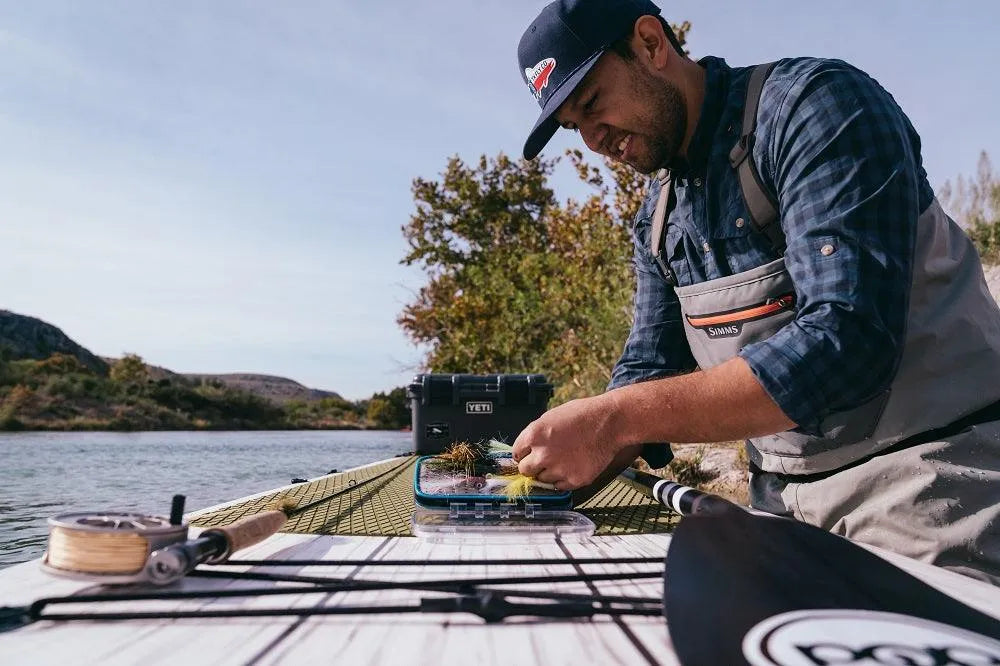
Man preparing fishing gear on an inflatable paddle board beside a calm river.
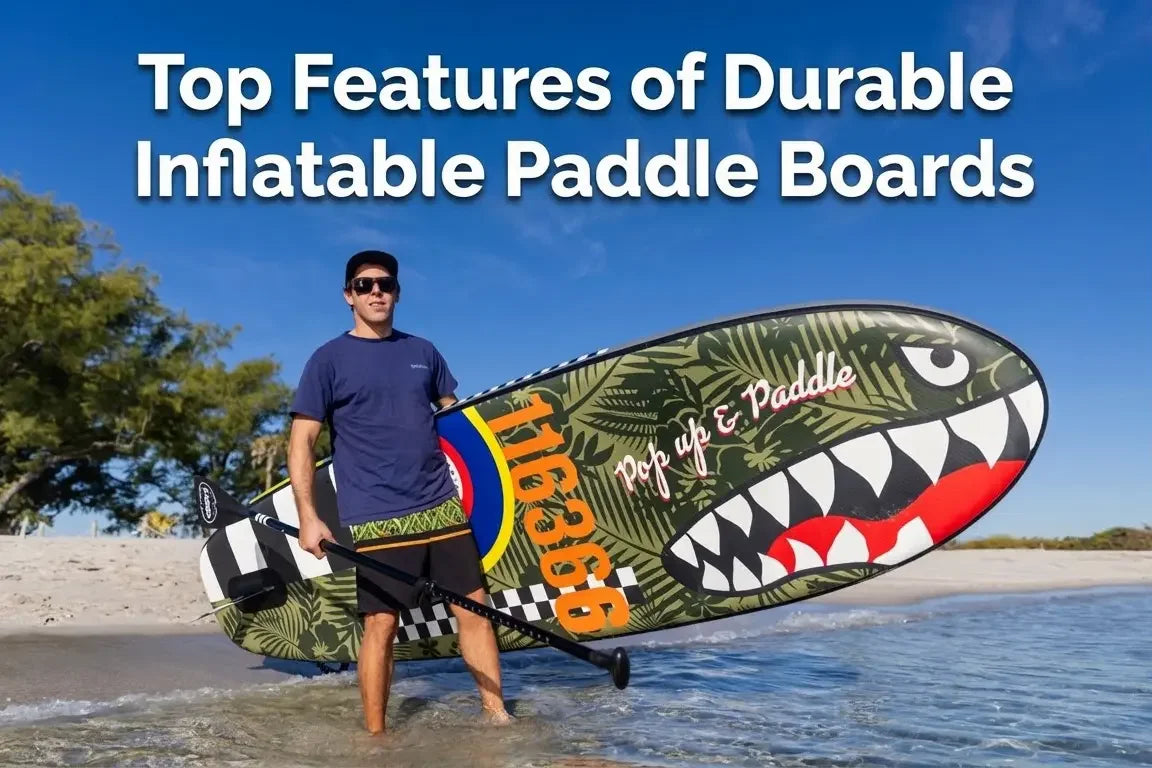
Man holding a durable inflatable paddle board on the beach highlighting key features

Leave a comment

All comments are moderated before being published.

This site is protected by hCaptcha and the hCaptcha Privacy Policy and Terms of Service apply.