
Top Features of Durable Inflatable Paddle Boards

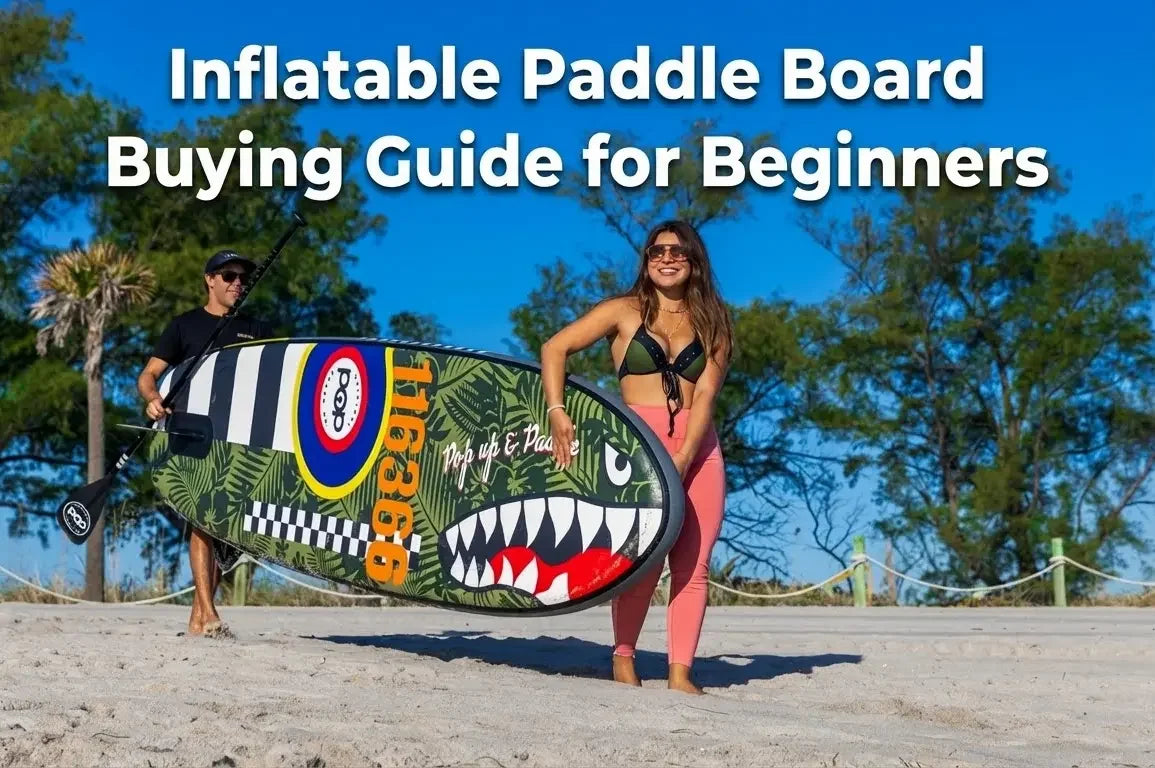
Man holding a durable inflatable paddle board on the beach highlighting key features

Top Features of Durable Inflatable Paddle Boards: Materials, Construction, and Longevity Explained

Durable inflatable paddle boards resist punctures, maintain rigidity under load, and deliver reliable performance year after year. This guide breaks down the materials, construction, and protective features that affect a board’s lifespan, translating technical details into practical buying and care advice. If terms like “military grade PVC,” woven drop-stitch, or double-layer builds are confusing, this article clarifies them, explains how inflation pressure and routine maintenance impact real-world longevity, and shows what to look for when comparing models. Read on for material comparisons, construction and PSI guidance, protective design notes, trade-offs with hard boards, company facts about Canadian Board Co., and simple care and repair steps to keep your board on the water for seasons to come.

Close-up of inflatable paddle board fin and tail floating on calm water

What Materials Make Inflatable Paddle Boards Durable and Long Lasting?

The materials used are the foundation of long-term durability, determining how a board handles abrasion, UV exposure, and impacts. Higher-spec PVC (often called “military grade”) provides a thicker, more abrasion-resistant outer skin than basic recreational PVC; stronger formulations and coatings reduce scuffs from sand and rocks. The drop-stitch core acts like an internal skeleton: higher thread density produces a stiffer, flatter platform at the same PSI, while lower density allows more flex and concentrates wear. Understanding properties like tensile strength, abrasion resistance, and UV stability helps prioritize features when comparing boards.

Key material drivers for longevity include PVC formulation, drop-stitch thread/denier, and protective top coatings that slow UV breakdown. Below is a quick-reference look at common materials and their durability traits.

This table offers a snapshot of core materials and their durability contributions.

Material Key Durability Attribute Typical Durability Impact
Military Grade PVC Tensile strength and layer thickness High abrasion resistance; better resistance to punctures on rough surfaces
Standard PVC (single layer) Basic waterproofing and flexibility Moderate wear resistance; more vulnerable to abrasion
Drop-stitch core (thread density) Internal stiffness per PSI Higher density → more rigidity and less flex fatigue

This table shows which material traits add real longevity and why thread density and PVC grade matter when judging a board. Next, we’ll look more closely at what “military grade PVC” actually means on the water.

How Does Military Grade PVC Enhance Paddle Board Durability?

“Military grade PVC” describes a tougher PVC build, featuring thicker outer layers, higher tensile strength, and added stabilizers that resist abrasion and chemical breakdown. This extra thickness spreads impact forces across the laminate, and manufacturers often add coatings that slow micro-abrasion. Practically speaking, boards built with higher-grade PVC maintain their appearance and integrity longer, especially around rocky shorelines or with frequent travel. Good habits still matter, but the material provides a stronger baseline for long service life.

PVC Applications: Materials, Properties, and Additives for Durability

Polyvinyl chloride (PVC) is widely used because of its mechanical and optical properties across industries like packaging, medical, construction and military applications. Pure PVC is rigid, so manufacturers compound it with additives — plasticizers, processing aids and stabilizers — to improve flexibility, processing, UV resistance and overall durability. In recent years, blends including nano- and micro-materials have widened PVC’s uses, boosting performance in demanding applications.

With PVC grade covered, the next structural element to understand is drop-stitch and how its internal weave combines with the outer skin to define rigidity and performance.

What Is Drop Stitch Technology and Why Is It Essential for Rigidity?

Drop-stitch technology uses thousands of fine threads that join the top and bottom layers inside the inflated panel, allowing the board to hold high PSI and a flat, rigid shape. Thread density and weave quality control how well the board resists bulging: more stitches create a stiffer platform that paddles more like a hard board. This stiffness improves efficiency, lowers fatigue at seams and rails, and reduces stress points that can lead to delamination. Checking thread density and the quality of the woven core helps predict a board's rigidity and durability in real use.

Two people fishing from an inflatable paddle board on calm water near mangroves

How Does Construction Affect the Rigidity and Strength of Inflatable SUPs?

Construction choices—single-layer, double-layer, or woven drop-stitch systems—determine how materials work together to create stiffness, puncture resistance, and weight trade-offs. Single-layer boards are lighter and pack smaller but typically offer less long-term rigidity. Double-layer and woven constructions add bonded layers or engineered weaves that increase surface hardness, reduce flex at normal PSI ranges, and spread impact forces over a larger area. These engineering trade-offs change how a board behaves for touring, surfing, or family use and alter where wear appears on seams and rails. Below, we quantify typical rigidity at recommended PSI ranges to help you choose the best balance of stiffness, weight, and longevity.

Compare construction types and rigidity metrics in this table to find the right balance of stiffness, weight, and longevity.

Construction Type Rigidity Attribute Typical Real-World Impact
Single-layer Rigidity @15 PSI: Low Lightweight and packable but more flex and greater seam stress
Double-layer laminate Rigidity @15 PSI: Medium–High Better puncture resistance and improved stiffness
AIR RIDE Woven Drop Stitch Rigidity @15 PSI: High Excellent stiffness-to-weight ratio and longer service life

This comparison explains why woven drop-stitch systems are chosen when stiffness and long-term durability matter. Many manufacturers pair a woven core with multi-layer PVC to achieve strong stiffness without an oversized pack. Next, we’ll cover the benefits of double-layer and AIR RIDE woven constructions.

What Are the Benefits of Double Layer and AIR RIDE Woven Drop Stitch Construction?

Double-layer construction bonds two PVC layers over the drop-stitch core, improving abrasion and puncture resistance and lowering flex that stresses seams. Woven drop-stitch variants like AIR RIDE use a tighter engineered weave that keeps the surface flatter at lower PSI and delivers a better stiffness-to-weight ratio. The result: boards feel firmer underfoot without needing extreme inflation, track better, waste less energy while paddling, and put less fatigue on high-stress points—all contributing to a longer usable life. Combining a woven core with multi-layer PVC provides internal stiffness and an abrasion-resistant exterior to reduce both impact and wear-related failures.

Understanding these construction trade-offs leads directly to proper inflation practices, which are essential for achieving designed stiffness and avoiding premature wear.

How Does Optimal PSI Influence Paddle Board Stability and Durability?

Optimal PSI is the pressure range where a board reaches its intended stiffness and minimizes flex-driven wear. Most quality inflatables perform best between about 12–15 PSI, where tracking and load distribution are balanced. Under-inflation allows the board to flex more, putting cyclical strain on seams and rails and accelerating delamination. Over-inflation can overstress valves and seams. Regular pressure checks with a good gauge and small PSI adjustments for temperature changes keep the board riding as designed and reduce micro-movement between layers that causes abrasion. Checking PSI is one of the highest-impact habits to protect your board’s construction and longevity.

Maintaining correct inflation connects directly to the protective design choices that further extend life, which are covered next.

What Protective Features Maximize the Lifespan of Durable Inflatable Paddle Boards?

Protective design elements like reinforced seams, thicker rails, sacrificial rail guards, and UV-stable coatings are frontline defenses against common damage. Reinforced seams—especially heat-welded or multi-layer bonded seams—spread load and resist opening under repeated flex. Thicker rails and external wraps absorb the worst knocks from docks and rocky landings. UV-resistant coatings and stabilizers slow polymer breakdown from sunlight, helping the material stay flexible and preventing brittleness. Accessories such as board bags, rail guards, and impact-friendly fins also reduce abrasion and puncture risk during transport and storage.

Here’s a short checklist of protective features to prioritize and how they protect your board in everyday use.

  • Reinforced seams and bonded rails: Prevent seam separation and spread impact loads.
  • Thicker rail or sacrificial rail guards: Absorb knocks from docks and shorelines without damaging the core.
  • UV-stable PVC coatings: Help the material retain flexibility and color over time.
  • External abrasion layers or rail wraps: Shield high-wear areas from sand, rocks, and repeated contacts.

After checking features, it’s useful to understand how manufacturers achieve puncture resistance and how to inspect seam quality up close.

This table illustrates how seam and puncture-resistance features enhance real-world durability.

Protective Feature Mechanism Durability Benefit
Reinforced (bonded/heat-welded) seams Distributes tensile loads Lower chance of seam failure over time
Multi-layer rails Impact absorption Less puncture and abrasion at edges
UV-stabilized coating Chemical stabilization Slows brittleness and color fading

This quick comparison shows which protective elements have the biggest effect on longevity. Next, we’ll explain how puncture resistance and seam quality work in practice.

How Do Puncture Resistance and Reinforced Seams Prevent Damage?

Puncture resistance comes from layering, thicker PVC mixes, and abrasion-resistant coatings that soak up or deflect sharp contacts before they reach the drop-stitch internal chambers and laminated PVC layers. Reinforced seams—made by heat welding, strong adhesives, or bonded laminates—stop seams from slowly opening when the board flexes at low pressure. When inspecting a board in person, look for uniform seam bonding and continuous weld lines, which are good signs. Together, a tough outer skin and high-quality seams reduce the two most common failure modes for inflatables and lengthen structural life.

Mechanical protections like these pair with environmental protections, especially UV resistance, which we cover next.

Why Is UV Protection Important for Inflatable SUPs and How Is It Achieved?

UV light breaks down PVC over time, causing loss of elasticity, fading, and eventually small cracks that weaken the outer skin and adhesives. Manufacturers add UV stabilizers to the PVC, apply top-layer UV coatings, and use pigments that resist photodegradation to slow this process. Good storage habits—keeping boards out of prolonged sun and using board bags or shade—work with material choices to dramatically slow UV aging. Watch for early signs of UV damage, like a chalky feel or stiff rails, so you can protect the board before repairs are needed.

How Do Durable Inflatable Paddle Boards Compare to Hard Boards in Longevity and Use?

Comparing inflatable and hard boards involves trade-offs in durability, repairability, storage, transport, and performance, all of which affect real-world lifespan. Inflatables usually win on portability, gentler collision behavior, and easier storage, while hard boards often offer higher top-end speed, a stiffer ride, and, with careful care, a long lifespan. Repairability favors inflatables: many punctures and seam issues can be patched by owners, whereas hard board dings typically require professional repair. If you travel often or paddle rocky shorelines, a durable inflatable with reinforced rails is probably the better choice; if you prioritize racing or ultimate stiffness and have controlled storage, a hard board may fit you better.

This table compares lifespan, repairability, storage, and best use cases to help match board type to your paddling style.

Board Type Typical Lifespan Repairability Best Use Cases
Inflatable SUP 5–10 years with proper care High; many DIY patches possible Travel, family outings, rocky shorelines
Hard Board 7–15 years depending on material and care Moderate; professional repairs often needed Racing, performance surfing, flat-water touring

This table sets realistic expectations so you can weigh longevity against how you actually use the board. Below are concise pros and cons to help you decide.

What Are the Pros and Cons of Inflatable vs. Hard Paddle Boards?

Inflatables are easy to carry, compact to store, and forgiving in collisions, but they trade a bit of glide efficiency and can show pressure-related wear. Hard boards are stiffer, faster, and more responsive, but heavier to move, harder to store, and more likely to suffer severe damage from rocks or docks. If travel, tight storage, or family-friendly durability matter most, an inflatable usually makes more sense. If top performance and maximum glide are your priority and you have safe storage, a hard board can be the right tool.

Which Paddle Board Type Is Best for Different Environments and Activities?

For travel, touring with frequent carries, and family days where easy transport and impact-friendly behavior matter, inflatables are usually the best fit. Hard boards shine for racing, advanced surfing, and flat-water touring where maximum stiffness and hydrodynamic efficiency are key. In rocky or variable shorelines, a reinforced inflatable will reduce the risk of irreparable damage. Match the board to the conditions you expect most often, and your durability expectations will align with real use.

Why Choose Canadian Board Co. for Durable Inflatable Paddle Boards?

Canadian Board Co. is a Canadian-owned and operated company focused on inflatable marine gear—paddleboards, docks, and inflatable chairs—with manufacturing choices aimed at lasting performance.

Beyond paddleboards, Canadian Board Co. offers other durable inflatables. For example, the Pop-up Aquadock gives you a stable platform for shore-side activity.

To round out a day on the water, check their inflatable pop-up chair set for comfortable, portable seating.

The company emphasizes construction choices that support longevity, including AIR RIDE woven drop-stitch cores, multi-layer PVC, and the use of higher-grade PVC, plus multi-stage quality checks during production. These elements are designed to reduce early failures by pairing a stiff woven core with a tough exterior skin that resists abrasion and impact. Canadian Board Co. also supports customers with practical benefits like free Canada-wide shipping on orders over $100, a 60-day rider’s guarantee, and a 3-year warranty. The company participates in sustainability efforts such as offsetting shipping carbon and working with ocean-cleanup partners.

Two people standing on inflatable paddle boards paddling together in shallow ocean water.

What Unique Features Do the El Capitan and Royal Hawaiian Models Offer?

Two example models are the 11'6 El Capitan — Bomber and the 10'6 Royal Hawaiian - Palm. Both reflect the company’s construction approach, using AIR RIDE woven drop-stitch and higher-grade PVC to boost rigidity and abrasion resistance compared to basic inflatables.

Specs are on the product pages, but at a glance: the El Capitan fits paddlers who want a larger, stable platform, while the Royal Hawaiian is a slightly shorter, more versatile board. Both use the same material and construction focus to improve real-world life expectancy.

How Does Canadian Board Co.’s Quality Control and Warranty Support Longevity?

Canadian Board Co. conducts multi-stage quality checks to catch manufacturing defects and verify materials and bonded seams meet tolerance standards before products ship. This QC approach lowers out-of-the-box issues and supports consistent seam and weld quality, a major factor in long-term performance. The 60-day rider’s guarantee provides a practical trial window, and the 3-year warranty offers added coverage that reflects confidence in material and construction choices. These protections reduce buyer risk and reinforce that proper maintenance will maximize your board’s usable life.

How Can You Maintain and Care for Your Inflatable Paddle Board to Extend Its Life?

Regular maintenance—rinsing, correct inflation, proper storage, and timely repairs—will extend an inflatable SUP’s life by preventing gradual damage from UV, salt, sand, and mechanical wear. Rinse with fresh water and mild soap after saltwater outings to remove corrosive salts and abrasive particles, and dry completely before packing to avoid mold and weakened adhesives. Inflate to the manufacturer-recommended PSI to prevent excess flex and seam fatigue, and store boards in a shaded, temperature-stable place to reduce UV and thermal stress. These routines protect both materials and bonded seams, making repairs less frequent and warranties more useful.

Here’s a simple after-outing checklist to help protect your investment.

  • Rinse with fresh water and wipe away sand to eliminate abrasive particles.
  • Clean with mild soap and a soft cloth to remove salt and oils that can degrade coatings.
  • Fully dry the board before packing to prevent mold and adhesive issues.
  • Store deflated in a cool, shaded spot for long-term storage; avoid leaving it in direct sun.

What Are the Best Practices for Storage and Cleaning of Inflatable SUPs?

Best practices include rinsing off salt and dirt, drying the board completely before packing, and storing it in a shaded, temperature-stable place to limit UV and thermal damage. If storing the board deflated, ensure it’s clean and dry, roll it gently following the manufacturer’s directions, and avoid tight compression that could crease the PVC layers. For boards kept inflated, use a breathable cover, keep them out of direct sun and high heat, and rotate storage position to avoid long-term stress at one seam or rail. These steps protect materials and bonded seams and make simple repairs less likely.

How Can You Repair Punctures and Protect Your Board from Common Damages?

Small punctures and surface abrasions are often fixable with a standard patch kit: clean and dry the area, lightly abrade if instructions call for it, apply the adhesive patch per kit directions, and let it cure fully before re-inflating. For seam damage or larger delamination, seek a professional repair to restore bonded layers and pressure integrity. Prevent problems by using rail guards, avoiding dragging the board over sharp terrain, and checking valves and D-rings regularly. Routine inspections after outings catch small issues early, and following the company’s care guidelines also helps keep warranty coverage intact.

This wraps up the maintenance advice—put these routines into practice, and your board will stay ready for the water season after season.

Frequently Asked Questions

What is the average lifespan of an inflatable paddle board?

With regular care, an inflatable paddle board typically lasts about 5–10 years. Material quality, construction, and how you maintain the board are the biggest factors. Keep it clean, properly inflated, and stored out of direct sun, and add rail guards or UV protection where needed to extend life.

How do I choose the right paddle board for my skill level?

Pick a board based on your skill, intended use, and body type. Beginners usually want wider, more stable boards for balance. Intermediate and advanced paddlers often choose narrower, faster shapes for speed and maneuverability. Think about whether you’ll be touring, surfing, or paddling casually, and ask local shops or experienced paddlers for tailored advice.

What are the best conditions for using inflatable paddle boards?

Inflatable SUPs are versatile but best in calm waters like lakes, bays, and slow rivers—ideal for beginners and casual paddling. Experienced users can handle light surf or choppy water, but avoid strong winds and rough seas. Always check local weather before heading out.

Can inflatable paddle boards be used in saltwater?

Yes. Rinse your board with fresh water after each saltwater outing to remove salt and protect materials. Regular cleaning and UV protection will help the board hold up over time.

What accessories are recommended for inflatable paddle boards?

Key accessories: a good paddle, a PFD for safety, a board bag or backpack for transport, a leash, rail guards, and a reliable pump. A repair kit is handy for quick fixes on the go.

How do I know if my inflatable paddle board needs repairs?

Inspect your board regularly for punctures, abrasions, seam separation, or air leaks. A drop in pressure or visible UV damage (discoloration, stiff spots) are also warning signs. Address small issues quickly to prevent bigger repairs later.

Reading next

Two beginners paddleboarding on an inflatable SUP in calm water, demonstrating stable stance and on-water balance.
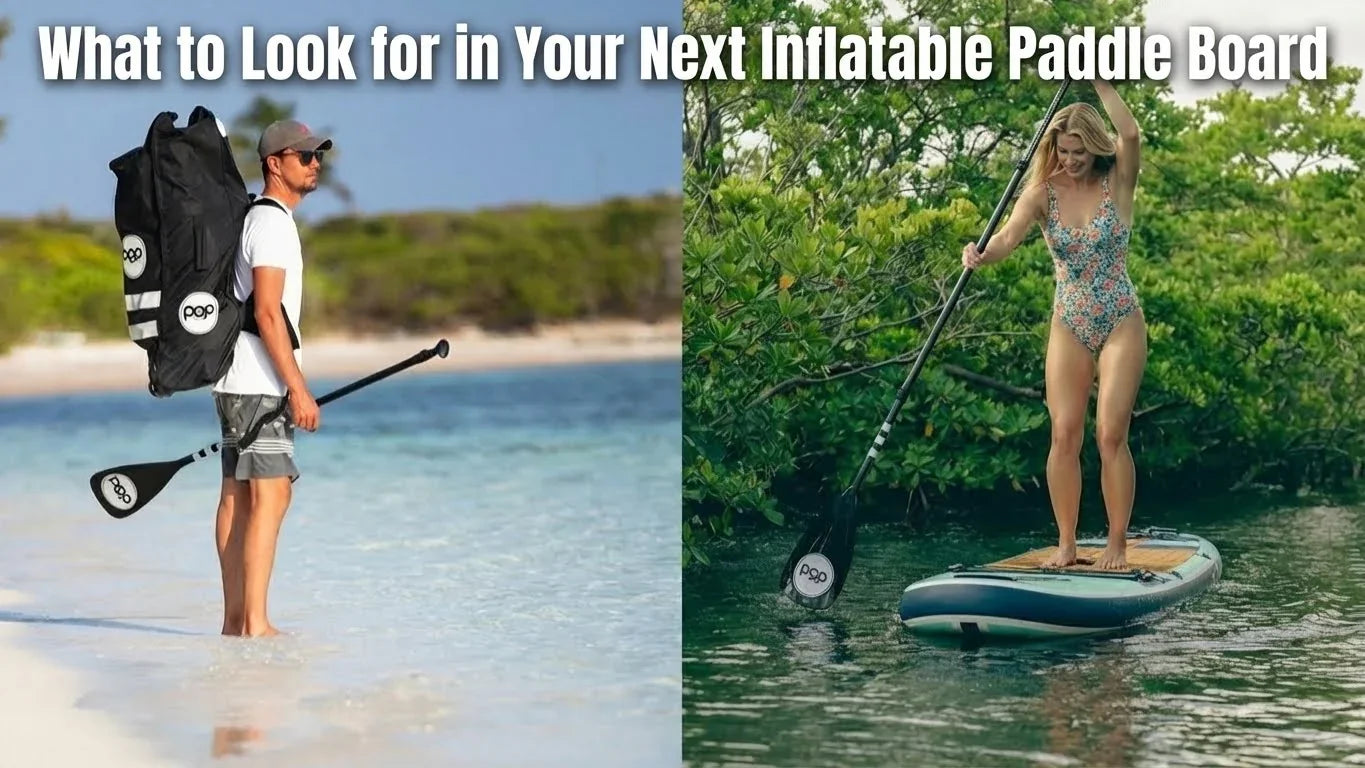
Man carrying an inflatable paddle board on the beach and a woman paddling on the water, used as the hero image for a SUP buying guide.

Leave a comment

All comments are moderated before being published.

This site is protected by hCaptcha and the hCaptcha Privacy Policy and Terms of Service apply.