
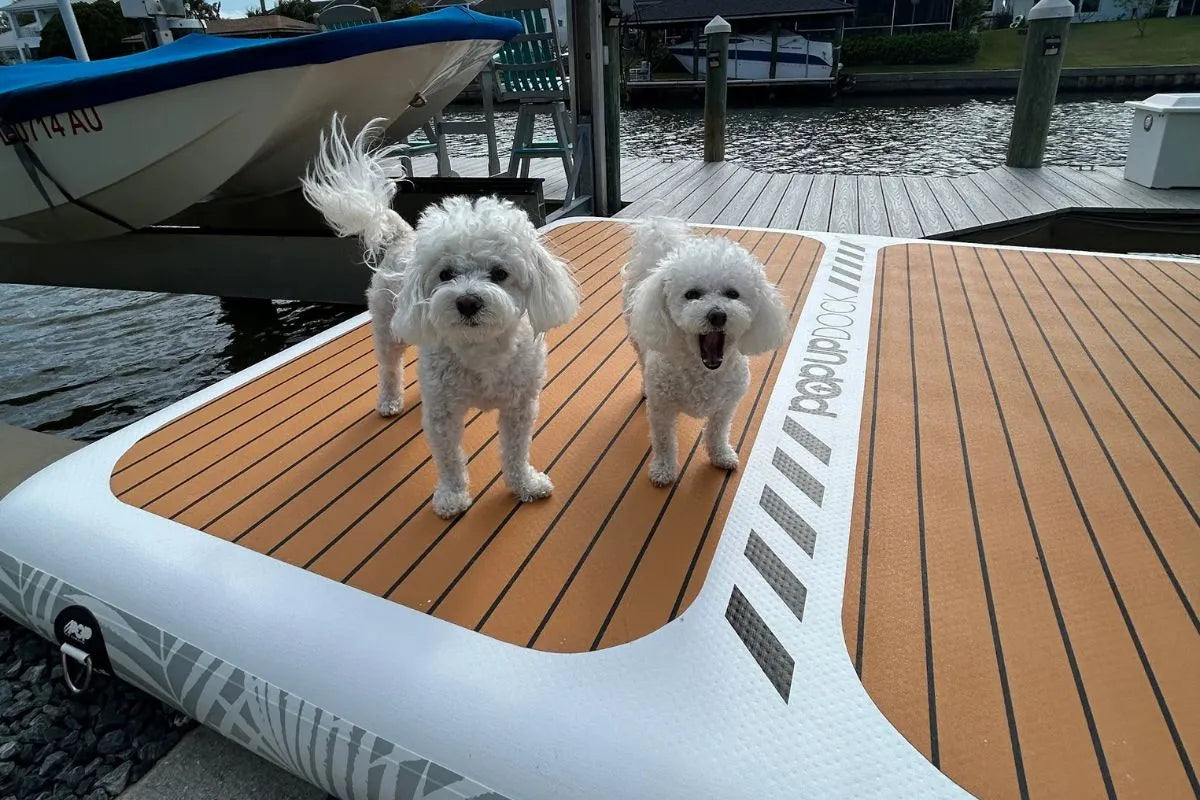
The storage problems that matter are moisture, grit, hard creases, heavy compression, pests and temperature conditions outside the product guidance. Clean, dry, supported storage protects the material and makes spring inspection easier.
Some of the most preventable inflatable damage happens during the months the product is not being used. A damp roll, heavy compression, pests or storage outside the manufacturer’s temperature guidance can create problems before spring.
Drop-stitch products are built for normal on-water use, but abrasion, impact, prolonged sun and poor storage can still cause damage. The off-season deserves the same attention as summer use.
If you want the step-by-step process, our paddleboard storage guide and dock winterization guide both walk through it. This piece is the other half: what actually goes wrong, why, and what it costs.
1. Packing it away damp
What happens: trapped moisture can cause odour, staining and mildew, while making spring cleanup harder.
Why it happens: People dry the top surface, which is in the sun and dries fast, and never flip the board. The underside is where the water is.
Instead: dry both sides, seams and accessories completely. If weather does not cooperate, continue drying in a suitable ventilated space before packing.
2. Storing outside the recommended temperature range
What happens: the product sits for months in conditions the manufacturer does not recommend, sometimes beside moisture, pests or heavy equipment.
Why it happens: a shed or detached garage is convenient, but the actual temperature can fall well below the range allowed by the warranty.
Instead: Canadian Board Co.’s current warranty excludes damage caused by inappropriate storage below -5°C or above 27°C. Choose a clean, dry, supported space within the guidance for the exact product.

3. Rolling it tight and stacking things on top
What happens: A permanent crease at the fold, which becomes a weak line, which becomes a leak.
Why it happens: The bag it came in is sized for shipping, not for eight months of storage, so people compress it to fit and then put the toolbox on top.
Instead: Roll loose. If it does not fit the original bag comfortably, do not force it. Store in a bin or on a shelf where nothing is bearing down on it, and vary the fold lines slightly from year to year rather than creasing the same spots every season.
4. Leaving it on a concrete floor
What happens: Concrete wicks moisture continuously. A dry board on a cold slab is a damp board by January.
Why it happens: The floor is where there is room.
Instead: Pallet, shelf, or hard-sided bin. Anything that breaks contact with the slab.
5. Ignoring rodents

What happens: rodents can chew PVC, fabric bags and accessories in an unprotected outbuilding.
Why it happens: few people thinks of it, and fabric storage bags provide no protection whatsoever.
Instead: use protected, pest-controlled storage that does not compress the inflatable. Keep food and seed elsewhere and inspect the area during winter.
6. Leaving water in the valve
What happens: Water in the valve housing freezes, expands, and damages the valve seat or the surrounding material. You find out in May when it will not hold pressure.
Why it happens: People deflate, roll, and go. The water sitting in the housing is invisible.
Instead: After deflating, open the valve fully, tip that corner down, drain it, and wipe the seat. Check that the spring pin moves freely. Thirty seconds.
7. Storing it fully inflated in a hot space, or fully deflated in a very cold one, without thinking about pressure
What happens: Air expands with heat. A board or dock stored at full pressure in a garage that hits 35°C in August, or a sunroom in a February cold snap, is working its seams for no reason.
Why it happens: Storing inflated is genuinely a good option, so people do it, but they do it at full working pressure.
Instead: follow the model’s storage instructions. If inflated storage is allowed, reduce pressure as directed, keep the product supported and away from sun, and account for temperature-related pressure changes.
8. Storing batteries and pumps without checking their manuals
Electric-pump and battery instructions vary. Remove detachable batteries where required, protect connectors, and use the specified storage charge, temperature and inspection interval. Do not apply one percentage or one winter location to every model.
Keep chargers and pumps dry, label them, and store hoses without sharp bends or heavy items resting on them.
9. Skipping the inspection because you will do it in spring
What happens: A small lifting seam, a peeling D-ring patch, or a scuff that has gone through the top layer sits under pressure and moisture for eight months and becomes a real repair.
Why it happens: Closing weekend is busy and it is easier to deal with in April.
Instead: Inspect at shutdown, not at opening. You are more likely to have time, and more importantly, if something needs professional attention you have the entire off-season to sort it out rather than losing the first three weeks of the season. A repair kit handles small stuff on the spot, and if you are unsure whether something is cosmetic or structural, ask us before it goes in the bag.
The version you can do in twenty minutes
If you take nothing else from this:
- Clean it, both sides.
- Dry it, both sides, completely.
- Drain the valve.
- Roll loose.
- Sealed bin, off the floor, stable temperature, out of the sun.
- Batteries inside.
That is the whole thing. It is not complicated. It is just consistently skipped.
Why this matters more than it sounds
Good care supports a longer service life. Poor storage can leave problems hidden until the first spring inflation, when there is little time to clean, repair or seek support.
A short, deliberate storage check in fall can prevent avoidable spring work. Service life still depends on construction, use and care.
Frequently Asked Questions
Can you store an inflatable paddle board in a cold garage?
Only if the garage remains clean, dry, pest-controlled and within the temperature guidance for the exact product. Canadian Board Co.’s current warranty excludes storage below -5°C or above 27°C.
Should I store my inflatable paddle board rolled or inflated?
Either is fine. Rolled loosely saves space. Lightly inflated, indoors, out of sunlight avoids fold-line stress and is slightly gentler on the material. Do not store at full working pressure.
What ruins an inflatable paddle board?
In storage: trapped moisture, pests, temperature conditions outside the product guidance, heavy compression and debris around the valve. In use: abrasion, impact, prolonged UV exposure and pressure outside the stated range.
Do mice really chew inflatable paddle boards?
Yes, and it is common in rural Canada. A rolled inflatable is warm, sheltered nesting material. Sealed hard-sided storage is the fix.
Is it bad to leave an inflatable paddle board inflated all winter?
Not if the pressure is reduced, it is out of direct sunlight, and it is off cold concrete. Stored at full working pressure in a space with big temperature swings, it puts unnecessary stress on the seams.
Does the warranty cover improper storage?
Canadian Board Co.’s current limited warranty lists improper storage and storage outside its recommended temperature conditions among the exclusions.
Related Canadian Board Co. guides and gear
Protect the gear before it disappears for winter
Review product-specific guidance and current warranty terms, or call 1-800-399-5260 when an issue needs a closer look.
Review warranty information

Leave a comment
All comments are moderated before being published.
This site is protected by hCaptcha and the hCaptcha Privacy Policy and Terms of Service apply.