
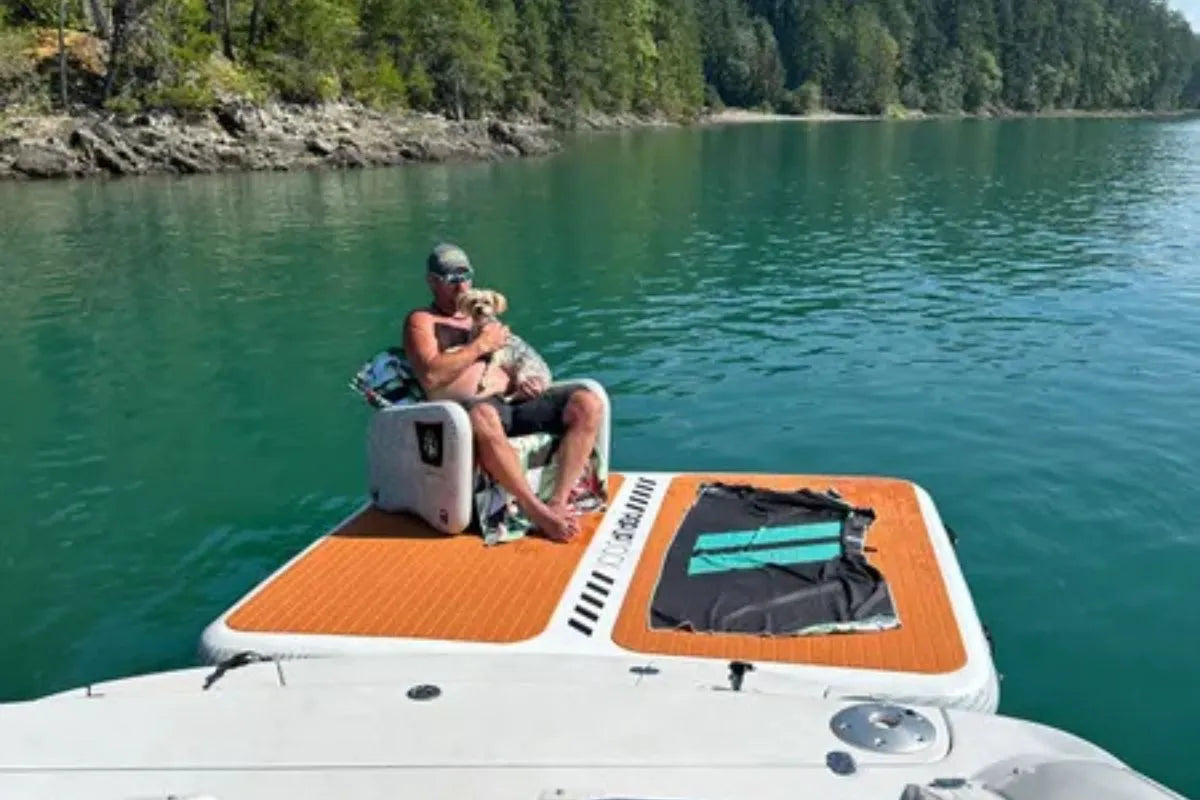
In Canada, permanent docks often need more review because they can affect shorelines, lakebeds, navigation, and local waterfront rules. A removable inflatable dock is usually a simpler path because it does not require in-water construction, does not permanently alter the shoreline, and can be pulled out when the weekend or season ends. You still need to check local rules before anchoring anything on the water.
Building a permanent dock can become a paperwork project before the first plank or float section reaches the water. Depending on where your cottage is, you may need to think about federal navigation rules, provincial shore land rules, municipal bylaws, conservation authority requirements, lake association guidance, and your own property rights.
That is one reason more cottage owners are looking at removable inflatable docks. Instead of building a fixed structure, you can use a portable floating platform for swimming, lounging, paddleboard launching, and boat-side lake time, then take it out of the water when you are done.
This guide explains the difference in plain English. It is general information, not legal advice. Rules vary by province, municipality, conservation authority, lake, park, rental property, and shoreline type, so confirm locally before you install, anchor, or leave any dock in the water.

A removable inflatable dock gives cottage owners usable water space without building a permanent shoreline structure.
Why permanent docks can trigger permits
A permanent or fixed dock is usually treated differently than a temporary floating platform because it can become part of the shoreline setup. It may sit on or near the lakebed, change the shoreline, affect public navigation, or require construction activity near the water.
That is what regulators and local authorities usually care about.
Navigation rules
Transport Canada oversees the Navigation Protection Program. If a dock, work, or structure may interfere with navigation on navigable water, it may require review, approval, or a public resolution process.
Shore land and lakebed rules
In Ontario, certain work on Crown land or shore lands may need a work permit. Other provinces have their own systems for shoreline, lakebed, and public land activities.
Municipal bylaws
Townships, cities, and cottage municipalities may have zoning, building, shoreline, or dock rules that apply even when provincial or federal rules are not the main issue.
Conservation authority rules
In Ontario, conservation authority permits can apply in regulated areas like shorelines, wetlands, watercourses, floodplains, and erosion hazard areas.
The more permanent the structure, the more homework you should expect. Fixed docks, lakebed work, shoreline alteration, piles, cribs, dredging, filling, erosion control, and boat mooring infrastructure can all bring extra review.
Where removable inflatable docks fit in
A removable inflatable dock is different because it is not built into the shoreline. It does not need piles. It does not require concrete. It does not require lakebed construction. It inflates, anchors for use, and can be removed when conditions change or when the season ends.
That removability is the main advantage. In many cottage situations, a temporary floating platform creates fewer approval issues than a permanent built dock because it is not changing the shoreline in the same way.
That does not mean the rules never apply. You should still check before anchoring anything in the water, especially if the lake has busy boat traffic, local bylaws, a lake association, sensitive shoreline habitat, park rules, conservation authority oversight, or rental property restrictions.
Do not assume “portable” means “no rules anywhere”
A removable inflatable dock is usually simpler than a permanent dock, but rules still vary by location. The smart move is to ask about temporary or removable floating platforms specifically, not just “dock permits.”
Permit checklist before using any floating dock
Even if your dock is temporary and removable, a quick check can save a lot of stress later. Use this list before anchoring a platform at a cottage, rental property, public lake, or private waterfront.
Ask your municipality
Ask specifically about temporary floating platforms, seasonal docks, removable docks, and inflatable docks. Do not only ask about permanent dock construction.
Check conservation authority rules
If the property is in a regulated shoreline, wetland, watercourse, floodplain, or erosion area, extra rules may apply.
Confirm lake association guidance
Some lakes have rules or etiquette around placement, swim zones, boat channels, anchoring, and shared waterfront use.
Keep navigation clear
Do not place any dock, float, buoy, or platform where it blocks boat traffic, narrows a channel, or creates a navigation hazard.
Check property and frontage rights
Waterfront rights, shore road allowances, leased land, Crown land, and shared access can change what you can place near shore.
Ask rental hosts first
If you are bringing an inflatable dock to a cottage rental, get permission before arrival. The property may have rules about anchoring, storage, or water access.
Permanent dock vs removable inflatable dock
The choice is not just about permits. It is about how you use the water.
A permanent floating dock can make sense when you own developed waterfront, need regular boat mooring, want a fixed walkway from shore, and are prepared for approvals, installation, maintenance, seasonal removal, and long-term storage.
A removable inflatable dock makes sense when you want more swim and lounge space without building waterfront infrastructure.
Best for fixed waterfront access
- Boat mooring
- Long-term shoreline setup
- Walkway from shore
- Developed private waterfront
- More approvals and installation planning
Best for portable lake space
- Swimming and lounging
- Cottage weekends
- Rental-friendly setup with permission
- Paddleboard launching
- Winter storage indoors
Simple rule: build a traditional dock if you need permanent waterfront infrastructure. Choose an inflatable dock if you want removable swim, lounge, and paddleboard space without committing to a fixed structure.
Why removability matters for Canadian cottages
Canadian waterfronts have a short season and a long winter. Ice movement, storms, wind, and seasonal water changes can be hard on anything left outside or in the water for too long.
A removable inflatable dock gives you more control. You can pull it in before rough weather, deflate it for transport, store it indoors for winter, and move it between locations if your summer plans change.
This is especially helpful for:
- Cottage owners who do not want to build a permanent dock
- Families who want extra swim space beside an existing dock
- Rental cottages where a fixed structure is not allowed
- Boat owners who want a floating lounge platform
- Paddleboarders who want a launch and rest area
- Properties with tricky shoreline or seasonal access

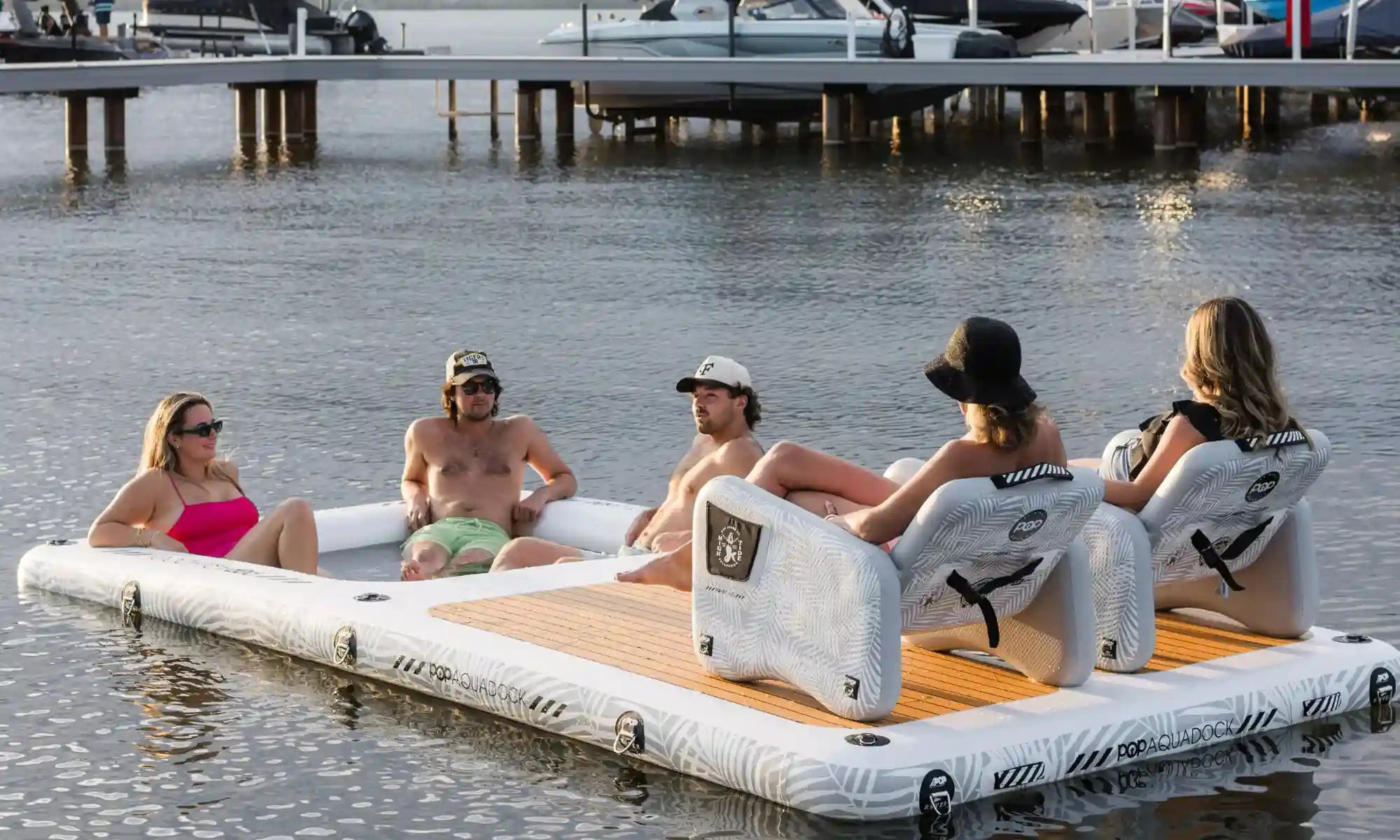
An inflatable dock is built for portable lake use: swimming, chairs, paddleboards, and easy seasonal storage.
Best CBC inflatable dock options
The right inflatable dock depends on whether you want a family swim platform, a drier full deck, or a smaller portable setup.
14' POPUP AquaDock
Best for families, kids, swimming, cooling off, paddleboard launching, and cottage lounging. The centre wet zone makes it feel more like a floating swim platform.
- 14' x 7' platform
- Centre wet zone
- Great for kids and swimmers
- Commonly listed around 2,000 lb capacity
- Removable and seasonal
14' POPUP YachtDock
Best for chairs, coolers, dry bags, gear, boat-side lounging, and customers who want a solid full platform with more dry usable surface.
- 14' x 7' platform
- Solid full deck
- More dry usable space
- Commonly listed around 3,000 lb capacity
- Great boat-side option
AquaDock vs YachtDock
Choose AquaDock if you want a family swim platform with a centre wet zone. Choose YachtDock if you want a solid full deck for chairs, coolers, bags, and boat-side lounging. Always confirm current specs, package contents, and capacity on the live product page.
What to ask before anchoring an inflatable dock
When you call a municipality, conservation authority, property manager, or lake association, ask specific questions. You will usually get a better answer than if you simply ask, “Do I need a dock permit?”
- Are temporary inflatable floating platforms allowed?
- Are seasonally removed docks treated differently from permanent docks?
- Are there rules about anchoring in this lake or bay?
- Are there setback rules from property lines, channels, swim areas, or boat lanes?
- Are there conservation authority rules for this shoreline?
- Are there rules for rental properties or shared waterfront access?
- Do I need to remove the platform daily, seasonally, or during certain conditions?
Best wording when calling: “I am asking about a temporary removable inflatable floating platform used for swimming and lounging, not a permanent dock or shoreline construction project.”
Safe placement matters
Even when a dock is temporary, placement matters. A floating platform should not interfere with boat traffic, block a channel, drift into a neighbour’s frontage, or create a hazard for paddlers and swimmers.
Keep the dock:
- Outside navigation channels
- Away from heavy boat traffic
- Visible to approaching boats
- Properly anchored for the depth and wind
- Clear of sharp rocks, metal, and rough concrete
- Removed or secured before storms and strong wind
Read the anchoring guide here: https://www.canadianboardco.com/blogs/water-sports-guide/anchoring-inflatable-dock-canadian-lake-wind-depth.
Browse dock hardware here: https://www.canadianboardco.com/collections/hardware.
The bottom line
If you are building a permanent dock in Canada, expect to check multiple layers of rules before you start. Federal navigation, provincial shore land rules, municipal bylaws, conservation authority requirements, lake association guidance, and property-specific issues can all matter.
If you want a dock-like platform this summer without a major construction project, a removable inflatable dock is usually the more practical route. It gives you real swim and lounge space, but it comes out of the water when you are done.
For most cottage families, that is the appeal: more time on the water, less permanent infrastructure, easier winter storage, and a simpler path than building a fixed dock.
Shop the 14' POPUP AquaDock here: https://www.canadianboardco.com/products/popup-aquadock-14-x-7-x-6.
Shop the 14' POPUP YachtDock here: https://www.canadianboardco.com/products/popup-yatchdock-14-x-7-x-8.
Browse inflatable docks here: https://www.canadianboardco.com/collections/inflatable-docks.
Read the inflatable dock vs floating dock comparison here: https://www.canadianboardco.com/blogs/water-sports-guide/inflatable-dock-vs-floating-dock-canada.
Read how much weight an inflatable dock can hold here: https://www.canadianboardco.com/blogs/water-sports-guide/how-much-weight-can-an-inflatable-dock-hold.
Warranty details are here: https://www.canadianboardco.com/pages/3-year-warranty.
Call 1-800-399-5260 if you want help choosing between AquaDock, YachtDock, and a smaller removable water platform for your cottage, boat, rental property, or shoreline setup.
FAQ
Do you need a permit for a floating dock in Ontario?
It depends on the dock, shoreline, municipality, conservation authority, and whether the structure is permanent, seasonal, removable, or affects the lakebed or navigation. A removable inflatable dock is usually simpler than a permanent built dock, but you should confirm locally before anchoring it.
Do inflatable docks need a permit in Canada?
Rules vary across Canada. Because inflatable docks are removable and do not require shoreline construction, they often have a simpler path than permanent docks. That does not mean no rules apply. Check municipal, provincial, conservation, lake association, park, rental, and navigation rules before use.
Is an inflatable dock considered a permanent dock?
Usually no. An inflatable dock is normally used as a temporary removable floating platform, not a fixed shoreline structure. The way it is used, anchored, stored, and removed can affect how local rules apply.
Who regulates docks in Canada?
Dock rules can involve Transport Canada for navigation, provincial shore land rules, municipalities, conservation authorities, lake associations, parks, and property-specific rights. The exact answer depends on the location and dock type.
Can I use an inflatable dock at a rental cottage?
Ask the host before bringing or anchoring one. The property may have rules about shoreline use, lake access, anchors, storage, liability, and whether temporary floating platforms are allowed.
Can I leave an inflatable dock in the water all season?
Many owners use inflatable docks during the warm season, but they should still be checked, cleaned, secured, and removed before winter or rough conditions. Follow the care guidance for your specific dock and confirm local rules.
Does a removable dock avoid all paperwork?
Not always. A removable dock usually avoids many of the issues tied to permanent construction, but local rules can still apply. The safest approach is to ask about temporary removable floating platforms before you launch.
Which inflatable dock should I choose?
Choose AquaDock if you want a family swim platform with a centre wet zone. Choose YachtDock if you want a solid full deck for chairs, coolers, gear, dry bags, and boat-side lounging.

Leave a comment
All comments are moderated before being published.
This site is protected by hCaptcha and the hCaptcha Privacy Policy and Terms of Service apply.