
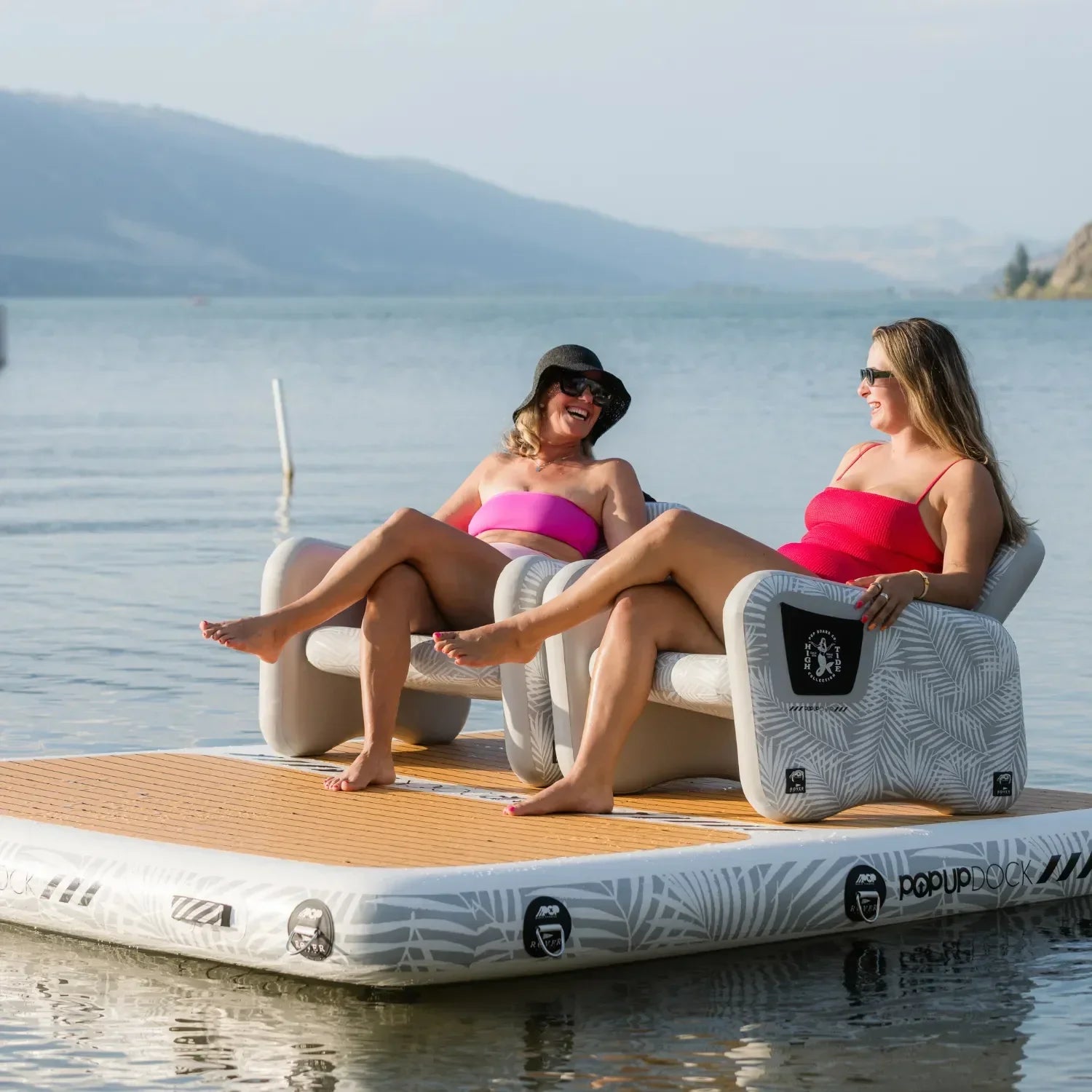
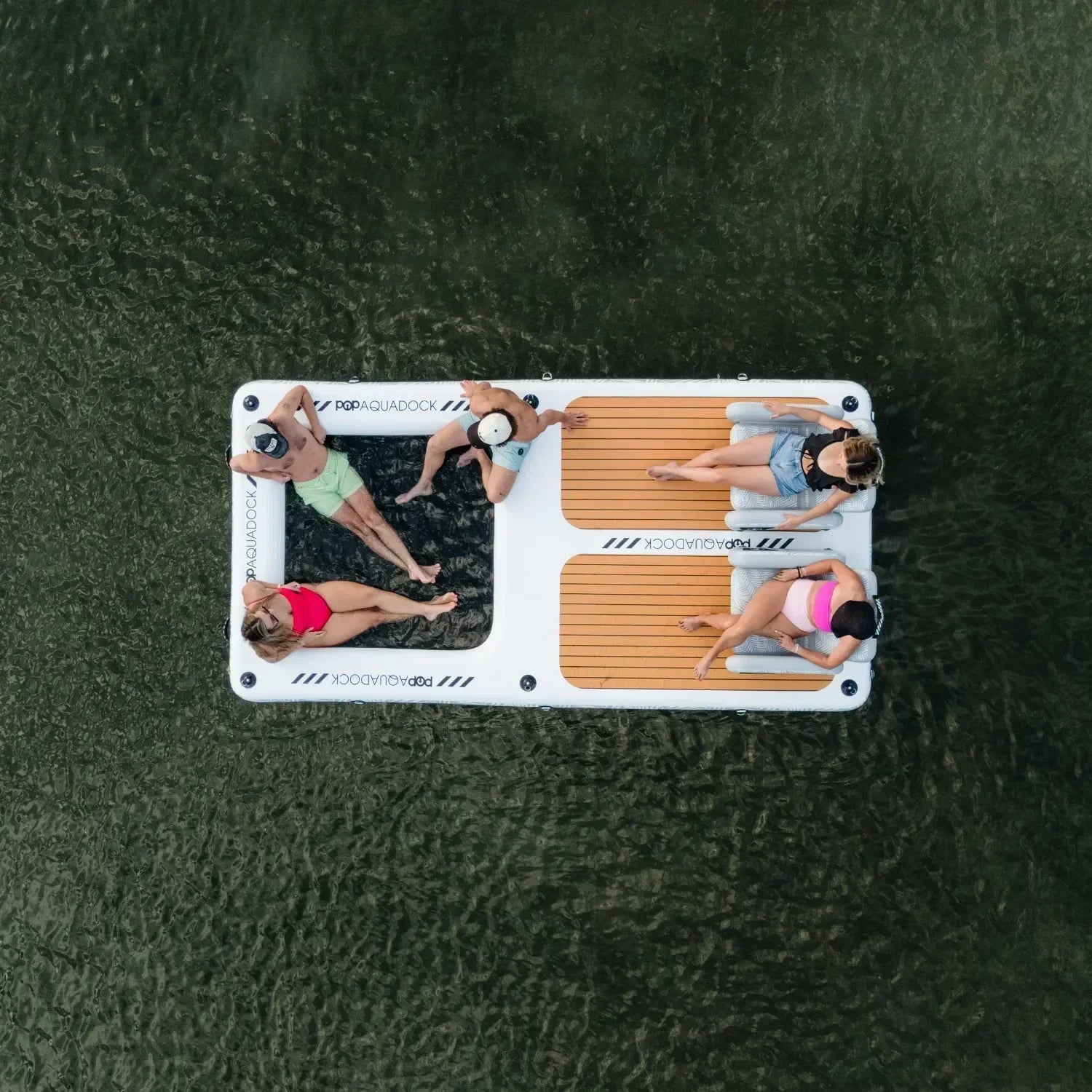
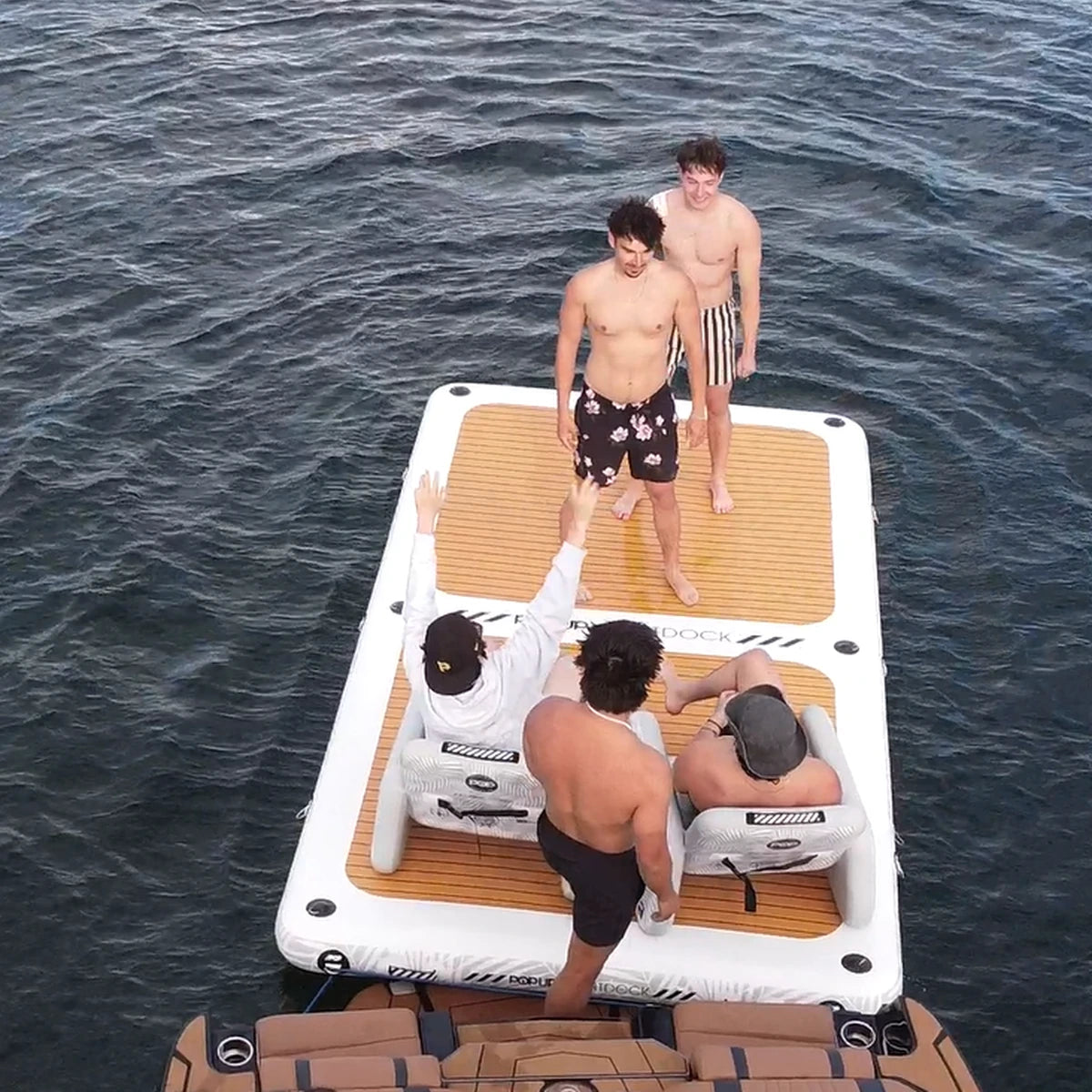
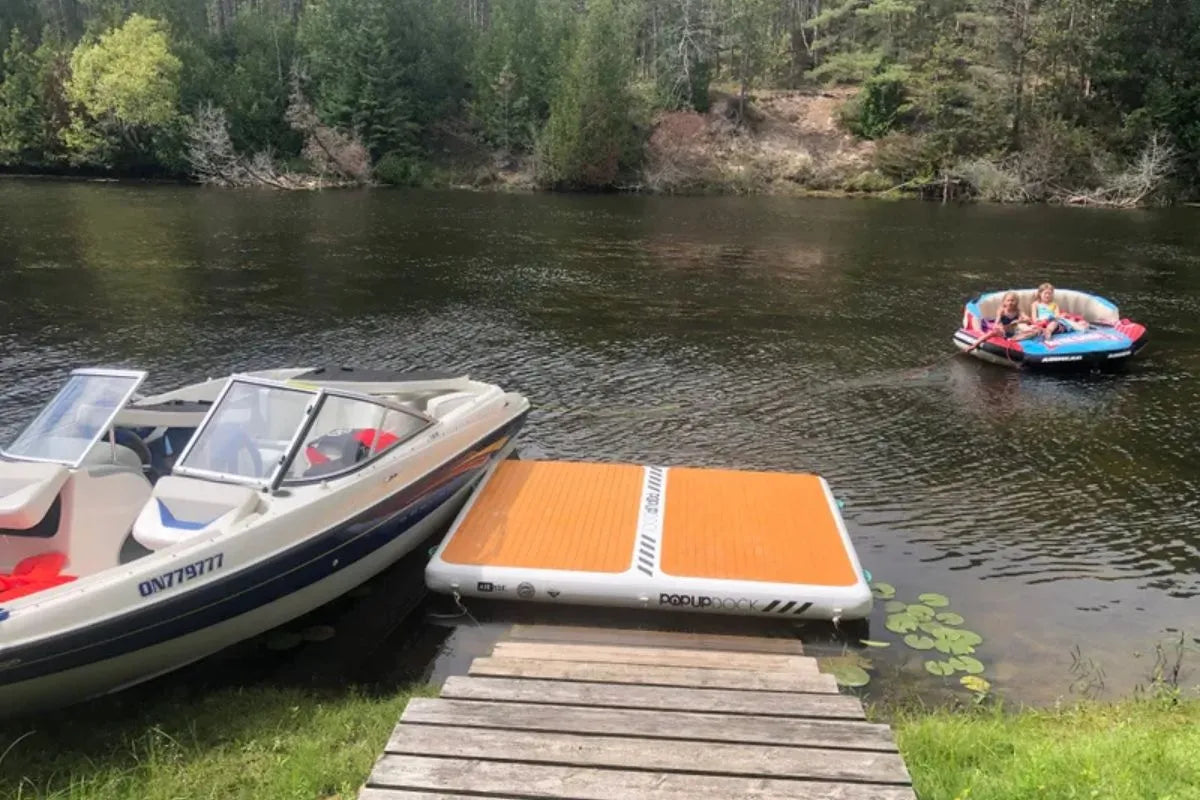
Remove the dock while you still have a calm, dry work window. Rinse it, dry both sides, inspect the valve, seams and D-rings, roll it without hard creases, and store it within the manufacturer’s temperature guidance.
Most of what is written about winterizing docks is written about hard docks. Ice heave, crib damage, pulling sections with a tractor. None of that applies to you.
An inflatable dock has an entirely different set of failure modes, and they all happen in storage rather than in the water. Get the shutdown right and a dock lasts many seasons. Get it wrong and you open a bag in May to mildew, a delaminated seam, or a rodent hole. This is the process.
First, when should you actually take it out?
Not Labour Day. That is a habit, not a rule.
Freezing risk. Water expands as it freezes. Any water trapped inside a valve housing, in a seam channel, or between the drop-stitch layers becomes a wedge. This is the hard deadline, and it arrives at very different times in Kelowna and in Kenora.
Ice formation on the lake. Sheet ice against an inflated dock is abrasive and the edges are surprisingly sharp. Never leave an inflatable in water that could skim over.
Storm season. Fall wind is stronger and less predictable than summer wind. If you are not going to be at the property to check anchoring after a blow, pull it.
Everything before those points is bonus season. A dock in the water through late September in most of southern Canada is fine, and it is some of the nicest use it gets all year.
The seven-step shutdown

Clean it while it is still inflated and floating.
An inflated dock is a taut, flat surface, which makes it far easier to clean than a limp one on grass. Rinse with fresh water. Use a soft brush and mild soap for anything stubborn. Skip solvents, bleach, degreasers, and pressure washers. All four attack PVC and the seam adhesive.
Pay attention to the waterline. That is where algae, weed film and mineral deposits build up, and anything you leave there sits against the material for eight months.
Pull it out and inspect it properly.
This is the one time each year you have a good reason to look at every inch. Check every seam for lifting or bubbling, every D-ring patch for edges that have started to peel, the valve housings for grit or corrosion, and the top surface for deep scuffs or cuts.
Small damage is easy to fix now and expensive to ignore. A repair kit handles minor punctures and lifting patch edges. Anything structural, get in touch before it sits all winter, because a seam issue does not improve in storage.
If your dock is still inside its coverage window, the warranty page is the place to check. POPUP docks carry a three year warranty.
Dry it completely. Both sides. Then dry it again.
This is the step people rush and it is the step that ruins docks.
Lay the dock flat, inflated, in the sun. Let the top dry, then flip it and dry the underside, which will be wetter than you expect. Do not roll anything that is even slightly damp. Trapped moisture plus eight months plus a dark bag equals mildew that stains permanently and, over time, degrades the material.
If the weather will not cooperate, dry it indoors with airflow. A garage with a fan running for a day beats a sunny afternoon that ends with a damp underside.
Deflate slowly and get the water out of the valves.
Open the valve and let it release at its own pace rather than forcing it. Once soft, open the valve fully, tip that corner down, and let any water sitting in the housing drain out. Wipe the valve seat clean and check the spring pin moves freely.
Water left in a valve is the number one freeze failure point on inflatables. It is thirty seconds of work.
Roll from the far end toward the valve.
Rolling toward the open valve pushes residual air out ahead of you and gives you a tighter, cleaner roll without stressing the material. Fold along the same lines each year rather than randomly, and avoid hard creases at the same spot season after season.
Store loose, dry, dark and stable.
Four conditions matter, in this order:
- Storage temperature. Follow the product guidance. Canadian Board Co.’s current warranty excludes damage caused by inappropriate storage below -5°C or above 27°C. Choose a clean, dry, supported location within that range.
- Dry. No concrete floor contact, which wicks moisture. Get it on a shelf or a pallet.
- Dark. UV keeps degrading PVC even through a window.
- Loose. Do not compress it under heavy objects or cinch the bag brutally tight. Sustained pressure on a fold line creates a weak point.
Deal with rodents before they deal with your dock.
Rodents can damage PVC, bags and soft accessories. Use a clean, pest-controlled storage area and inspect it during the winter.
Store in a sealed hard-sided bin if you are in a rodent-prone building, keep the storage area free of food and birdseed, and check on it midwinter. A dock in a tote is a dock that survives.
What to do with the accessories
Anchors and lines. Rinse the salt or lake grit off, dry, coil loose. Wet rope in a bag rots.
Hand and electric pumps. Remove moisture as directed, protect hoses and fittings, and store batteries according to the exact manual. Canadian Board Co. currently lists one year of coverage for electric pumps and electronics.
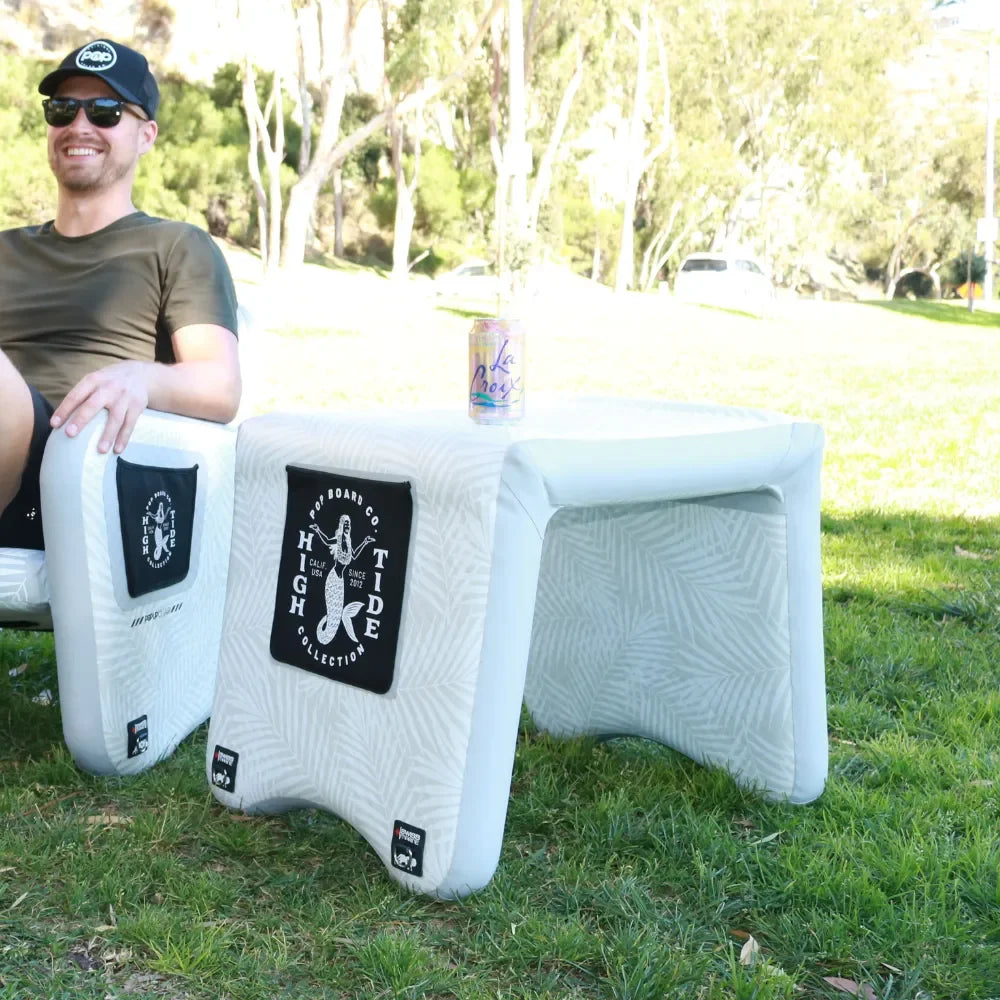
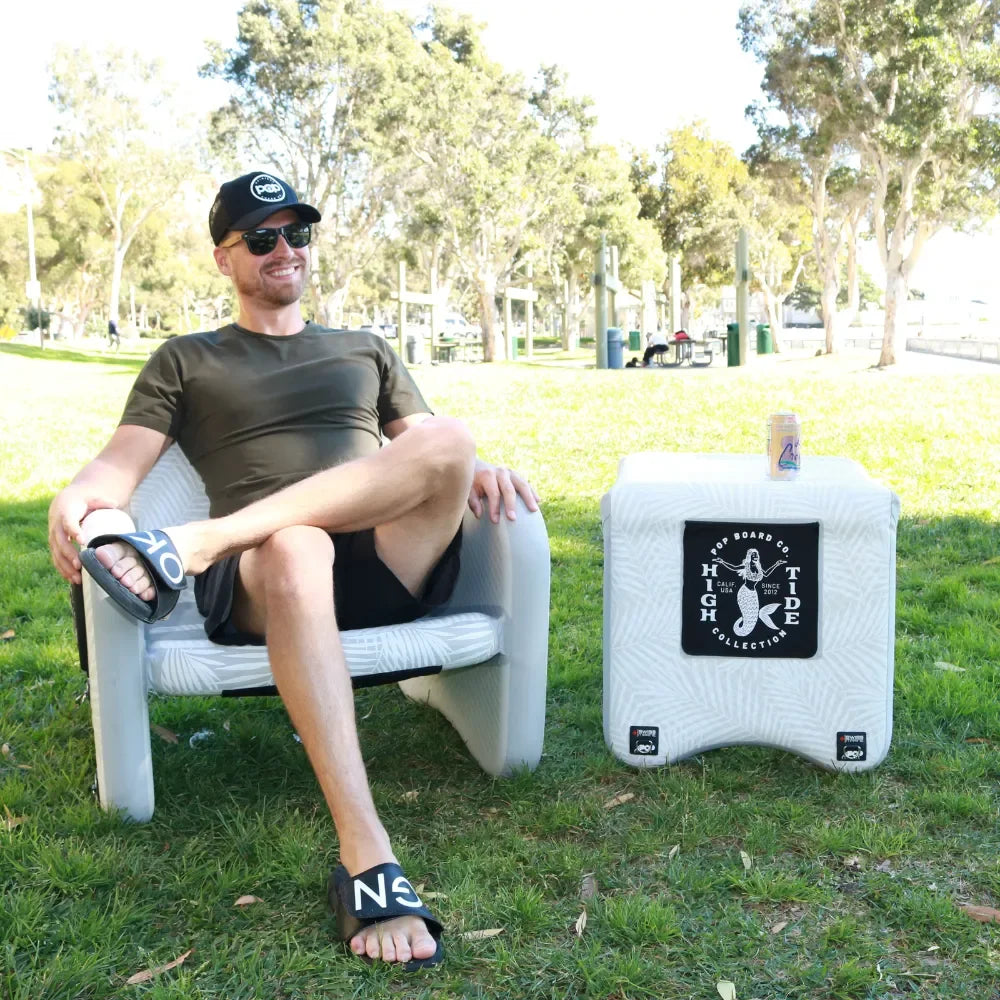
Chairs, planks and add-ons. Same rules as the dock. Clean, dry fully, store loose and indoors.
What about leaving it inflated in storage?
You can, if you have the space, and it is genuinely a good option. A dock stored lightly inflated, indoors, out of sunlight, avoids fold-line stress entirely.
Two conditions: reduce the pressure so temperature swings do not overpressure it, and keep it off a cold concrete floor. If you have a heated garage ceiling and a hoist, this is the gentlest way to overwinter a dock.
Spring, briefly

Come opening, unroll it in a warm space before you inflate. Cold PVC is stiff and less forgiving of being forced flat. Inflate to about half, let it come up to temperature, then take it to full pressure. Inspect the seams and valves again before it goes in the water, and check pressure after the first hot afternoon, because sun on a fully inflated dock raises internal pressure noticeably.
Our cottage opening checklist covers the rest of the spring sequence.
Frequently Asked Questions
Can you leave an inflatable dock in the water over winter?
No. Ice forming against an inflatable dock will abrade and can puncture it, and any water that freezes inside the valve or seams expands and causes damage. Remove it before there is any risk of ice.
Do you store an inflatable dock inflated or deflated?
Either works if the conditions are right. Deflated and loosely rolled saves space and is the standard approach. Lightly inflated, indoors, out of sunlight avoids fold-line stress and is gentler on the material if you have the room.
What temperature is too cold to store an inflatable dock?
Use the product’s actual storage limits. Canadian Board Co.’s current warranty excludes damage caused by inappropriate storage below -5°C or above 27°C, so a consistently cold shed may still be outside the permitted range.
How do I stop mice from chewing my inflatable dock in storage?
Where pests are plausible, use protected storage that does not crush the inflatable. Keep food and seed elsewhere and inspect the area during winter.
How long does an inflatable dock last?
With correct end-of-season care, many seasons. Storage practice matters more than hours of use. Our guide on how long inflatables actually last goes into the detail.
When should I take my dock out of the water in Ontario?
There is no fixed date. Watch for the first hard frost forecasts and any risk of overnight freezing at the shoreline. In much of southern Ontario that is mid to late October, but it varies year to year and lake to lake.
Should I document damage before repair?
Yes. Photograph the area and contact support first when it may be an eligible manufacturer defect.
Related Canadian Board Co. guides and gear
Protect the gear before it disappears for winter
Review product-specific guidance and current warranty terms, or call 1-800-399-5260 when an issue needs a closer look.
Review warranty information

Leave a comment
All comments are moderated before being published.
This site is protected by hCaptcha and the hCaptcha Privacy Policy and Terms of Service apply.