






Use the manual for the exact motor and battery. Clean and inspect the system, store the battery at its specified charge and temperature, and schedule any required checks instead of applying one generic rule to every model.
Everything written about winterizing an outboard assumes gas. Fuel stabiliser, fogging oil, draining the carburettor, changing the lower unit oil. None of it applies to you.
An electric outboard has a completely different set of things that can go wrong over a winter, and almost all of them are about the battery. The motor itself is a sealed unit with very few moving parts and it mostly looks after itself. The battery is the expensive component, it is the one that degrades quietly in storage, and it is the one people leave in an unheated boathouse.
If you are still choosing a motor, our Torqeedo versus ePropulsion buyer's guide covers that decision. This is what to do at the end of the season once you own one.
Start with the manufacturer, because we mean it
Torqeedo and ePropulsion each publish storage guidance for their specific models, and battery chemistry and management systems differ between them and between generations. Where anything below conflicts with your manual, the manual wins.
What follows is the general shape of the job and the parts people skip.
The battery instructions control the winter plan
Lithium-battery storage guidance varies by brand and model. Use the exact manual for storage charge, temperature, inspection interval and charging procedure. Do not assume every battery belongs at half charge, indoors above freezing, or connected to a charger.
For example, the ePropulsion Spirit 1.0 Plus manual calls for storage at about 60% charge in a dry 15°C to 25°C environment, with the charge checked every three months. That is a model-specific example, not a rule for every electric outboard.
- Identify the exact battery and current manual.
- Charge or discharge only to the specified storage level.
- Protect terminals and keep the battery dry.
- Set the inspection reminder required by the manual.
- Use only the approved charger and disconnect it when instructed.

The motor and the leg
Flush it. If you have been in salt or brackish water, flush per your manual before anything else. This matters far more on the coast than on an interior lake, but weed, silt and lake grit are worth rinsing off regardless.
Dry everything, particularly the connectors. Water sitting in a connector over a winter corrodes contacts, and corroded contacts are a fault that presents as an intermittent electrical problem in the spring, which is a miserable thing to diagnose. Dry them, and if your manual recommends a contact protectant, use it.
Check the propeller. Nicks, chips, weed line wrapped around the shaft, and any play in the shaft itself. A damaged prop costs you efficiency and range, and range is the thing you care about most on an electric motor. Easier to sort out in October than in May.
Check the anodes if your model has them. Saltwater use consumes them. Replace before storage, not after.
Store it upright and supported, per the manual. Tilt position matters on some models for drainage.
The parts of the boat everybody forgets
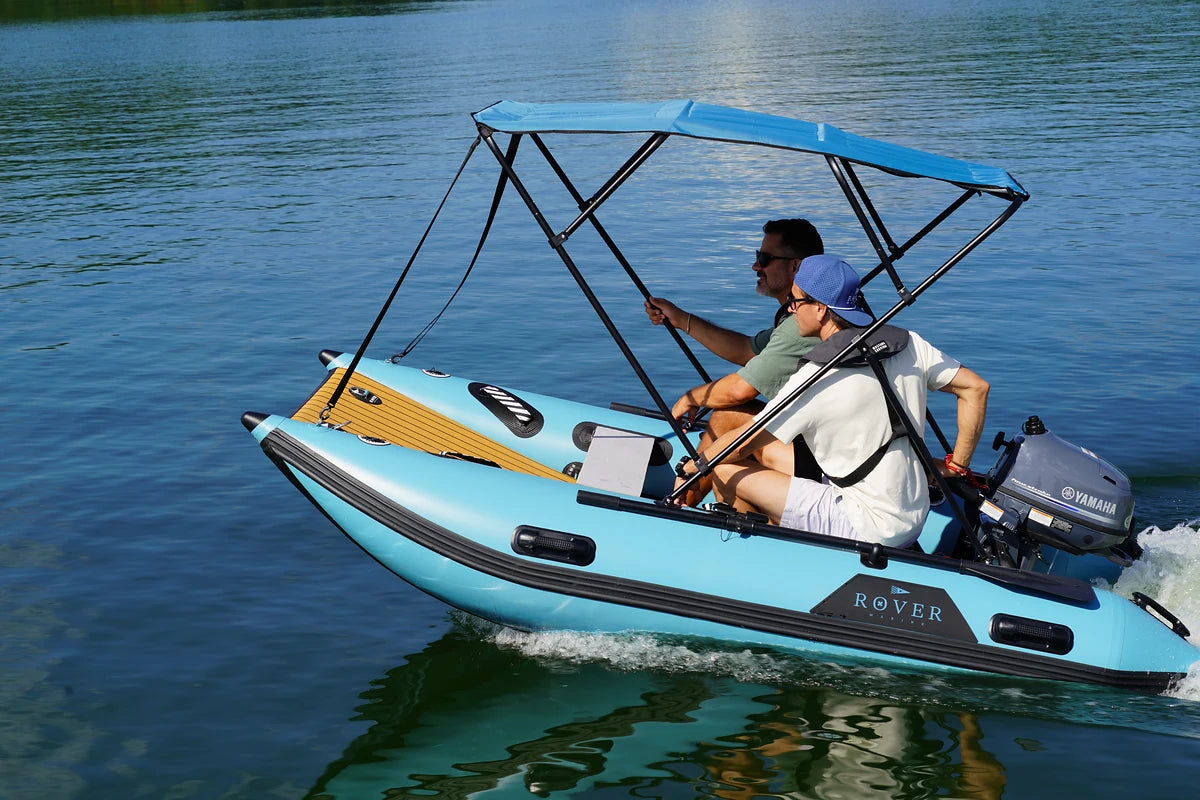
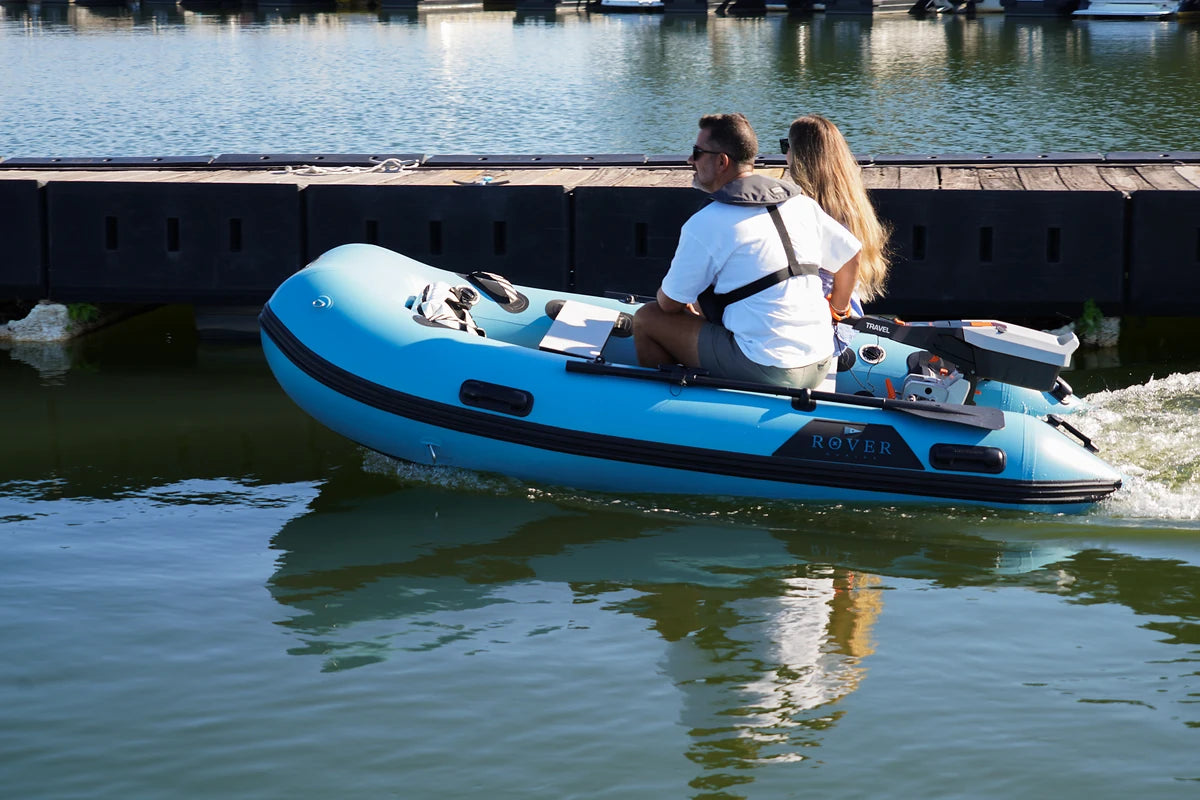
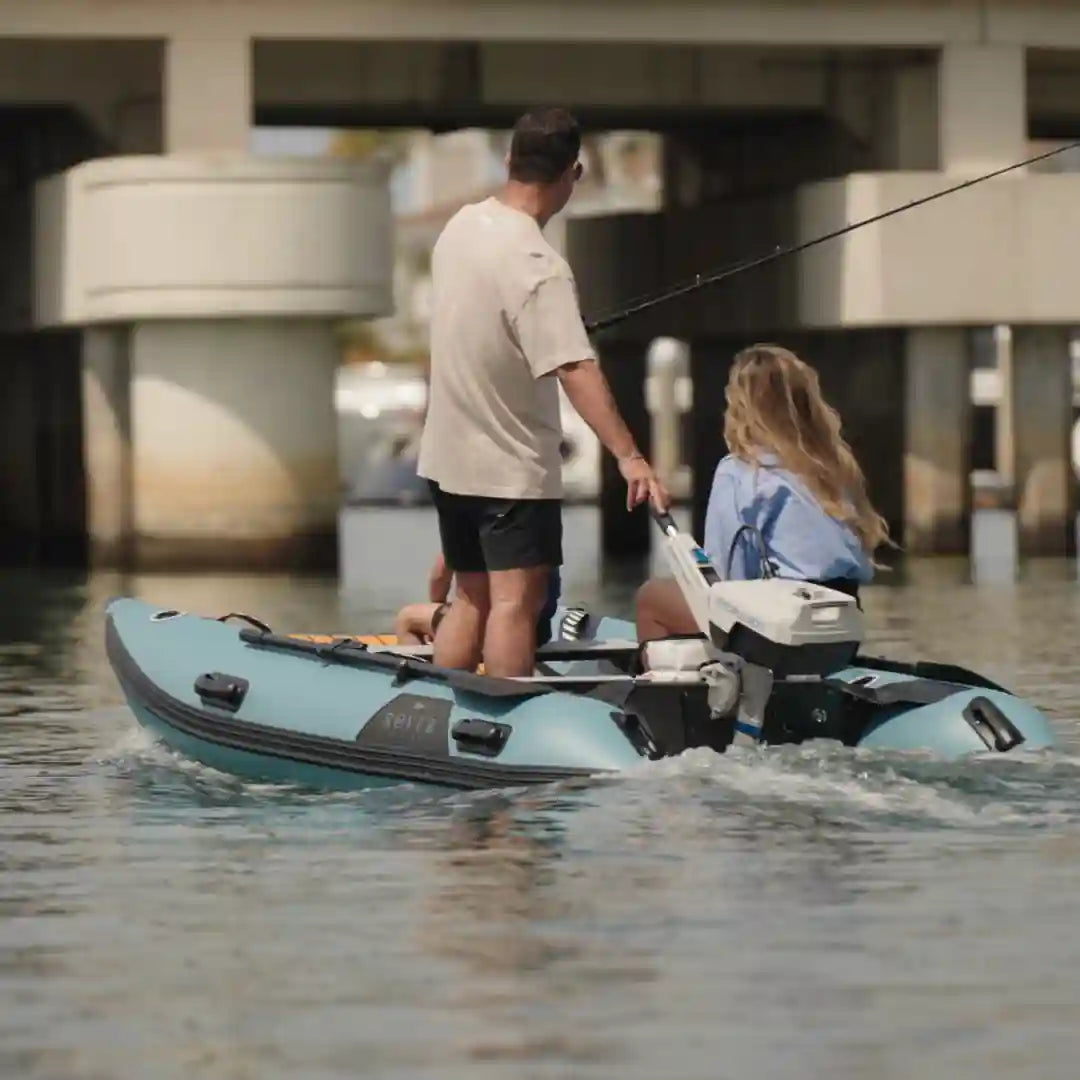
If the outboard hangs off an inflatable boat or tender, the hull needs its own attention. Our inflatable boat storage guide and the inflatable maintenance guide cover it properly, but the short version:
Clean it while it is still inflated. Dry both sides completely. Check the transom mount and its fasteners while the motor is off, because that is the one time of year you can actually see it. Drain the valves. Store loosely rolled or lightly inflated, somewhere temperature-stable, in a sealed container if rodents are a possibility where you are.
Rodents are worth repeating. Mice nest in rolled inflatables and chew wiring looms with equal enthusiasm. A boat and a motor stored in the same cold outbuilding are two targets.
The five minute inspection worth doing now

While everything is out and dry, look at:
- The full length of the wiring loom, for chafe or rodent damage
- The throttle or tiller mechanism, for stiffness or play
- The mounting bracket and clamps, for corrosion or a stripped thread
- The battery terminals and connectors, for corrosion or heat discolouration
- The kill switch or magnetic lanyard, which is a safety item and gets ignored
Anything that needs a part is far easier to source in October than in the second week of May when every marine supplier in the country is backed up.
Why this matters more on electric than on gas
A gas outboard that has been neglected over the winter usually announces itself immediately. It will not start, and you deal with it.
An electric outboard that has been stored badly starts up perfectly and then quietly gives you less range than it used to. You get eighty percent of the runtime you had last year and you assume you were pushing harder, or the wind was worse, or the battery is just getting older. The degradation is invisible until you compare it against what the motor did when it was new.
That is the real argument for doing this properly. You are not preventing a breakdown. You are preventing a slow, unnoticed loss of the thing you paid for.
Spring, briefly
Bring the battery up to full charge indoors before the first outing rather than at the ramp. Reconnect and check every connector for corrosion before you rely on it. Test the motor in shallow water near shore before committing to a long run, because the first outing is when a winter problem shows up and the middle of a lake is a poor place to find out.
Our electric outboard range is here if you are comparing, and the shop takes calls at 1-800-399-5260, Monday to Friday, 8 to 5 Pacific, if you would rather ask a person about your specific model.
Frequently Asked Questions
Do you need to winterize an electric outboard?
Yes, though the job is different from a gas motor. There is no fuel system to deal with, but the battery needs correct storage charge and an indoor, above-freezing location, and connectors need drying and protection.
What charge should I store an electric outboard battery at over winter?
There is no safe universal storage percentage. Use the exact battery manual for charge, temperature and inspection guidance.
Can I leave my electric outboard battery in the boat over winter?
Not if the boat is stored somewhere that goes below freezing, which in Canada is most boathouses, sheds and detached garages. Bring the battery indoors to a stable, above-freezing space.
Can the motor itself be stored in a cold space?
Generally yes, provided it is clean, dry and stored in the position your manual specifies. It is the battery that needs the heated space.
How do I know if my battery was damaged over winter?
The usual sign is reduced range rather than a failure to start. If you are getting noticeably less runtime than the previous season at similar throttle and conditions, that is a capacity loss worth investigating.
Should I check on the battery during winter?
Yes. Batteries self-discharge slowly. Check the charge level around midwinter and bring it back into the storage range if it has drifted down.
Can I leave every battery at half charge?
No. Storage charge varies by system. Follow the manual for the exact battery.
Related Canadian Board Co. guides and gear
Put the motor and battery away by the book
Browse electric outboards and boating accessories, or call 1-800-399-5260 for help finding the right product guidance.
Browse electric outboards


Leave a comment
All comments are moderated before being published.
This site is protected by hCaptcha and the hCaptcha Privacy Policy and Terms of Service apply.