
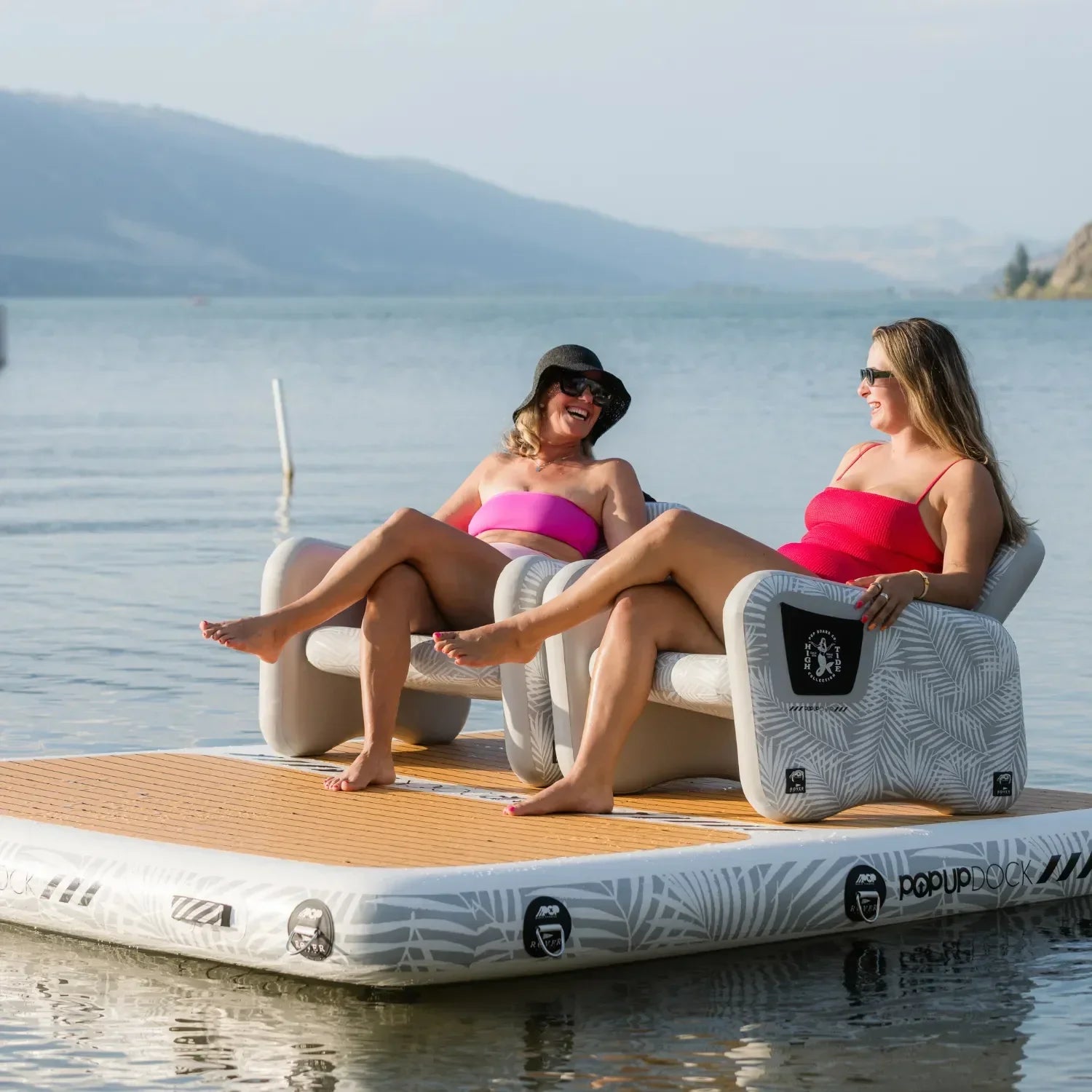




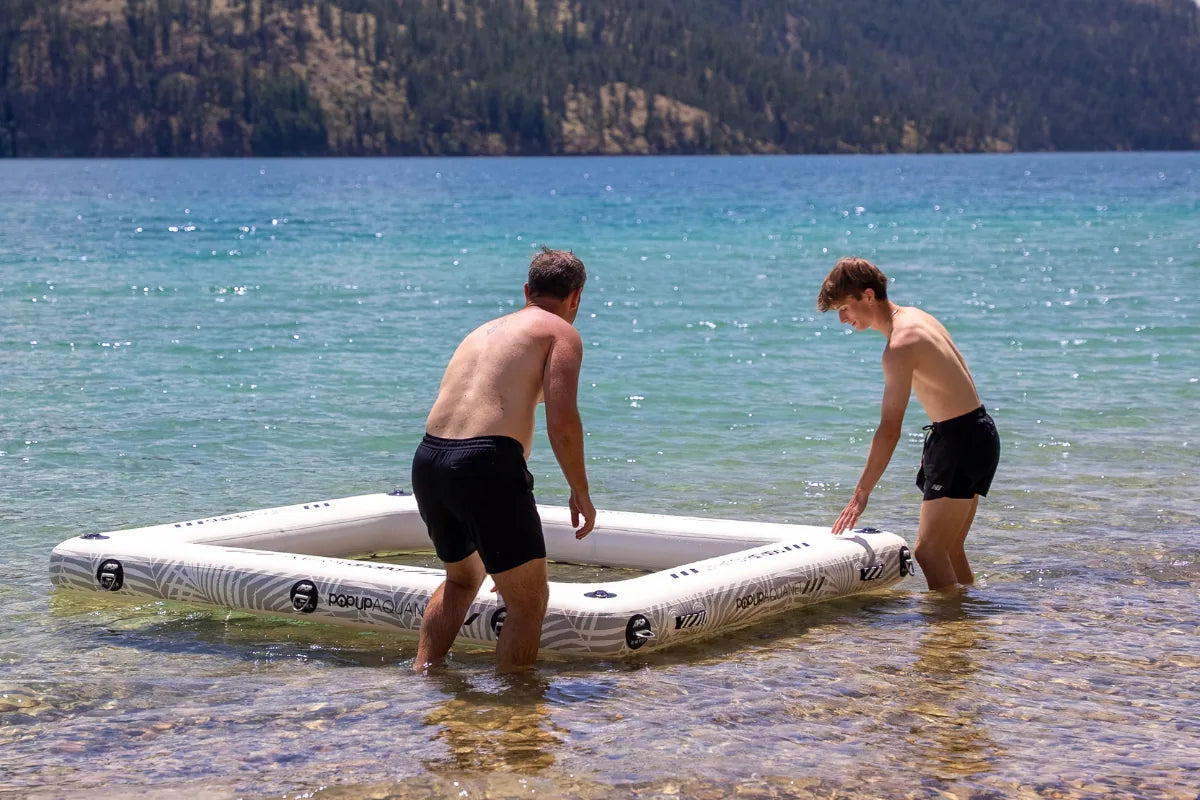
Every October, cottage-country Canada runs the same playbook: boats come out, docks come in, and the lake gets quiet. If you have an inflatable dock floating off your shoreline, October is also the month to bring it in. Leaving an inflatable dock in the water through freeze-up is one of the fastest ways to shorten its life. Ice expands, shifts, and grinds against anything it touches, and PVC drop-stitch construction is tough but not ice-proof.
The good news: pulling an inflatable dock is a straightforward two-person job if you time it right and follow a simple sequence. This guide walks through when to pull it, how to haul it out safely, and how to store it so it is ready to splash again in spring.

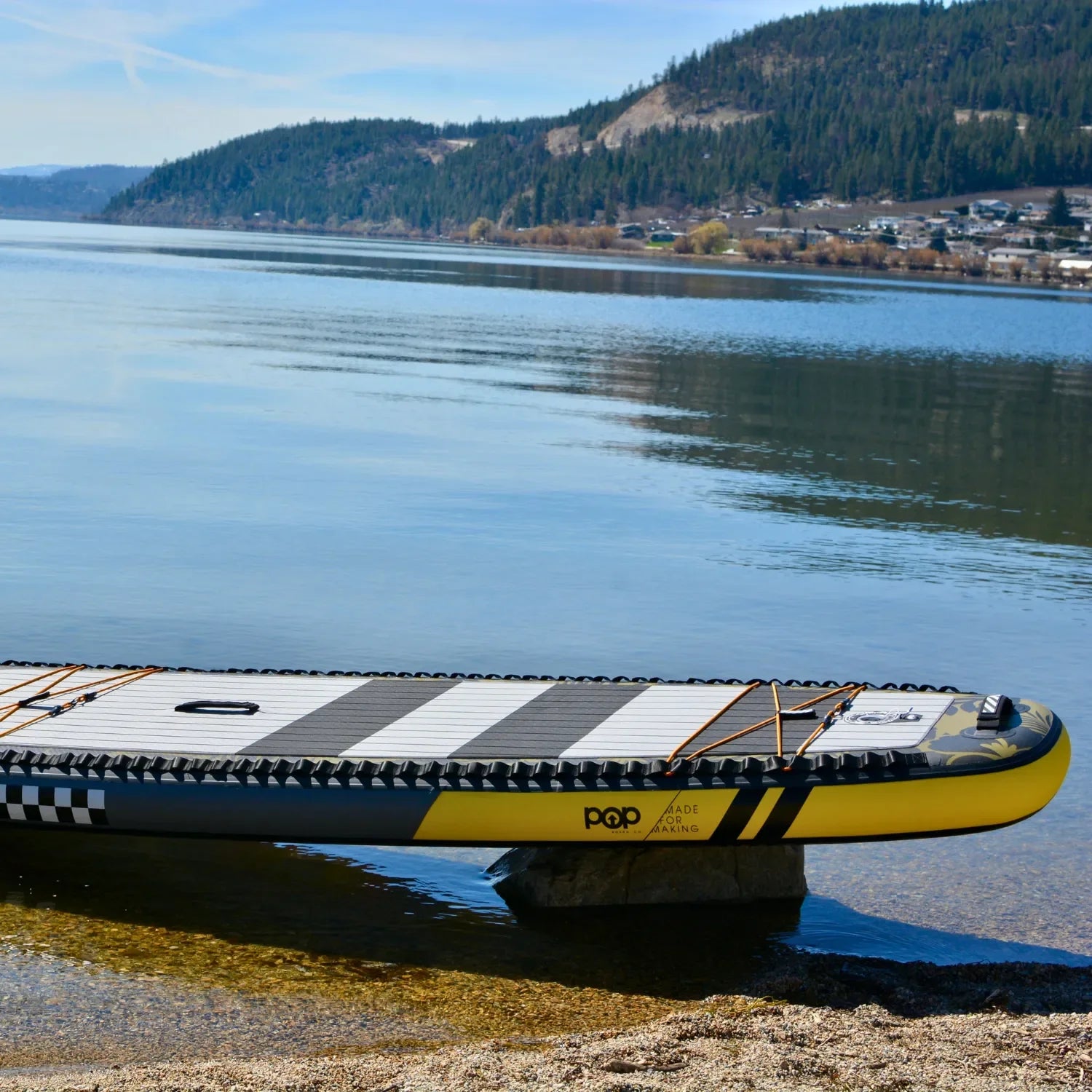
A two-person haul-out is the safest way to bring an inflatable dock in before freeze-up.
When to Pull Your Dock: Beat the Ice, Not the Calendar
There is no single date that works for every lake in Canada. Okanagan Lake near Kelowna rarely freezes solid before late November or December, while smaller lakes in Ontario cottage country can skin over with ice by mid-November. The rule is simple: your dock should be out of the water before the first hard freeze, not after it.
Watch for these signals that haul-out week has arrived:
- Overnight lows are consistently near or below freezing
- Morning frost is lingering on the dock deck instead of melting off
- Water temperature has dropped enough that nobody is swimming anymore
- Other cottage owners on your lake are pulling their boats and fixed docks
Do not wait for visible ice. Even thin shore ice can scrape valves, handles, and D-rings as the dock shifts, and a freeze-thaw cycle around anchor lines puts repeated stress on attachment points. Give yourself a buffer of at least two to three weeks before your lake typically freezes.
The Two-Person Haul-Out: Roles and Setup
An 8-foot inflatable dock is manageable for two adults. A 14-foot AquaDock or YachtDock is a genuine two-person lift, especially when wet. Assign roles before you touch the dock: one person on the shore side pulling hand over hand, one in the water in waders pushing the far edge clear of rocks.

Drain and dry the dock fully on shore before rolling it up for winter.
Draining and Drying: The Step People Rush
A dock that goes into storage even slightly damp can develop mildew, odours, and material breakdown over the winter. After cleaning, open the valves and drain any water inside, then let the dock air-dry completely while still inflated. In October air, a full dry can take several hours, so start early in the day.

Rolled, strapped, and ready for indoor winter storage.
Deflating and Rolling: Loose, Not Tight
Once the dock is bone dry, deflate it and roll it loosely toward the valve so air pushes out ahead of the roll. Store indoors if possible: a garage, shed, or basement works. Keep it off bare concrete, away from sharp tools, and somewhere mice cannot reach it.
If your dock is showing its age, October is when our end-of-season sale runs. Every order over $100 ships free anywhere in Canada. Questions? Call us at 1-800-399-5260.


Leave a comment
All comments are moderated before being published.
This site is protected by hCaptcha and the hCaptcha Privacy Policy and Terms of Service apply.