Call the season when water temperature, wind, daylight, clothing, route and rescue options no longer leave a comfortable margin. The last paddle should be a good decision, not a calendar challenge.
Nobody tells you when the season is over. There is no notice. One day you look at the board in the garage, look at the lake, and have to make a judgement call with nothing to go on but a feeling.
Paddlers can misjudge the shoulder season in either direction: stopping while suitable windows remain, or launching without clothing that matches cold water.
Here is a better way to make the call.
Stop asking about air temperature
The air is not what hurts you. The air is what makes the decision feel safe when it is not, or feel unsafe when it is fine.
Air temperature alone is a poor guide. A comfortable shore can sit beside water that requires far more thermal protection, while cool air can occur over water that is changing more slowly.
Start with the water, then check the sky, wind and daylight.
The three questions worth asking

If I go in right now, dressed exactly like this, what happens?
This is the whole safety framework in one sentence. Not "will I go in", because you cannot know that. If the honest answer involves the phrase "I would be in trouble", you are either changing what you are wearing or you are not going.
Cold water can affect breathing immediately, and useful movement or coordination can decline. Timing varies with the water, clothing, person and circumstances, so do not rely on a fixed countdown. Use suitable thermal protection, flotation and a conservative route.
Can I get back on the board, in these clothes, in this water?
Practise this before you need it, ideally in September rather than discovering the answer in November. A wetsuit changes your buoyancy and your range of motion. Cold hands change your grip. A board you can remount easily in July can be surprisingly difficult in full neoprene with numb fingers.
The board is your rescue platform. It only works if you can get on it.
Who knows where I am, and how long until they notice?
Late-season water may have fewer people nearby. Tell someone the route and return time, and carry reliable communication.
Transport Canada advises stand-up paddleboarders to always wear a lifejacket or PFD. A leash is not an approved replacement for flotation, and applicable safety-equipment requirements must be carried when a SUP is used as a pleasure craft. Review the current Safe Boating Guide for the outing you are planning.
The conditions that should end a specific outing
Separate from the season question, some days are simply no.
Wind above what you can paddle back into. The classic fall mistake is a fast, fun downwind run followed by the realisation that the return leg is not happening. Check the forecast, and if in doubt, paddle out into the wind first so the tired leg is the easy one.
Sunset closer than your plan allows. Daylight in October disappears fast, and it disappears faster than the same clock time in August because the sun drops at a steeper angle. Know your sunset time. Carry a white light.
Alone, cold water, no float plan. Any two of these is a judgement call. All three is not.
Ice anywhere. Skim ice in a sheltered corner means it is over. Ice and inflatable PVC do not mix, and neither do ice and hands.
The conditions that mean you should absolutely still go
Suitable paddling windows can still occur after the busy season.
Cool air over slower-cooling water can create pleasant fall paddling windows. Boat traffic, wind, insects and light vary by location and day, so check the actual conditions.
With suitable clothing, flotation, a leash chosen for the water and a clear check-in plan, the shoulder season can be rewarding. Keep the route inside your experience and rescue options.
Making the last one count
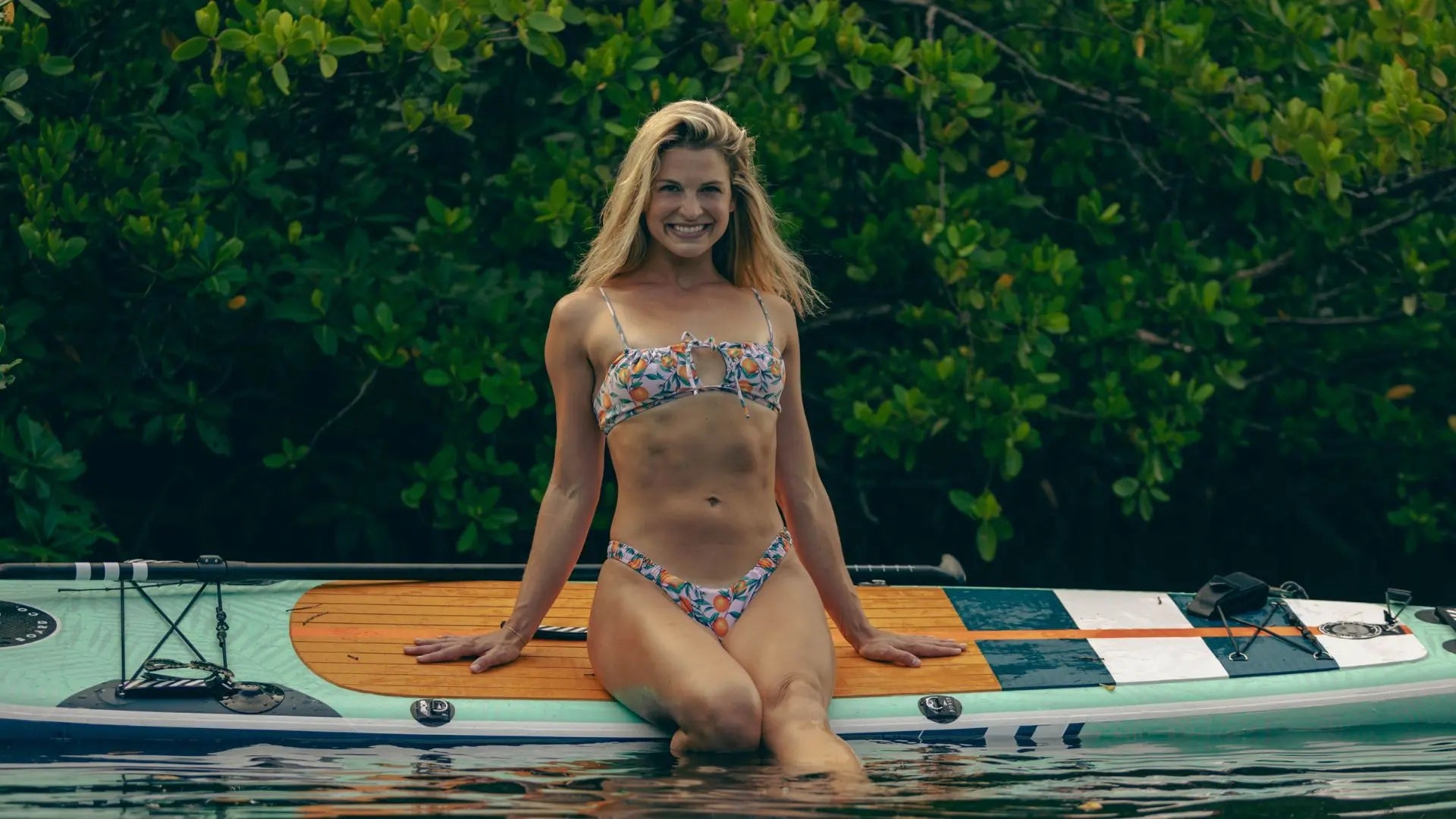
When you do decide it is the last one, make it deliberate rather than accidental.
Pick a good forecast rather than squeezing one in. Go somewhere you like rather than the closest launch. Go with someone. Take the photo, because October water photographs better than anything you shot all summer.
And then deal with the board properly that same day, while you are still thinking about it. Rinse it, dry both sides completely, drain the valve, roll it loose, and get it somewhere temperature-stable in a sealed container. The storage mistakes guide covers what happens if you do not, and none of it is good.
A board that goes away clean and dry in October is a board that is ready on the first warm Saturday in May. A board that goes away damp is a project.
If you are not ready to stop
Some people keep going. Winter paddling is a real thing in the milder parts of the country, and coastal BC in particular has a year-round paddling community.
Winter and very cold-water paddling are distinct disciplines. A drysuit, redundant communication, practiced self-rescue and qualified instruction may be appropriate. Do not treat them as ordinary summer outings with extra layers.
For everyone else, there is no shame in October being the end. It is a long season in a cold country and you used it.
Frequently Asked Questions
When does paddleboarding season end in Canada?
There is no fixed date. Stop when water temperature, weather, clothing, daylight, route or rescue options no longer leave a suitable margin.
How cold is too cold to paddleboard?
The useful test is whether you are dressed to survive falling in the water you are actually on. If you are not, either change what you are wearing or do not go out. Air temperature is a poor guide because water lags well behind it.
Is it safe to paddleboard alone in the fall?
It carries meaningfully more risk than in summer, because fewer people are on the water to notice a problem and colder water shortens your response time. If you do, leave a float plan, carry a charged phone in a waterproof case, and stay closer to shore than you would in July.
What should I do with my paddleboard after the last paddle?
Rinse it, dry it completely on both sides, drain the valve, roll it loosely and store it in a sealed container somewhere with a stable temperature. Doing it the same day is far easier than promising yourself you will do it later.
Can you paddleboard in winter in Canada?
Some trained paddlers continue in very cold conditions with specialized equipment, practiced rescue and redundant communication. Seek qualified instruction before treating that as an extension of recreational summer paddling.
Does a warm afternoon make cold water safe?
No. Comfortable air can hide cold water. Check both and dress for an unexpected swim.
Related Canadian Board Co. guides and gear
Plan the next outing with a wider safety margin
Browse PFDs and water-safety gear, or call 1-800-399-5260 for help choosing equipment for your paddling conditions.
Browse water-safety gear

Leave a comment
All comments are moderated before being published.
This site is protected by hCaptcha and the hCaptcha Privacy Policy and Terms of Service apply.