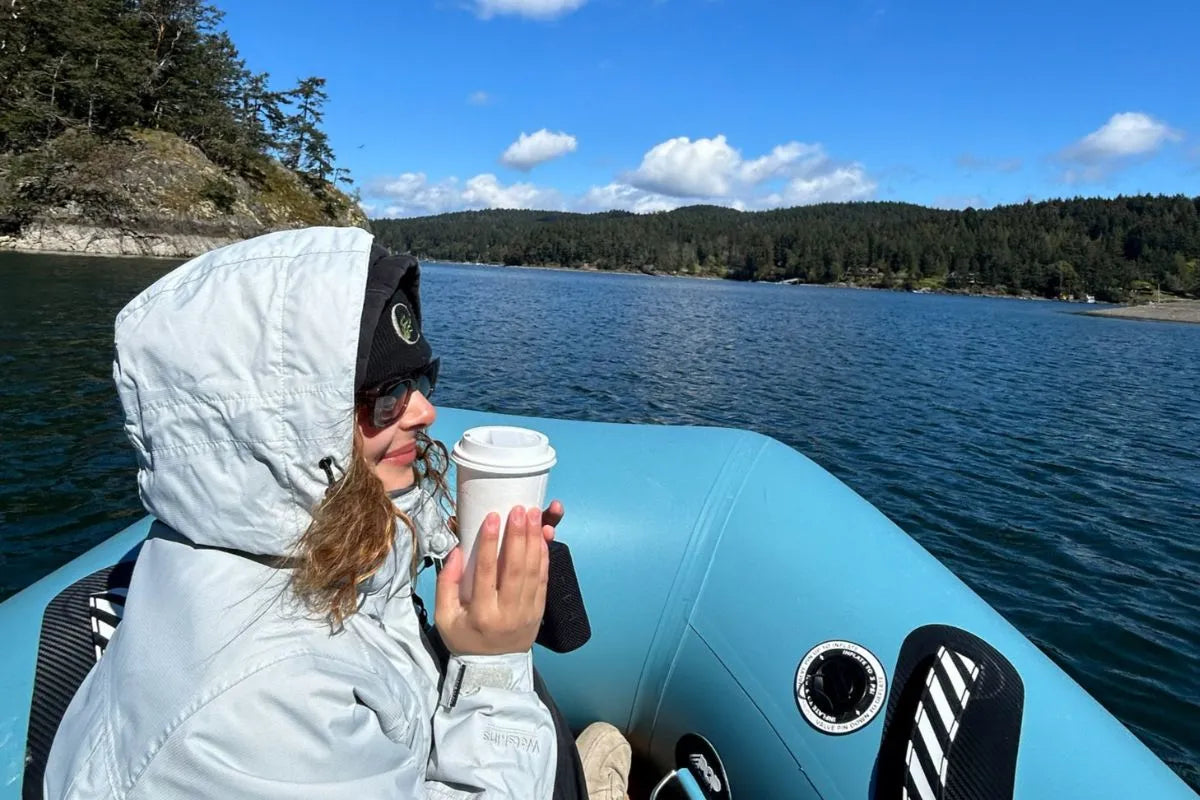
Some weekends, the goal isn't to drive to the cottage. It's to find an unfamiliar lake, set up for the day, and be home by sunset. For Canadian families, the friction in this is logistical: traditional water sports gear means trailers, ramps, vehicles to tow, and the storage logistics of rigid boats. This guide is about the alternative: the one-vehicle, no-trailer setup that turns any drivable Canadian lake into a family lake day.
We're a Canadian-owned, family-run team based in Kelowna, BC, and the "everything in one car" use case has been the fastest-growing segment we serve over the last three years. Younger families, urban families without cottages, families exploring beyond their home lake, the gear we sell most often comes back as "it changed how we use our weekends." Here's the framework.
The constraint: one vehicle, no trailer, no roof rack
The setup this guide solves for is specifically:
- Mid-size SUV, full-size sedan, or wagon, anything with a cargo area that can swallow several packed inflatable bags plus family gear
- No trailer hitch, or trailer hitch reserved for other uses
- No roof rack, or no desire to roof-rack a paddleboard
- Family of 2-4 people on a typical day
- Day trip or 1-2 night stay, not extended cottage stays
- Lakes accessible by car, drivable shoreline, no hike-in required
If any of those constraints don't apply, the calculus changes. With a trailer, you can carry rigid boats and bigger gear. With a roof rack, you can carry hard SUPs. With a hike-in scenario, the gear weight matters more. For the one-vehicle car-camping family, this is the right loadout.
The complete kit, by the numbers
Everything in this kit is built around fitting in the cargo area of a mid-size SUV alongside a cooler, beach bags, and overnight gear for a family of four. The total weight depends on whether you use board-only weights or full kit weights, and whether your lake-day spot requires locally sourced anchoring gear.
14' POPUP AquaDock
The product page lists the dock at 52 lb in the main specifications and about 67 lb in the packed-weight FAQ/feature table. Treat it as a two-person carry and plan for the higher number if vehicle space and lifting are tight.
11'6 El Capitan Bomber
11'6 El Capitan Bomber paddleboard
Current product specs list 25 lb board weight and about 42 lb total kit weight with bag and accessories. This is the stable family and beginner board in the setup.
11' Yacht Hopper
Current product specs list 27 lb board weight and about 42 lb total kit weight with bag and accessories. This is the more agile board for the stronger or more experienced paddler.
POP Up Chair Set
The product page lists the set at 20 lb, with two inflatable lounge chairs and a RipStop carry bag. This is the comfort piece that makes the dock feel like a floating living room.
Rechargeable electric pump
Plan around roughly 8 lb depending on the pump model. Rechargeable pumps save the most time when you are inflating a dock and two boards in one session.
PFDs and safety gear
Two adult PFDs, two kids' PFDs, whistles, a throw line, first-aid kit, and a dry bag. Weight varies by sizing and product choice, but this should be treated as required gear, not optional gear.
Realistic planning weight: about 180-230 lb of water gear before the cooler, food, and overnight bags. The number moves based on whether you use the AquaDock as a standalone item or bundle, which electric pump you choose, and whether your launch spot needs locally sourced anchoring gear.
Anchoring note: Canadian Board Co. does not sell dock anchors, anchor lines, shackles, or anchor systems. If your day-use lake requires anchoring the dock, source the correct anchor setup from a local marina or marine supply shop that understands the bottom type, wind exposure, and rules for that lake.
The packing strategy
Loading the cargo area in the right order saves 10-15 minutes at the lake. Here's the sequence:
- Heaviest gear at the bottom: cooler, AquaDock carry bag, and any locally sourced anchoring gear if you are bringing it.
- Paddleboards and chairs on top of the heavy gear: orient the long bags along the length of the cargo area. The AquaDock bag is usually the longest item, so it goes along the floor or against the side wall first.
- Pump, PFDs, paddles, and accessories in the middle layer: these are the first items you need at the lake, so do not bury them under towels and food.
- Beach bags, towels, and quick-access gear on the very top: sunscreen, bug spray, kids' snacks, dry clothes, and the first-aid kit should be reachable without unpacking the whole vehicle.
For a typical mid-size SUV, RAV4, Highlander, Outback, Pilot, Tahoe, or similar, this leaves the back seats clear for passengers. For sedans and wagons, the trunk fills completely. Back-seat folding lets the boards extend forward if needed.

The setup sequence at the lake
Arriving at an unfamiliar lake, the gear deployment that gets the family on the water fastest is:
- Site selection, 5 minutes. Walk the shoreline. Find a launch spot with clean water entry, sandy bottom or dock, some shade for setup, parking near the water, and a clear view of the water for setup-while-watching-kids dynamics.
- Inflate the dock first, 10-12 minutes. The dock provides a stable platform for further setup. Use the electric pump. Soap-test if you haven't deployed in a few weeks. Attach dock lines if needed.
- Walk the dock to the water, 3-5 minutes. The 14' AquaDock is two-person carry territory. Float it out and position it where the family can use it safely.
- Inflate paddleboards, 8-10 minutes total for two boards with an electric pump. The 11'6 El Capitan Bomber and 11' Yacht Hopper handle different paddler types. The El Capitan is the family/beginner board. The Yacht Hopper is the agile single-paddler board.
- Inflate the chair set, 1 minute. The POP Up Chair Set inflates quickly and provides comfortable seating either on the dock or shoreline.
- Safety brief, 2-3 minutes. PFDs on, whistles attached, water-temperature check, float plan for anyone going farther than the dock. The kids especially need a clear "you can swim to the dock and back, but no farther" rule for the day.
- On the water, zero minutes. The dock is staffed by an adult, the kids are on the dock, and the paddleboards are deployed for whoever wants to use them.
Total setup time: 25-30 minutes from car park to "on the water." Pack-up is about the same.
The lake selection: where to actually go
For Canadian families with this kit, the right lakes for a day trip are:
Provincial park lakes with sandy beach access
Algonquin in Ontario, Mont-Tremblant area lakes in Quebec, some Banff-area lakes in Alberta, Kalamalka and Kelowna-area lakes in BC, and Cape Breton lakes in Nova Scotia can all work depending on season, water temperature, park rules, and launch access.
Smaller lakes off the main cottage routes
Most provinces have hundreds of lakes that don't host major cottage developments. They are often quieter, cleaner, and sometimes have free or low-fee parking. It is worth driving past the famous lake to find the one your family can actually enjoy.
Crown land or public-access lakes with road access
Most of Northern Ontario, Quebec's Laurentians, and BC's interior have Crown land or public-access lakes with road access. Park at the permitted put-in, set up, paddle, and leave it cleaner than you found it.
Lakes with day-use parks
These often have washroom facilities, picnic areas, and designated swim zones. With kids, that matters. A good day-use setup beats a beautiful remote shoreline if everyone is uncomfortable by noon.
Avoid: lakes with heavy motor traffic, lakes with weed or algae problems in mid-summer, lakes with restricted access or no shore parking, and lakes more than 90 minutes from home. The drive eats the day.
The cold-water consideration in May
May day trips have one consistent challenge: the water is still cold across most of Canada. For a family with kids on the water, this means:
- Wetsuits or thermal layers for any extended in-water time. See our cold-water guide at https://www.canadianboardco.com/blogs/water-sports-guide/first-paddle-spring-cold-water-safety-canada-2026.
- PFDs on at all times, especially for kids. May lake immersions can become a 1-10-1 emergency very quickly.
- Time on the dock vs time in the water. The dock is the comfort zone in May. In-water swim time is for the warmer afternoon hours only.
- Towels and dry layers as standard kit. Cold-water exposure on a kid produces a noticeable energy crash. Warm dry clothes and a snack get them back to baseline.
For families wanting to do May day trips without the cold-water consideration, the workaround is to skip the swim part of the day and use the dock as a sun deck. Paddleboards still work fine, just stay close to shore and don't fall in. The day still works.
Why this kit beats the alternatives
For a family deciding between the inflatable kit and other options, here is the real comparison.
Vs traditional rigid kayaks or canoes on a roof rack
- Kayaks often weigh 50-70 lb each, and the shape is awkward.
- Roof racks add cost and reduce fuel economy.
- Kayaks are not kid-friendly platforms compared to a stable inflatable dock plus paddleboards.
- Storage at home is harder. Kayaks live outside or in a garage, not a closet.
Vs hard paddleboards on a roof rack
- Hard SUPs usually require a roof rack.
- Storage requires wall mounts, garage space, or rafter-hanging.
- They are less forgiving if dinged during transport.
- They work beautifully for committed paddlers, but they add friction for casual family lake days.
Vs renting at the lake
- Rental gear is rarely as predictable as your own.
- Costs add up fast, especially with multiple boards or repeat weekends.
- Kids' rental PFDs are often poorly fitted.
- Renting does not build the family lake-day habit because every trip still needs a new transaction.
Vs doing nothing
- This is the "we should get out on the water sometime" family.
- The friction is the reason it doesn't happen.
- Removing the friction, no trailer, no roof rack, no specialized storage, is what makes the weekend actually happen.
- The kit pays back in family use, not just product math.
The honest cost
The complete kit changes price depending on sale pricing, stock, and whether you buy individual pieces or bundles. At current product-page pricing checked for this draft, the core setup is no longer a $3,150-$3,300 kit if bought as individual pieces. The paddleboards and chair set have moved higher than the original draft numbers.
A realistic current planning range looks like this:
Core dock and chair route
The AquaDock and Chair Bundle is the cleanest way to simplify the dock-plus-chair purchase when available.
Smaller dock route
The Dock and Chair Bundle pairs the 8' POPUP Dock with the chair set and is the smaller, lower-footprint entry point.
Paddleboard route
The 11'6 El Capitan Bomber and 11' Yacht Hopper give the family one stable board and one more agile board.
For most Canadian families, this is a multi-year investment that replaces piecemeal seasonal rental costs and unlocks weekends that previously didn't happen. Over five years of regular use, 15-25 day trips per year, the per-trip cost lands in a range that can compete with repeated rentals, while giving you better gear, better fit, and no rental-line logistics.
For families who want to start smaller, the right entry points are:
- Just the dock and chairs: the floating family base. Start with the AquaDock and Chair Bundle or the smaller Dock and Chair Bundle, depending on shoreline and budget.
- Just one paddleboard and chairs: for single-paddler families that want one person on the water and everyone else comfortable at shore.
- Dock plus one paddleboard: the minimum kit that delivers the full experience. A floating base, one board, and enough structure that the whole family has something to do.

The bottom line
The family lake-day setup turns "we should get on the water sometime" into "we go to a different lake every weekend." The gear in this guide fits in one vehicle, deploys in about 30 minutes, and works for any drivable Canadian lake from May through October when conditions are appropriate.
For the full lineup:
Inflatable docks
Paddleboards
Inflatable furniture
Water safety
Pumps
Bundles that simplify the buying decision:
Warranty, shipping, and support
Free shipping Canada-wide on orders over $100.
Eligible boards are backed by the 60-Day Rider's Guarantee. Inflatable paddleboards and inflatable docks are listed with 3-year warranty coverage. Warranty coverage can vary by product type, so check the product page and the general warranty page here: https://www.canadianboardco.com/pages/3-year-warranty.
Call 1-800-399-5260 if you want to talk through your specific family setup. The team will recommend a kit sized to your vehicle, your family, and your typical lake plans.
Frequently asked questions
What's the minimum gear for a family lake day?
A paddleboard, a PFD, and a paddle. For a more complete experience, add an inflatable dock, which turns the shoreline into a family base, an electric pump, which saves setup time, and chairs. The bundle approach through https://www.canadianboardco.com/products/dock-and-chair-bundle is the simplest entry for the smaller dock setup.
Will all this gear actually fit in a mid-size SUV?
Yes, if you pack it in the right order and keep the kit realistic. The core water gear sits in the rough 180-230 lb planning range depending on product choices, pump choice, PFDs, and whether locally sourced anchoring gear is needed. A RAV4, Outback, Highlander, or similar mid-size SUV can handle the setup, but the cargo area will be working. Measure your actual vehicle before buying if space is tight.
How long does setup take at the lake?
About 25-30 minutes from car park to on-the-water with an electric pump. Without an electric pump, especially if hand-pumping the dock and two boards, expect closer to 45-60 minutes. The electric pump is the single most time-saving accessory in the kit.
Can my kids use the inflatable dock safely?
Yes, with PFDs and supervision. Inflatable docks are kid-friendlier than wood docks because the surface is softer, there are no splinters, and there are no nails. The AquaDock has enough room for multiple people including kids. Always require Transport Canada-approved PFDs for any kid using the water around the dock, regardless of swim ability.
What's the right paddleboard for a family with one beginner and one experienced paddler?
The 11'6 El Capitan Bomber for the beginner because it is 36" wide and very stable. The 11' Yacht Hopper for the experienced paddler because it is agile, lighter on the water, and more responsive. Two boards covers a family with mixed skill levels.
Can I use this kit on rivers or moving water?
The full kit is designed for lake use. Inflatable docks are not appropriate for most rivers because anchoring is impractical and currents are unsafe. Paddleboards can work on slow-moving rivers, but they require the same cold-water and safety precautions. For river-specific gear, call 1-800-399-5260 for recommendations.
What should I do if the weather turns?
Pull the dock to shore if wind or storm conditions are building. Deflate gear if storms are forecast. Lightning is the biggest concern on water. Pack up and drive home if needed. The gear inflates again next weekend without issue. The flexibility is the point.
Is the gear good for cottage rentals or just owners?
Both. Many families use this exact kit while renting cottages. The gear travels with them, and they are not dependent on the rental cottage's gear quality. Just pull the dock onto the rental's dock or shore at the end of each day, and make sure the rental owner allows temporary inflatables before setup.

Leave a comment
All comments are moderated before being published.
This site is protected by hCaptcha and the hCaptcha Privacy Policy and Terms of Service apply.