
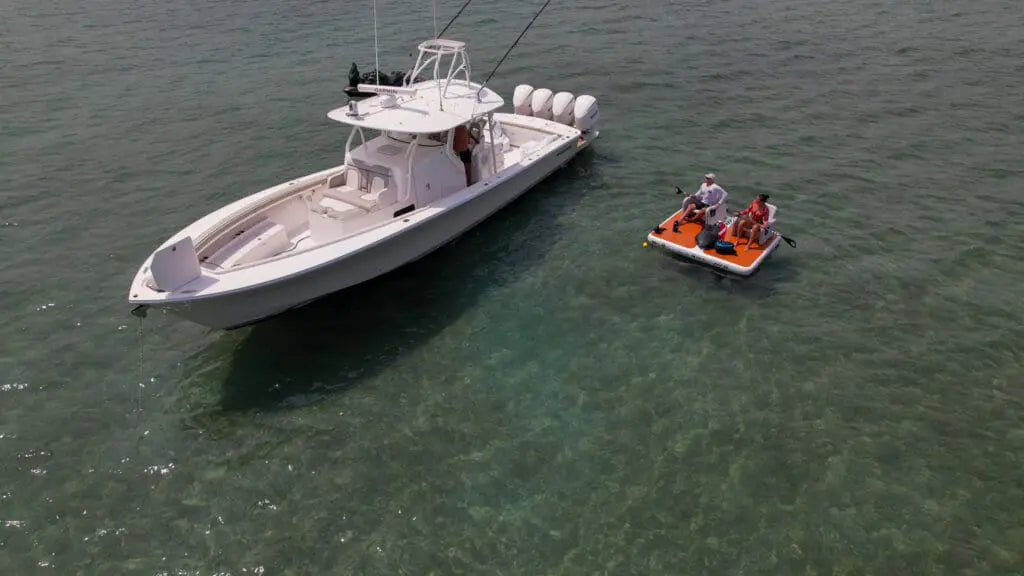
Inflatable docks work best on calm, protected water. They shine on lakes, can work on slow rivers with careful anchoring, and can be used in salt water when you rinse and store them properly. The key is choosing the right water, the right dock, and the right anchor setup.
An inflatable dock is one of the most flexible pieces of summer water gear you can own, but it is not equally at home everywhere. A calm cottage lake is different from a fast river. A protected ocean cove is different from exposed open water. A quiet bay is different from a busy boat channel.
Knowing where to use an inflatable dock helps you get better performance, safer days on the water, and a longer life from your platform.
Canadian Board Co. is a Canadian owned and operated shop based in Kelowna, BC. This guide explains where inflatable docks work best across Canada, where to be cautious, and how to choose between the POPUP AquaDock and the POPUP YachtDock based on your water.

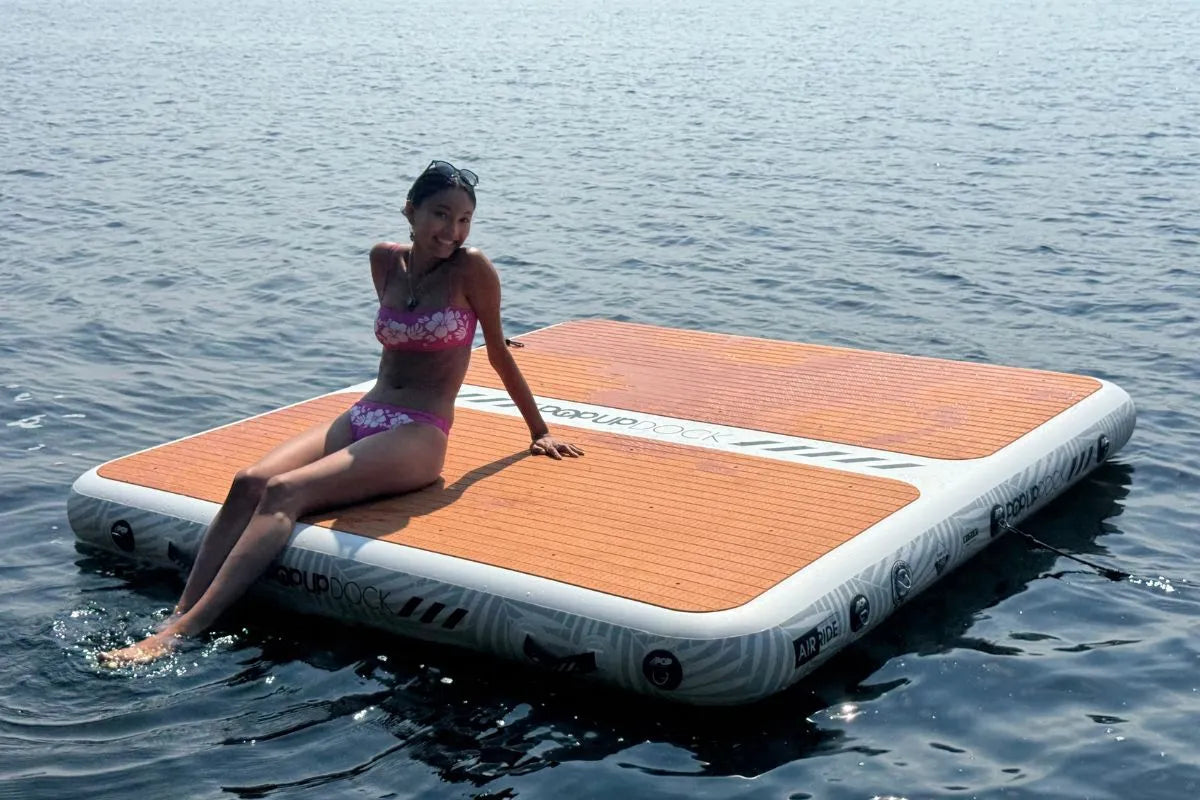
Calm, protected lake water is the natural home for an inflatable dock.
The best water for an inflatable dock
The easiest way to think about inflatable dock placement is this: the calmer and more protected the water is, the better the dock will perform.
Calm lakes and protected bays
This is where inflatable docks work best. Calm lake water gives the platform a stable feel for swimming, lounging, paddleboard launching, and cottage weekends.
Slow rivers and channels
Slow-moving rivers and protected channels can work with proper anchoring. Current adds constant load, so placement and anchor setup matter more.
Sheltered salt water
Salt water is possible when the water is protected and the dock is rinsed after use. Tides, swell, wind, and salt care all need extra attention.
Fast current and exposed open water
Fast rivers, heavy waves, busy channels, rocky edges, and exposed windy water can put too much strain on the dock and anchor setup.
Simple rule: inflatable docks reward calm placement. Choose protected water, anchor carefully, keep clear of boat traffic, and pull the platform in before rough conditions.
Calm lakes: the natural home
If you are asking where to use an inflatable dock, the first answer is a calm lake. This is what most inflatable docks are built for.
On a protected lake or quiet bay, a platform like the AquaDock gives you a floating base for swimming, sunbathing, launching paddleboards, watching kids, relaxing with friends, and extending the usable space around a cottage.
Lake use is ideal when the dock is placed:
- In calm or lightly choppy water
- Away from main boat traffic
- Outside navigation channels
- In water deep enough for safe swimming
- Away from sharp rocks, metal, or rough concrete
- Close enough to shore or a boat that people can access it safely
For most Canadian cottage families, the AquaDock is the best starting point because the centre wet zone makes it a natural swim and lounge platform.

For families, swimmers, dogs, and paddleboarders, calm lake water is where an inflatable dock feels most natural.
Slow rivers and channels: possible with anchoring care
Rivers add one important variable: current. Even slow current puts steady pressure on a floating platform and its anchor lines.
An inflatable dock can work on slow, gentle rivers or protected channels when the setup is chosen carefully. The best river locations are calm eddies, backwaters, protected shoreline areas, or quiet channels where the current is light and predictable.
Be cautious with river setups because current can:
- Pull steadily on anchor lines
- Shift the platform into a different position
- Make boarding and swimming less predictable
- Carry floating debris toward the dock
- Increase stress on D-rings, ropes, and anchor points
Avoid fast-moving water
Do not use an inflatable dock in fast current, rapids, narrow high-flow channels, or places where the platform could be pushed into rocks, boats, bridges, docks, or swimmers. If the current feels strong enough to make anchoring stressful, choose another location.
For slow river use, anchor from multiple points, keep the platform close to shore, and monitor it often. If conditions change, pull the dock in.
Read the anchoring guide here: https://www.canadianboardco.com/blogs/water-sports-guide/anchoring-inflatable-dock-canadian-lake-wind-depth.
Ocean and salt water: yes, with care
Inflatable docks can be used in salt water when the location is protected and the dock is cared for after use. The material can handle coastal days, but salt, tide, swell, wind, barnacles, shells, rocks, and rough landings all deserve respect.
The best saltwater locations are sheltered coves, calm marina areas where allowed, protected beaches, and quiet boat-side swim spots. Exposed coastline, breaking waves, strong swell, sharp rocks, and heavy boat wake are not good places for an inflatable dock.
Saltwater use works best when you:
- Rinse the dock with fresh water after use
- Let it dry before long-term storage
- Keep it away from barnacles, oysters, shells, and sharp rocks
- Account for tide changes when anchoring
- Use it in protected water, not exposed surf
- Pull it in before wind, swell, or rough conditions build
Saltwater habit: rinse the dock, straps, D-rings, anchor lines, and any hardware with fresh water after coastal use. Salt left to dry on gear is hard on almost everything over time.
For coastal use, boat-side lounging, chairs, coolers, dry bags, and heavier loads, the YachtDock is usually the better choice because it has a solid full deck and higher listed capacity.
Where to be cautious
Some places are simply not a good fit. Inflatable docks are strong, but they are still floating platforms. They perform best when conditions are controlled and predictable.
Fast rivers and strong current
Fast current constantly loads the anchor setup and can move the platform where you do not want it to go.
Busy boat channels
A dock should never block traffic, narrow a route, or surprise boaters. Keep clear of navigation areas and heavy wake zones.
Rocky or sharp shorelines
Sharp rocks, shells, metal, rebar, rough concrete, and dock hardware can damage inflatable materials if dragged or rubbed against them.
Open windy water
Wind and wave action make anchoring harder and can make the dock feel less stable, even if the platform itself is properly inflated.
What customers notice in real use
Customer reviews are helpful because they show how inflatable docks perform outside the product specs. CBC dock reviews often mention stability, kids, family use, and how much the platform gets used once it is on the water.
“Rock solid.”
That is the feeling shoppers are looking for when they place an inflatable dock in calm, protected water and use it as a real floating platform.
“Grandkids were constantly playing on it.”
Family lake use is where inflatable docks shine, especially when the platform is anchored near shore in calm water.
“These docks are the best!”
Customers often turn the dock into the centre of summer with chairs, swimmers, dogs, kids, paddleboards, and boat days.
Read more Canadian Board Co. customer reviews here: https://www.canadianboardco.com/pages/reviews.
Matching the dock to the water
The best dock depends on the water and the way you plan to use the platform.
14' POPUP AquaDock
Choose AquaDock for calm lakes, protected bays, cottage shorelines, swimming, kids, cooling off, paddleboard launching, and relaxed family weekends.
- Centre wet zone
- Best family swim platform
- Great for kids and dogs
- Best for calm lake use
- Commonly listed around 2,000 lb capacity
14' POPUP YachtDock
Choose YachtDock if you want a solid full platform for boat-side lounging, chairs, coolers, gear, dry bags, heavier use, and more deck-style surface.
- Solid full deck
- More dry usable surface
- Better for chairs and gear
- Strong boat-side option
- Commonly listed around 3,000 lb capacity
Always check the live product page
Capacity, specs, package contents, and recommendations can change. Always confirm current details on the AquaDock or YachtDock product page before buying.
Anchoring matters everywhere
No matter where you use an inflatable dock, anchoring is what keeps the platform useful. A dock that drifts, swings, pulls into traffic, or rubs against rocks is not set up correctly for the conditions.
Good anchoring depends on:
- Water depth
- Wind direction
- Boat wake
- Current
- Bottom type
- Distance from shore
- Number of people using the dock
- Whether the dock is near a boat, shoreline, or swim area
For lakes, one or two anchors may work depending on depth and wind. For slow rivers or coastal use, multiple anchor points may be needed. If conditions are not predictable, pull the dock in and choose a safer location.
Read the inflatable dock anchoring guide here: https://www.canadianboardco.com/blogs/water-sports-guide/anchoring-inflatable-dock-canadian-lake-wind-depth.
Browse dock hardware here: https://www.canadianboardco.com/collections/hardware.
Best uses by water type
Swimming, lounging, SUP launch
Best overall use case. Choose AquaDock for family swim days and general cottage water use.
Chairs, coolers, family setup
Great when there is minimal wake and good anchoring. Choose YachtDock if you want a solid full platform.
Calm eddy or backwater only
Possible with careful multi-point anchoring and regular monitoring. Avoid faster current.
Sheltered coastal use
Use in protected water, account for tide and swell, rinse after use, and store dry.
The bottom line
An inflatable dock works best where the water is calm, protected, and easy to manage. For most Canadian families, that means lakes, cottages, quiet bays, and swim-friendly shorelines.
Slow rivers can work when the current is gentle and the anchor setup is right. Salt water can work when the location is sheltered and the dock is rinsed after use. Fast current, exposed open water, busy channels, sharp rocks, and heavy wind are the places to avoid.
Choose the AquaDock for calm lake use, family swimming, kids, dogs, and paddleboard launching. Choose the YachtDock for a solid full deck, boat-side lounging, chairs, coolers, gear, and higher listed capacity.
Shop the 14' POPUP AquaDock here: https://www.canadianboardco.com/products/popup-aquadock-14-x-7-x-6.
Shop the 14' POPUP YachtDock here: https://www.canadianboardco.com/products/popup-yatchdock-14-x-7-x-8.
Browse inflatable docks here: https://www.canadianboardco.com/collections/inflatable-docks.
Read the AquaDock vs YachtDock comparison here: https://www.canadianboardco.com/blogs/water-sports-guide/aquadock-vs-yachtdock-comparison.
Read the inflatable dock anchoring guide here: https://www.canadianboardco.com/blogs/water-sports-guide/anchoring-inflatable-dock-canadian-lake-wind-depth.
Read the traveling with an inflatable dock guide here: https://www.canadianboardco.com/blogs/water-sports-guide/traveling-with-an-inflatable-dock.
Browse dock hardware here: https://www.canadianboardco.com/collections/hardware.
Call 1-800-399-5260 if you want help choosing the right inflatable dock for your lake, river, coastal, boat-side, or cottage setup.
FAQ
Where can you use an inflatable dock?
Inflatable docks work best on calm lakes, protected bays, quiet cottage shorelines, sheltered boat-side areas, and slow water where anchoring is safe and predictable.
Can you use an inflatable dock on a lake?
Yes. Calm lake water is the best use case for an inflatable dock. Place it in a protected area away from boat traffic and anchor it for the conditions.
Can you use an inflatable dock in a river?
Yes, but only in slow, gentle water or protected channels with careful anchoring. Avoid fast current, rapids, narrow high-flow areas, and places with floating debris.
Can you use an inflatable dock in salt water?
Yes, in sheltered saltwater locations. Rinse the dock and hardware with fresh water after use, let it dry before storage, and avoid exposed swell, surf, sharp rocks, shells, and barnacles.
What water should I avoid with an inflatable dock?
Avoid fast rivers, rapids, exposed open water, heavy waves, busy boat channels, sharp rocky shorelines, rough concrete, and areas where wind or current could push the dock into hazards.
Which dock is best for calm lake use?
The AquaDock is usually the best choice for calm lake use because it is built as a family swim and lounge platform with a centre wet zone.
Which dock is best for coastal or boat-side use?
The YachtDock is usually the better choice for boat-side use, chairs, coolers, gear, and a solid full platform. For coastal use, choose sheltered water and rinse the dock after saltwater exposure.
Do inflatable docks need anchors?
Yes. An inflatable dock should be anchored or secured based on water depth, wind, current, wake, and shoreline layout. The right anchor setup keeps the platform from drifting or swinging into hazards.

Leave a comment
All comments are moderated before being published.
This site is protected by hCaptcha and the hCaptcha Privacy Policy and Terms of Service apply.