




October is audit month. Before your boards, docks, pumps, and accessories disappear into the garage until spring, give every piece of gear a proper inspection. An hour now catches the small problems that become expensive surprises in May: the slow valve leak, the frayed strap, the pump hose that cracked in August and got forgotten.
This checklist covers everything in a typical Canadian cottage water-gear kit: boards, docks, pump, fins, valves, caps, repair kit, bags, straps, and the things that broke during summer that you meant to deal with. Work through it once, fix or replace what needs attention, and store everything clean and organized.

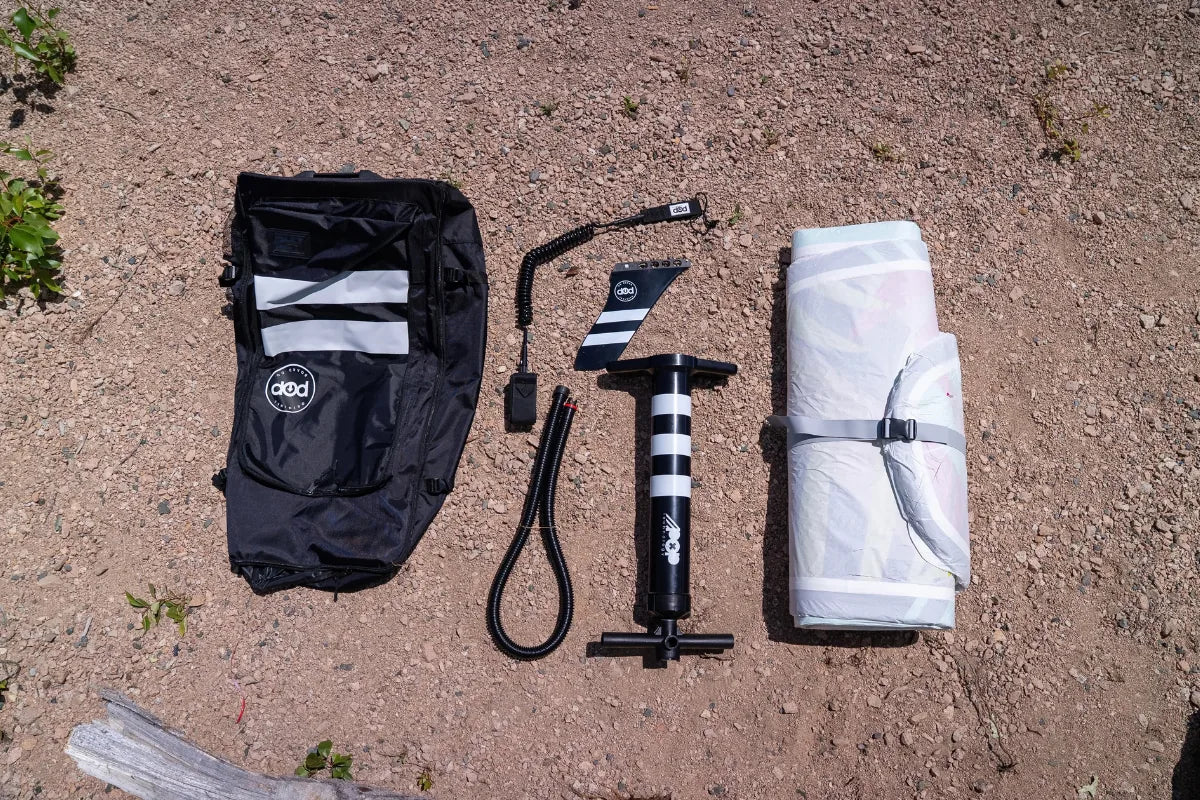
Lay out the full kit: bag, pump, fin, leash, and board all get inspected.
Boards: Hull, Deck Pad, Seams
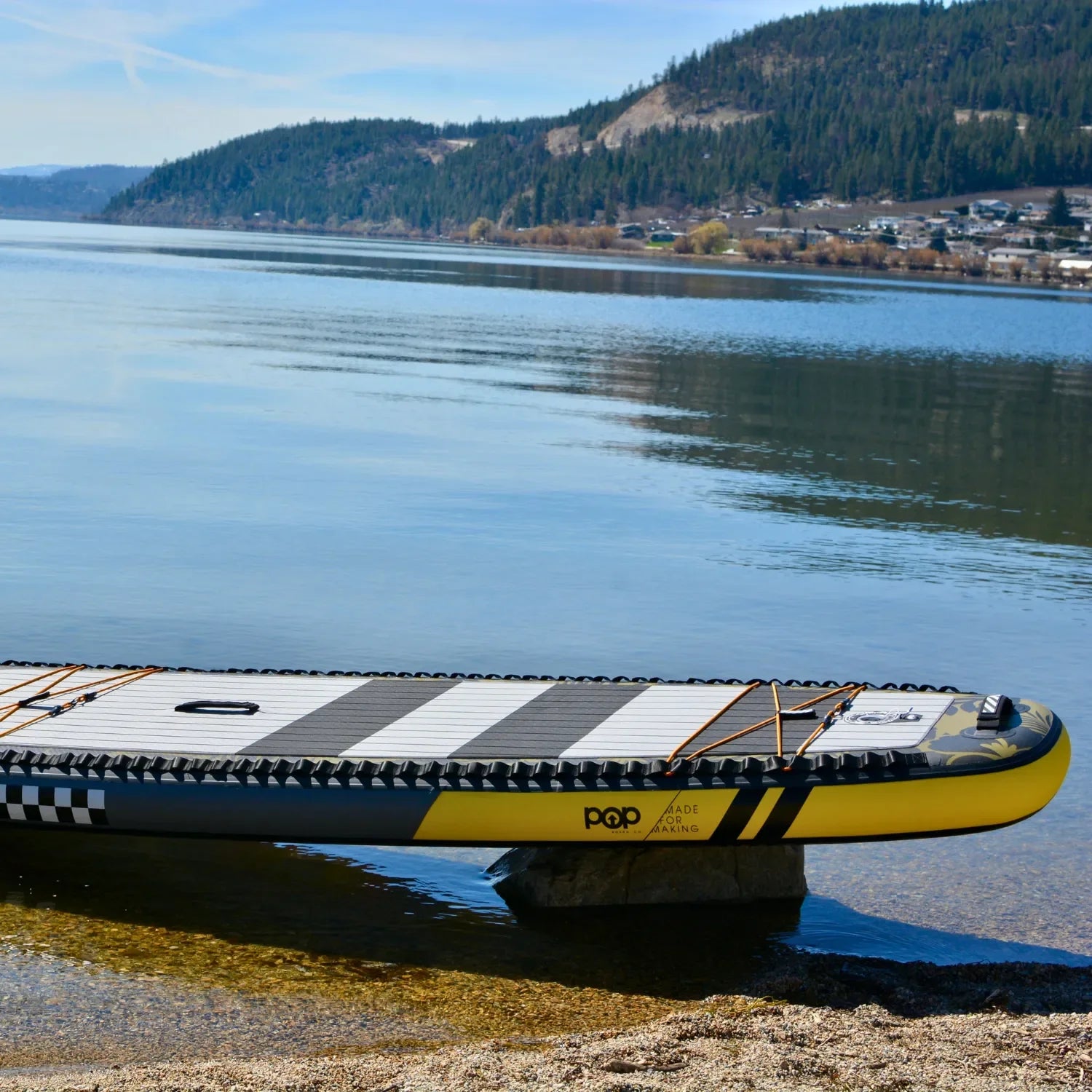
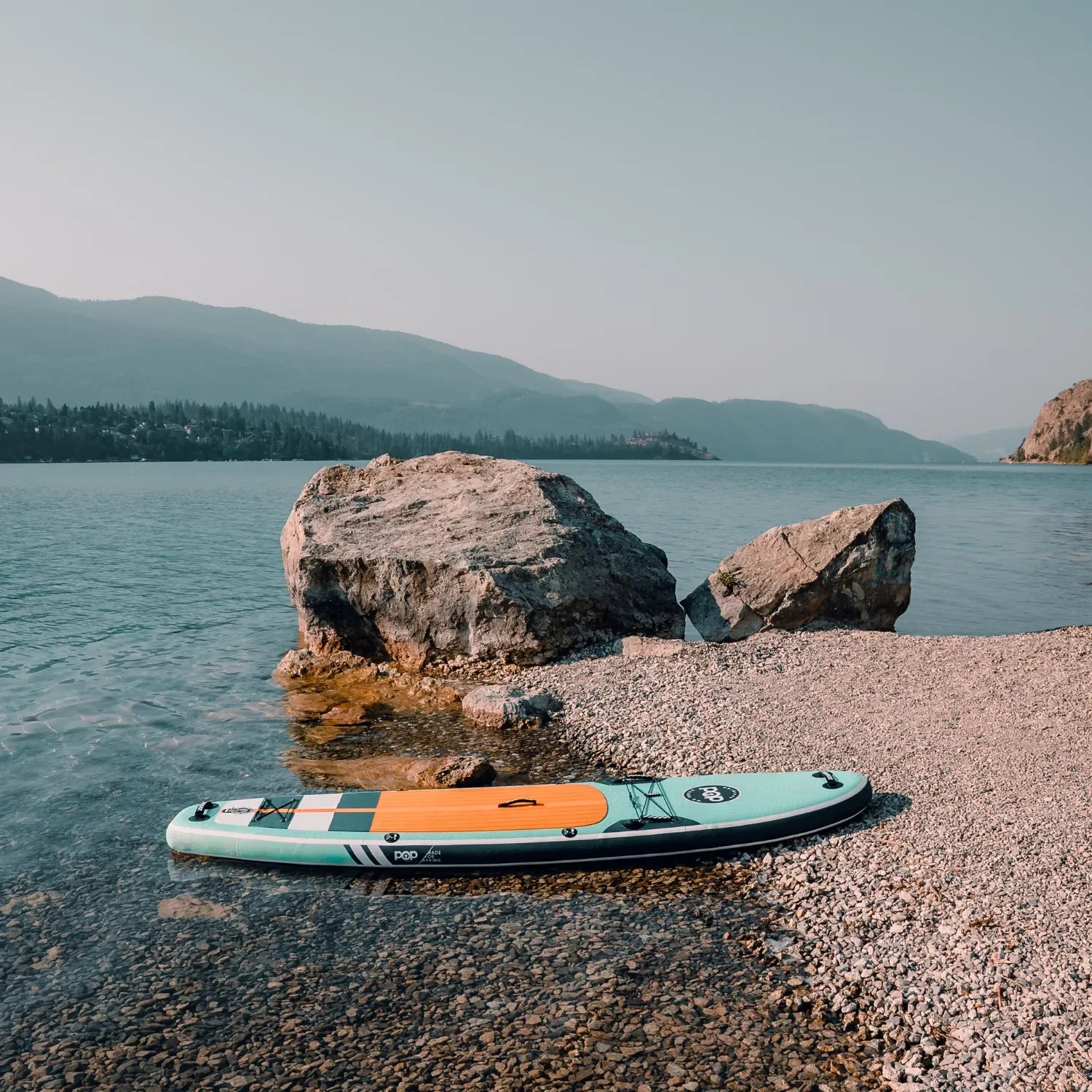
Start with the boards themselves, inspected while still inflated. An inflated board shows problems a deflated one hides.
- Surface and seams. Run your eyes and hands over the full hull. Look for abrasions, cuts, and any seam separation, especially along the rails.
- Deck pad. Check the EVA pad for peeling edges, bubbles, or worn patches.
- D-rings and handles. Tug each one. Loose stitching or cracked plastic gets worse over winter.
- Bottom. Flip the board and check for scrapes. Light scuffing is cosmetic. Deep gouges need a patch.
Small PVC repairs are straightforward with a proper repair kit. If a board is beyond sensible repair, our end-of-season sale is the cheapest time of year to replace it. Boards like the Yacht Hopper, El Capitan, and Ionic All Water are all covered by our 3-year warranty.
Docks: Valves, Handles, Attachment Points
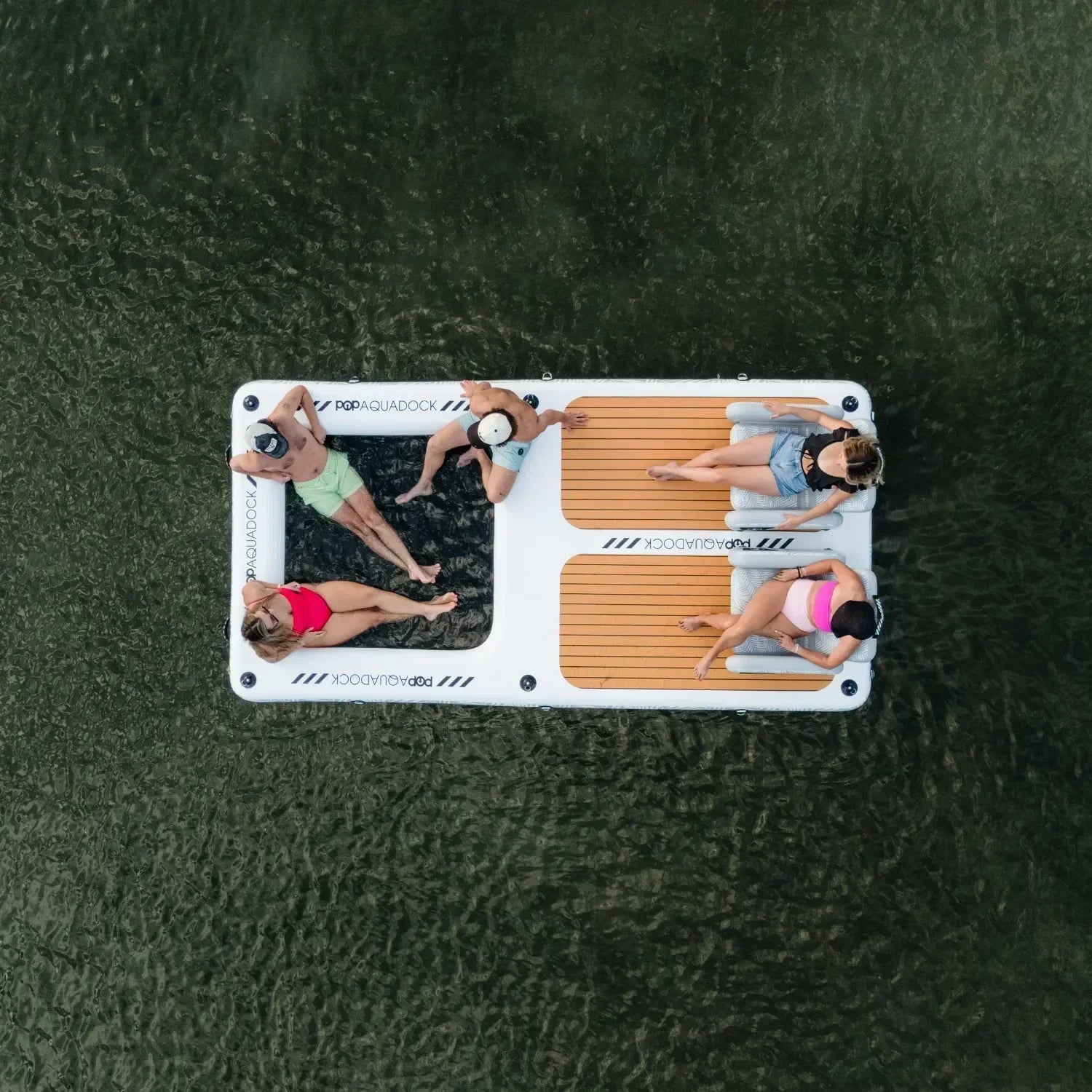
Inflatable docks take more abuse than boards: jump platforms, swim bases, and boat bumpers all summer.
- Valves. Press around each valve base and listen for hissing.
- Handles and D-rings. Check stitching and mounting patches carefully.
- Underside. Flip the dock and check the bottom for abrasion.
For the full removal and storage process, see our guide to getting your inflatable dock out of the water before winter.
Pump: The Most Neglected Item in the Kit
Nobody thinks about the pump until it fails on a hot beach in July. October is when you make sure that does not happen.
- Hose. Flex the full length and look for cracks and splits, especially near the fittings.
- Fittings and adapters. Check that valve adapters still seat properly and O-rings are intact.
- Gauge. Verify it reads zero at rest and moves smoothly.

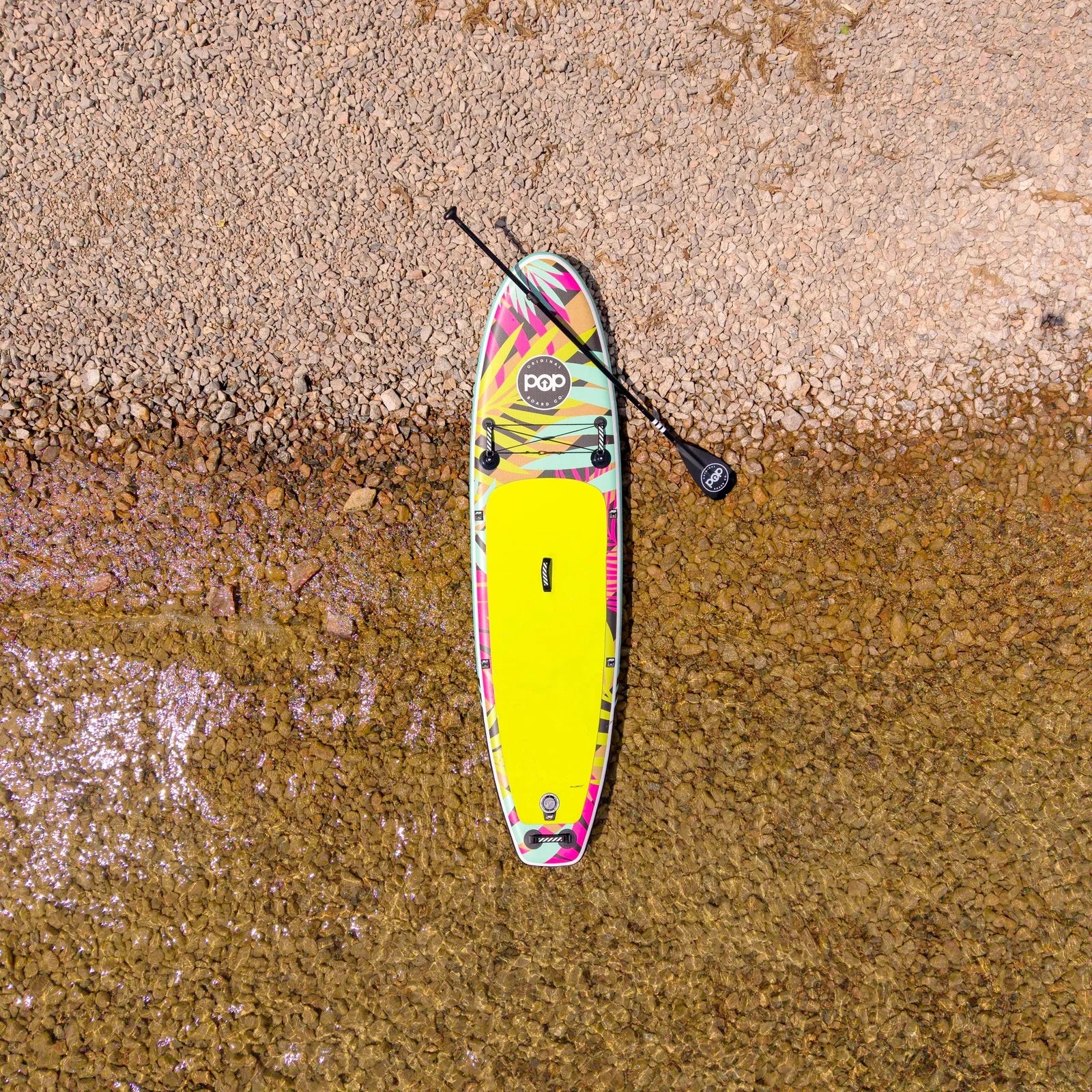
Check the board skin for abrasions and the deck pad for peeling edges.
Fins, Valves, and Caps: The Small Parts That Disappear
- Fins. Remove all fins for storage. Inspect each for cracks and clear fin boxes of sand.
- Valve caps. Count them. Every valve should have its cap screwed on.
- Leashes. Check for nicks and stretched sections. A compromised leash gets replaced, not repaired.
Repair Kit: Restock Before You Forget
Open your repair kit and take inventory. Restock anything you used during the summer. Check that this summer's repairs are still holding.
Bags and Straps: The Carrying System
- Board bags. Empty completely, shake out sand, check zippers and straps.
- Tie-down straps. Inspect webbing for fraying and check buckles for cracks.
Electric Outboard and Battery
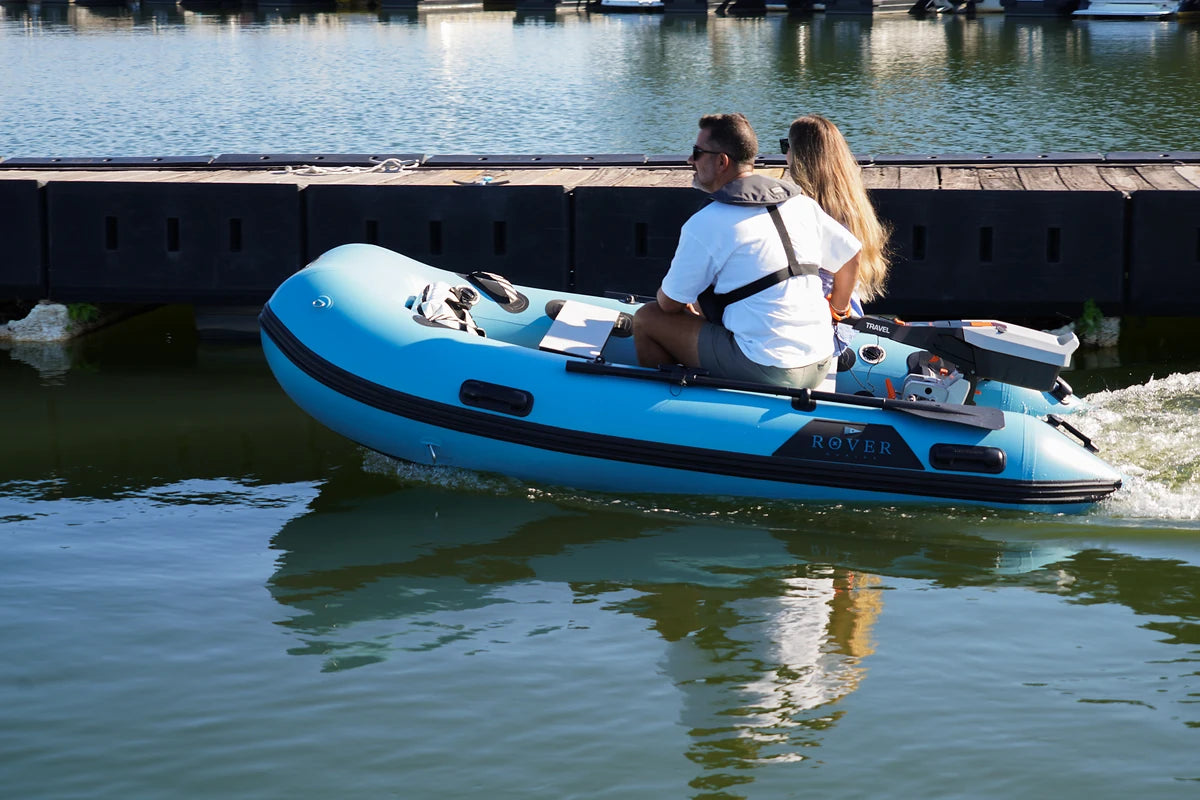
If you run a Torqeedo Travel S or ePropulsion Spirit 1.0 Plus on a Rover Marine Battle Boat, winterize the electrical side too: rinse, dry, inspect the prop, and store the battery per the manufacturer's instructions.

A full-kit layout makes it easy to spot anything that needs replacing before spring.
Safety Gear: Non-Negotiable
- Lifejackets and PFDs. Check for torn fabric, broken buckles, waterlogged foam. See Transport Canada's children's lifejacket guide for fitting kids.
- Sound signalling device. Test the whistle.
- First aid kit. Restock and check expiry dates.
The Canadian Red Cross publishes straightforward water safety guidance worth a re-read every season.
The "Broke During Summer" Pile
October is decision time for each broken item: repair it, replace it during the fall sale, or recycle it. Do not store broken gear "to deal with later."
Store It Right
Clean it, dry it fully, and store it indoors away from heat, moisture, pests, and sharp objects. Our full off-season storage guide covers the details. Mice are attracted to PVC, so choose a pest-free spot.
Questions? Call us at 1-800-399-5260 or use our contact page. Orders over $100 ship free anywhere in Canada.


Leave a comment
All comments are moderated before being published.
This site is protected by hCaptcha and the hCaptcha Privacy Policy and Terms of Service apply.