
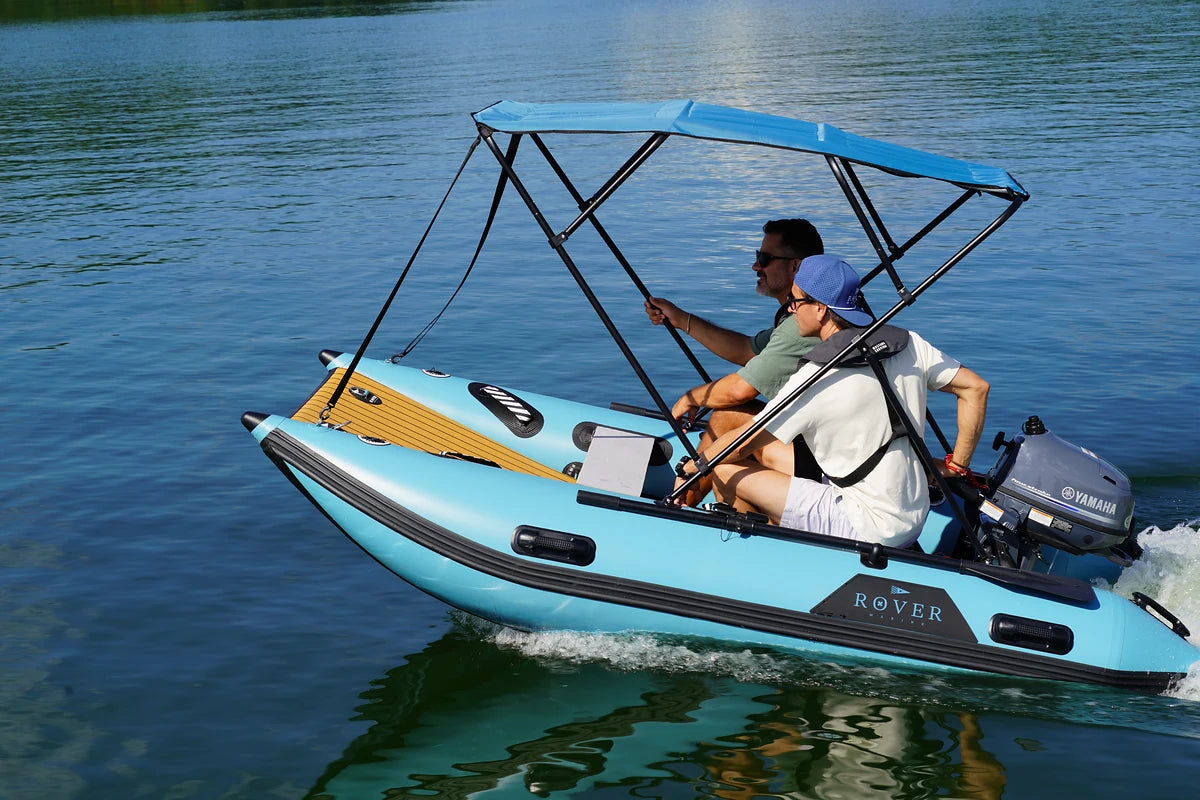
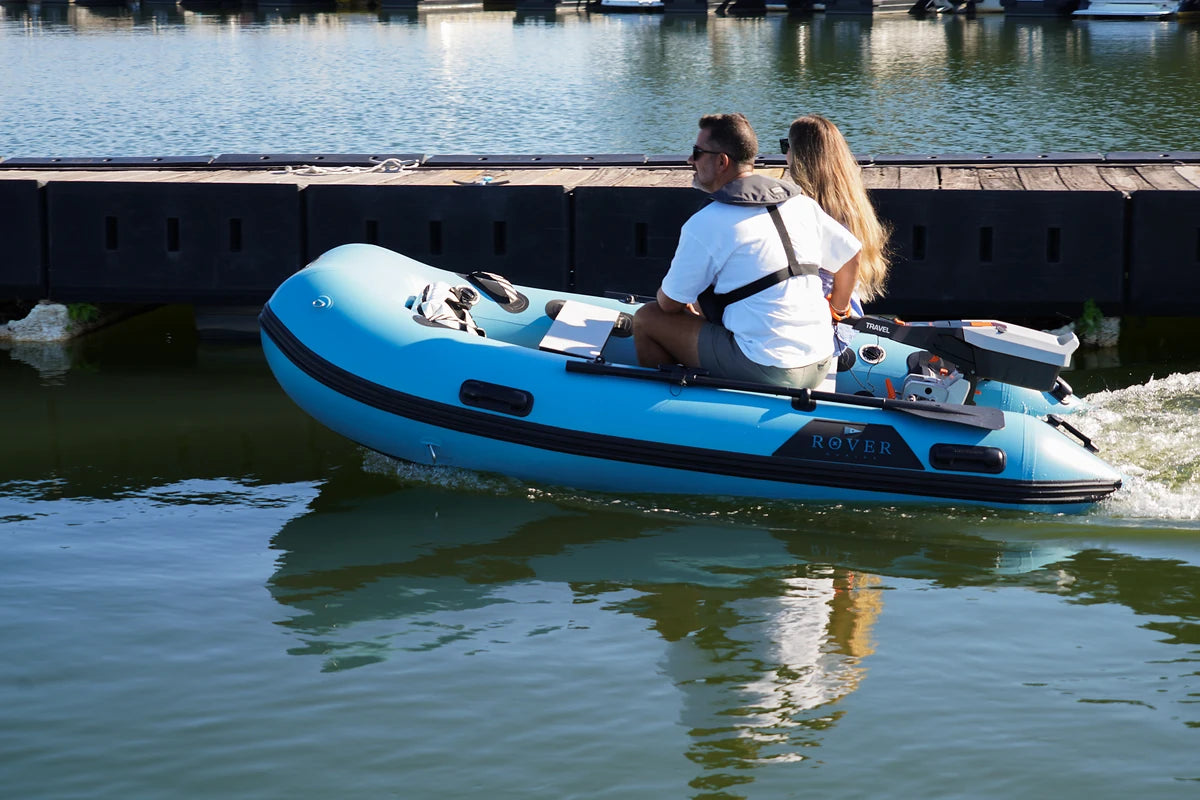

Rinse it with fresh water, dry it completely while inflated and in the shade, fix anything small, then deflate it, roll it loosely and store it somewhere dry, off the floor and away from mice. Bring the motor battery indoors. That hour in the fall is what keeps the boat in good shape for years.
The Battle Cat product page sums up the off-season in one line: “Deflate it in the fall, roll it up, and it waits in the garage until the ice is off.” That is the whole idea. The hour of work in between is what decides whether it comes out in May smelling of lake or smelling of mildew.
Here is the routine we suggest. Always follow the manual that came with your boat and motor where it says something different. For the bigger picture on these boats, see our inflatable catamaran buyer’s guide.
When to do it
Pick a dry, mild day before freeze-up, not the morning after the first hard frost. In the Okanagan that is usually October. Further north and east it can be September. You want the boat fully dry before it goes in the bag, and that is much easier at 12°C in the sun than at 2°C in a dark garage.
The routine, step by step
Rinse it with fresh water
Hose the whole boat down while it is still inflated: tubes, deck pad, under the pontoons and around the valves. Sand and grit trapped in a fold all winter act like sandpaper. Use a mild soap for sunscreen marks and scum lines, and skip harsh solvents.
Dry it completely, inflated, in the shade
This is the step that matters most. Leave it pumped up and let it air-dry out of direct sun, which the product page also recommends between trips. Towel off the seams, valves and every crease, then flip it and do the underside. If you can, give it a full day. Trapped moisture is what turns into mildew by April.
Inspect while it is still up
Look for scuffs, abrasion where it sat on the beach, and any slow leaks. A spray bottle of soapy water on the valves and seams will bubble where air is escaping. Fix small things now with the repair kit that came in the box. If you think you have a defect, our warranty page asks you to report it promptly with photos and proof of purchase, so do it in the fall, not the week before the long weekend.
Deflate and roll it loosely
Open the valves, push the air out, and roll it from the bow toward the valves so the last of the air escapes. Roll, don’t crease. Sharp folds in the same spot all winter are hard on any inflatable. Bag it once it is flat.
Store it dry, off the floor and away from mice
A shelf in an attached garage, a basement storage room or a closet beats an unheated shed with a mouse problem. Keep the bag off bare concrete, keep nothing heavy stacked on it, and if rodents are a risk, put the bagged boat in a sealed tote. Mice chew, and inflatables do not forgive it.
Bring the motor and battery indoors
If you run an electric outboard, the battery is the priority. Storage charge levels and temperatures vary by brand, so follow your manual. Our guide to winterizing an electric outboard walks through it, including the Spirit 1.0 Plus manual’s storage guidance. Gas motor? Follow the manufacturer’s winterizing steps or have it serviced.
Clean and dry the accessories
Wash and fully dry the Bimini canopy before folding it. Take off clamp-on rod holders and cup holders. Pull the coin-cell batteries out of clip-on LED navigation lights. Store the electric pump somewhere dry with its nozzles in the case.


Where to store it: good, okay, avoid
| Spot | Verdict | Why |
|---|---|---|
| Basement storage room or closet | Best | Dry, stable temperature, no mice if the house is sealed |
| Attached garage shelf | Good | Fine if it is dry and the boat is off the floor in a sealed tote |
| Cottage closet (house closed for winter) | Okay | Only if it is dry and rodent-proof; check it at spring opening |
| Unheated shed or boathouse | Avoid | Damp, mice, and big temperature swings |
| Outside under a tarp | Avoid | Moisture, sun exposure in shoulder seasons, and animals |
| Next to a furnace, or a hot attic | Avoid | Too much heat in one spot |
Should you leave it inflated?
For a Battle Cat, no. The product page says deflate it in the fall and roll it up, and that keeps it compact and out of harm’s way. If you have a heated space and you will use it on a mild winter day, call us first and we will talk it through.

The spring check
Before you drive to the lake, pump the boat up at home and leave it for a few hours. Check every chamber holds pressure, the valves seal, and the floor is firm. Mount the motor and make sure the clamps and kill switch are in good shape. Our setup guide covers the full sequence.
Then think about the water, not the air. On a 20°C day in May, lakes like Okanagan and Shuswap are still cold. Dress for the water temperature, not the air temperature, and wear your PFD. Transport Canada’s Safe Boating Guide recommends a PFD with thermal protection for water below 15°C, and notes that inflatable PFDs are less buoyant and slower to inflate near freezing, so a non-inflatable PFD with thermal protection is worth considering in spring and fall.
- Rinse with fresh water, inflated
- Dry completely in the shade, seams and valves too
- Soapy-water check on valves and seams
- Patch now, report any defect now
- Deflate, roll loosely, no sharp creases
- Bag it, sealed tote if mice are around
- Store dry, off the floor, nothing stacked on top
- Motor and battery indoors, per the manual
- Bimini dry, clamp-ons off, light batteries out
- Pump and nozzles together, somewhere dry
“Great service. Easy delivery. Helpful information”Shauna Gifford, Trustpilot review
Questions about your boat in particular? Call the shop at 1-800-399-5260, Monday to Friday. And if you are already thinking about next summer’s add-ons, our accessories guide is a good winter read.

Frequently Asked Questions
Can I store an inflatable boat in the cold?
Yes, as long as it is clean, completely dry and stored somewhere free of damp and rodents. The Battle Cat product page suggests deflating it in the fall, rolling it up and keeping it in the garage until the ice is off.
Should I leave my inflatable catamaran inflated all winter?
No. Deflate it, roll it loosely without sharp creases, and bag it. That keeps it compact and protected.
Can I store it outside under a tarp?
We would not. Tarps trap moisture, and outdoor storage exposes the boat to sun, animals and big temperature swings. A dry indoor space is far better.
How do I keep mice away from my inflatable boat?
Store it clean, with no food residue, inside a sealed tote and off the floor. Avoid sheds and boathouses that already have a mouse problem.
What do I do with the electric outboard battery?
Bring it indoors and follow the storage charge and temperature in your motor manual, since they vary by brand. Our electric outboard winterizing guide covers the details.
What should I check in spring?
Inflate the boat at home a few hours before your first trip, check that every chamber holds pressure and the valves seal, then check the motor clamps and kill switch.
Related Canadian Board Co. guides and gear
Get set for next season
Pumps, Bimini, ladders and clamp-on accessories for your Battle Cat.
Shop boating accessories


Leave a comment
All comments are moderated before being published.
This site is protected by hCaptcha and the hCaptcha Privacy Policy and Terms of Service apply.