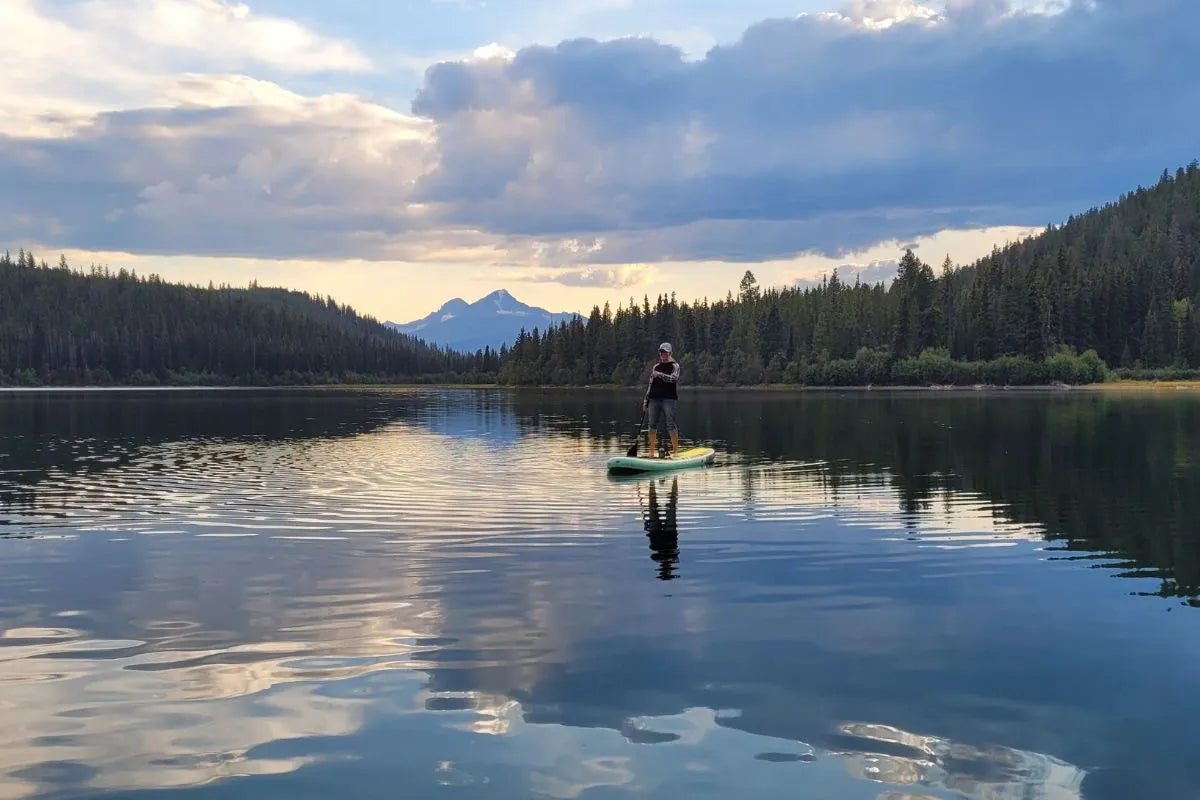
The Canadian Shield is one of the best paddleboarding regions in the country. Clean lakes, rocky shorelines, pine-covered islands, quiet coves, and portable shoreline launches make it ideal for inflatable paddleboards. The best beginner-friendly Shield regions include Algonquin, Muskoka, the Kawarthas, Killarney, Temagami, the Laurentians, the Eastern Townships, Charlevoix, and La Mauricie.
The Canadian Shield is the geological backbone of the country. It covers roughly half of Canada’s land mass and stretches through large parts of Ontario, Quebec, Labrador, Manitoba, Saskatchewan, Nunavut, and the Northwest Territories.
For paddleboarders, the Shield means granite shorelines, clear water, quiet lakes, protected bays, and launch points that often favour portable inflatable gear over trailers, roof racks, and hard boards.
Canadian Board Co. is a Canadian owned and operated team based in Kelowna, BC. This guide is for paddlers who want to explore more Canadian Shield water in 2026 and choose the right board, gear, and timing for the conditions.
What makes Canadian Shield paddling different
Shield-country paddling is not exactly the same as paddling a warm urban lake or a shallow beach area. The scenery is better, but the conditions deserve more respect.
- Water can stay cooler: even in summer, many Shield lakes can feel cold compared with shallow southern lakes.
- Shorelines are rocky: granite, boulders, gravel, and uneven entries are common.
- Access can be limited: some lakes use gravel roads, park access points, Crown land launches, or portage-style routes.
- Wind can build quickly: longer lakes and open crossings can change from calm to choppy faster than expected.
- Cell service may be unreliable: many Shield areas are remote enough that a phone is not a complete safety plan.
Simple rule: for Shield lakes, choose stability over speed. A wide inflatable paddleboard is easier to launch, easier to land on rock, and more forgiving when wind or chop builds.
Ontario Shield-country lake picks
Algonquin Provincial Park
Algonquin is one of Ontario’s best-known paddling destinations, with access points around the park and along the Highway 60 corridor. Canoe Lake, Smoke Lake, Lake of Two Rivers, and Lake Opeongo are common starting points for paddlers.
Best for: classic Shield scenery, easy-to-identify access points, and paddlers who want a mix of day trips and bigger route options.
Muskoka
Lake Muskoka, Lake Joseph, and Lake of Bays are the famous names, but smaller surrounding lakes are often better for relaxed paddleboarding. Three Mile Lake, Brandy Lake, and Skeleton Lake are good examples of quieter cottage-country paddling.
Best for: cottages, weekend paddles, calm morning sessions, and paddlers who want easy access with classic Ontario lake views.
Kawartha Lakes
The Kawarthas are generally more accessible from the GTA and can be a better starting point for families. Pigeon Lake and Sturgeon Lake offer cottage-country paddling with a more relaxed feel than some larger Muskoka lakes.
Best for: beginner-friendly family paddles, cottage weekends, and paddlers who want easier access from southern Ontario.
Killarney Provincial Park
Killarney offers some of the most dramatic scenery in Ontario, with clear lakes, rugged shorelines, and the La Cloche Mountains nearby. It is a better fit for paddlers who already have some experience and want a quieter alternative to busier destinations.
Best for: scenic day paddles, experienced beginners, and paddlers who want a more rugged park feel.
Temagami Region
Temagami is classic northern Shield paddling: big water, islands, remote routes, and serious wilderness feel. It rewards planning, proper gear, and respect for changing conditions.
Best for: experienced paddlers, longer day trips, and anyone who already understands cold water, wind, and route planning.
North Shore of Lake Superior
Lake Superior is beautiful, but it is not casual beginner paddleboarding water. The inland lakes around the north shore and provincial park areas are more approachable than Superior itself.
Best for: experienced paddlers, inland lake exploring, and people who know how quickly big-water weather can change.
Quebec Shield-country lake picks
Laurentians
The Laurentians are one of the most accessible Shield-style paddling regions from Montreal. Lakes around the Mont-Tremblant area and smaller regional lakes offer clear water, rocky shorelines, and classic Quebec cottage scenery.
Best for: Montreal-area paddlers, weekend trips, cottage paddling, and scenic day sessions.
Eastern Townships
Lake Memphremagog, Brome Lake, and Massawippi are well-known paddling destinations with a more developed cottage and recreation feel. They can be busier in peak summer, so morning paddles are usually best.
Best for: accessible day trips, warmer summer paddles, and paddlers who want services close by.
Charlevoix
Charlevoix gives paddlers dramatic scenery, cooler water, and a more rugged feel. Inland lakes are the better paddleboard target for most recreational paddlers.
Best for: scenic travel paddles, experienced paddlers, and anyone who wants a more dramatic Shield-country backdrop.
La Mauricie National Park
La Mauricie National Park has clear lakes, forested shorelines, and park-managed paddling opportunities. Parks Canada provides paddleboarding safety guidance for the park, and paddlers should check current park access and reservation details before going.
Best for: planned day trips, national park paddling, and paddlers who want a managed-access Shield experience.
The right board for Canadian Shield paddling
Shield paddling rewards a board that is stable, durable, and easy to carry. Bigger lakes, rocky shorelines, gear-heavy days, and changing wind conditions make a wide inflatable SUP the practical choice.
11'6 El Capitan Bomber
Best for paddlers who want maximum stability for cottage lakes, rocky launches, light chop, family use, and day paddles.
- 11'6" long
- 36" wide
- 420 lb capacity
- Stable beginner-friendly platform
- Strong pick for Canadian Shield day paddling
Ionic Adventure Ark
Best for paddlers who want stability plus more attachment points for dry bags, layers, snacks, fishing gear, or longer Shield days.
- 11'6" long
- 36" wide
- 425 lb capacity
- Extra D-rings
- Scotty mount
11'0 Yacht Hopper
Best for paddlers who already have the basics and want a lighter, more responsive board for calmer Shield lakes and cottage cruising.
- 11'0" board
- 32" wide
- Lighter, more agile feel
- Better for confident paddlers
- Less stable than the 36" options in chop
Water Safety Gear
Cold water, remote launches, and changing wind make safety gear more important in Shield country than on a small warm urban lake.
- Canadian-approved PFD or lifejacket
- Whistle or sound signalling device
- Leash for board connection
- Waterproof phone pouch
- Dry bag for layers
What to pack for a Shield-country day paddle
A Shield lake can start calm and sunny, then turn windy, cooler, and choppy by afternoon. Pack like you may be out longer than planned.
- Dry bag: 10 to 20 litres is enough for most day paddles.
- Extra layer: a light fleece, shell, or dry shirt for cooler wind.
- Water: 1 to 2 litres depending on heat, distance, and paddler size.
- Snacks: easy calories matter more than people expect on long paddles.
- Sun protection: sunscreen, hat, sunglasses, and SPF lip balm.
- Safety gear: PFD, whistle, leash, and phone in a waterproof pouch.
- Float plan: tell someone where you are going and when you expect to return.
Browse dry bags, paddles, and paddleboard accessories here: https://www.canadianboardco.com/collections/paddle-board-accessories.
Safety notes for Canadian Shield paddling
Canadian Shield paddling is beautiful, but it can be remote. Treat safety as part of the plan, not something you figure out after conditions change.
Cold water matters
Even when the air feels warm, Shield lakes can stay cool. If you are paddling in spring, early summer, fall, or on large deep lakes, dress for the water temperature, not just the air temperature.
- Check the forecast: use Environment and Climate Change Canada before launching: https://weather.gc.ca.
- Watch wind direction: an easy outbound paddle can become a difficult return if the wind changes.
- Avoid big crossings in the afternoon: morning is usually calmer.
- Do not rely on cell signal: tell someone your route before you go.
- Wear or carry the required safety gear: Parks Canada guidance for SUPs includes either wearing a PFD with a whistle, or carrying a PFD, whistle, and floating throw rope. Wearing the PFD is the better choice for remote or cold-water paddling.
The realities of Shield-country paddling
A few honest things to know before your first Shield paddle:
- The rocks are real: land gently, protect the fin, and lift your board instead of dragging it over granite.
- The bugs are real: black flies and mosquitoes can be heavy near launches, especially in late spring and early summer.
- Boat traffic varies: smaller lakes are usually calmer than big cottage lakes on long weekends.
- Weather changes quickly: turn back early if wind starts building beyond your comfort level.
- Wildlife is part of the experience: keep your distance from loons, moose, beavers, otters, bears, and nesting birds.
Launch tip: inflatable paddleboards are a strong fit for rocky Shield shorelines because they are easier to carry, easier to land, and less stressful around granite than a hard board.
When to go paddleboarding on Canadian Shield lakes
| Month | What to Expect | Best For |
|---|---|---|
| May | Cold water, early-season conditions, possible ice-out timing in some regions. | Experienced cold-water paddlers only. |
| June | Long days, warming water, more bugs near shore and launches. | Paddlers who do not mind black flies and cooler water. |
| July | Peak season, warmer water, more cottage and park traffic. | Most recreational paddlers. |
| August | Warmest water, fewer bugs, busy long weekends, cooler evenings late in the month. | Best all-around month for many Shield paddlers. |
| September | Beautiful colour, cooling water, shorter days, quieter lakes. | Experienced paddlers with proper layers. |
| October | Cold water, changing weather, short days. | Cold-water paddlers with proper gear only. |
Park fees, access, and local rules
Many Shield lakes are on Crown land, provincial parks, national parks, conservation areas, or municipal access points. Rules and fees vary by location.
- Provincial and national parks may require day-use permits or reservations.
- Some managed access points have parking fees or launch restrictions.
- Rental availability varies by park, outfitter, and season.
- Always check the current park or municipality website before driving out.
For Algonquin access planning, check the official park access information before your trip. For La Mauricie, check Parks Canada’s current access, safety, and reservation details.
The bottom line
Canadian Shield paddling is some of the best paddling in the country. The combination of clean lakes, granite shoreline, pine forest, islands, and quiet coves makes it hard to beat.
The right setup is simple: a stable inflatable paddleboard, a properly fitted PFD or lifejacket, a leash, a dry bag, extra layers, water, a float plan, and respect for wind and cold water.
For most Shield day paddles, start with a wide board like the 11'6 El Capitan Bomber. If you want more gear attachment and adventure capability, choose the Ionic Adventure Ark. If you are already confident and want a lighter, more responsive board, look at the 11'0 Yacht Hopper.
Browse the full inflatable paddleboard lineup here: https://www.canadianboardco.com/collections/inflatable-paddleboards-canadas-best-isup.
Browse water safety gear here: https://www.canadianboardco.com/collections/water-safety.
Browse paddleboard accessories here: https://www.canadianboardco.com/collections/paddle-board-accessories.
Boards are backed by the 60-Day Rider's Guarantee: https://www.canadianboardco.com/pages/60-day-riders-guarantee.
Warranty details are here: https://www.canadianboardco.com/pages/3-year-warranty.
Call 1-800-399-5260 if you want help choosing the right board and safety setup for a specific Shield lake, cottage, park, or region.
FAQ
What is the best Canadian Shield lake for first-time paddleboarders?
Smaller sheltered lakes are better than large open-water lakes. In Ontario, smaller Muskoka lakes, quieter Kawartha lakes, and sheltered Algonquin access lakes are good starting points. In Quebec, protected Laurentian or Eastern Townships lakes are often easier than bigger windy lakes.
Can I paddleboard in Algonquin Park?
Yes, paddleboards can be used at suitable access points, but visitors should check current park access rules, day-use fees, parking, and rental availability before going.
What is the best paddleboard for Shield-country paddling?
A wide drop-stitch inflatable is usually best. The 11'6 El Capitan Bomber is the stable all-around pick, while the Ionic Adventure Ark is better for paddlers carrying more gear.
Do I need a permit to paddle on Canadian Shield lakes?
It depends where you launch. Crown land access, provincial parks, national parks, conservation areas, municipalities, and private access points may all have different rules, fees, or permits. Check the current local source before your trip.
How cold are Canadian Shield lakes in summer?
Many Shield lakes stay cooler than shallow southern lakes, especially large or deep lakes. Spring, early summer, fall, and large-water paddles require extra caution and proper clothing for cold-water exposure.
How do I handle bugs on Shield-country paddles?
Bring repellent and expect the worst bugs near shore, launches, portages, and rest stops. Once you are out on open water, bugs are usually less of a problem than at the access point.
Should I bring bear spray for Shield paddling?
For managed day-use areas, bear spray is not always necessary. For remote launches, portages, overnight trips, or wilderness routes, check local guidance and carry wildlife safety gear appropriate for the region.
Can I rent a paddleboard at Canadian Shield access points?
Some major parks, outfitters, and popular cottage regions offer rentals, but availability and quality vary. Bringing your own inflatable board gives you more flexibility and avoids rental lineups during peak season.

Leave a comment
All comments are moderated before being published.
This site is protected by hCaptcha and the hCaptcha Privacy Policy and Terms of Service apply.