
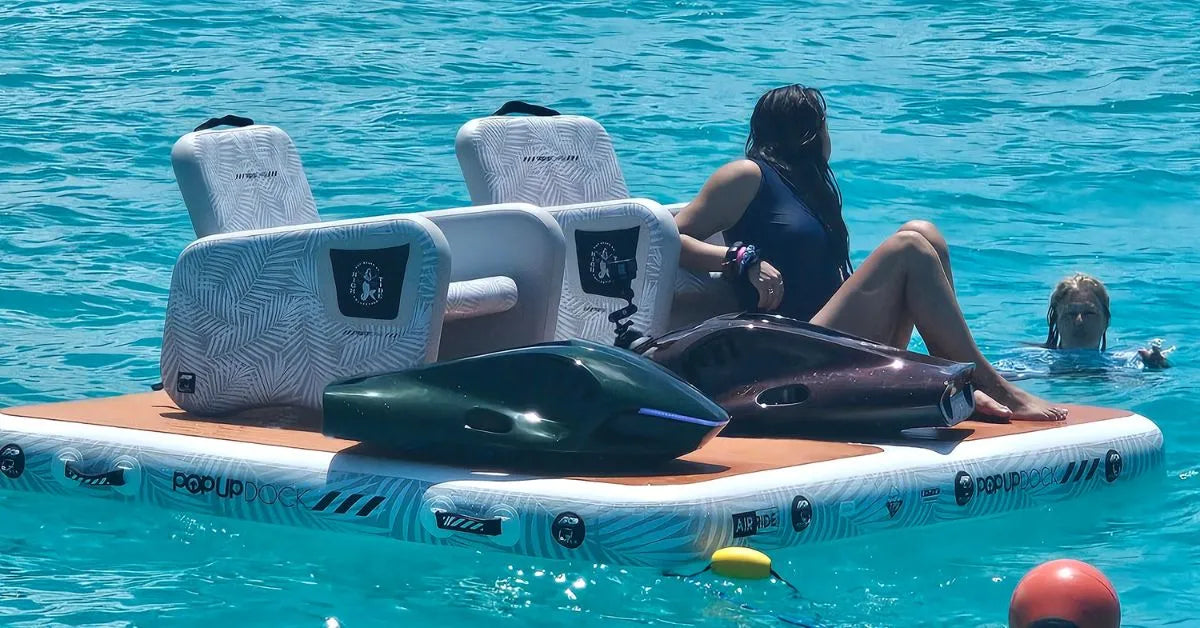
Your POPUP AQUADOCK or other inflatable dock represents a significant investment in waterfront recreation. With proper maintenance and care, quality inflatable docks deliver 10-15+ years of reliable performance—but neglect can reduce that lifespan to just 3-5 years. This comprehensive guide covers everything from daily care to seasonal storage, ensuring your dock remains shipshape season after season.
Understanding Inflatable Dock Construction and Longevity Factors
Canadian Board Co. inflatable docks use military-grade PVC with drop-stitch technology—thousands of internal threads connecting top and bottom surfaces to create rigid platforms when inflated to 5-7 PSI. This construction delivers exceptional durability, but longevity depends on protecting three critical vulnerability points:
Primary Degradation Factors
- UV exposure: Sunlight breaks down PVC polymers over time, causing brittleness and color fading. Continuous UV exposure can reduce lifespan by 40-50%
- Abrasion wear: Contact with rough surfaces, docks, rocks, and boat hulls wears through the protective outer layer, eventually compromising air chambers
- Chemical exposure: Petroleum products, harsh cleaners, and salt water accelerate PVC degradation if not properly rinsed
- Improper storage: Moisture, extreme temperatures, and rodent access during off-season storage cause the majority of preventable damage
Understanding these factors guides every maintenance decision, from daily rinsing to winter storage protocols.
Daily and Weekly Maintenance: Building Good Habits
Consistent daily care prevents 80% of inflatable dock damage. These simple habits take minutes but add years to your dock's lifespan.
After Every Use: Fresh Water Rinse
Rinse your entire dock with fresh water after each use, paying special attention to:
- Valve areas: Salt, sand, and organic debris accumulate around valves, compromising sealing and making inflation/deflation difficult
- D-rings and anchor points: Rinse attachment hardware to prevent corrosion and buildup that weakens connections
- Deck surface: Remove algae, bird droppings, and organic matter before they stain or degrade PVC
- Underside: If accessible, rinse the bottom surface to remove accumulated sediment and vegetation
This 5-minute rinse prevents 90% of staining issues and significantly extends PVC life by removing corrosive substances before they penetrate the material.
Weekly Pressure Checks
Check and adjust air pressure weekly during active use. All Canadian Board Co. docks require 5-7 PSI optimal inflation:
- Use a reliable pressure gauge—don't rely on feel
- Check pressure when the dock is at water temperature (cold water reduces pressure 1-2 PSI)
- Top up as needed to maintain 5-7 PSI range
- Never exceed 7 PSI—over-inflation stresses seams and increases puncture risk
Proper inflation maintains structural integrity, prevents excessive flexing that stresses seams, and ensures full weight capacity.
Weekly Visual Inspection
Conduct quick visual inspection covering:
- Seam condition—look for separation or stress marks
- Surface abrasions—identify developing wear before it penetrates to air chambers
- Valve integrity—ensure valves seal properly and caps are secure
- D-ring security—verify anchor points remain firmly attached
- Deck pad condition—check for lifting edges or excessive wear
Early detection allows minor repairs before they become major failures requiring professional service or replacement.
Monthly Deep Cleaning and Inspection
Monthly deep cleaning removes embedded dirt and allows thorough inspection of all dock components.
Cleaning Procedure
- Inflate to 5-7 PSI: Full inflation exposes all surfaces and seams for inspection
- Prepare cleaning solution: Mix mild dish soap with water (avoid harsh chemicals, bleach, or petroleum-based cleaners)
- Scrub deck surface: Use soft-bristle brush to clean entire deck, paying attention to textured areas where dirt accumulates
- Clean valves: Use small brush or cloth to clean valve threads and surrounding areas
- Rinse thoroughly: Remove all soap residue with fresh water
- Dry completely: Allow dock to air dry in sun before deflating or storing
Detailed Inspection Protocol
While cleaning, conduct thorough inspection:
Seam examination: Run your hand along all seams feeling for separation, bulging, or unevenness. Drop-stitch construction should feel uniformly firm—any soft spots indicate potential internal thread failure.
Surface assessment: Look for cuts, punctures, or deep abrasions. Mark any damage locations for repair. Surface scratches that haven't penetrated the outer PVC layer are cosmetic but should be monitored.
Valve testing: Open and close each valve multiple times, verifying smooth operation. Check rubber gaskets for pliability—dried or cracked gaskets need replacement before they fail during use.
Hardware inspection: Examine all D-rings, anchor attachment points, and tie-down loops. Tug firmly on each to verify secure attachment. Look for tearing or stress around mounting points.
Deck pad condition: Check for lifting edges, tears, or excessive wear. Deck pads can be replaced if damaged—contact Canadian Board Co. for replacement options.
Seasonal Maintenance: Spring Setup and Fall Storage
Proper seasonal transitions dramatically impact longevity. Spring setup and fall storage represent the most critical maintenance windows.
Spring Pre-Season Inspection and Setup
Before first deployment each season, conduct comprehensive inspection:
Storage damage assessment: Inspect for any damage that occurred during winter storage—rodent chewing, mildew growth, or storage-related stress.
24-hour inflation test: Inflate to 5-7 PSI and allow to sit for 24 hours. Any pressure loss indicates slow leaks requiring repair before water deployment.
Valve service: Clean all valve threads, lubricate rubber gaskets with silicone spray (not petroleum-based lubricants), and verify proper sealing.
Anchor line inspection: Examine all anchor lines for UV damage, fraying, or wear. Replace any compromised lines before season start.
Hardware check: Inspect anchor hardware, shackles, and attachment points for corrosion or damage. Replace any questionable components.
Cleaning and preparation: Deep clean the dock following monthly cleaning protocol before first use.
Fall Post-Season Storage Preparation
Proper winterization ensures your dock emerges from storage in spring ready for another season. This is the single most important maintenance procedure for Canadian climates.
Final cleaning: Wash entire dock with mild soap and water, removing all algae, dirt, and organic matter. Pay special attention to crevices, valve areas, and D-ring attachments where debris accumulates.
Complete drying: This step is critical—any trapped moisture promotes mildew growth that degrades PVC and creates health hazards. Inflate the dock partially and allow to dry in sun and air for 2-3 days. Ensure all surfaces, including underside and valve areas, are completely dry.
Inspection and repair: Conduct thorough end-of-season inspection, repairing any damage discovered. Repairs completed in fall cure properly before spring deployment rather than rushing repairs when you're eager to get on the water.
Deflation procedure: Open all valves and deflate completely. Press out remaining air, working from center toward valves. Ensure no trapped air remains in chambers.
Folding technique: Fold loosely in accordion style rather than tight rolls. Tight rolling creates permanent creases that stress PVC. Avoid folding along the same lines each year—vary fold patterns to distribute stress.
Storage location selection: Choose cool, dry location with stable temperatures between 5-25°C (40-77°F). Avoid:
- Garages with petroleum products (gasoline, oil, solvents)
- Areas accessible to rodents
- Locations with temperature extremes (freezing or excessive heat)
- Direct sunlight exposure
- Damp basements or areas with moisture issues
Protective covering: Store in original carry bag or breathable cover. Avoid plastic tarps that trap moisture. If using a storage bag, ensure the dock is completely dry first.
Positioning: Store flat or loosely rolled, never with heavy objects on top. Pressure from stored items can create permanent deformation.
Repair and Damage Management
Prompt repair prevents minor damage from becoming major failures. Understanding repair capabilities and limitations ensures appropriate response.
DIY-Repairable Damage
Small punctures and minor abrasions can be repaired at home using PVC patch kits:
Punctures under 5mm: Clean and dry the damaged area thoroughly. Roughen the area with fine sandpaper to improve adhesive bonding. Cut patch material 5cm larger than the damage in all directions. Apply PVC adhesive to both the dock surface and patch, following adhesive manufacturer's cure time instructions. Press patch firmly onto damaged area, working from center outward to eliminate air bubbles. Allow adhesive to cure for minimum 24 hours before re-inflating. Test repair by inflating to 5-7 PSI and submerging repaired area—look for bubbles indicating incomplete seal.
Surface abrasions: Abrasions that haven't penetrated to air chambers can be reinforced with patch material to prevent progression. Clean the area, apply patch following the same procedure as puncture repair.
Deck pad repairs: Lifting deck pad edges can be re-glued using marine adhesive. Clean both surfaces, apply adhesive, press firmly, and weight down during curing.
Professional Repair Required
Some damage exceeds DIY capabilities and requires professional assessment:
- Punctures or cuts exceeding 10cm in any dimension
- Seam separation longer than 10cm
- Valve damage or failure
- Drop-stitch internal structure damage (visible bulging or soft spots)
- Multiple punctures in same area
- Damage near seams or stress points
Contact Canadian Board Co. for professional repair services or replacement part availability. Attempting DIY repair of major damage can create safety hazards and void manufacturer warranties.
Preventive Reinforcement
High-wear areas can be reinforced before damage occurs:
- Entry/exit points: Apply protective patches to areas where users frequently enter and exit
- Anchor attachment zones: Reinforce areas around D-rings that experience repeated stress
- Contact points: Protect areas that regularly contact docks, boat hulls, or other hard surfaces

Extending Lifespan: Advanced Care Techniques
UV Protection Strategies
UV exposure is the primary long-term degradation factor. Minimize exposure through:
Protective covers: When the dock is deployed but not in active use, cover with UV-resistant tarp or custom cover. This is particularly valuable for docks left in water for extended periods.
Shade positioning: When possible, position docks in shaded areas during peak sun hours (10am-4pm).
UV protectant application: Apply marine-grade UV protectant spray designed for PVC surfaces. Reapply monthly during active season following product instructions.
Minimize unnecessary deployment: Don't leave docks inflated and deployed when not in use for extended periods. If you won't use the dock for a week or more, consider deflating and storing.
Abrasion Prevention
Reduce wear through careful deployment and use practices:
- Use dock bumpers or fenders when positioning near fixed docks or boat hulls
- Avoid dragging the dock across rough surfaces—carry or use a dock cart for transport
- Position away from rocky shorelines or areas with sharp underwater obstacles
- Educate users about avoiding shoes with aggressive tread or sharp objects on the dock
- Use protective mats in high-traffic entry/exit areas
Chemical Protection
Prevent chemical degradation through:
- Immediate fresh water rinse after any saltwater exposure
- Never use petroleum-based cleaners, solvents, or harsh chemicals
- Avoid contact with gasoline, oil, sunscreen, or insect repellent
- If chemicals contact the dock, rinse immediately with copious fresh water
- Store away from any petroleum products or chemical storage areas
Anchor Line and Hardware Maintenance
Anchor systems experience significant stress and require dedicated maintenance:
Anchor Line Care
- UV inspection: Examine lines monthly for UV damage—look for fading, stiffness, or fuzzy texture indicating fiber breakdown
- Abrasion check: Inspect areas that contact dock D-rings or anchor points for wear
- Knot integrity: Verify knots remain tight and properly formed
- Replacement schedule: Replace anchor lines every 2-3 seasons with regular use, or immediately if significant wear is detected
Hardware Maintenance
- Rinse all metal hardware with fresh water after each use to prevent corrosion
- Inspect shackles, carabiners, and connectors for wear or deformation
- Lubricate moving parts with marine-grade lubricant
- Replace any hardware showing corrosion, cracks, or excessive wear
Troubleshooting Common Issues
Slow Air Loss
If your dock loses pressure over 24-48 hours:
- Inflate to 5-7 PSI and listen for hissing sounds indicating leak location
- Apply soapy water to suspected areas—bubbles indicate air escape
- Check valves first—most slow leaks are valve-related rather than punctures
- Inspect seams carefully—seam separation is common slow leak source
- Once located, repair following appropriate procedures
Valve Issues
Valves that won't seal or are difficult to operate:
- Clean valve threads thoroughly—debris is the most common cause
- Inspect rubber gaskets—replace if dried, cracked, or deformed
- Lubricate threads with silicone spray (not petroleum-based)
- If valve is damaged, contact Canadian Board Co. for replacement valve kits
Staining and Discoloration
Stains from algae, bird droppings, or organic matter:
- Clean immediately—stains become permanent if allowed to set
- Use mild soap and soft brush—avoid abrasive cleaners or scrubbers
- For stubborn stains, try diluted vinegar solution (1 part vinegar to 3 parts water)
- Rinse thoroughly after cleaning
- Some discoloration is cosmetic and doesn't affect performance
Mildew Growth
Mildew from improper storage:
- Clean affected areas with diluted vinegar solution
- Dry completely in sun—UV helps kill mildew spores
- Prevent recurrence by ensuring complete drying before storage
- Store in well-ventilated area with stable humidity
Model-Specific Maintenance Considerations

8' POPUP DOCK Maintenance
The 8' POPUP DOCK is the most portable model, making it ideal for frequent deployment and storage. Focus maintenance on:
- Fold line variation—its compact size means it's folded more frequently, so vary fold patterns to prevent crease stress
- Carry strap inspection—frequent transport stresses carry straps and attachment points
- Valve maintenance—more frequent inflation/deflation cycles require diligent valve care
14' POPUP AQUADOCK Maintenance
The 14' POPUP AQUADOCK offers 98 square feet of platform space, making it popular for family use. Maintenance priorities:
- Center area inspection—high traffic in the center requires monitoring for wear
- Multi-user load stress—inspect seams carefully as this model experiences varied loading patterns
- Anchor point maintenance—larger surface area creates more wind load, stressing anchor attachments
14' POPUP YACHTDOCK Maintenance
The 14' POPUP YACHTDOCK represents premium construction for demanding applications. Maintenance focus:
- Premium material care—yacht-grade construction deserves premium maintenance practices
- Boat contact protection—use fenders when positioning against boat hulls
- Higher pressure monitoring—premium construction allows higher loads, making proper 5-7 PSI inflation critical
POPUP AQUANET Maintenance
The POPUP AQUANET features unique mesh construction requiring specific care:
- Mesh cleaning—organic matter accumulates in mesh, requiring thorough rinsing after each use
- Mesh inspection—check for tears or fraying in net material
- Frame integrity—inspect inflatable perimeter frame carefully as it bears all structural load
Warranty and Professional Service
Understanding warranty coverage and professional service options protects your investment:
Warranty Coverage
Canadian Board Co. inflatable docks include manufacturer warranty covering defects in materials and workmanship. Warranty does not cover:
- Normal wear and tear
- Damage from improper use or maintenance
- Punctures or cuts from external objects
- UV degradation from excessive sun exposure
- Damage from improper storage
- Modifications or unauthorized repairs
Maintain records of purchase and follow all maintenance guidelines to preserve warranty coverage.
Professional Service Options
Contact Canadian Board Co. for:
- Major repairs exceeding DIY capabilities
- Replacement parts (valves, deck pads, D-rings)
- Professional inspection and assessment
- Warranty claims and service
- Upgrade and accessory recommendations
Maintenance Schedule Summary
Consolidating all maintenance tasks into a clear schedule:
After Every Use
- Rinse with fresh water
- Quick visual inspection
- Remove debris and organic matter
Weekly During Active Season
- Check and adjust pressure to 5-7 PSI
- Visual inspection of seams, valves, and hardware
- Clean valve areas
Monthly During Active Season
- Deep cleaning with mild soap
- Detailed inspection protocol
- Anchor line and hardware inspection
- Apply UV protectant if used
Pre-Season (Spring)
- Comprehensive storage damage assessment
- 24-hour inflation test
- Valve service and lubrication
- Anchor line and hardware replacement if needed
- Deep cleaning before first use
Post-Season (Fall)
- Final deep cleaning
- Complete drying (2-3 days)
- Thorough inspection and repair
- Proper deflation and folding
- Storage in appropriate location
Annual
- Professional inspection (optional but recommended)
- Anchor line replacement
- Hardware replacement as needed
- Warranty documentation review
Frequently Asked Questions
How long should my inflatable dock last?
With proper maintenance following this guide, quality inflatable docks like the POPUP AQUADOCK deliver 10-15+ years of reliable performance. Neglected docks may only last 3-5 years. The difference is consistent maintenance, proper storage, and prompt repair of damage.
What's the most important maintenance task?
Proper winterization and storage is the single most critical maintenance procedure for Canadian climates. Complete drying before storage prevents 90% of off-season damage. Second most important is maintaining proper 5-7 PSI inflation to prevent seam stress.
Can I leave my dock inflated all season?
While possible, leaving docks inflated for extended periods when not in use accelerates UV degradation. If you use the dock weekly, leaving it deployed is reasonable. For longer gaps between use, deflate and store to extend lifespan.
How do I know if damage requires professional repair?
Damage exceeding 10cm, seam separation, valve failure, or any damage to drop-stitch internal structure requires professional assessment. When in doubt, contact Canadian Board Co. rather than attempting repairs that might create safety hazards.
What cleaning products are safe?
Use only mild dish soap and water. Avoid bleach, harsh chemicals, petroleum-based cleaners, or abrasive scrubbers. Diluted vinegar (1:3 with water) is safe for stubborn stains and mildew.
How often should I replace anchor lines?
Replace anchor lines every 2-3 seasons with regular use, or immediately if you observe UV damage (fading, stiffness, fuzzy texture) or abrasion wear. Lines are inexpensive compared to the cost of a drifting dock causing damage.
Can I repair my dock in cold weather?
PVC adhesives require temperatures above 15°C (60°F) to cure properly. Conduct repairs in spring or fall when temperatures are appropriate, or bring the dock indoors to a heated space for winter repairs.
What causes slow air loss?
Most slow leaks are valve-related rather than punctures. Check valves first—clean threads, inspect gaskets, and verify proper sealing. If valves are fine, use soapy water to locate punctures or seam separation.
Invest in Longevity: Maintenance Pays Dividends
The difference between a dock lasting 5 years versus 15 years is consistent maintenance following the protocols in this guide. Daily rinsing takes 5 minutes. Weekly pressure checks take 2 minutes. Monthly deep cleaning takes 30 minutes. Proper fall storage takes 2 hours. This minimal time investment protects thousands of dollars and ensures your POPUP AQUADOCK or other inflatable dock delivers decades of family memories on Canadian waters.
Explore our complete inflatable docks collection and invest in quality platforms designed for longevity when paired with proper care.

Leave a comment
All comments are moderated before being published.
This site is protected by hCaptcha and the hCaptcha Privacy Policy and Terms of Service apply.