
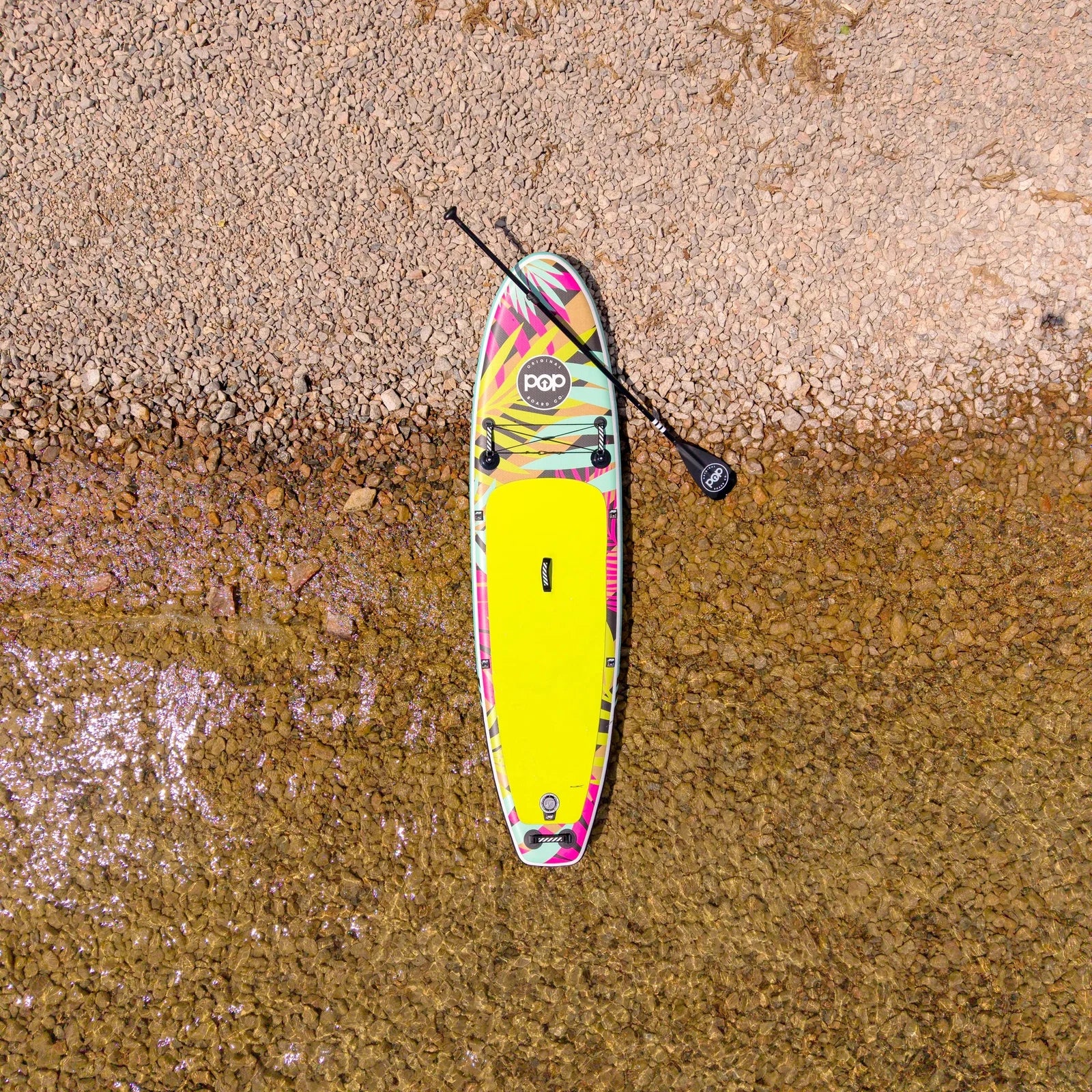
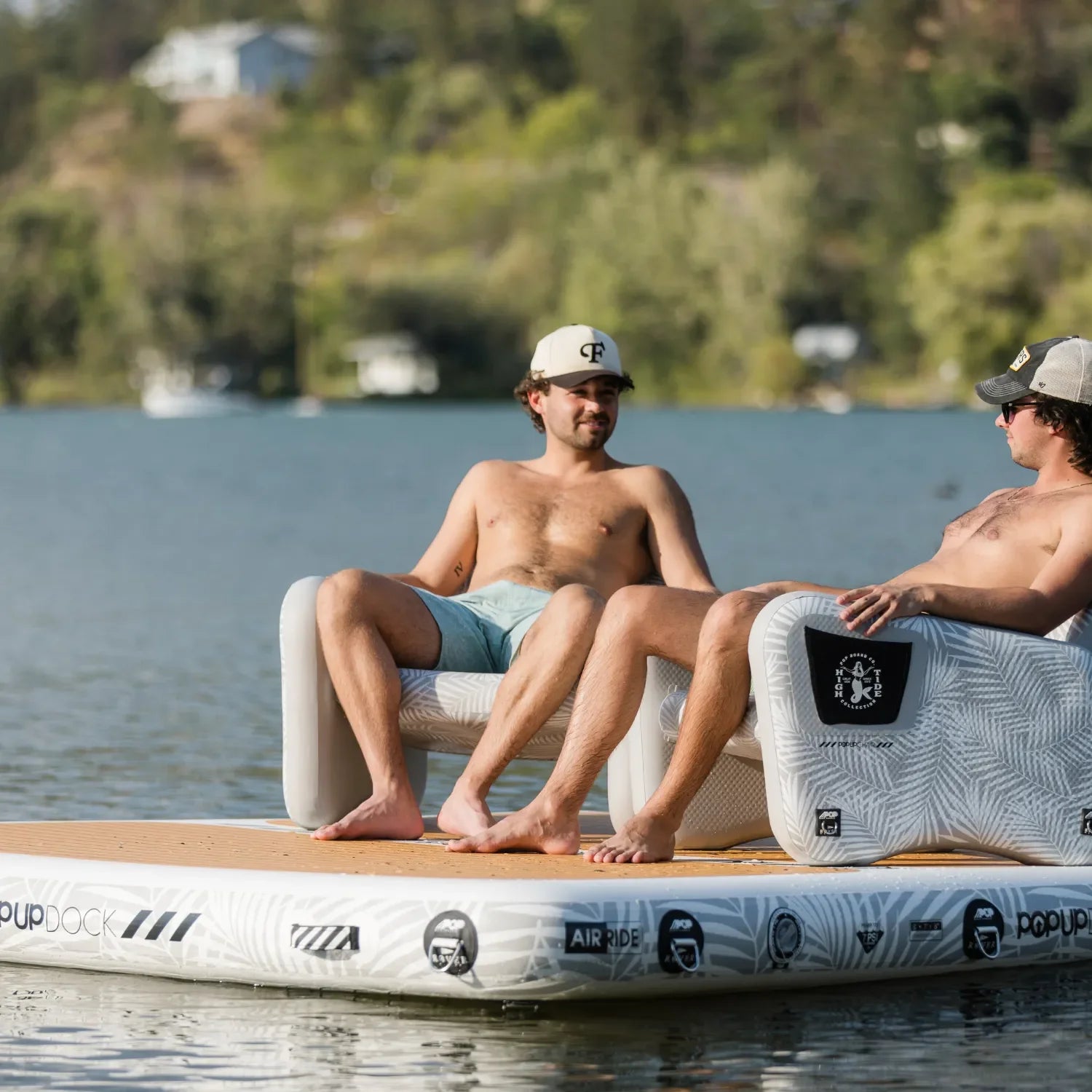
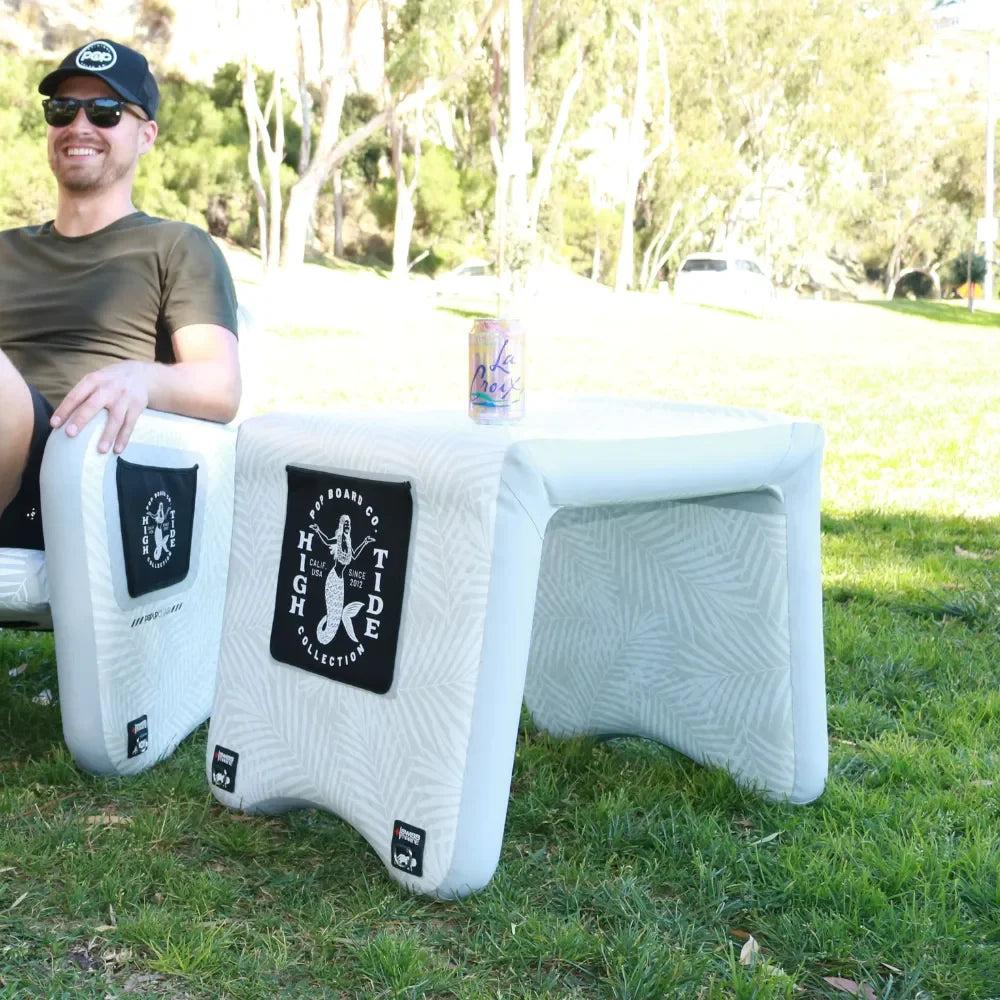
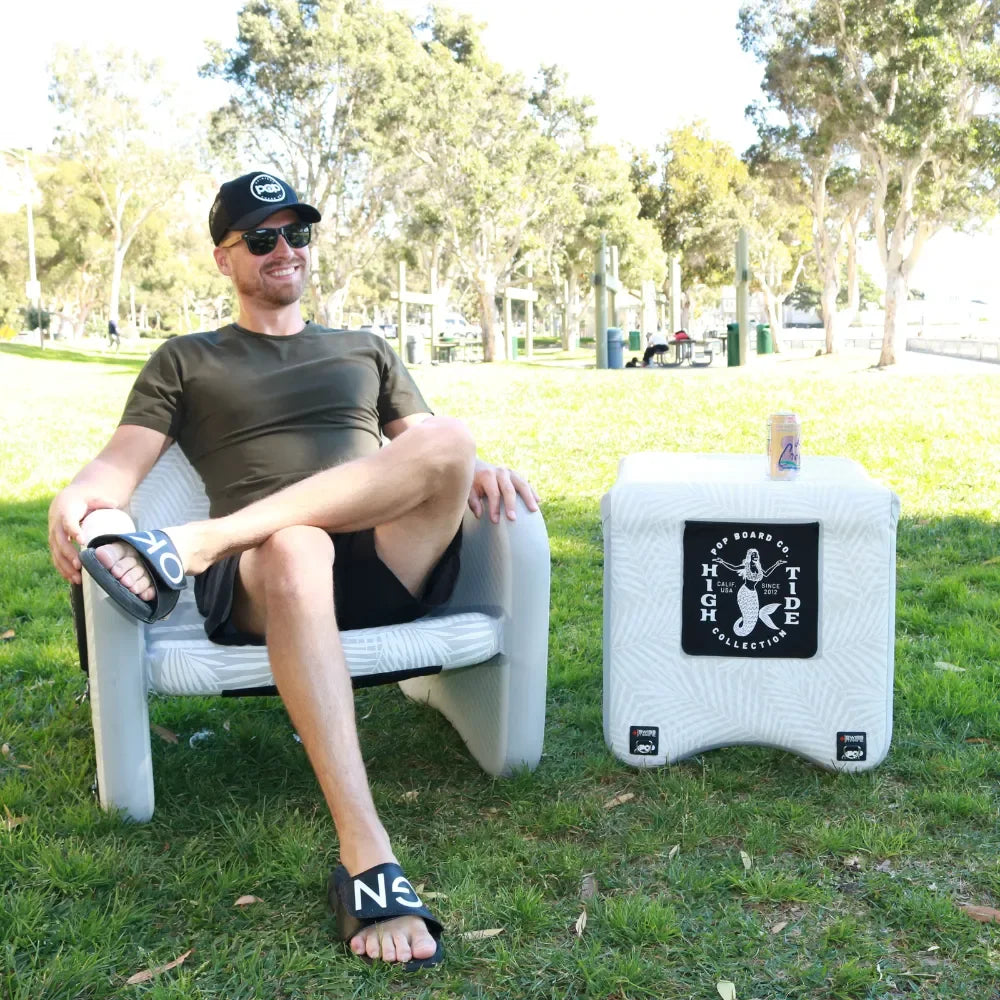
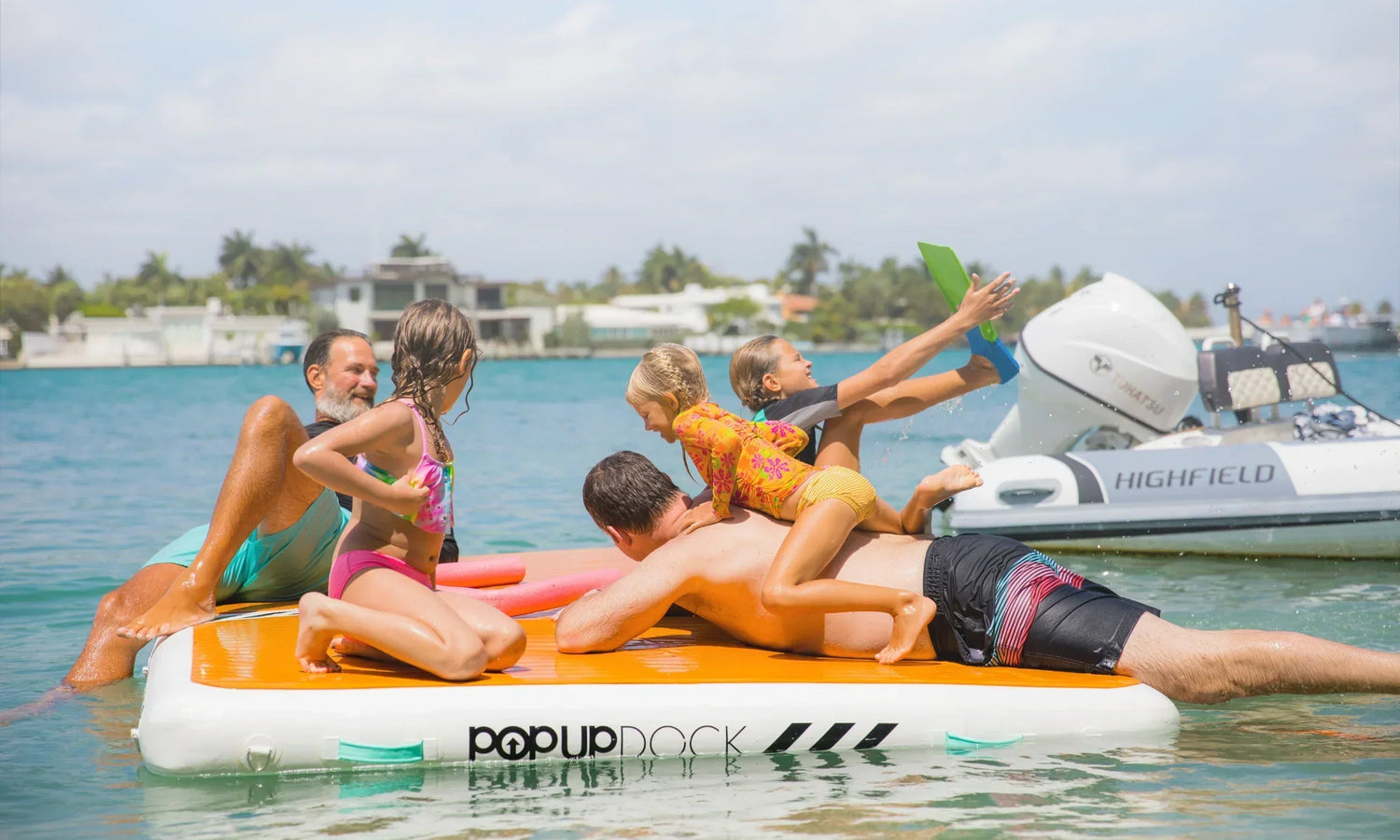
The short answer: an inflatable dock makes a beach day easier by creating a stable, low-profile platform for swimming, lounging, paddleboard launching, dogs, coolers, and social time. It packs down for transport, avoids the bulk of a permanent platform, and can be matched to a small family outing or a larger group setup.
For Canadian lake beaches, boat-access spots, campgrounds, and cottage shorelines, portability is often the main advantage. You can use the platform where local rules and conditions allow, then remove, clean, dry, and store it after the trip or season.

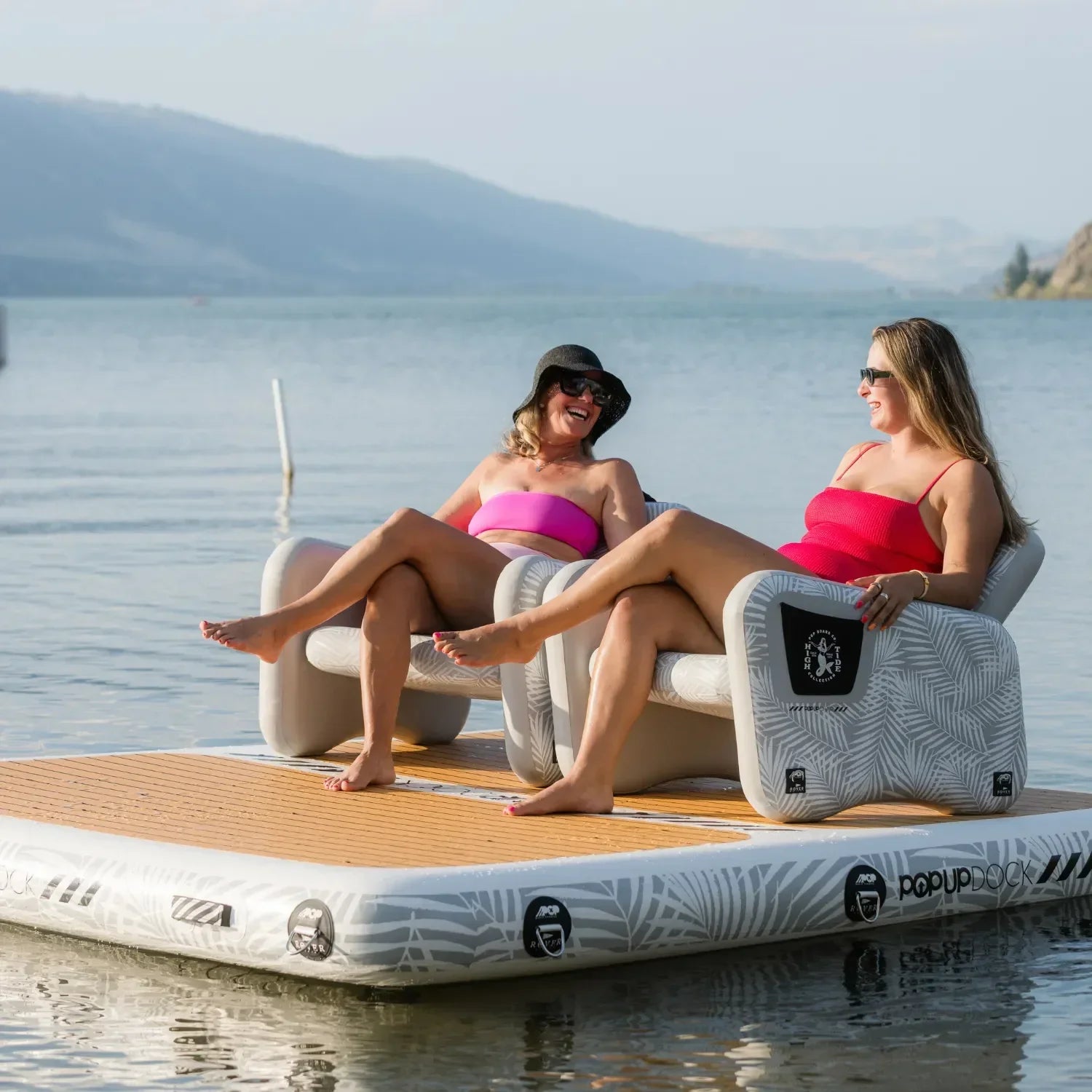
A portable floating platform creates a comfortable place to rest between swims and paddle sessions.
1. Create a Stable Swim and Rest Platform
A properly inflated drop-stitch dock gives swimmers a defined place to sit, regroup, put on fins, or climb out of the water. The low profile is also useful for launching kayaks and paddleboards. It is not a substitute for swimming ability, supervision, or life-saving equipment.
2. Carry It Where a Permanent Dock Cannot Go
An inflatable platform can travel to a rental cottage, campsite, road-trip stop, marina, or boat-access beach. Before using one, confirm that the location allows temporary floating platforms and anchoring. Rules vary by province, municipality, conservation authority, park, lake association, rental property, and shoreline type.
Never assume “no permit needed.” A removable inflatable dock is usually simpler than permanent dock construction, but confirm locally. Ask specifically about temporary or removable floating platforms, anchoring, protected habitat, swimming zones, and overnight storage.
3. Match the Platform to the Beach Day
8-foot POPUP Dock
Choose the 8-foot POPUP Dock for smaller shorelines, shorter trips, couples, and groups that value easier portability.
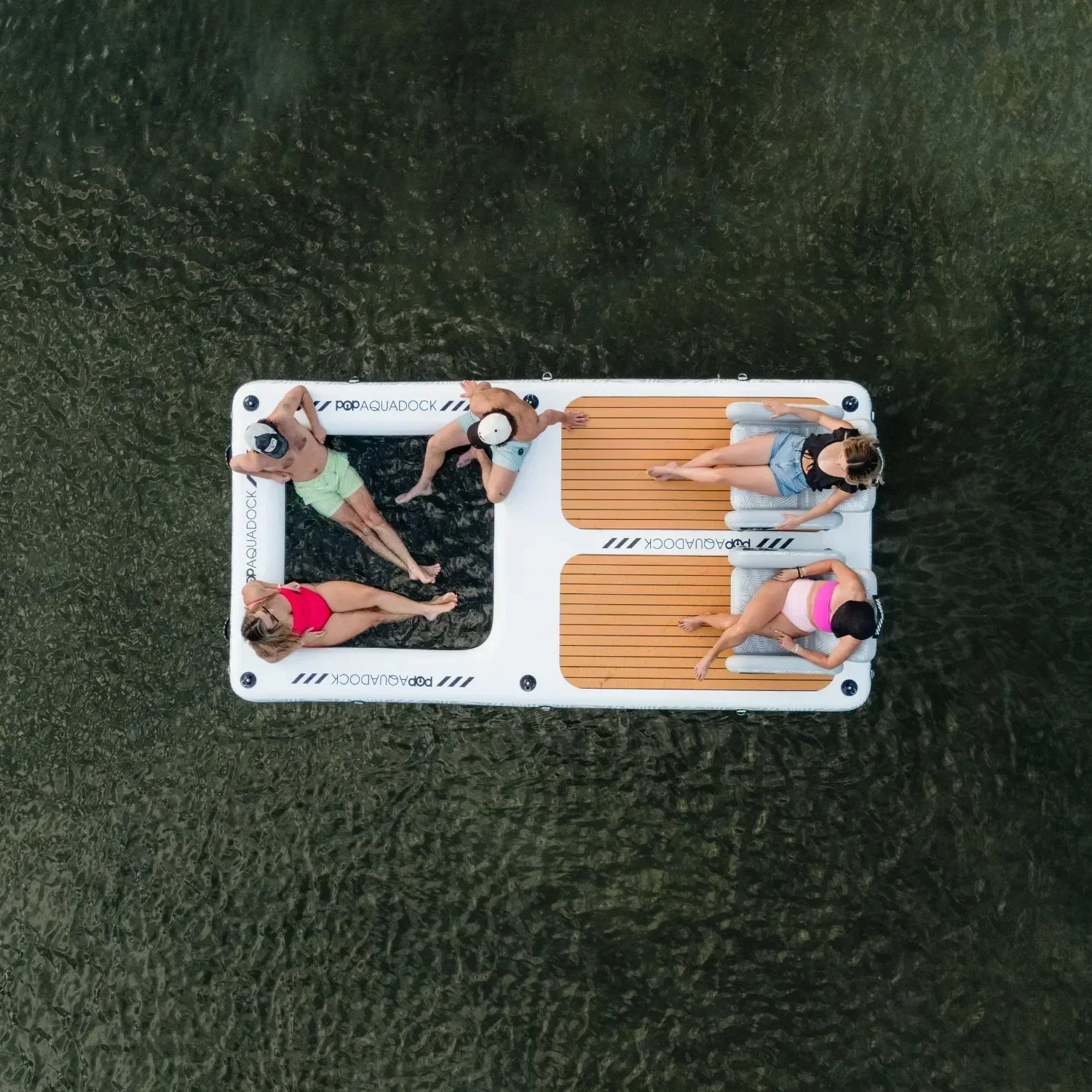
14-foot AquaDock
Choose the AquaDock for a larger family setup with a centre wet zone for swimming, cooling off, kids, and dogs.
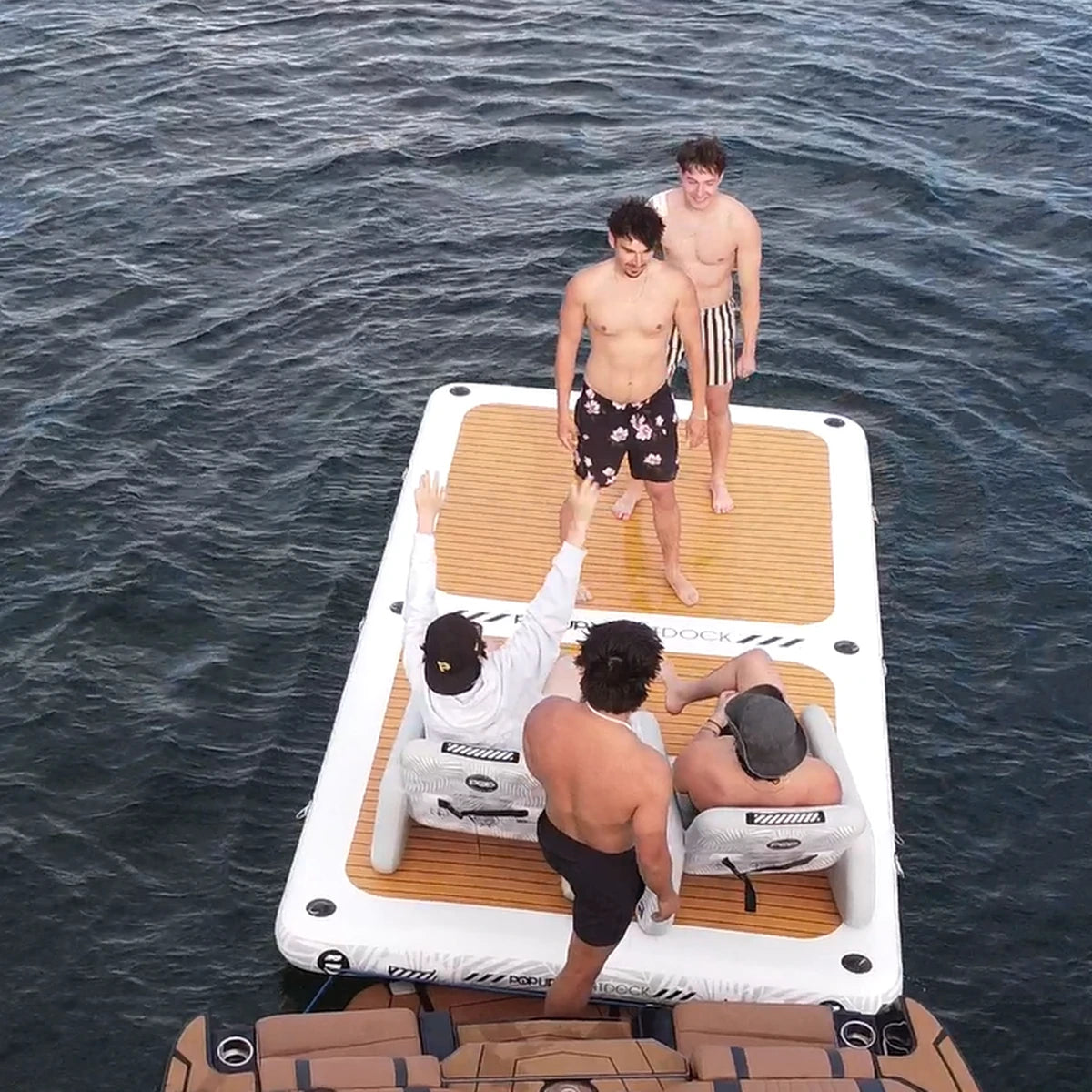
14-foot YachtDock
Choose the YachtDock when chairs, coolers, dry bags, fishing gear, and more dry surface are the priority.
8-foot AquaNet
Choose the AquaNet when the main goal is sitting partly in the water and cooling off through a centre mesh zone.

Choose a platform size that fits the shoreline, users, gear, and carrying plan.
4. Support More Activities with One Piece of Gear
Swimming
Create a place to rest and re-enter the water. Keep the platform away from vessel traffic and unsafe jumping areas.
Paddleboard launching
Sit low to the water, position the board beside the platform, and start from a stable kneeling position.
Lounging
Add compatible inflatable chairs on a solid deck, while counting every person and item in the total load.
Dogs
Use a dog lifejacket, protect claws, supervise closely, and give the dog a clear low-stress route back onto the platform.
5. Simplify Seasonal Storage
A dock that deflates can fit into storage that would never hold a full-size rigid platform. Before rolling it up, rinse away sand and salt, dry both sides, inspect seams and valves, and keep the package away from rodents, sharp tools, moisture, and extreme heat.
How to Set Up Safely at a Beach
- Choose a clean inflation area away from sharp rocks, glass, shells, and hot exhaust.
- Inflate to the current product guidance and install valve caps correctly.
- Move the platform with enough people rather than dragging it.
- Use an anchoring plan that matches the bottom, wind, current, depth, and traffic.
- Keep lines visible and away from swimming and boarding paths.
- Remove the platform when storms, strong wind, waves, traffic, or local rules make use unsafe.
For more detail, read how to anchor an inflatable dock and how to travel with an inflatable dock.
Family Safety
Young children, weak swimmers, and anyone playing in deep water should wear a properly fitted Canadian-approved lifejacket or PFD. Active adult supervision is still required. Check weather, water temperature, air quality, and local warnings before leaving shore, and browse the water safety collection.
What Customers Like
“Grandkids were constantly playing on it.”
A floating platform often becomes the centre of a supervised family beach day.
“Rock solid.”
That firm feel helps users relax, move around, and get back out of the water.
Chairs complete the setup
For solid platforms, portable seating can turn a swim stop into a longer lounge.
Read current feedback on the Canadian Board Co. reviews page.
The Bottom Line
The better beach dock is the one you can transport, anchor, use, and store safely. Start with the 8-foot POPUP Dock for compact trips, AquaDock for a larger family swim platform, YachtDock for a full dry deck, or AquaNet for cooling and in-water lounging.
Frequently Asked Questions
Can I use an inflatable dock at any beach?
No. Confirm local rules, anchoring restrictions, swimming zones, protected habitat, water conditions, and property permission.
Which model is easiest to transport?
The 8-foot POPUP Dock is the compact solid-platform option. Check live weights and packed dimensions before choosing.
Which dock is best for kids?
AquaDock is the family-focused option because of its size and centre wet zone, but active supervision and appropriate PFDs remain essential.
Can I put chairs on an inflatable dock?
Use compatible chairs on a solid platform, protect the traction surface, secure loose items, and count all weight in the total load.
How do I stop the dock from drifting?
Use a suitable anchoring or tie-off system with the platform's attachment points. Match the system to depth, bottom type, wind, current, and traffic.
How should I store it after summer?
Clean, dry, inspect, deflate, roll without sharp folds, and store it in a dry protected place away from pests and heat.


Leave a comment
All comments are moderated before being published.
This site is protected by hCaptcha and the hCaptcha Privacy Policy and Terms of Service apply.