
Why Inflatable Paddle Boards Are Perfect for Families

Family carrying an inflatable paddle board on the beach highlighting why inflatables are ideal for families.

Inflatable paddle boards offer a firm yet forgiving surface, creating an accessible platform ideal for family time on the water. This guide explores why SUPs excel for families, focusing on three core benefits: stability, safety, and portability. We'll also cover setup, choosing the right model, basic care, activity ideas, and a safety checklist for parents. Inflatable SUPs meet common family needs—carrying multiple people, neat storage, and reduced risk for kids and pets—with wide decks, high-volume construction, and softer surfaces that minimize impact. Read on to understand how stability is engineered, how to quickly transport and inflate boards, which family-friendly models to consider, activity ideas for children and dogs, simple maintenance tips, and a clear pre-launch safety routine. We'll also highlight product and service details to help you choose with confidence for lakes, calm bays, and cottage shorelines.

Children jumping into clear water beside an inflatable paddle board on a grassy shoreline.

What Makes Inflatable Paddle Boards Ideal for Family Use?

Inflatable paddle boards feature wide decks and drop-stitch construction, creating a buoyant, stable surface that resists tipping and supports multiple riders. This generous volume and width, common in family SUPs, significantly boost initial stability. Air Ride woven drop-stitch panels and military-grade PVC ensure the board remains rigid at the recommended PSI, offering soft-pack convenience with near-hardboard performance. For families, these features translate to faster learning for kids, reduced risk for pets, and predictable control for adults, even with extra weight. Here’s a quick summary of the main benefits before we delve into the details.

Inflatable paddle boards offer three core family benefits:

  • Exceptional stability: Wider decks and higher volume reduce roll and make it easier for kids to sit or stand without tipping.
  • Improved safety: Softer deck pads and rounded edges lower the risk of cuts and hard impacts during slips or falls.
  • Packable portability: Deflate-and-pack designs store compactly and fit in most car trunks or small closets.

These advantages make inflatable SUPs approachable for parents and enjoyable for children, setting the stage for understanding how stability works in real-family situations.

How Does Stability Benefit Families and Kids on Inflatable Paddle Boards?

Inflatable boards achieve stability through a balance of width, length, and volume, which increases buoyant force and provides a steady surface for beginners. A wider deck distributes weight over a larger area, reducing the board’s tendency to roll and minimizing spills when kids fidget or pets shift. This stability helps children transition from sitting to kneeling and standing with less frustration, accelerating their learning. Parents should manage weight distribution—keeping heavier riders centered and children slightly forward when necessary—to maintain consistent control. Understanding board engineering simplifies choosing the right size and planning enjoyable excursions.

Two people preparing an inflatable paddle board in shallow water along a sandy shoreline.

Why Are Inflatable Paddle Boards Safer for Families Compared to Hard Boards?

Inflatable SUPs reduce impact risk; their deck pads and softer PVC rails cushion contact during falls, unlike rigid hardboards with sharp rails and hard fins. This forgiving surface is crucial for families, as kids and pets move unpredictably, and inflatable construction minimizes abrasions and blunt-force knocks. These boards often feature more attachment points and D-rings for secure leashes, life jackets, and bungee cargo, allowing tethers for children or anchors for pets. High-volume designs also add buoyancy, making sudden submersion less likely when carrying multiple riders. Capsizes are rarer, and re-boarding is easier for caregivers supervising young paddlers.

How Do Inflatable Paddle Boards Support Family Adventures with Portability and Convenience?

Inflatable paddle boards compress into compact packs, fitting easily in trunks, closets, or cottage cabins. This makes spontaneous family adventures realistic, even with limited storage. The typical workflow—unroll, inflate, stow in a backpack—is family-friendly, as many boards come with ergonomic backpacks, manual or high-volume pumps, and simple valve systems. Such portability simplifies car day-trips, apartment storage, or even plane travel, allowing families to prioritize experiences over storage concerns. The steps below provide a quick routine for parents to prepare boards with minimal fuss before launching.

Prepare and inflate a family board in a few simple steps:

  • Unpack and unfold: Lay the board flat on a clean surface and sweep away rocks, sticks, and debris.
  • Attach the pump and inflate: Use a high-volume pump and bring the board to the manufacturer’s recommended PSI for proper stiffness.
  • Install fins and check valves: Lock in the fins, confirm valve seals, and clip on leashes and PFDs before launch.

Intro to packed-size comparison:

Below is a compact comparison of the transport and storage features families care about, showing how inflatable boards trade a few minutes of inflation for major savings in space and carry convenience.

Feature Attribute Typical Value
Packed size Backpack dimensions when deflated Fits in trunk or closet
Backpack included Ease of transport Often included with family kits
Pump type Inflation method manual or high-volume pump
Inflation time Setup duration 5–10 minutes per board

What Are the Advantages of Inflatable Paddle Boards for Easy Transport and Storage?

Inflatable SUPs save space, rolling into backpacks rather than requiring a roof rack or large garage. Families in apartments, small cottages, or homes with limited storage can easily slide a packed board under a bed or into a closet. Carrying is also simpler; ergonomic straps and lightweight paddle options allow one adult to move a packed board while supervising children. For multi-stop excursions, portaging short distances by hand or carrying a board on the shoulder makes shore-to-shore fun feasible without heavy lifting. These benefits simplify planning water days and transition smoothly into quick prep and inflation tips for busy caregivers.

Surfboards tied down with Vamo premium straps featuring soft protective backing.

How Can Families Easily Prepare and Inflate Their Paddle Boards for Outdoor Fun?

Efficient preparation for family adventures involves clear roles, a reliable pump, and simple safety checks, ensuring more time on the water and less on shore. Assign older kids small tasks—holding the pump base, snapping the fin, or checking the leash—to involve them and speed setup. Inflate to the manufacturer’s recommended PSI, verify the valve seal, and perform a quick press test for slow leaks. To prevent over-inflation in hot sun or damage from abrasive surfaces, choose a clean, shaded spot and inspect for sharp objects. These routines help families launch quickly and safely, enhancing the day for both young paddlers and supervising adults.

Transport Item Attribute Value
Backpack Included in many family kits Yes/No depending on model
Pump Type manual high-volume pump
Inflation time Typical 5–10 minutes
Carry weight Average packed weight Easy for one adult to shoulder

Which Inflatable Paddle Boards Are Best Suited for Families and Multiple Riders?

Choosing the right family board depends on length, width, and weight capacity—specs that dictate how many people and how much gear it can safely carry. For multi-rider use, prioritize wider decks (often 32" or more), high-volume construction for buoyancy, and reinforced D-rings or bungee areas to secure coolers, children’s items, or pet anchors. Accessories like kayak-seat conversion, extra handles, and roomy non-slip deck pads enhance comfort and versatility. The table below compares family-focused models, highlighting key attributes and quick specs to guide your choice.

Model Key Attribute Family Value
El Capitan (11'6") Weight capacity High capacity for multi-riders and pets
Royal Hawaiian (10'6") Versatile size Balanced control for smaller families
Generic family kit Included handles/bungees Easier loading and cargo security

What Features Should Families Look for When Choosing a Paddle Board?

Families need to consider high weight capacity, a wide deck, secure attachment points, and a durable non-slip pad for safe and comfortable excursions. A capacity over 300–400 lbs accommodates two adults plus children or an adult with multiple children and a pet. A deck width above 32" significantly boosts initial stability, crucial for learning and multi-rider balance. Look for multiple carry handles for easy loading, reinforced D-rings for tethers and bungee cargo, and simple tool-free fin systems. Sturdy construction—featuring welded seams, multi-stage quality checks, and military-grade PVC—minimizes damage from family use, allowing caregivers to focus on enjoyment, not repairs.

Two people fishing from an inflatable paddle board on calm water near mangroves.

Why Are Canadian Board Co.’s El Capitan and Royal Hawaiian Models Perfect for Families?

Canadian Board Co. designs family-focused boards with essential features for parents. The El Capitan (11'6") offers exceptional stability and a high weight limit for multiple riders and pets. The 10'6" Royal Hawaiian provides balanced control and versatility for smaller families or mixed-skill groups. Both models utilize Air Ride woven drop-stitch panels and military-grade PVC for stiffness and durability, undergoing multi-stage quality checks to ensure consistent performance. We support confident purchases with free Canada-wide shipping on orders over $100 and a 60-day rider’s guarantee, allowing families to try a board in real conditions before committing.

What Family-Friendly Activities Can You Enjoy on Inflatable Paddle Boards?

Inflatable SUPs serve as versatile platforms for many family activities beyond simple cruising, including SUP fishing, beginner-friendly yoga, floating picnics, and cooperative games that build water confidence in kids. Their stable decks and bungee cargo allow for fishing setups or coolers for lakeside snacks, while broad, non-slip surfaces are ideal for simple yoga sequences families can try together. Bringing pets is easy with leash attachment points and a designated spot near the nose for small dogs; always use a pet life jacket and monitor their movement to maintain board stability. Below is a compact list of easy family activities with quick setup notes.

  • Multi-rider cruising: Place an extra child or pet near the center and paddle slowly with smooth, steady strokes.
  • SUP fishing: Use a wide, stable board, secure rods in holders, and keep tackle simple for safety.
  • SUP yoga and stretching: Start seated and kneeling, then try basic standing balance moves as confidence grows.
  • Floating picnics: Store food under bungees and keep sessions short to limit sun exposure.
Two women relaxing on inflatable lounge chairs on a floating dock in calm water.

If you want more space on the water, a dedicated floating dock is a great addition—perfect for safe entry, extra room, and relaxing with kids and pets nearby.

For longer outings, comfort matters. An inflatable chair set can turn your board into a comfortable seat so you can relax while supervising children or enjoying a quiet stretch on the lake.

How Can Families Include Kids and Pets in Paddle Boarding Adventures?

Safely including kids and dogs requires planning, appropriate gear, and short practice drills to build confidence gradually. Ensure everyone wears properly fitted PFDs—child-sized for young paddlers and pet life jackets for dogs—and begin in shallow, calm water near shore. Teach kids to kneel before standing, and have an adult sit mid-board to enhance stability when children climb on. Introduce dogs on land first, reward calm behavior, and use a short tether attached to a D-ring. Conduct pre-boarding checks—PFDs, leash, and weight distribution—and practice re-boarding from the water so everyone knows what to do if they slip off.


What Are Popular Family Activities Beyond Paddling, Like Fishing and Yoga?

Inflatable SUPs adapt to many family activities, suiting various ages and interests, from light fishing setups to kid-friendly yoga flows and relaxed floating picnics. For fishing, select a wide, stable board with bungee storage and a simple rod holder; keep casts basic and children centered to prevent tangles. SUP yoga thrives on wide, non-slip decks—start with seated stretches and breath work before attempting standing balances. Floating picnics require secure bungees and dry bags for food; stay close to shore for easy returns. These options keep excursions fresh and encourage families to use boards for more than just short paddles.

How Can Families Maintain and Extend the Life of Their Inflatable Paddle Boards?

Regular maintenance ensures boards perform well and prevents mid-season repairs. Rinse after use, dry thoroughly, and store in a cool, dry place to significantly extend their lifespan. While military-grade PVC and Air Ride drop-stitch construction reduce puncture risk, families should still inspect seams, valves, and the deck pad after use with kids and pets. A small repair kit—containing patches, adhesive, spare valve parts, and a valve wrench—handles minor fixes, while manufacturer support and warranties address larger issues. The table below summarizes simple maintenance steps and longevity tips.

Maintenance Item Recommended Practice Family Application
Cleaning Rinse with freshwater and mild soap after use Prevents salt and grime buildup
Storage Fully dry before storing deflated in cool, dry area Avoids mildew and delamination
Repair kit Patch, glue, spare valve Enables quick fixes on-site
Inspection Regular seam and valve checks Early detection of wear from family use

What Are the Best Practices for Cleaning and Storing Family Paddle Boards?

After each trip, rinse boards with fresh water to remove sand, lake residue, and salt. For stubborn grime, use mild soap, avoiding harsh solvents that can damage PVC. Allow boards to dry completely—including valves and seams—before deflating to prevent mildew and trapped moisture. For seasonal storage, keep deflated boards in their backpacks or flat in a cool, dry spot away from prolonged UV exposure. If hanging an inflated board, use wide straps and avoid pressure points that could deform the deck. These habits keep boards ready for family adventures and minimize emergency repairs.

How Do Repair Kits and Quality Materials Ensure Longevity for Family Use?

A basic repair kit typically includes PVC patches, adhesive, spare valve parts, and instructions, enabling families to fix small punctures themselves. Boards constructed with Air Ride woven drop-stitch and military-grade PVC resist seam failure and accommodate multiple patch repairs before structural issues arise, making them durable for family use. Monitor repair frequency and seam condition; persistent leaks or major seam delamination warrant manufacturer support or warranty service. Canadian Board Co. provides repair resources and backs purchases with a 60-day rider’s guarantee, offering families added peace of mind during real-world testing.

What Safety Tips Should Families Follow When Paddle Boarding Together?

A simple safety routine before every outing reduces risk and sets clear expectations for kids and adults: insist on PFD use, run pre-launch checks, and make conservative choices about weather and distance. Essential gear includes properly sized child PFDs, a leash for each rider where appropriate, and a whistle or simple signaling method for short-distance communication. Pre-launch checks—confirm inflation pressure, secure fins and valves, plan weight distribution, and assess weather—are especially important when multiple riders change the board’s behavior. The checklist below is a compact sequence families can follow before every launch.

Pre-launch family safety checklist:

  • PFDs on everyone: Make sure child PFDs fit correctly and consider pet life jackets for dogs.
  • Inflation pressure and valve check: Verify PSI and inspect valve seals for leaks.
  • Weight distribution plan: Assign seating or standing positions based on combined weight.
  • Weather and water check: Choose calm conditions and stay close to shore when learning.

How Can Parents Ensure Children’s Safety on Inflatable Paddle Boards?

Parents must prioritize properly fitted PFDs, close supervision, and short, step-by-step practice sessions to build skills. Begin in flat, shallow water, progressing from sitting to kneeling to short standing attempts, keeping sessions brief to prevent fatigue and sun exposure. Teach children recovery basics—how to hold the board, re-board from the water, and use simple hand signals—and model calm responses to capsizes. These routines foster a safe learning environment, helping children gain skills for longer family excursions.

What Are the Recommended Weight Limits and Stability Checks for Family Paddle Boards?

To interpret a board’s max load, sum the weight of riders, gear, and pets, then leave a safety margin—typically 10–20% below the listed capacity—to maintain optimal performance and stability. For instance, a 450 lb rating is safe for combined loads around 360–405 lb, ensuring movement and small waves don’t overload buoyancy. Simple pre-launch checks—a kneel-test, gentle rocking at shore, and a short paddle to gauge control—will confirm if the board behaves as expected with your actual load. These practical steps help families set realistic limits and enjoy safer, more confident adventures.

When you’re ready to explore family-sized inflatables, Canadian Board Co. offers models designed for multi-rider stability and family convenience. These boards feature Air Ride woven drop-stitch construction and military-grade PVC, undergo multi-stage quality control, and come with free Canada-wide shipping on orders over $100, carbon offsetting for shipments, and a 60-day rider’s guarantee to support confident ownership and extended family fun.

Frequently Asked Questions

1. How do I choose the right inflatable paddle board for my family?

Choose a board based on length, width, and weight capacity. A width of 32 inches or more provides better stability for multiple riders. Look for models supporting a combined weight of at least 300–400 lbs for adults, kids, and gear. Also, check for secure attachment points and bungee storage. Reading reviews and comparing specs helps you find the right fit for your family’s needs.

2. What safety gear is essential for families using inflatable paddle boards?

Essential gear includes properly fitted PFDs for everyone, including children and pets, and a leash for each rider when appropriate to prevent separation from the board. Bring a basic first aid kit, a whistle for signaling, and a dry bag for valuables. Make sure everyone knows basic safety steps like how to re-board and how to signal for help.

3. Can inflatable paddle boards be used in different water conditions?

Yes—inflatable SUPs are versatile and work well on calm lakes, slow rivers, and sheltered coastal areas. Always assess weather and water before launching. Avoid high winds, strong currents, or rough seas, which can compromise stability and safety. Choose locations that match your group’s experience and comfort level.

4. How can families ensure their inflatable paddle boards last longer?

Follow a routine maintenance plan: rinse boards with fresh water after use, dry them completely before storing, and keep them in a cool, dry place. Regularly inspect seams, valves, and the deck pad, and keep a repair kit on hand for small fixes. These habits significantly extend your board's life.

5. What activities can families enjoy on inflatable paddle boards besides paddling?

Beyond paddling, families can enjoy SUP fishing, kid-friendly yoga, floating picnics, and cooperative games. Stable decks facilitate rigging light fishing gear or spreading out for snacks, while broad, non-slip surfaces support basic yoga poses and balance games, helping kids gain water confidence.

6. How do I transport inflatable paddle boards easily?

Transport is simple due to the deflatable design. Most boards include a carry backpack, allowing you to roll, pack, and fit the board in a car trunk or closet. Use a high-volume pump at your destination for quick inflation. This makes spontaneous trips and travel significantly easier than with rigid boards.

7. What should families do if someone falls off the paddle board?

If someone falls off, stay calm. The person in the water should hold onto the board to stay afloat and signal if they need help. The adult on the board should stabilize the board and avoid sudden movements. Paddle back slowly if you can and assist the person in re-boarding. Practicing re-boarding techniques before you head out makes these situations less stressful.

Reading next

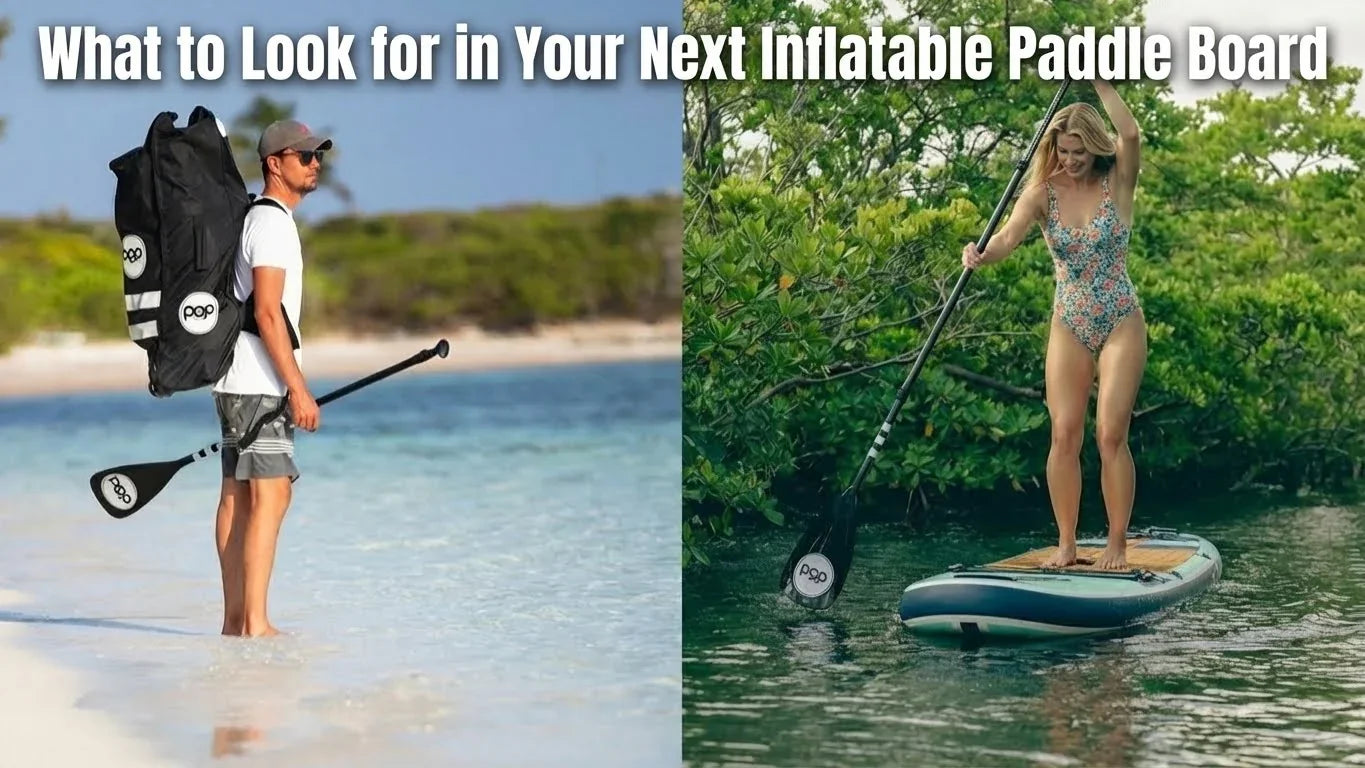
Man carrying an inflatable paddle board on the beach and a woman paddling on the water, used as the hero image for a SUP buying guide.
Woman sitting on an inflatable paddle board floating on calm water near greenery.

Leave a comment

All comments are moderated before being published.

This site is protected by hCaptcha and the hCaptcha Privacy Policy and Terms of Service apply.