

Canadian boaters face unique challenges—short seasons, variable water levels, limited marina access, and the need to maximize every day on the water. Portable inflatable docks like the 14' POPUP AQUADOCK solve these challenges while adding versatility that traditional fixed docks and boat-only setups can't match. Whether you're extending your boat's usable space, creating a swim platform, or establishing a water sports staging area, inflatable docks elevate every aspect of Canadian boating.

The Portability Advantage: Boat Anywhere
Traditional boat docks are permanent installations tied to specific locations. Inflatable docks pack into carry bags and deploy wherever your boating adventures take you.
Multi-Location Boating Freedom
Canadian boaters often explore multiple water bodies throughout the season—cottage lakes, provincial parks, different marinas, and remote waterways. The 14' POPUP YACHTDOCK deflates to fit in your boat's storage compartment or vehicle, enabling you to bring your dock to every destination. Set up your swim platform at the cottage this weekend, pack it up, and deploy it at a different lake next weekend.
No Marina Required
Marina slips are expensive, often unavailable, and lock you into specific locations. Inflatable docks enable anchoring in protected bays, coves, and shoreline areas without marina infrastructure. This independence opens up remote boating destinations inaccessible to marina-dependent boaters.
Seasonal Flexibility
Canada's short boating season (typically May through September in most regions) makes permanent dock installations impractical for many boaters. Inflatable docks deploy in spring, provide full-season functionality, then pack away for winter storage in a fraction of the space required by traditional docks. No professional installation or removal fees, no off-season storage costs.
Boat Integration: Extending Your Vessel's Capabilities
Inflatable docks transform boats into complete water recreation platforms by extending usable space and adding functionality.
Swim Platform Extension
Most boats have limited swim platform space—barely enough for one person to enter/exit water. Deploy the YACHTDOCK alongside your boat, creating 98 square feet of additional platform space. Multiple swimmers can enter and exit simultaneously, sunbathers have dedicated space, and water toys launch from the dock rather than cramped boat decks.
Water Sports Staging Area
Wakeboarding, waterskiing, tubing, and paddleboarding all benefit from dedicated staging areas. Inflatable docks provide stable platforms for:
- Gearing up for water sports without crowding boat decks
- Resting between runs without climbing back into the boat
- Launching paddleboards and kayaks without boat instability
- Teaching beginners in stable, controlled environments
- Managing multiple water sport participants efficiently
Entertaining and Socializing
Boats have limited deck space for entertaining. Add an inflatable dock to create expanded social zones. Guests spread between boat and dock, reducing crowding while maintaining the social atmosphere. The stable platform accommodates chairs, coolers, and gear that would clutter boat decks.
Boat Maintenance and Cleaning Platform
Hull cleaning, bottom painting, and maintenance tasks are easier with stable working platforms. Position your inflatable dock alongside your boat, creating a stable surface for accessing hull areas, applying bottom paint, or conducting underwater inspections. The platform's stability beats working from unstable dinghies or trying to reach from docks.
Safety Enhancements for Boating
Inflatable docks improve boating safety in multiple ways, particularly important given Canadian water conditions.
Emergency Boarding Platform
If someone falls overboard, re-boarding from water can be difficult, especially for children, elderly, or injured persons. An inflatable dock deployed alongside your boat provides a low, stable platform for water re-entry. The person climbs onto the dock first, then boards the boat from the stable platform—far easier than direct water-to-boat boarding.
Stable Transfer Point
Transferring between boats, loading gear, or assisting passengers is safer with stable intermediate platforms. The dock eliminates the gap between vessels and provides stable footing during transfers.
Rest Area for Swimmers
Canadian waters remain cold even in summer—water below 15°C creates hypothermia risk during extended swimming. Inflatable docks provide rest platforms where swimmers can exit cold water, warm up, and re-enter when ready. This is particularly valuable for children who may not recognize hypothermia symptoms.
Visibility and Marking
Brightly colored inflatable docks increase your boat's visibility to other vessels, particularly when anchored. The expanded footprint makes your position more obvious to approaching boats, reducing collision risk.
Water Sports Applications
Paddleboard and Kayak Launch Platform
Launching paddleboards and kayaks from boats is awkward and unstable. Inflatable docks create dedicated launch zones. Position boards on the dock, step on from the stable platform, and paddle away. When returning, approach the dock rather than trying to climb back into a rocking boat while on a paddleboard.
Diving and Snorkeling Base
Scuba diving and snorkeling from boats requires managing heavy gear on unstable platforms. Inflatable docks provide stable areas for gearing up, entering water, and exiting after dives. The low profile makes water entry and exit easier than high boat gunwales.
Wakeboard and Ski Instruction
Teaching wakeboarding or waterskiing is easier with stable platforms for instruction and practice. Beginners practice getting up on the dock before attempting it behind the boat. The stable surface builds confidence and allows instructors to demonstrate techniques.
Yoga and Fitness on Water
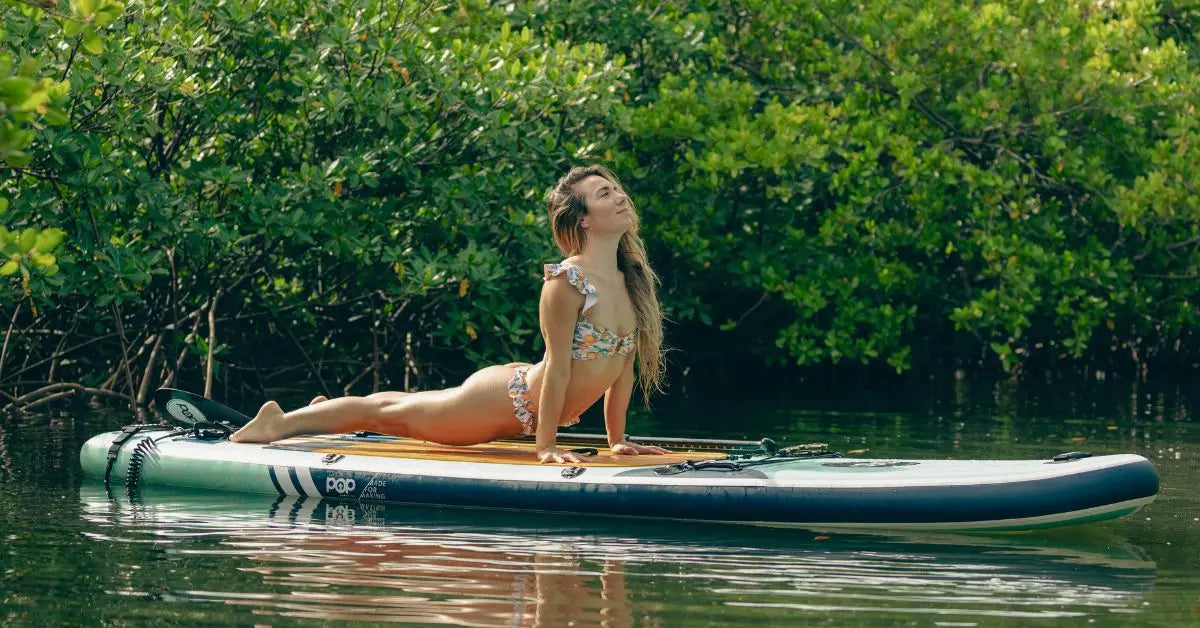
SUP yoga and water fitness are growing activities. Deploy your inflatable dock in calm bays for stable yoga platforms. The 98 square feet of the AQUADOCK accommodates multiple participants for group sessions.
Anchoring and Positioning for Boating Applications
Proper anchoring ensures your inflatable dock remains positioned correctly relative to your boat.
Alongside Anchoring
Position the dock alongside your boat, creating an extended platform. Use four-anchor configuration—two anchors on the outboard side of the dock, one anchor forward, one aft. This prevents the dock from drifting away from the boat while allowing some movement to absorb wave action.
Stern Platform Configuration
Deploy the dock off your boat's stern, creating an extended swim platform. Secure the dock to stern cleats using adjustable lines, then deploy two anchors from the dock's far end to prevent drift. This configuration works well for swim platforms and water sports staging.
Independent Anchoring
For maximum flexibility, anchor the dock independently near your boat. Use four-anchor square configuration for stability. This allows the boat to swing on its anchor independently while the dock remains stationary—useful when wind and current directions differ.
Anchor Specifications for Boating Use
Use 20-30 lb anchors for 14' docks, marine-grade nylon rope with 1,500 lb breaking strength, and 5:1 scope ratio minimum. For 3-meter water depth, deploy 15 meters of anchor line. Match anchor type to bottom conditions—fluke anchors for sand/mud, mushroom for silt, grapnel for rock.
Canadian Boating Environments
Great Lakes Boating
The Great Lakes present unique challenges—large waves, strong currents, and variable weather. Inflatable docks work well in protected harbors, bays, and marinas but should not be deployed in open water during rough conditions. Monitor marine forecasts from Environment Canada and evacuate docks when winds exceed 35 km/h or wave heights exceed 1 meter.
Interior Lake Boating
Ontario's cottage country, Quebec's Laurentian lakes, and BC's interior lakes provide ideal inflatable dock environments. Calmer conditions, protected bays, and family-focused recreation align perfectly with inflatable dock capabilities. These environments allow extended deployment throughout the season.
Coastal and Ocean Boating
Coastal boaters in BC, the Maritimes, and Atlantic Canada can use inflatable docks in protected harbors, estuaries, and bays. Avoid deployment in open ocean or areas with significant tidal currents. Salt water requires immediate fresh water rinsing after each use to prevent PVC degradation.
River Boating
River boaters can deploy inflatable docks in calm sections, eddies, and protected areas. Avoid fast-moving water or areas with significant current—these create dangerous conditions and excessive anchor loads. Position behind islands or in backwater areas where current is minimal.
Seasonal Boating Strategies
Spring Boating (May-June)
Early season boating often involves cold water temperatures (10-15°C). Deploy inflatable docks for swim platforms but require all users to wear PFDs due to hypothermia risk. The portable nature of inflatable docks allows you to capitalize on early-season boating opportunities without waiting for permanent dock installation.
Peak Season (July-August)
Peak boating season brings warm water, long days, and maximum water recreation. Inflatable docks see heavy use for swimming, water sports, and entertaining. Monitor for UV degradation—apply marine-grade UV protectant monthly and rinse thoroughly after each use. Peak season also means peak boat traffic—position docks away from navigation channels and mark with visible flags.
Fall Boating (September-October)
Fall offers exceptional boating with fewer crowds and beautiful conditions. Water temperatures cool, requiring increased safety awareness. The portability of inflatable docks allows you to extend your season—deploy for weekend trips even as permanent docks are removed for winter.

Maintenance for Boating Applications
Salt Water Considerations
Coastal boaters using inflatable docks in salt water must rinse thoroughly with fresh water after every use. Salt accelerates PVC degradation and corrodes metal hardware. Rinse all surfaces, valve areas, D-rings, and anchor attachment points. Allow to dry completely before storage.
Fuel and Oil Protection
Avoid contact between your inflatable dock and gasoline, diesel, or motor oil. These petroleum products degrade PVC rapidly. If fuel spills on the dock, rinse immediately with copious fresh water and mild soap. Position docks away from fuel fill areas and engine compartments.
Boat Hull Contact
When positioning docks alongside boats, use fenders or bumpers to prevent abrasion from hull contact. Boat hulls—particularly fiberglass and aluminum—can abrade dock surfaces during wave action or when boats rock. Protective fenders extend dock life significantly.
Anchor Line Inspection
Boating applications stress anchor lines more than stationary deployments due to wave action and boat wake. Inspect anchor lines weekly for UV damage, abrasion, and fraying. Replace lines every 2-3 seasons or immediately if significant wear is detected.
Regulations and Compliance
Transport Canada Requirements
Inflatable docks used in conjunction with boats must comply with Transport Canada safety equipment requirements:
- Personal flotation devices (PFDs) for all persons on the dock
- Sound signaling device (whistle or horn)
- Watertight flashlight if used after sunset
- Proper navigation lights if deployed after dark
Navigation Rules
Position inflatable docks outside navigation channels and maintain safe distances from marked waterways. Docks must not obstruct vessel passage or create navigation hazards. In busy harbors or marinas, verify local regulations regarding temporary platform deployment.
Environmental Regulations
Avoid deploying docks in protected habitat areas, near fish spawning zones, or in designated conservation areas. Clean docks thoroughly when moving between water bodies to prevent spreading invasive species like zebra mussels. Many provinces have mandatory watercraft inspection programs—inflatable docks may be subject to these requirements.
Comparing Dock Options for Boaters
8' POPUP DOCK — Compact Boat Companion
The 8' POPUP DOCK provides 48 square feet of platform space, ideal for smaller boats (under 20 feet) or solo/couple boating. The compact size stores easily in boat compartments and deploys quickly for swim platforms or water sports staging. Weight capacity of 1,500+ lbs handles 3-4 adults comfortably.
14' POPUP AQUADOCK — Family Boating Platform
The 14' POPUP AQUADOCK offers 98 square feet—ideal for family boats (20-30 feet) and group boating. The expanded platform accommodates 5-6 adults with room for water sports gear, coolers, and recreational equipment. This is the most versatile option for Canadian family boating.
14' POPUP YACHTDOCK — Premium Yacht Platform
The 14' POPUP YACHTDOCK represents yacht-grade construction for larger vessels (30+ feet) and demanding applications. Premium materials, reinforced construction, and higher weight capacity make this the choice for serious boaters wanting maximum performance and durability.
Cost Analysis: Inflatable Dock vs. Alternatives
Permanent Dock Installation
Permanent docks cost $5,000-20,000+ for materials and professional installation, plus $300-800 annually for removal and reinstallation. They're tied to specific locations and require significant storage space. Inflatable docks cost $899-1,399 one-time, with minimal ongoing costs and complete portability.
Boat Swim Platform Upgrades
Aftermarket swim platform extensions cost $1,500-5,000 installed and are permanently attached to your boat. They add weight, affect boat handling, and can't be removed for different applications. Inflatable docks provide more space, deploy only when needed, and don't affect boat performance.

Floating Dock Rentals
Renting inflatable docks costs $150-300 per weekend or $2,000-4,000 per season. Ownership pays for itself in 1-2 seasons while providing unlimited use and complete control over deployment timing and location.
Real-World Boating Applications
Cottage Boating
Cottage boaters use inflatable docks to extend their boat's functionality without permanent dock installations. Deploy the dock alongside your boat for swimming, water sports, and entertaining, then pack it away when you leave. This flexibility is perfect for seasonal cottage use.
Cruising and Exploration
Boaters exploring new waterways bring inflatable docks for overnight anchoring. The dock creates stable platforms for shore access, swimming, and relaxation in remote locations. Pack the dock during travel, deploy when you anchor for the night.
Fishing Boats
Fishing boats use inflatable docks as stable casting platforms, fish cleaning stations, and gear staging areas. The stable platform improves fishing success while providing dedicated space for tackle, coolers, and catch management.
Sailing Applications
Sailors deploy inflatable docks for dinghy alternatives, shore access in anchorages, and swim platforms. The portability fits sailing's go-anywhere philosophy while the stability beats unstable dinghies for water access.
Accessories for Boating Applications
Fenders and Bumpers
Protect both your boat and dock with marine fenders positioned between hull and dock. This prevents abrasion damage during wave action and boat movement.
Dock Lines and Cleats
Use adjustable dock lines to secure the inflatable dock to your boat's cleats. Spring lines prevent fore/aft movement while allowing vertical movement to absorb wave action.
Boarding Ladder
Add a boarding ladder to your inflatable dock for easy water entry and exit. This is particularly valuable for children, elderly, or anyone with mobility limitations.
Shade Structures
For extended use, add portable canopies or umbrella mounts to provide sun protection. UV exposure on water is intense—shade structures improve comfort during all-day boating.
Frequently Asked Questions
Can I leave my inflatable dock deployed all season?
While possible in protected locations, it's better to deflate and store when not in use for extended periods (week+). Continuous UV exposure accelerates degradation. If you use the dock weekly, leaving it deployed is reasonable with proper anchoring and UV protectant application.
How do I secure the dock to my boat?
Use adjustable dock lines attached to your boat's cleats and the dock's D-rings. Maintain slight tension to keep the dock positioned alongside while allowing vertical movement to absorb waves. Add spring lines to prevent fore/aft movement.
What size dock do I need for my boat?
For boats under 20 feet, the 8' POPUP DOCK works well. For 20-30 foot boats, choose the 14' AQUADOCK. For boats over 30 feet, the YACHTDOCK provides yacht-grade performance.
Can I use my inflatable dock in rough water?
No. Inflatable docks are designed for calm to moderate conditions. Evacuate and deflate when winds exceed 35 km/h or wave heights exceed 1 meter. Monitor Environment Canada forecasts and err on the side of caution.
How long does setup take?
Inflation takes 5-10 minutes with the included high-pressure pump. Anchoring adds 15-20 minutes for four-anchor configuration. Total deployment time: 25-30 minutes. Breakdown takes 15-20 minutes including deflation and packing.
Do I need special insurance for my inflatable dock?
Check with your boat insurance provider. Many policies cover inflatable docks as boat accessories, but verify coverage limits and requirements. Some insurers may require specific safety equipment or usage restrictions.
Can I tow my boat with the dock attached?
No. Deflate and pack the dock before towing your boat. The dock creates excessive drag and stress on attachment points during towing. Always transport the dock deflated and secured in your boat or vehicle.
What's the correct inflation pressure?
All Canadian Board Co. inflatable docks require 5-7 PSI optimal inflation. Use a pressure gauge to verify—never exceed 7 PSI. Cold water can reduce pressure by 1-2 PSI, so check and adjust 15-20 minutes after deployment.
Elevate Your Boating: Get Started Today
Portable inflatable docks transform Canadian boating by adding versatility, safety, and functionality that traditional setups can't match. Whether you're extending your boat's swim platform, creating water sports staging areas, or establishing remote anchoring bases, the POPUP AQUADOCK and other inflatable platforms deliver performance that elevates every boating adventure.
Explore our complete inflatable docks collection and discover how portable platforms can transform your Canadian boating experience.

Leave a comment
All comments are moderated before being published.
This site is protected by hCaptcha and the hCaptcha Privacy Policy and Terms of Service apply.