
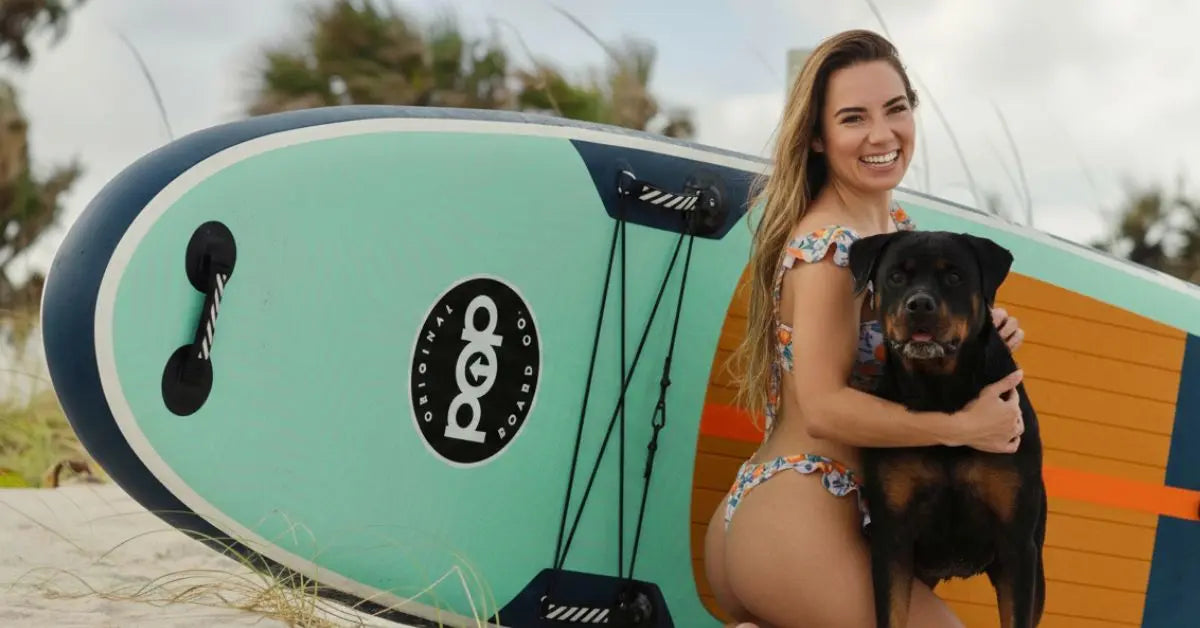
The best paddleboard setup for dogs starts with a wide, stable inflatable board, a properly fitted dog life vest, and calm training close to shore. For most Canadian dog owners, the 11'6 El Capitan Bomber is the easiest choice because it gives you the width, deck space, and stability a moving dog needs. The 11'0 Yacht Hopper is better for confident solo paddlers with smaller, calmer dogs.
Paddleboarding with your dog sounds simple until your dog takes one step to the side, shakes off water, or decides the front of the board is now the back of the board. Dogs move differently than people, and that movement changes what kind of paddleboard works best.
The good news is that most dogs can learn to enjoy paddleboarding when the setup is right. You need a stable board, a grippy deck, a dog life vest, short first sessions, and a calm launch area where the dog does not feel rushed.
Canadian Board Co. is a Canadian owned and operated shop based in Kelowna, BC. For this guide, we are focusing on the POP Board Co boards that make the most sense for dog owners, especially the 11'6 El Capitan Bomber and the 11'0 Yacht Hopper.

For dog paddling, calm water and a stable board matter more than speed.
Start with the right paddleboard for your dog
The board matters more when a dog is involved. A board that feels stable with one adult can feel completely different once a dog starts shifting weight, turning around, or walking toward the nose.
For paddleboarding with a dog, prioritize:
- Width: 34" to 36" is the safer range for most dog owners.
- Deck space: your dog needs room to sit, stand, turn, and lie down.
- Capacity: count your weight plus your dog’s weight plus gear.
- Deck grip: a soft, grippy deck pad helps paws stay planted.
- Stability: choose stable over fast, especially for the first season.
Simple rule: if your dog is medium or large, nervous, energetic, or new to paddleboarding, choose the wider board. Stability keeps the day fun.
Best POP Board Co boards for paddling with a dog
For Canadian dog owners, the best board is usually the one that feels boringly stable. You want the board to stay calm when your dog moves.
11'6 El Capitan Bomber
Best for most dog owners, bigger dogs, beginners, family use, and anyone who wants the most forgiving platform.
- 11'6" length
- 36" width
- 420 lb capacity
- Extra-stable family board
- Best POP Board Co pick for dogs
11'0 Yacht Hopper
Best for confident paddlers, smaller dogs, calm water, and solo cottage paddles where you want a lighter, more responsive board.
- 11'0" recreational board
- 32" width
- More agile feel
- Best with smaller, calmer dogs
- Great solo cottage cruiser
El Capitan is the safer dog-board recommendation
The Yacht Hopper is a fun recreational board, but the El Capitan is the stronger choice for most dog owners because it is wider and more stable. If your dog is overexcited, large, new to the water, or likely to move around, start with the El Capitan.
Why inflatable paddleboards work well for dogs
A quality inflatable paddleboard has a few real advantages for dogs.
- Softer deck feel: easier on paws than many hard-board surfaces.
- Grippy traction pad: gives dogs a better place to stand or lie down.
- More forgiving around docks: helpful when launching from a cottage shoreline.
- Easy storage: deflates and packs away after cottage weekends.
- Portable: easier to bring to different lakes, rentals, and dog-friendly beaches.
Dogs also tend to like routine. An inflatable board you can bring to the same quiet launch, set up the same way, and keep familiar helps your dog learn faster.

A clear deck area, soft traction pad, and simple gear setup help dogs settle on the board.
Your dog needs a flotation vest
Even strong-swimming dogs should wear a canine flotation device on a paddleboard. Cold water, fatigue, panic, wind, boat wake, and repeated re-boarding can wear a dog out quickly.
A good dog life vest should:
- Fit snugly without restricting breathing
- Have a secure handle on top
- Allow natural movement
- Stay in place when wet
- Be introduced before the first paddle
The handle matters because it gives you a safer way to help your dog back onto the board. Do not lift roughly or rely only on the collar. Practice gentle re-boarding in shallow water before going farther from shore.
Browse water safety gear here: https://www.canadianboardco.com/collections/water-safety.
Training your dog to paddleboard
The best dog paddleboard sessions are slow at the start. The goal is not to get on the lake as fast as possible. The goal is to teach your dog that the board is safe, calm, and predictable.
Step 1: practice on dry land
Inflate the board and place it on grass, carpet, or another soft surface. Let your dog sniff it, step on it, and get comfortable without water involved.
Reward calm behaviour. Practice simple cues like “on,” “off,” “sit,” and “stay.” Keep the first sessions short and positive.
Step 2: introduce the dog life vest
Let your dog wear the life vest around the yard or cottage before using it on the water. Some dogs need time to get used to the feel of straps and flotation panels.
Adjust the fit before the lake day, not while standing at the shoreline with an excited dog.
Step 3: move to shallow water
Start in ankle-deep or knee-deep water on a calm day. Kneel on the board, invite your dog on, and let the board move gently under both of you.
Do not rush into standing. Kneeling gives you better balance and helps your dog feel less movement.
Step 4: take a short first paddle
Stay close to shore. Take a few gentle strokes. If your dog stays calm, praise them and keep it short. Ending early on a good note is better than pushing too long.
Step 5: build slowly
Once your dog is comfortable, extend the session gradually. Add a little distance, a little standing time, and a little more variety only after your dog is relaxed.
Dog training tip: do not turn the first paddle into a long adventure. Ten calm minutes is a win if your dog finishes relaxed and willing to try again.
What to bring when paddleboarding with your dog
Dog paddling does not require a huge kit, but a few items make the session safer and easier.
| Item | Why You Need It |
|---|---|
| Dog life vest | Helps with flotation and gives you a handle for calm re-boarding. |
| Stable board | Wide boards like the El Capitan are easier when a dog shifts weight. |
| Fresh water | Do not rely on lake water as your dog’s drinking source. |
| Collapsible bowl | Small, easy to pack, and useful for hot lake days. |
| Towel | Helps dry paws and gives nervous dogs a familiar spot. |
| Dry bag | Keeps treats, keys, phone, leash, and towel organized. |
| Human PFD | You still need your own properly fitted PFD or lifejacket. |
Browse paddleboard accessories here: https://www.canadianboardco.com/collections/paddle-board-accessories.
Common mistakes to avoid
- Starting on windy water: choose calm, flat water for the first sessions.
- Using a narrow board: dogs need room and stability.
- Skipping the dog life vest: even strong swimmers can get tired or cold.
- Standing too soon: kneel until your dog settles.
- Going too far on day one: short, positive sessions build confidence.
- Letting claws get too long: trimmed nails help with grip and reduce deck wear.
- Forgetting fresh water: bring clean water and a bowl for your dog.
Cold water and hot weather both matter
Canadian lake conditions can change the way you paddle with a dog. Spring and early summer water can be colder than the air suggests. Hot July and August afternoons can also be hard on dogs because they cannot cool themselves as easily as people.
In cold water, keep sessions short, close to shore, and watch for shivering or fatigue.
In hot weather, paddle earlier in the day, bring fresh water, give your dog breaks, and avoid making them stand on hot surfaces before launching.
Watch your dog, not the clock
Some dogs tire quickly, especially if they are excited, cold, overheated, or swimming more than expected. If your dog starts shivering, panting heavily, pacing, whining, or trying to get off the board, head in.
Best setup by dog size
| Dog Size | Board Recommendation | Setup Note |
|---|---|---|
| Small dog | Yacht Hopper or El Capitan | The Yacht Hopper can work well if the paddler is confident and the dog is calm. |
| Medium dog | El Capitan | The extra width is helpful when the dog turns, shifts, or sits off-centre. |
| Large dog | El Capitan | Choose the widest, most stable setup and keep the first sessions close to shore. |
| Nervous dog | El Capitan | Stability matters more than speed. Train slowly on dry land first. |
| Experienced dog | Yacht Hopper or El Capitan | Confident dogs may do well on either, depending on paddler size and conditions. |
Should your dog sit in front or behind you?
Most dogs do best sitting or lying near the front half of the board, ahead of your feet but not all the way on the nose. You want them close enough that you can see their body language and adjust your balance.
If your dog sits too far forward, the nose may feel low. If your dog moves too far to one side, the board may roll. A wide board gives you more room to correct those shifts without falling in.
Start kneeling with your dog in front of you. Once they learn where to settle, standing becomes easier.

Before trying a paddleboard, let your dog get comfortable around inflatable lake gear, docks, and shallow water.
The bottom line
Paddleboarding with your dog is one of the best parts of Canadian lake season, but the setup matters. Choose a stable board, use a properly fitted dog life vest, train slowly, and keep the first sessions calm and close to shore.
For most dog owners, the 11'6 El Capitan Bomber is the best POP Board Co choice because it gives you the width and stability dogs need. The 11'0 Yacht Hopper can work well for smaller calm dogs and confident paddlers who want a lighter recreational board.
Shop the El Capitan Bomber here: https://www.canadianboardco.com/products/116-el-capitan.
Shop the Yacht Hopper here: https://www.canadianboardco.com/products/110-yacht-hopper-teak-blue-mint-2024.
Browse inflatable paddleboards here: https://www.canadianboardco.com/collections/inflatable-paddleboards-canadas-best-isup.
Browse water safety gear here: https://www.canadianboardco.com/collections/water-safety.
Browse paddleboard accessories here: https://www.canadianboardco.com/collections/paddle-board-accessories.
Read the paddleboard sizing guide here: https://www.canadianboardco.com/blogs/water-sports-guide/what-size-paddleboard-do-i-need-canada.
Boards are backed by the 60-Day Rider's Guarantee: https://www.canadianboardco.com/pages/60-day-riders-guarantee.
Warranty details are here: https://www.canadianboardco.com/pages/3-year-warranty.
Call 1-800-399-5260 if you want help choosing the right paddleboard for your dog, your cottage lake, your paddling experience, and your storage setup.
FAQ
What is the best paddleboard for a dog?
A wide, stable inflatable paddleboard is best for most dogs. The 11'6 El Capitan Bomber is the strongest POP Board Co recommendation for dog owners because it is wide, stable, and forgiving when the dog moves around.
Can I paddleboard with my dog on the Yacht Hopper?
Yes, the Yacht Hopper can work for smaller, calmer dogs and confident paddlers on calm water. For larger dogs, nervous dogs, or beginners, the El Capitan is the better choice because it is wider and more stable.
Does my dog need a life vest on a paddleboard?
Yes, a dog life vest is strongly recommended. It helps your dog stay buoyant, makes them easier to spot, and gives you a handle to help them back onto the board.
Will my dog’s claws damage an inflatable paddleboard?
Quality inflatable paddleboards are built for regular use, and claw damage is uncommon when nails are trimmed and the dog is on the deck pad. Keep nails trimmed and avoid letting the dog dig or scratch at seams.
How do I train my dog to paddleboard?
Start on dry land, then move to shallow calm water, then take a short kneeling paddle close to shore. Reward calm behaviour and keep the first sessions short.
Should my dog sit in front of me on the paddleboard?
Most dogs do best near the front half of the board, ahead of your feet but not all the way on the nose. Start kneeling so you can control balance while your dog learns where to settle.
Is paddleboarding safe for dogs in cold Canadian lakes?
It can be, but keep sessions short, stay close to shore, use a dog life vest, and watch for shivering, fatigue, or stress. Early-season water can be colder than the air feels.
What should I bring when paddleboarding with my dog?
Bring a dog life vest, your own PFD, leash, fresh water, collapsible bowl, towel, dry bag, phone pouch, and sun protection. Keep the first setup simple and close to shore.

Leave a comment
All comments are moderated before being published.
This site is protected by hCaptcha and the hCaptcha Privacy Policy and Terms of Service apply.