
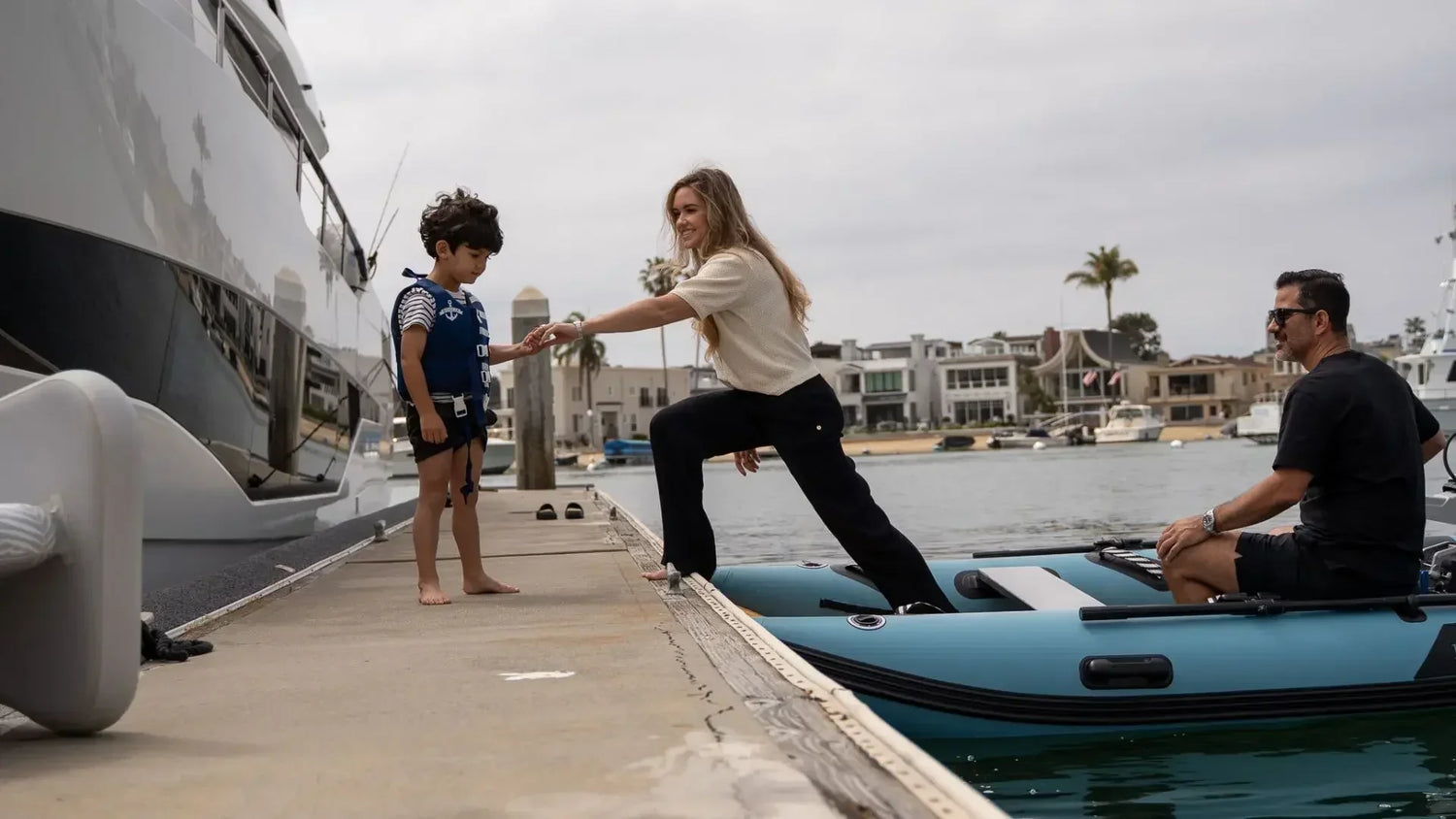
To choose the right inflatable dinghy, start with how many people you carry, how much weight you bring, where you launch, how you store it, and what motor you plan to use. At Canadian Board Co., the Rover Marine Battle Boat is the traditional inflatable boat option, while the Rover Marine Battle Cat is the catamaran-style option for extra deck stability.
An inflatable dinghy can be a cottage runabout, a fishing boat, a tender, a beach launcher, or a portable family boat. The right choice depends less on one headline feature and more on matching the boat to your real use.
Before buying, check the live product page, capacity plate, current motor recommendation, and local boating rules. Specs can vary by size and model, and power-driven boats in Canada have proof-of-competency requirements.

The right inflatable dinghy should match your passenger load, motor plan, launch style, storage space, and water conditions.
Start with the job the dinghy needs to do
Boat-to-shore use
For tendering, think about boarding height, gear, motor weight, tie-up points, and whether the dinghy needs to pack down between trips.
Stability matters
Fishing requires space for rods, tackle, coolers, movement, and steady footing. A more stable platform can make the day easier.
Capacity first
Count people, pets, coolers, bags, batteries, safety gear, and motor weight. Do not size only for empty passengers.
Portable still needs space
Inflatable boats pack down, but larger sizes still need storage room for the hull, floor, pump, oars, motor, fuel or battery, and accessories.
Battle Boat vs Battle Cat
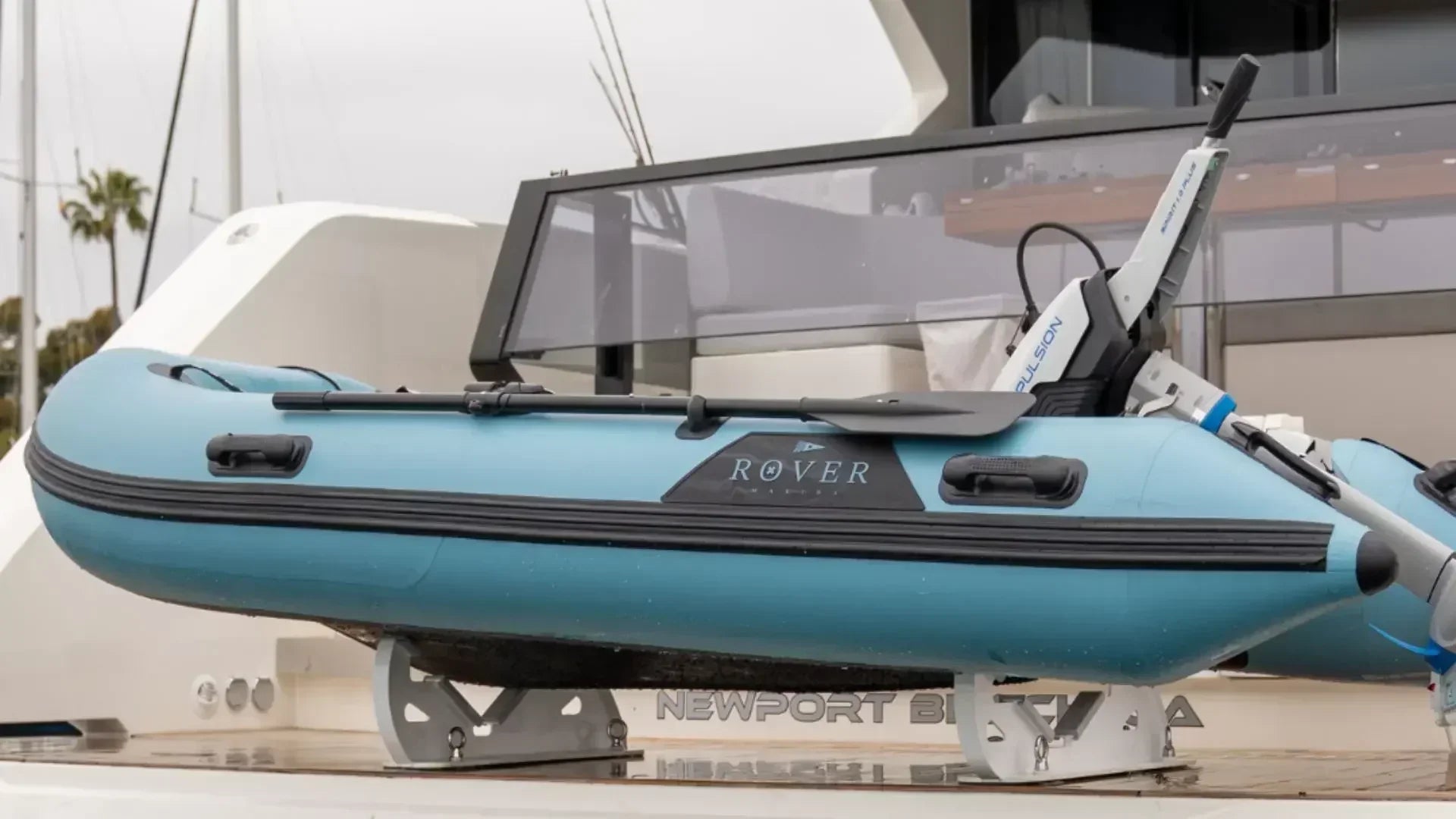
The Battle Boat and Battle Cat serve different buyers. The Battle Boat has a more traditional inflatable boat feel. The Battle Cat uses a catamaran-style layout for a more stable deck feel, especially useful for fishing, family use, and people moving around.
Rover Marine Battle Boat
Choose Battle Boat if you want a classic inflatable dinghy for cruising, fishing, tendering, exploring, and portable cottage boating.
- Currently offered in 8 ft, 10 ft, and 12 ft sizes
- Single-hull style inflatable boat feel
- Drop-stitch floor
- Gas or electric outboard ready with proper setup
Rover Marine Battle Cat
Choose Battle Cat if you want the more stable catamaran-style platform for family rides, fishing, standing, and gear-heavy days.
- Currently offered in 8 ft, 10 ft, and 12 ft sizes
- Twin-pontoon catamaran-style layout
- Good deck space for fishing and family use
- Portable alternative to a trailer boat

The Battle Cat is the better fit when the buyer wants catamaran-style stability and more usable deck feel.
How to choose the right size
Current Rover Marine product pages list 8 ft, 10 ft, and 12 ft options with different capacities and motor recommendations. Use the live product page and boat capacity plate as the final source before buying or powering the boat.
Compact tender or solo setup
Best when portability matters most, passenger load is lighter, and storage space is limited.
Middle-size family option
A good balance for many cottage users who want more space than the smallest size without jumping to the largest package.
More room and load capacity
Best for heavier gear, larger groups within the listed capacity, and buyers who want the most usable deck space.
Check before buying
Current pages commonly list size-specific motor recommendations. Confirm the live spec, motor weight, shaft length, transom, and local rules.
Motor and operator rules in Canada
In Canada, operators of power-driven pleasure craft need proof of competency, with the Pleasure Craft Operator Card being the most common. Transport Canada also has pleasure craft licence rules for recreational craft with engines totaling at least 10 hp or 7.5 kW.
Check Transport Canada before operating
Read Transport Canada's Pleasure Craft Operator Card information here: https://tc.canada.ca/en/marine-transportation/marine-safety/pleasure-craft-operator-card. Read pleasure craft licence information here: https://tc.canada.ca/en/marine-transportation/vessel-licensing-registration/licensing-pleasure-craft/apply-manage-pleasure-craft-licence-pcl/apply-manage-pleasure-craft-licence-pcl. Rules can change, and provincial, municipal, park, marina, or waterbody rules may also apply.
Electric vs gas outboard
Electric outboards can be quiet, low-maintenance, and convenient for cottage cruising, marinas, and calm water. Gas outboards can offer longer runtime and different power options, but they add fuel, maintenance, noise, and storage considerations.
Check the boat's live motor recommendations and the motor manufacturer's setup requirements before pairing. Also consider battery weight, charger access, runtime, shaft length, mounting, and how you will transport the motor safely.
Browse electric outboards here: https://www.canadianboardco.com/collections/electric-outboard-motors.
Customer feedback: family stability matters
"Perfect for our family of four."
That is the kind of use case where a stable inflatable catamaran-style boat can make sense.
"Easy to store and transport."
Portability is a major reason shoppers choose inflatable boats instead of trailer-based setups.
"More stable than the inflatable boat we used to own."
Stability is a practical buying reason for fishing, families, and people moving around on the deck.
Read more Canadian Board Co. customer reviews here: https://www.canadianboardco.com/pages/reviews.
The bottom line
Choose the Battle Boat if you want a traditional inflatable dinghy for portable cottage boating, tendering, cruising, and fishing. Choose the Battle Cat if you want more deck stability, catamaran-style handling, and a better platform feel for family and fishing use.
Shop Battle Boat here: https://www.canadianboardco.com/products/rover-marine-battle-boat-inflatable-boat.
Shop Battle Cat here: https://www.canadianboardco.com/products/rover-marine-battle-cat-inflatable-catamaran.
Browse boats here: https://www.canadianboardco.com/collections/boats.
Browse electric outboards here: https://www.canadianboardco.com/collections/electric-outboard-motors.
Browse boating accessories here: https://www.canadianboardco.com/collections/boating-accessories.
Call 1-800-399-5260 if you want help choosing the right inflatable dinghy size, motor setup, accessories, or Battle Boat versus Battle Cat fit.
FAQ
What size inflatable dinghy should I buy?
Choose based on passenger load, gear weight, motor plan, storage space, and where you launch. Check the live product page and boat capacity plate before buying.
What is the difference between Battle Boat and Battle Cat?
Battle Boat is the more traditional inflatable boat. Battle Cat is the catamaran-style option with a more stable platform feel for fishing, family use, and standing.
Can I use an electric outboard on an inflatable dinghy?
Yes, if the boat, motor, transom, shaft length, battery setup, and weight are compatible. Always check the live product page and motor manufacturer guidance.
Do I need a boating licence for an inflatable dinghy in Canada?
For power-driven pleasure craft, operators need proof of competency, with the Pleasure Craft Operator Card being the most common. Read Transport Canada guidance here: https://tc.canada.ca/en/marine-transportation/marine-safety/pleasure-craft-operator-card.
Does an inflatable boat need a pleasure craft licence in Canada?
Transport Canada says a pleasure craft licence applies to recreational craft with engines totaling at least 10 hp or 7.5 kW. Read current details here: https://tc.canada.ca/en/marine-transportation/vessel-licensing-registration/licensing-pleasure-craft/apply-manage-pleasure-craft-licence-pcl/apply-manage-pleasure-craft-licence-pcl.
Is Battle Cat better for fishing?
Battle Cat is usually the better fit when fishing stability and deck feel matter most. Battle Boat is better for buyers who prefer a traditional dinghy layout.
Can I use an inflatable dinghy as a tender?
Yes, many inflatable boats are used as tenders. Confirm size, capacity, tie-off points, boarding method, motor setup, and storage before buying.


Leave a comment
All comments are moderated before being published.
This site is protected by hCaptcha and the hCaptcha Privacy Policy and Terms of Service apply.