
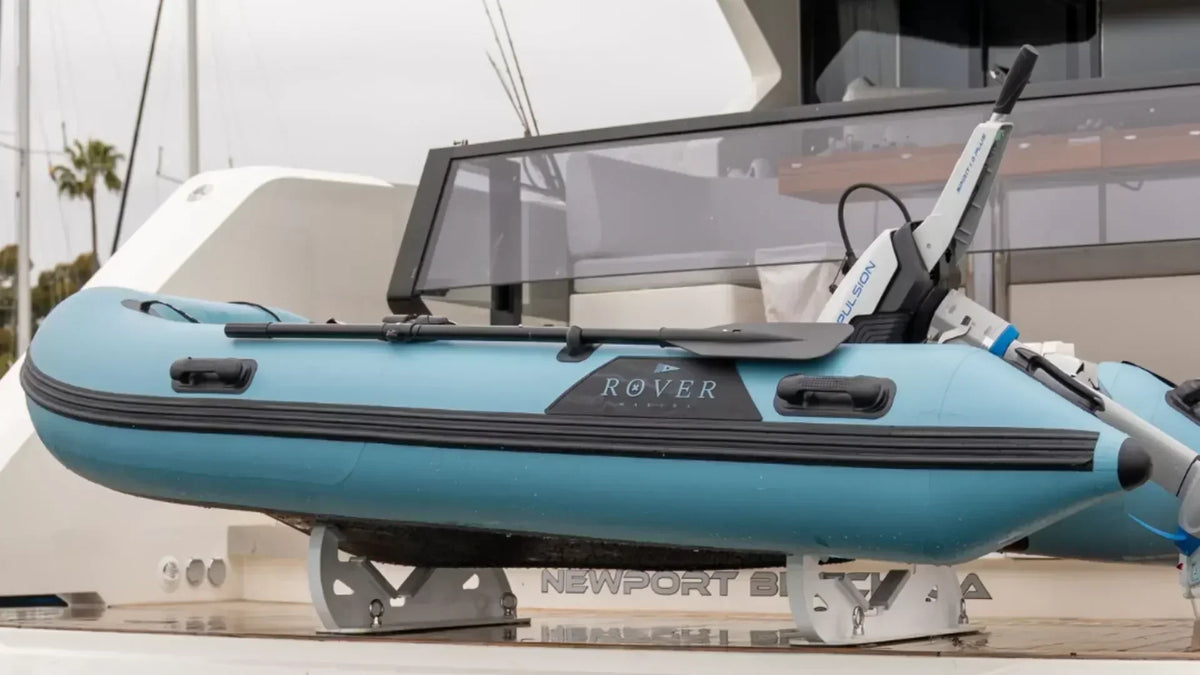
The short answer: regular inflatable dinghy maintenance means rinsing after use, drying before storage, checking valves and seams, protecting the material from UV and abrasion, monitoring pressure, cleaning hardware, and handling small repairs early. A simple routine after every trip is easier than fixing leaks at the start of boating season.
An inflatable dinghy works hard. It rubs docks, carries gear, sits in sun, collects sand, supports motors, gets rolled into bags, and often spends winter in a shed. Regular maintenance protects the material, seams, floor, valves, transom, and accessories so the boat stays easier to launch and safer to inspect.
This 2026 update focuses on practical care for portable inflatable boats like the Rover Marine Battle Boat and Rover Marine Battle Cat. It avoids outdated claims and includes current safety reminders for Canadian boaters.

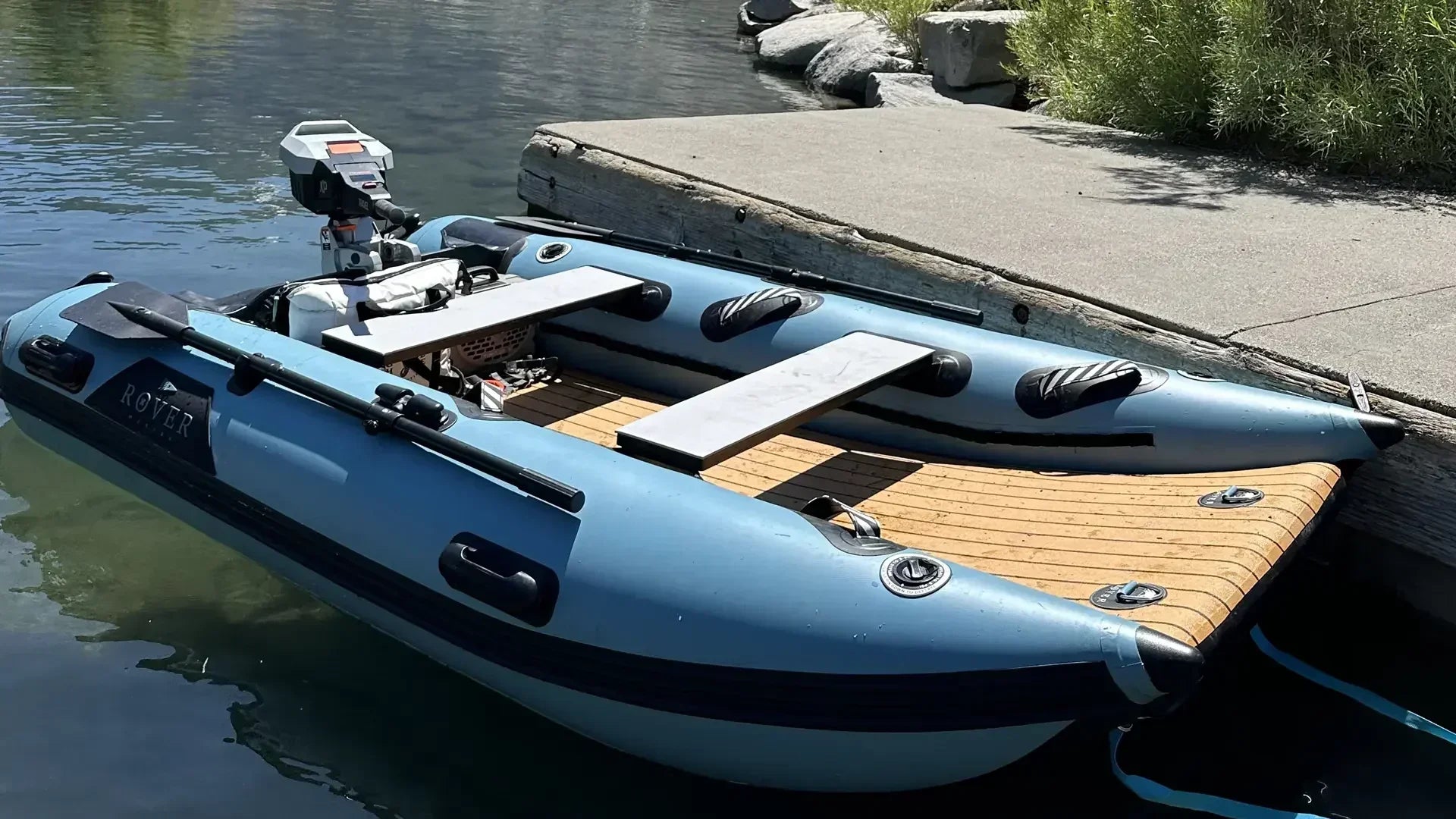
Regular maintenance protects valves, seams, deck surfaces, tubes, hardware, and the transom before small issues become bigger problems.
After every use: the quick maintenance routine
Rinse
Use fresh water to remove salt, sand, mud, algae, fish residue, sunscreen, and grit from tubes, floor, seams, and hardware.
Dry
Dry the boat before bagging it. Pay attention to folds, valve areas, floor edges, seat contact points, and the underside.
Inspect
Look for scuffs, cuts, loose valve caps, seam lifting, soft pressure, transom issues, and missing accessories.
Store
Keep the boat shaded, clean, and dry. Do not leave it baking in the sun or sitting wet in a closed bag.
Monthly checks during boating season
Even if the boat seems fine, a quick monthly inspection helps catch issues early. Inflate the boat enough to hold shape and work around each section slowly.
- Check valves for grit, leaks, and damaged caps.
- Check seams and floor edges for bubbling, lifting, or slow leaks.
- Inspect the transom and motor mount hardware.
- Look at D-rings, handles, oar locks, seats, and straps.
- Check the pump hose, adapters, repair kit, and bag.
- Top up your water safety gear and boating accessories before the next trip.

A clean cover helps protect the boat, but regular inspections are still needed throughout the season.
Pressure and inflation care
Inflatable boats need proper pressure to perform as intended. Too little pressure can make the boat flex and handle poorly. Too much pressure, especially during heat, can stress seams and chambers. Current Rover Marine listings reference tube and floor pressure details, but you should always follow the live product page, product label, and manual for your exact boat.
Heat reminder: air expands in hot sun. Avoid leaving a fully inflated boat baking on shore for long periods. If conditions change, check pressure and follow the manufacturer’s guidance.
How to protect against UV and abrasion
Sun, docks, rocks, concrete, barnacles, and dragging are the usual enemies. Use shaded storage when possible. Rinse after saltwater. Avoid dragging the boat across rough surfaces. Use fenders when tied near a boat or hard dock. Keep the boat away from sharp metal, exposed screws, rough concrete, and barnacle-covered edges.
Limit long exposure
Use covers, shade, and proper storage. Do not treat the boat as permanent outdoor furniture.
Avoid dragging
Lift or carry where possible. Dragging over rock, shells, pavement, and rough docks can damage the underside and tubes.
Rinse after use
Saltwater can be hard on hardware, straps, and material. Rinse with fresh water and dry before storage.
Keep cleaners gentle
Use mild soap and water unless the manufacturer recommends otherwise. Avoid harsh solvents and abrasive pads.
Repair small issues early
Small scuffs and tiny leaks are easier to handle before a long weekend. Keep the repair kit with the boat and learn what is included. If a leak is near a seam, valve, or transom, contact support before attempting a major repair. For replacement accessories and support gear, browse boating accessories and pumps.
Transport Canada safety reminders
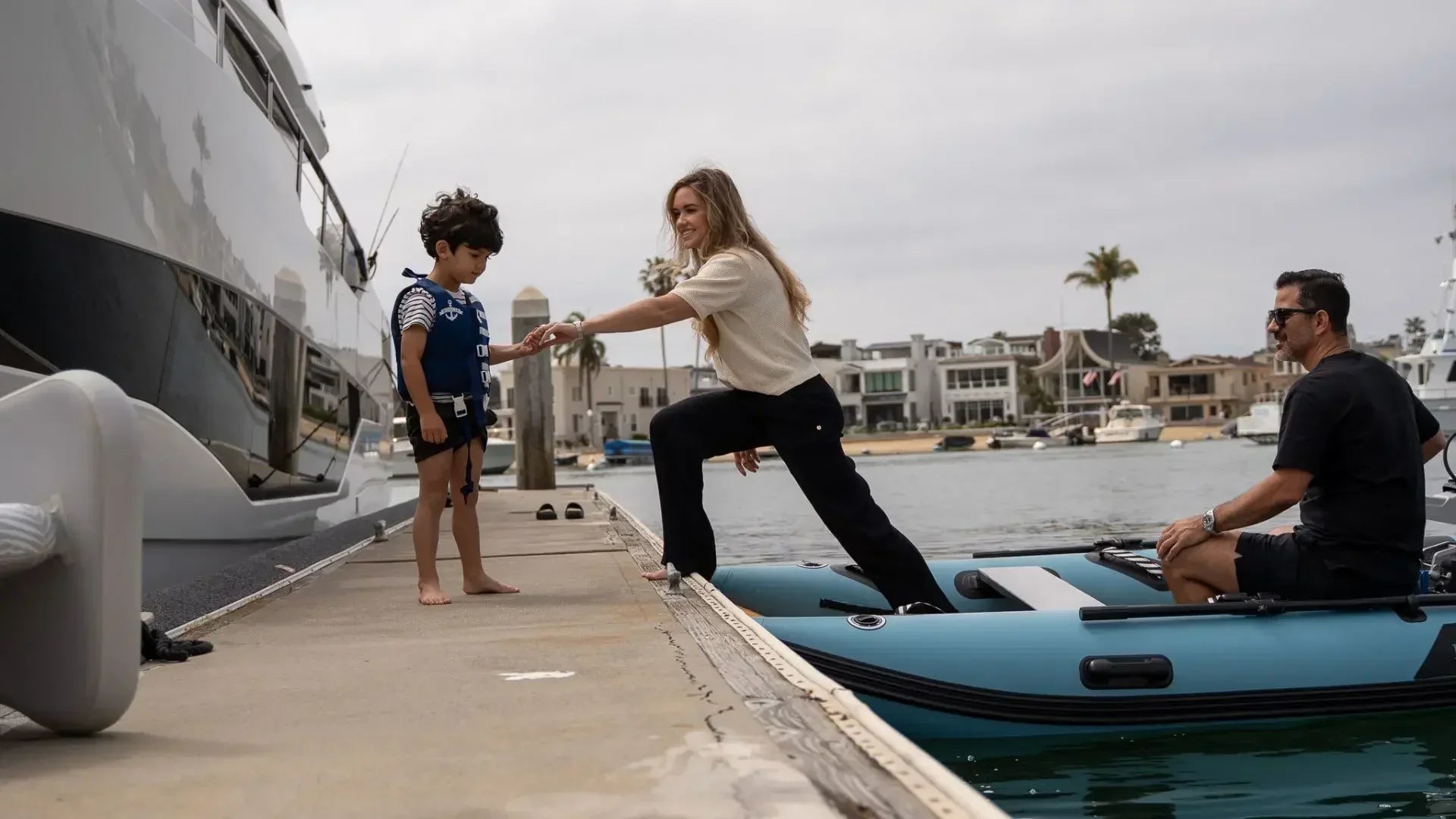
Maintenance is not only about the boat material. Before heading out, confirm your safety gear is on board, check the weather, brief passengers, and know local hazards. In Canada, operators of power-driven pleasure craft need proof of competency. Everyone on board should have a properly fitted Canadian-approved lifejacket or PFD available, and wearing it is the safest habit.
Helpful external references: Transport Canada maintaining a safe pleasure craft, Transport Canada PCOC information, Transport Canada PFD guidance, and marine weather forecasts.
Customer feedback: practical ownership matters
For inflatable boats, useful customer feedback usually comes down to portability, easy setup, stable footing, and whether the boat fits the owner’s actual storage space. Those are the details that make a boat easy to use more than once.
“Stable on the water.”
A steady inflatable boat makes fishing, tender runs, and family cruising feel more controlled in calm, protected conditions.
“Easy to store.”
Portability is one of the biggest reasons people choose a Battle Boat or Battle Cat instead of a trailer boat.
“Great setup for the cottage.”
The right size boat can handle short runs, fishing gear, shoreline exploring, and light family cruising without needing a permanent slip.
Read more Canadian Board Co. customer reviews here: https://www.canadianboardco.com/pages/reviews.
The bottom line
Inflatable dinghy maintenance is mostly about consistency. Rinse it, dry it, inspect it, protect it from UV and abrasion, monitor pressure, care for the motor, and store it properly. A few minutes after each trip can prevent many spring surprises.
Shop Battle Boat here: https://www.canadianboardco.com/products/rover-marine-battle-boat-inflatable-boat.
Shop Battle Cat here: https://www.canadianboardco.com/products/rover-marine-battle-cat-inflatable-catamaran.
Browse boating accessories here: https://www.canadianboardco.com/collections/boating-accessories.
Browse water safety gear here: https://www.canadianboardco.com/collections/water-safety.
Call 1-800-399-5260 if you want help building a maintenance kit.
FAQ
How often should I maintain an inflatable dinghy?
Rinse and dry after every use. Do a deeper inspection monthly during the season and before winter storage.
What should I use to clean an inflatable dinghy?
Use fresh water, mild soap, and a soft cloth or brush. Avoid harsh solvents, abrasive pads, and cleaners not intended for inflatable boats.
How do I find a leak?
Inflate the boat enough to hold shape and listen for hissing. A mild soapy water solution can help show bubbles at small leaks.
Can I leave my inflatable dinghy in the sun?
Limit long sun exposure when possible. Use shade, a cover, and proper storage to reduce UV damage.
Should I rinse after freshwater use?
Yes. Freshwater can still leave grit, algae, mud, and organic residue that can stain or smell during storage.
How do I protect the transom?
Rinse hardware, check fasteners, avoid overloading, remove the motor for storage, and inspect for cracks, corrosion, or soft spots.
What safety gear should stay with the dinghy?
Keep properly fitted lifejackets or PFDs, required safety equipment, a pump, repair kit, line, and signalling gear with the boat.
When should I contact support?
Contact support if you find seam separation, valve failure, transom damage, persistent leaks, or damage you are not comfortable repairing.

Leave a comment
All comments are moderated before being published.
This site is protected by hCaptcha and the hCaptcha Privacy Policy and Terms of Service apply.