
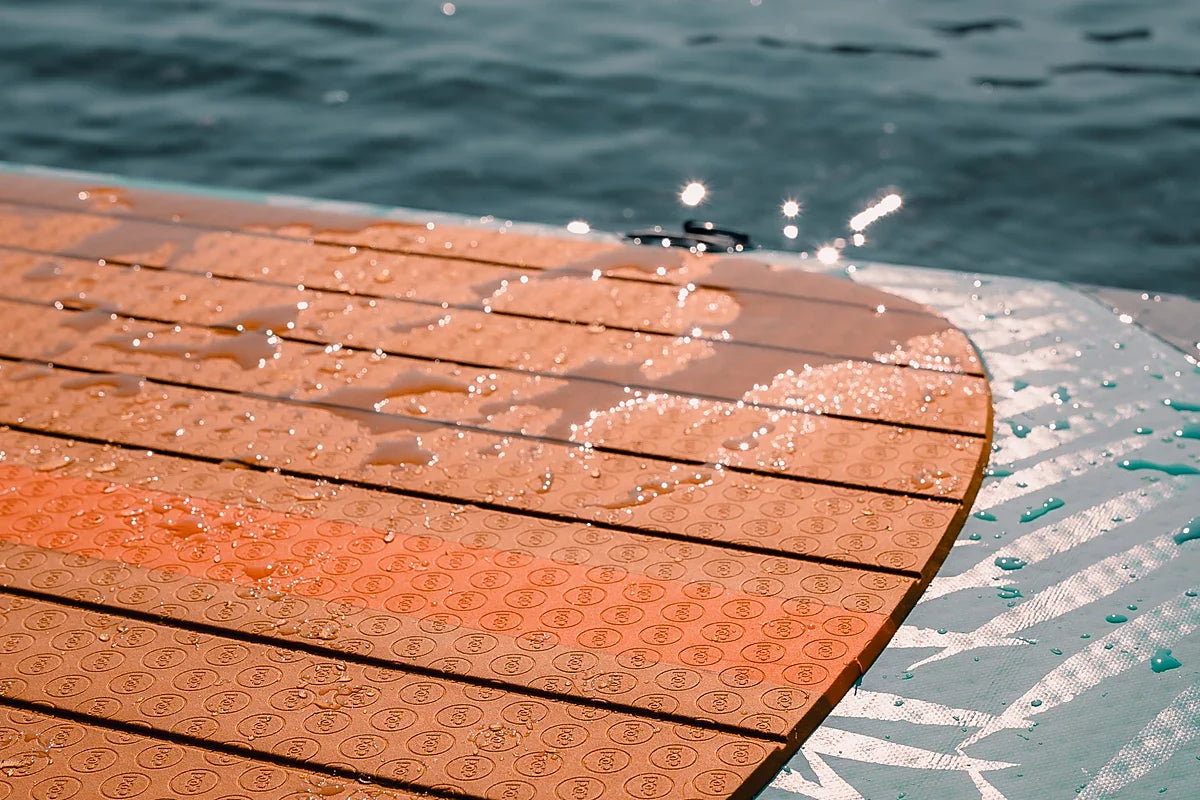
There is no responsible universal lifespan. Construction, use, pressure, UV exposure, abrasion, repairs and winter storage determine how long an inflatable remains dependable.
Somebody asks this before almost every purchase, and the answers online are either a marketing number or a shrug.
The answer is not a simple number of years. Two products bought on the same day can age very differently because use, UV exposure, abrasion, repairs and storage are different.
The short answer
A quality drop-stitch inflatable that is properly cared for can provide many seasons of use, but no responsible lifespan can be promised without knowing the product, use and care
A quality drop-stitch inflatable that is stored wet, compressed under weight, in a shed that swings forty degrees between afternoon and midnight, can develop avoidable problems much sooner.
Construction and storage both influence service life.
Why "years" is the wrong unit

Think of it in terms of what actually degrades.
UV exposure degrades PVC. That is measured in hours in direct sunlight, not years owned. A board that lives on a sunny dock all summer ages faster than one that is inflated for a paddle and packed away, even if the second one is used more often.
Fold-line stress accumulates at creases. That is measured in how tightly and how repeatedly you fold at the same spot, not in seasons.
Storage should stay within the temperature guidance for the exact product. Canadian Board Co.’s warranty currently excludes damage caused by inappropriate storage below -5°C or above 27°C.
Moisture and mildew degrade material and staining is permanent. That is measured in whether you dried it properly, once, in September.
Rodents are a binary event. It either happens or it does not, and a fabric bag in a rural outbuilding makes it far more likely.
Every one of those is a storage variable. Which is why the useful question is not "how long does it last," it is "what am I doing to it for the eight months a year I am not using it."
What actually fails, and in what order
In rough order of how commonly we see it:
Valves. Debris, a poorly seated mechanism or damage can cause pressure loss. Clean and inspect the area using the product instructions before deciding on repair.
Seams. Bonded panel and rail areas deserve regular inspection. Lifting, bubbling or pressure loss can have different causes, so document the change and ask for support before attempting a repair that may affect warranty review.
D-ring and patch attachments. Bonded to the surface, so they take the same abuse as seams with more leverage on them. Caught early, they are a repair. Ignored, they take material with them.
The top layer. Scuffs, gouges and abrasion from beaching on rock, dragging across gravel, or a dog with enthusiastic claws. Mostly cosmetic until it goes deep enough to expose the drop-stitch core.
Internal structural damage. A bulge or distorted area that does not sit flat needs professional assessment. Stop using the product until the cause is clear.
Note that four of those five are storage and maintenance driven. Only the fourth is genuinely about use.
What the warranty tells you
Our warranty runs three years on inflatable paddleboards and docks. Pumps and electronics carry a shorter window, which is normal across the industry and reflects that a motor and a battery are wear items in a way that bonded PVC is not.
A warranty period is not a lifespan estimate. It defines eligible coverage for a period. Construction, normal wear, use, maintenance and storage all continue to influence service life.
The five habits that add years

Dry it properly before storage. Both sides. This is the single highest-return habit in the whole category and it costs you an afternoon once a year. Our storage mistakes guide covers why.
Store somewhere temperature-stable. A cold basement beats a variable shed. Consistency matters more than warmth.
Keep it at the correct pressure in use. Underinflation reduces rigidity and overinflation can damage the structure. Use a gauge and the exact product specification.
Get it out of the sun when you are not on it. Not a rule about ever leaving it out, just a general habit. A board that lives inflated in full sun on a dock all summer is doing a lot of UV hours for very little paddling.
Address small changes promptly. Document possible manufacturer defects before repair and use the approved method for ordinary damage.
Inflatable versus hard: does one last longer?
This comes up constantly and the answer is more even than people expect.
A hard board is more vulnerable to the thing that actually happens to boards: impact. Dings from rocks, dropped gear, and transport damage. A hard board with a compromised skin takes on water and that is a serious repair.
An inflatable is far more impact-tolerant and far more vulnerable to storage neglect. It shrugs off the rock that would ding a hard board, then gets destroyed in a shed.
So the durability question is really a question about your habits and your storage situation. If you have a garage, a car and a cottage a couple of hours away, an inflatable is the more practical long-term proposition for most Canadians. Our inflatable versus hard board comparison goes deeper.
When is it actually worth replacing?
- It will not hold pressure overnight and the valve is not the culprit.
- A seam has lifted along a meaningful length rather than at one small spot.
- There is a bulge or distortion that does not sit flat when inflated, indicating internal fibre failure.
- Rodent damage through the material at multiple points.
Signs it is not time, even though people think it is:
- Cosmetic scuffs and faded graphics.
- One small puncture. That is a patch.
- A soft feel underfoot. Check pressure first, then inspect the valve and structure if the issue persists.
- A valve that leaks slowly. Often cleanable, sometimes replaceable.
If you are unsure which category you are in, send us photos. We would rather tell you it is fixable than sell you something you do not need.
The buying implication
If lifespan is driven by storage rather than by use, two things follow.
First, buying a better-built board is worth it, because you are not replacing it in three years, you are keeping it for a long time and the per-season cost of quality drops fast.
Second, buying in the off-season and storing it correctly over the winter costs you nothing in lifespan. A board that spends its first winter in a dry, stable, dark space is in better shape in May than one bought in spring and stored badly the following October. Our guide on when to buy covers the timing.
Frequently Asked Questions
How long do inflatable paddle boards last?
A quality drop-stitch board that is dried properly, stored in stable conditions and kept at correct pressure will give you many seasons. Poorly stored boards can show serious problems within a few years. Storage practice matters far more than how often it is used.
Do inflatable paddle boards lose air over time?
All of them lose pressure gradually, and they drop noticeably when the temperature falls because cool air contracts. Losing a small amount over days is normal. Going soft overnight in stable temperatures usually means a valve issue.
How long do inflatable docks last?
The same logic applies. The material is durable and the limiting factor is end-of-season care. Docks that are cleaned, fully dried, drained at the valve and stored in stable conditions last many seasons.
Are inflatable paddle boards durable?
Yes, and more impact-tolerant than hard boards. Drop-stitch construction handles rocks, docks, dogs and beaching in ways that would ding a hard board. Their weakness is storage neglect rather than use.
What is the warranty on Canadian Board Co paddleboards and docks?
Three years on inflatable paddleboards and docks. Pumps and electronics carry a shorter period. Full terms are on our warranty page.
Is it worth repairing an inflatable paddle board?
Usually, yes. Punctures, valve issues and lifting patch edges are all routine repairs. Long seam separation and internal fibre failure are the two that generally are not worth it.
Does warranty length equal expected lifespan?
No. Warranty defines eligible coverage for a period. It does not predict the date a product will need replacement.
Related Canadian Board Co. guides and gear
Protect the gear before it disappears for winter
Review product-specific guidance and current warranty terms, or call 1-800-399-5260 when an issue needs a closer look.
Review warranty information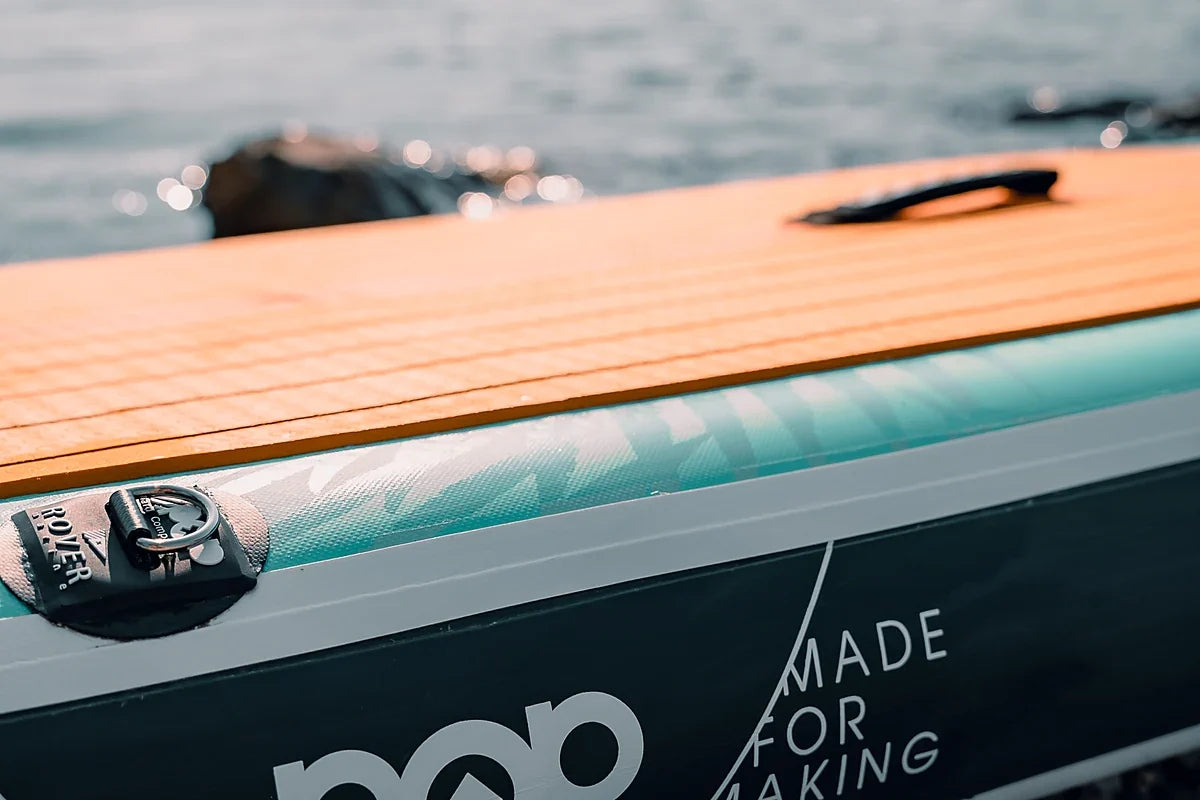


Leave a comment
All comments are moderated before being published.
This site is protected by hCaptcha and the hCaptcha Privacy Policy and Terms of Service apply.