The short answer: choose an 8 ft inflatable boat for compact solo or duo use, a 10 ft inflatable boat for the best all-around cottage and marina setup, and a 12 ft inflatable boat when you want maximum room, higher load capacity, and stronger motor options. The right size depends on people, gear, water conditions, storage space, and your motor plan.
Inflatable boat size affects more than comfort. It changes how the boat carries weight, how stable it feels, how easily it turns, what motor range makes sense, how much gear you can bring, and where you can store it. For Canadian cottages, lakes, rivers, and marina tender use, the goal is not to buy the biggest boat automatically. The better fit is the boat you will actually launch, power safely, clean, and store.
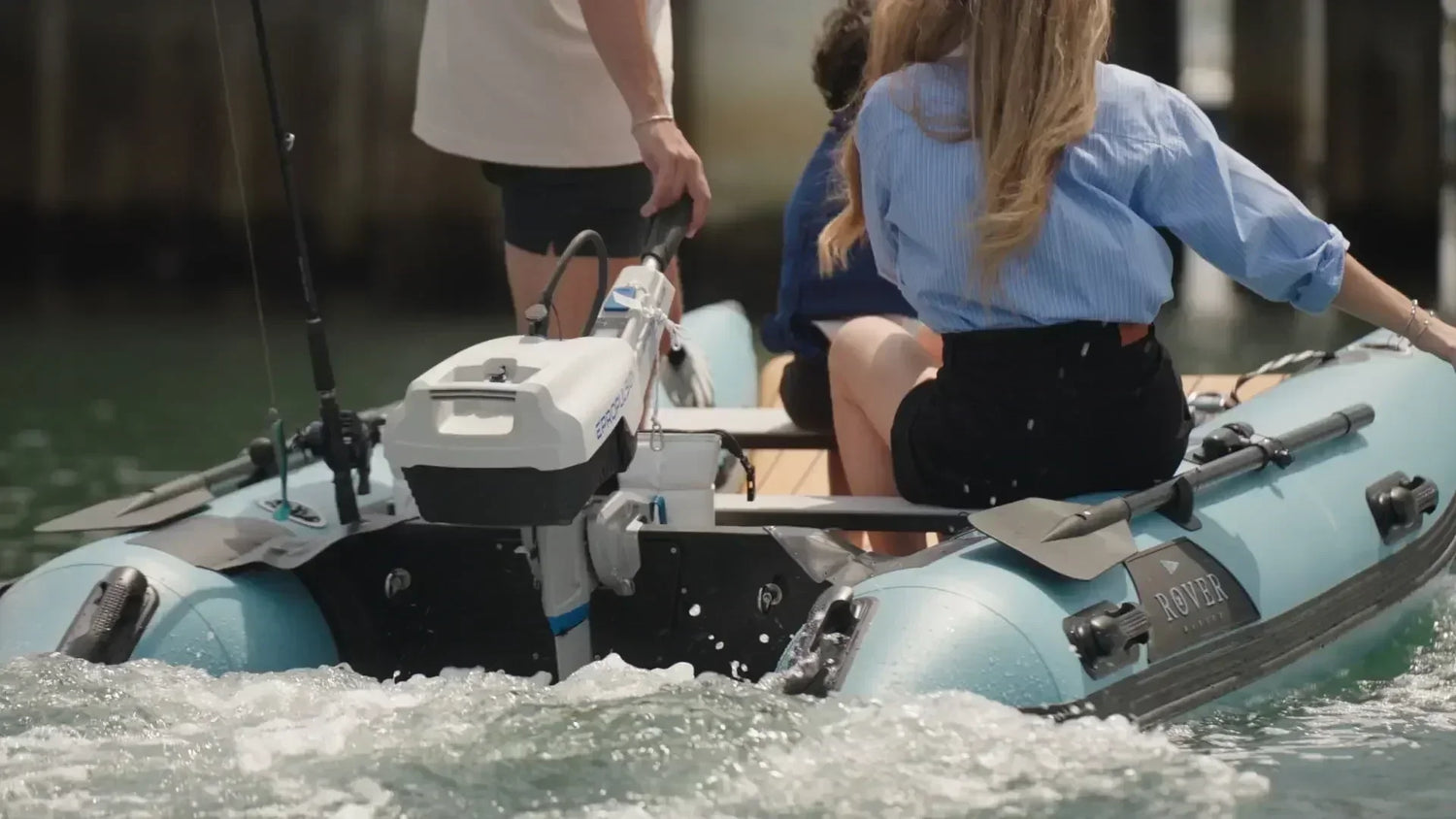
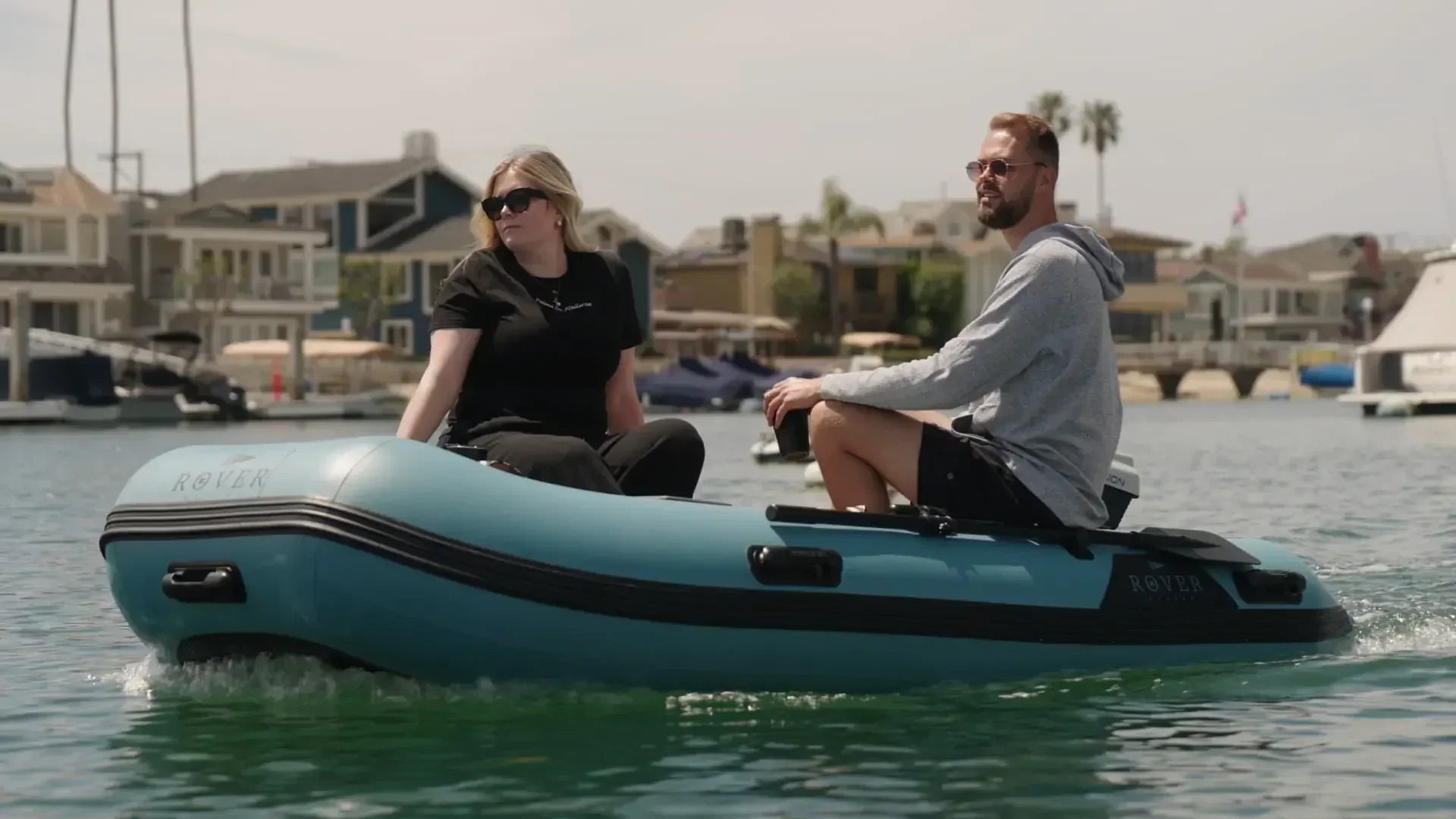
The Rover Marine Battle Boat and Rover Marine Battle Cat are currently listed in 8 ft, 10 ft, and 12 ft options. Current CBC listings show the 8 ft options around 2 people and 600 lb capacity, the 10 ft options around 4 people and 1000 lb capacity, and the 12 ft options around 4 people and 1200 lb capacity. Always confirm the live product page before buying because package details can change.

Boat size affects interior space, carrying capacity, motor plan, and how easy the boat is to store between trips.
8 ft, 10 ft, or 12 ft: the simple size guide
Best for compact use
Choose 8 ft if you want the easiest storage, shortest setup, and smallest package for one or two people. It is best for short cottage runs, calm marina errands, and simple tender use where gear is light.
Best all-around size
Choose 10 ft if you want a practical balance of room, portability, and motor flexibility. For many Canadian cottage owners, this is the easiest middle ground.
Best for more room
Choose 12 ft when you carry more passengers, coolers, fishing gear, safety gear, and want a stronger motor plan. It is larger to move and store, but more comfortable on longer outings.
Pick the hull style too
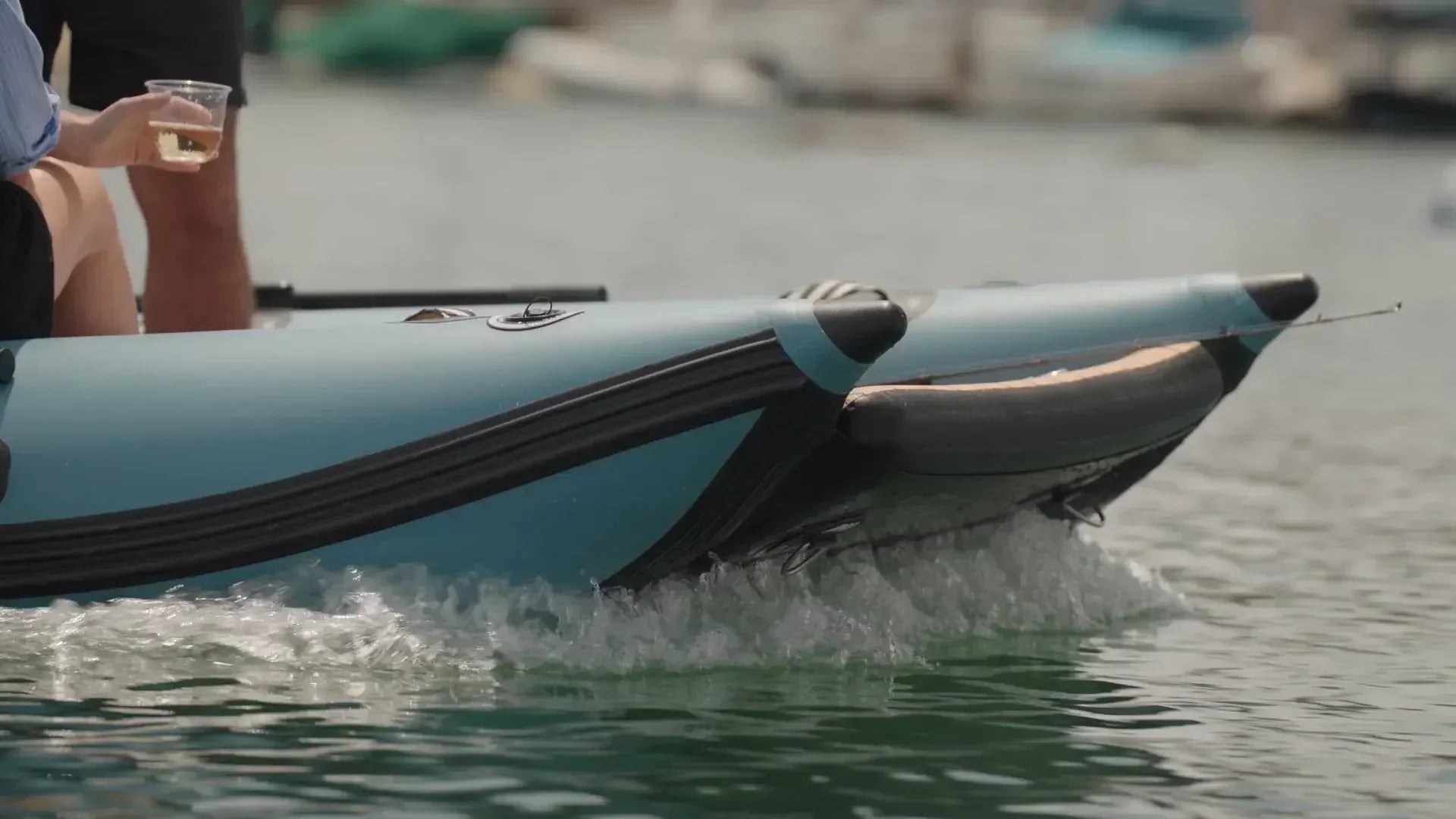
Battle Boat gives the familiar single-hull tender feel. Battle Cat gives a wider twin-pontoon stance for more platform stability, fishing, family cruising, and relaxed use.
Start with how you actually use the boat
A small boat can be the perfect choice if the trips are short, the launch is close, and you are not carrying much. A bigger boat becomes the better fit when the crew, gear, and water conditions increase. Before choosing size, answer these questions:
- How many adults will normally be in the boat?
- Will you bring kids, dogs, coolers, fishing gear, anchors, fuel, batteries, dry bags, or safety gear?
- Will the boat be used as a tender, cottage boat, fishing platform, or weekend cruiser?
- Will you launch from docks, beaches, rocky shorelines, ramps, or a yacht swim platform?
- Do you have space to store the boat dry, clean, and protected?
- Do you plan to use an electric motor or gas outboard?
Total load matters more than passenger count
Capacity is not just people. Add passengers, motor, battery or fuel, anchor, pump, oars, cooler, fishing gear, safety equipment, and bags. Leave a margin instead of loading to the listed maximum.
Battle Boat vs Battle Cat size decisions
Battle Boat
Choose Battle Boat if you want the traditional inflatable dinghy feel for tender runs, marina errands, shore trips, light fishing, and cottage cruising. It is straightforward, familiar, and easy to understand for buyers moving from a classic inflatable tender.
- 8 ft for compact solo or duo trips
- 10 ft for the all-around choice
- 12 ft for more room and motor power
Battle Cat
Choose Battle Cat if your priority is a wider-feeling platform for fishing, relaxing, family use, and more stable footing. The catamaran layout is helpful when people shift weight or when you want a deck that feels less narrow.
- 8 ft for compact stability
- 10 ft for the best balance
- 12 ft for maximum room and capacity

The Battle Cat layout is a strong option when stability and deck feel matter as much as length.
Motor planning by boat size
Motor choice should match the boat, the crew, and local conditions. Current CBC listings show recommended power up to 6 HP for the 8 ft, up to 10 HP for the 10 ft, and up to 20 HP for the 12 ft. Check the live product page before buying a motor because the correct choice depends on the exact boat, shaft length, load, and use case.
In Canada, operators of power-driven pleasure craft need proof of competency, with the Pleasure Craft Operator Card being the most common. Transport Canada also explains that pleasure craft licence requirements apply when a recreational boat has one or more engines totalling at least 10 horsepower or 7.5 kW, even temporarily. Link to Transport Canada before making a final motor decision, especially if your setup crosses that threshold.
Useful external references: Transport Canada Pleasure Craft Operator Card and Transport Canada Pleasure Craft Licence information.
How storage affects the right size
A 12 ft boat may be more comfortable on the water, but it is also heavier, bulkier, and slower to dry and pack. A boat that is easy to store gets used more often. Before choosing the largest size, confirm you have room to dry it, roll it, store the bag, and keep accessories together.
Buying shortcut: if you are torn between two sizes and you have the storage room, size up for comfort. If storage, carrying, and solo setup are the biggest barriers, choose the smaller size you will actually use.
Safety and weather checks for every size
Every size boat needs properly fitted lifejackets or PFDs for everyone on board, a weather check, and a conservative plan for wind, current, cold water, and boat traffic. Transport Canada’s boating safety resources are a good reference for safety equipment and trip planning. For coastal water, Great Lakes, St. Lawrence, and major water bodies, check Environment and Climate Change Canada marine forecasts.
Customer feedback: practical ownership matters
For inflatable boats, useful customer feedback usually comes down to portability, easy setup, stable footing, and whether the boat fits the owner’s actual storage space. Those are the details that make a boat easy to use more than once.
“Stable on the water.”
A steady inflatable boat makes fishing, tender runs, and family cruising feel more controlled in calm, protected conditions.
“Easy to store.”
Portability is one of the biggest reasons people choose a Battle Boat or Battle Cat instead of a trailer boat.
“Great setup for the cottage.”
The right size boat can handle short runs, fishing gear, shoreline exploring, and light family cruising without needing a permanent slip.
Read more Canadian Board Co. customer reviews here: https://www.canadianboardco.com/pages/reviews.
The bottom line
Choose 8 ft if you need the easiest storage and compact tender use. Choose 10 ft if you want the best all-around size for most cottage and marina boaters. Choose 12 ft if you want more room, more capacity, and a stronger motor plan. Then decide whether the single-hull Battle Boat or twin-pontoon Battle Cat better matches how you move on the water.
Browse boats here: https://www.canadianboardco.com/collections/boats.
Compare Battle Boat here: https://www.canadianboardco.com/products/rover-marine-battle-boat-inflatable-boat.
Compare Battle Cat here: https://www.canadianboardco.com/products/rover-marine-battle-cat-inflatable-catamaran.
Browse motors here: https://www.canadianboardco.com/collections/electric-outboard-motors.
Call 1-800-399-5260 if you want help choosing the right size before you order.
FAQ
What size inflatable boat is best for two people?
An 8 ft boat can work well for two people with light gear in calm conditions. Choose 10 ft if you want more comfort, gear room, or better all-around flexibility.
What size inflatable boat is best for a family?
For most families, start with 10 ft or 12 ft depending on crew weight, gear, and storage space. Always total people, motor, battery or fuel, safety gear, and bags.
Is a 12 ft inflatable boat harder to store?
Yes. A 12 ft boat gives more room on the water but takes more space to dry, fold, bag, carry, and store.
What is better, Battle Boat or Battle Cat?
Choose Battle Boat for a classic tender feel. Choose Battle Cat for a wider, more stable platform feel.
Do I need a Pleasure Craft Operator Card for an inflatable boat?
If the boat is power-driven, operators in Canada generally need proof of competency. Check Transport Canada for current PCOC rules.
When does a pleasure craft licence matter?
Transport Canada says recreational boats need a Pleasure Craft Licence if they have one or more engines totalling at least 10 horsepower or 7.5 kW, even temporarily.
Can I use an electric motor on an inflatable boat?
Yes, if the boat and motor are compatible. Confirm shaft length, power, mounting, battery weight, and current product details before buying.
Should I choose the biggest inflatable boat I can afford?
Not always. Choose the biggest boat you can realistically move, launch, clean, dry, and store.

Leave a comment
All comments are moderated before being published.
This site is protected by hCaptcha and the hCaptcha Privacy Policy and Terms of Service apply.