What to Look for in Inflatable Paddle Boards

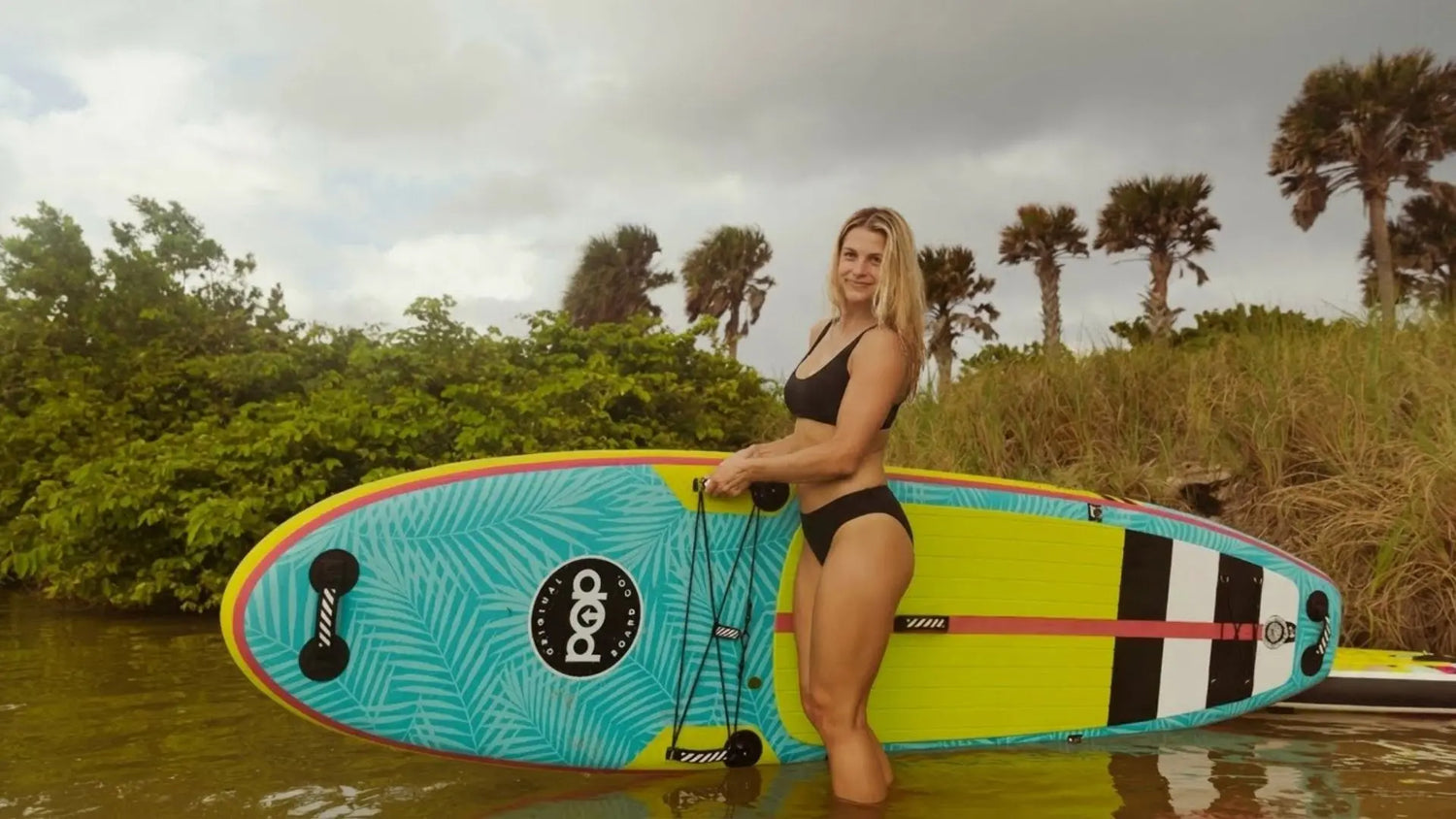
Woman standing in shallow water holding an inflatable paddle board near a tropical shoreline.

What to Look for in an Inflatable Paddle Board — Your Practical Guide to Stability, Size, and Durability

Inflatable paddle boards (iSUPs) are lightweight, portable watercraft built around a drop‑stitch core and reinforced outer laminates that become surprisingly rigid when inflated to the right PSI. This guide walks through how length, width and thickness affect stability and speed, why stitch density and PVC grade matter for stiffness and lifespan, and which accessories and warranty terms are worth prioritizing. Many shoppers find it hard to translate specs into real‑world use — touring, yoga, fishing or surfing — so we offer easy rules‑of‑thumb, comparison charts and checklists to make the choice straightforward. You’ll learn to read drop‑stitch claims, pick fin setups for either tracking or quick turns, and decide which package items are essential. We also cover post‑purchase confidence: what warranties and trial guarantees actually protect, and how to spot durability signals in reviews. Keep reading for dimension charts, construction comparisons, accessory checklists and clear next steps that focus on stability, performance and long‑term value.

10'6 Yoga Lotus - Canadian Board Company

How Do Inflatable Paddle Board Dimensions Affect Performance and Stability?

Board dimensions are the best first clue to how an iSUP will behave on the water: length influences glide and straight‑line speed, width controls primary stability and how the board handles chop, and thickness sets volume, stiffness and weight capacity. Mechanically, a longer waterline reduces yaw and improves tracking, while extra width spreads your center of gravity and makes standing easier. That means touring riders lean toward length and a narrower profile for efficient strokes, while yoga practitioners and families pick wider, higher‑volume boards for stability and cargo. Below is a compact comparison that maps common board types to recommended length, width and thickness ranges so you can quickly match a board profile to your primary use.

This table summarizes recommended dimension ranges by board type and typical rider loads.

Board Type Length (ft) Width (in) Thickness (in) Typical Use / Rider Notes
All-around SUP 10'0"–11'6" 30–33" 4–6" Beginners, casual paddling, mixed activities
Touring SUP 11'6"–12'6" 28–32" 4–6" Distance, efficient glide, lighter cargo
Yoga SUP 10'6"–11'6" 32–36" 5–6" Stability, flat deck, group/yoga practice
Fishing SUP 10'6"–12'0" 33–36" 5–6" Stable platform, higher weight capacity
Surf SUP 8'6"–10'6" 29–31" 4–5" Maneuverability, responsive turning

Those ranges highlight the trade‑offs: longer, narrower boards track and glide better but feel less immediately steady, while shorter, wider boards are easier to balance and turn. Match your main activity and rider weight to the table, then look at construction and accessories before you buy.

Man holding a colorful paddleboard with a shark design on a sandy beach.

What Is the Ideal Length for Your Inflatable Paddle Board?

Length affects how efficiently each stroke moves you forward — a longer waterline reduces drag and improves straight‑line tracking. Boards under 10' are nimble and suit surf or tight turning; 10'–12' boards are the best all‑round compromise of stability and glide for most paddlers; and boards over 12' are built for touring, efficiency and heavier loads. As an example, an intermediate weekend tourer will often pick a board around 11'6"–12' for a good balance of speed and manageable handling. Think about how often you’ll need to maneuver in tight spaces versus how much glide you want on longer crossings.

How Does Board Width Influence Stability and Balance?

Width governs primary stability — the first impression of steadiness when you stand up — and contributes to secondary stability when the board heels or the water gets choppy. Wider decks (32"–36") give beginners, yoga practitioners and anglers more confidence by spreading weight over a larger surface, while narrower decks (28"–31") cut through water more efficiently for paddlers chasing speed. Too much width can slow your stroke efficiency, so match it to your activity: wider for stationary or family use, narrower for touring or faster cruising. The right width balances comfort and performance for how you actually paddle.

Research into rider stability on stand‑up paddle boards has produced analytical models and experiments that quantify how dimensions and rider skill interact.

Rider Stability on Stand-Up Paddle Boards (SUPs)

This study models rider stability on an SUP using a buoyant body dynamics approach, accounting for board dimensions, rider body parameters and skill level. The system is represented as a planar motion of a rectangular cross‑sectional buoyant body with an added mass at a fixed height. The authors produce a stability map to show regions of stability across parameters; their eigenvalue contours align with qualitative terms like beginner and professional. They also propose a new way to describe rider skill and validate the analytic results with wave tank experiments, finding the rectangular board model trends match real SUP tests.

Stability of coupled human and stand-up paddle board, BP Mann, 2018

Why Is Thickness Important for Volume and Rider Weight Capacity?

Thickness adds internal volume and contributes to structural stiffness: at the same length and width, a thicker board (for example, 6") displaces more water and carries heavier loads without the rails submerging. Thickness also affects stiffness at a given PSI — thicker boards typically feel firmer under load and support higher capacities. If you plan to carry fishing gear or pack for multi‑day trips, aim for 5"–6"; lighter recreational paddlers will often be fine with 4" boards that are easier to handle and pack. Still, always check a manufacturer’s weight‑capacity rating and overall build rather than relying on thickness alone.

Two people with paddleboards on a beach

What Construction Features Ensure Durability and Rigidity in Inflatable SUPs?

Construction dictates how an iSUP turns inflation pressure into on‑water rigidity and how well it resists abrasion, UV exposure and knocks. Key elements include drop‑stitch density, number of internal stitch points, outer PVC layer count and grade, and rail reinforcement — together these determine stiffness, puncture resistance and dimensional longevity. The practical payoff is simple: stronger construction reduces flex at working PSI, improves tracking and reduces paddler fatigue, and usually prolongs the board’s usable life. The compact table below compares major construction features so you can weigh stiffness, weight and durability trade‑offs.

This table clarifies construction trade-offs so you can prioritize the attributes that matter to your use case.

Construction Feature Attribute Benefit / Expected Outcome
Drop-stitch core Stitch density / internal fibers Higher stitch density → greater stiffness at lower PSI
PVC outer layer Layer count / grade Multi-layer, military-grade PVC → improved puncture and UV resistance
Reinforced rails Added fabric / seam protection Prevents abrasion and splitting during docking and transport
Bonding method Heat-welded vs glued seams Heat-welded seams typically provide stronger, longer-lasting joins

Use this comparison when reading specs: favor higher stitch counts and multi‑layer PVC for touring or frequent use, and confirm rail reinforcement if you expect lots of beaching or dock contact. Stronger construction means fewer repairs and steadier performance season after season.

How Does Drop-Stitch Technology Provide Stiffness and Strength?

Drop‑stitch construction uses thousands of tiny polyester threads that lock the top and bottom layers together, keeping the deck flat when inflated and resisting bulging under load. Stitch density controls how well the inflated shell converts internal pressure into a stiff platform — more stitches per square inch reduce micro‑flex and help an iSUP behave more like a hard board at realistic PSI. For paddlers that translates to a firmer ride, better power transfer and less wasted energy on long paddles. When comparing models, look for specific stitch‑count claims or descriptions of internal mesh density.

What Makes Military-Grade PVC and Reinforced Rails Essential for Longevity?

“Military‑grade” PVC generally means thicker, multi‑layer laminates with stronger abrasion and UV resistance, which cut down on punctures and delamination over time. Reinforced rails add extra fabric and bonding where the board takes the most abuse — edges, docks and tight launches. Together these features extend service life, reduce upkeep and often justify longer warranty terms. When manufacturers make durability claims, look for explicit references to multi‑layer PVC and visible rail reinforcement in photos or spec sheets.

How Does Canadian Board Co.’s Air Ride Construction Enhance Board Quality?

Canadian Board Co.’s Air Ride Construction is an example of a proprietary approach that pairs a drop‑stitch core with layered outer laminates and thoughtful internal structure to improve rigidity at working PSI and reduce flex. That results in a firmer paddling platform, better tracking and improved puncture resistance for frequent users. When you compare construction claims across brands, watch for these proprietary descriptions — they translate technical choices into real benefits like steadier tracking, stronger load handling and longer usable life. Models that showcase these features include the POP El Capitan 11'6" and the POP Royal Hawaiian 10'6", which target different use cases while using similar construction principles.

Which Performance Features Should You Prioritize for Tracking and Maneuverability?

Performance comes down to fin setup, rocker, tail shape and correct PSI — together they determine whether a board tracks straight or pivots quickly in surf and chop. Fins stabilize yaw and change lateral resistance, rocker affects turning and nose lift in waves, and PSI converts the drop‑stitch structure into usable stiffness. Picking the right combination gives you a board that either holds a line on long crossings or snaps through turns in coastal breaks. Below are practical checks and a short comparison of fin setups and PSI guidance to help you prioritize tracking versus maneuverability.

Common performance features to evaluate include:

  • Fin configuration and size for tracking or turning.
  • Recommended inflation PSI relative to board thickness and rider weight.
  • Rocker and tail shape for wave handling or glide efficiency.

These elements work together: choose fin size and single‑ vs tri‑fin setups for your primary activity, then tune PSI and rocker for the feel you want on the water.

What Are the Differences Between Single Fin and Tri-Fin Systems?

A single center fin favors straight‑line tracking and lower drag, making it a common choice for touring and flat‑water paddling. Tri‑fin setups (thrusters or 2+1 arrangements) boost lateral control and improve turning and hold in surf by spreading hydrodynamic forces across multiple points. Removable fins add flexibility — swap setups to suit conditions or travel needs. In short: single fins for distance and efficiency, tri‑fins for surf and sharper turning, and removable systems for modularity.

How Does Optimal PSI Affect Inflatable Paddle Board Performance?

PSI controls how rigid the board becomes: higher PSI increases stiffness, improving tracking, stroke efficiency and responsiveness, but it requires a good pump and an accurate gauge. Typical guidance is about 12–15 PSI for 4" boards and 15–20 PSI for 5"–6" boards, though exact numbers depend on manufacturer specs and rider weight. Keep in mind temperature and altitude shift pressure — cool air lowers PSI and hot conditions raise it — so recheck inflation as conditions change. Carry a reliable pump with a gauge and inflate to the maker’s recommended PSI for predictable performance.

Why Are Deck Pads, D-Rings, and Bungee Systems Important Accessories?

Deck pads provide traction and comfort: thicker, textured pads help for yoga and surf maneuvers, while lower‑profile pads reduce fatigue on long tours. D‑rings let you attach a leash, cargo or seating for fishing setups, increasing the board’s versatility. Bungee systems on the nose or mid‑deck secure dry bags and gear for day trips. Check pad thickness, D‑ring placement and bungee layout to make sure the hardware supports your intended activity — good deck hardware can turn a standard SUP into a specialized touring, fishing or family board.

Two people on a paddleboard with fishing rods in a natural setting

How Do You Choose the Right Inflatable Paddle Board for Your Intended Use?

Choosing the right board is a matching exercise: define your primary activity, estimate rider plus gear weight, then prioritize dimensions, construction and accessories that support that use. This approach filters out boards that look good on paper but fail in practice — for example, a narrow touring board used as a family platform. The payoff is a confident, fit‑for‑purpose purchase that lowers returns and raises enjoyment on the water. Use the short checklist below to focus your search, then compare models against the three decision criteria that follow.

Start by answering these core questions to focus your search:

  1. Primary Activity: What will you mostly do — touring, yoga, fishing, surf, or casual paddling?
  2. Rider + Gear Weight: What total load do you expect to carry?
  3. Transport & Storage: How important is compactness and pack size for travel?

After you answer these, prioritize boards that match your activity profile and offer the volume and construction you need for your load and frequency of use.

What Makes All-Around SUPs Ideal for Beginners and Versatile Paddling?

All‑around SUPs typically mix moderate length (10'–11'6"), comfortable width (30"–33") and 4"–6" thickness to give forgiving primary stability with manageable maneuverability. The design balances stability and ease of use, lowering the center of gravity and helping new paddlers find their feet while still offering enough length for casual cruising. For newcomers who want one board for many activities, an all‑around board — like the POP Royal Hawaiian 10'6" — is a smart, versatile choice.

Which Boards Are Best for Touring, Fishing, and Yoga Activities?

Touring boards favor length and a narrow waterline for efficient glide, often pairing a single center fin with a pointed nose for tracking. Fishing boards trade some speed for width, flat decks, extra D‑rings and higher load capacity to carry gear and accessories. Yoga boards maximize flat deck area, use thicker pad coverage and stable bungee zones for props. Match features to activity: long, narrow boards for distance; wide, flat boards with attachment points for fishing; and broad, cushioned decks for yoga.

For larger groups or more extensive on‑water setups, specialty floating platforms like the AquaDock provide a roomy, stable base for multiple users or extra gear.

What Questions Should You Ask to Match a Board to Your Paddling Style?

Ask outcome‑focused questions to avoid getting lost in specs: What percentage of your sessions will be flat‑water touring versus surf? How often will you carry extra gear or a passenger? Do you need quick setup for travel or a full‑size platform for fitness classes? Those answers point to the core variables — length, width, thickness and construction — and help you narrow options that also meet constraints like storage, transport and budget. Use your answers to filter candidates, then compare the short list by build quality and included accessories.

What Accessories and Package Inclusions Should You Expect with Inflatable Paddle Boards?

Paddle board packages commonly bundle the essentials that determine out‑of‑the‑box readiness and transport convenience — adjustable paddles, dual‑action pumps, coil leashes, removable fins, wheeled bags and repair kits. The right accessories matter: a quality pump gets you to the recommended PSI faster and more reliably, and a stiffer paddle improves stroke efficiency and reduces fatigue. The table below shows typical package components and what they contribute, plus quick guidance on what to upgrade for specific needs.

This table helps you evaluate typical package components and what they contribute to the paddling experience.

Accessory Type / Material Included? Performance Impact / Use-case
Paddle 3-piece aluminum or composite Often included Affects weight and stroke efficiency; upgrade for touring
Pump Dual-action manual / electric Often included Determines inflation speed and final PSI accuracy
Leash Coiled or straight Usually included Essential for safety; coiled suits flat-water, straight for surf
Wheeled Bag Nylon with wheels Often included Improves transport; heavier boards require better bags
Repair Kit PVC patches & glue Included Enables field repairs for small punctures

Use this list to judge readiness: prioritize a reliable pump and a padded wheeled bag if you move the board often, and consider upgrading to a carbon or fiberglass paddle for longer tours where every ounce and stroke counts.

What Types of Paddles Are Included and How Do They Affect Performance?

Most included paddles are adjustable 3‑piece designs in aluminum or composite. Aluminum is durable and budget friendly but heavier; carbon and fiberglass are lighter and more efficient for long distances. Adjustable shafts make travel and storage easier, but fixed‑length performance paddles tend to feel stiffer and more responsive. Choose a fuller blade for power in surf, a slimmer blade for long‑distance efficiency, and upgrade to a lighter composite paddle if you plan extended touring to reduce fatigue.

How Do Pumps, Leashes, Bags, and Repair Kits Enhance Your SUP Experience?

A quality pump (dual‑action or electric) speeds inflation to the target PSI and helps preserve board shape. The right leash supports safety — coiled leashes keep slack off the deck on flat water while straight leashes suit surf. Wheeled bags protect the board and make transport easier from car to shoreline, and repair kits let you patch small punctures quickly so a minor ding doesn’t end your day. Consider upgrading one or two accessories based on how often and how far you travel to maximize convenience and longevity.

If you want to expand your on‑water setup, an inflatable pop‑up dock gives you a stable floating platform for relaxing, extra gear or group hangs.

Canadian Board Co. typically ships boards with a full accessory kit designed for quick on‑water readiness and easy transport. Common bundle items — paddle, pump, leash, fin, wheeled bag and repair kit — set expectations across packages so you can compare value. For example, the High Roller package groups these items to help buyers get on the water right away without hunting for add‑ons.

Why Is Warranty and Customer Support Critical When Buying an Inflatable Paddle Board?

Warranty and after‑sales support lower the risk of buying a technical inflatable product by covering manufacturing defects, guiding repairs and offering trial guarantees for hands‑on evaluation. Warranties are a durability signal — longer coverage suggests the maker trusts their materials and construction — and rider guarantees let new owners test fit and performance under normal use. Strong policies reduce lifetime cost and simplify repairs or replacements. Below is a short checklist of warranty questions to ask and what to look for in customer feedback about durability.

Ask these warranty and support questions before buying:

  1. What specifically does the warranty cover and what are common exclusions?
  2. Is there a trial or rider guarantee period to test fit and feel?
  3. How are shipping, repairs and claims handled in practice?

These questions set realistic expectations for ownership and post‑purchase support.

What Does a 3-Year Warranty and 60-Day Rider’s Guarantee Cover?

A multi‑year warranty usually protects against manufacturing defects in materials and workmanship, like delamination or seam failure; typical exclusions include accidental damage, improper storage or misuse. A 60‑day rider’s guarantee gives you a window to test the board under normal conditions and return or exchange if it doesn’t meet your needs. Together, a longer warranty and a short trial reduce purchase anxiety by offering both long‑term protection and a practical trial period. When evaluating policies, check the claims process, documentation requirements and any potential restocking or return fees.

Canadian Board Co. demonstrates this approach with a three‑year warranty and a 60‑day rider’s guarantee, plus Canada‑wide free shipping over $100 and sustainability initiatives like carbon‑offset shipping and ocean cleanup partnerships. Those policies illustrate how warranties and support can lower ownership risk while reflecting a brand’s quality and environmental commitments.

How Do Customer Reviews Reflect Board Durability and Satisfaction?

Reviews that report long‑term use, session frequency and specific conditions (rocky launches, frequent beaching, travel) offer high‑value clues about durability; recurring notes about seam problems or persistent loss of stiffness are red flags. Prioritize reviews with timelines, photos or follow‑ups that show board performance after months or a season. Be cautious with overly generic praise and give more weight to detailed reports that mention repairs and manufacturer responsiveness. Use reviews alongside construction specs and warranty terms to make a balanced buying decision.

Frequently Asked Questions

What are the key differences between inflatable paddle boards and hard boards?

Inflatable SUPs (iSUPs) pack down for easy transport and storage, making them very portable. Hard boards (fiberglass, epoxy, etc.) are typically stiffer and faster, offering peak performance for speed and tracking. iSUPs, however, are forgiving, stable and less prone to impact damage — a great choice for beginners, families and casual paddlers who value convenience and durability over elite performance.

How do I maintain my inflatable paddle board for longevity?

Rinse your board with fresh water after each outing to remove salt, sand and grit. Store it in a cool, dry spot out of direct sunlight to limit UV wear. Inspect seams and valves regularly and use the included repair kit for small fixes. Avoid dragging the board across rough surfaces and fully deflate before long‑term storage to prevent creases. Little habits like this keep performance high and extend service life.

Can I use an inflatable paddle board in saltwater?

Yes — iSUPs are fine in saltwater. Rinse thoroughly with fresh water after each use to prevent salt buildup and corrosion on metal parts. Dry your board and accessories before storing to avoid mildew, especially in humid climates. Regular maintenance keeps both the board and its hardware running trouble‑free.

What should I consider when transporting my inflatable paddle board?

For transport, a wheeled bag is a huge convenience, especially if you have any distance to carry. If you’re traveling by car, avoid stacking heavy items on top of the packed board. When flying or shipping, follow airline and carrier rules and pack the board securely. If you frequently walk from car to launch, prioritize a lighter board or a high‑quality wheeled bag to make life easier.

How do I choose the right paddle length for my inflatable paddle board?

Paddle length depends on your height and paddling style. A simple rule for recreational paddling is to add 6–8 inches to your height. Racers and tourers often use slightly longer paddles for more reach. Adjustable paddles are versatile for travel and shared use; just make sure it feels comfortable during your stroke to avoid fatigue and get the most from each session.

What are the benefits of using a leash with my inflatable paddle board?

A leash keeps you connected to your board if you fall off, preventing it from drifting away and making retrieval easier. It also reduces collision risk in crowded spots. Coiled leashes work well for flat water, keeping slack off the deck; straight leashes are better suited to surf. Choose the type that matches where you’ll be paddling for the safest setup.

What are the advantages of using a dual-action pump for inflation?

Dual‑action pumps move air on both the up and down strokes, cutting inflation time and effort — useful for bigger boards or inflating several boards in a session. Many pumps include pressure gauges so you can hit the manufacturer’s recommended PSI reliably, which preserves board shape and performance.

Reading next

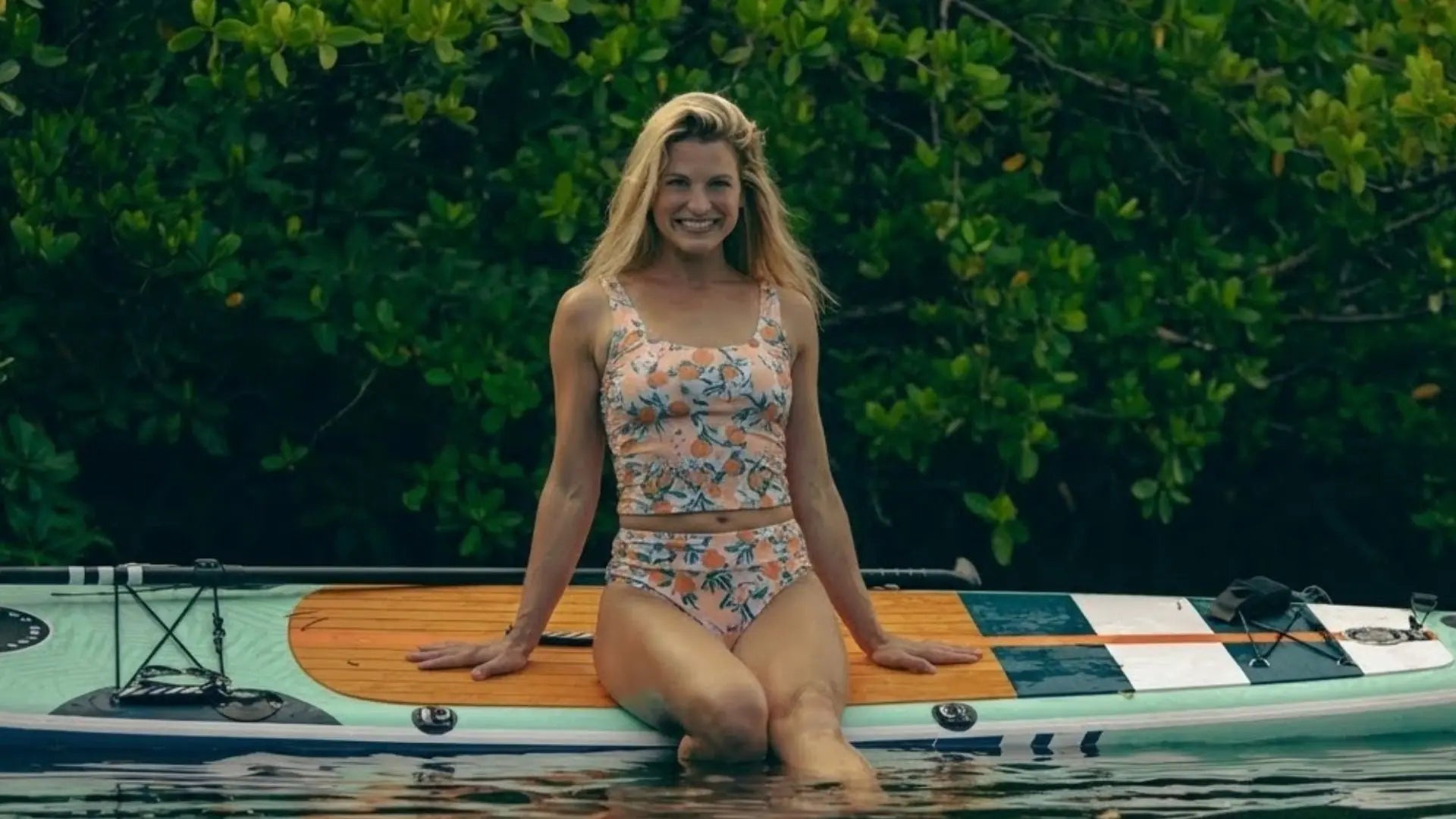
Woman sitting on an inflatable paddle board floating on calm water near greenery.
Woman relaxing on an inflatable paddle board floating on calm water near mangroves.

Leave a comment

All comments are moderated before being published.

This site is protected by hCaptcha and the hCaptcha Privacy Policy and Terms of Service apply.