

For most Canadian paddlers, an inflatable paddle board is the better everyday choice than a hard board. It is easier to store, easier to transport, more forgiving around rocky shorelines, and more practical for cottages, condos, road trips, family use, and weekend lake days.
Hard paddle boards still have their place. If you are racing, surfing at a high level, or want the sharpest possible rail response, a hard board can offer a performance edge. But for the way most people paddle in Canada, inflatable paddle boards make more sense.
Modern inflatable paddle boards use drop-stitch construction, durable PVC materials, removable fins, traction pads, and compact carry bags to give paddlers a board that can go from a closet or car trunk to the lake without a roof rack or storage headache.
Canadian Board Co. is a Canadian owned and operated shop based in Kelowna, BC. This guide explains why many paddlers choose inflatable paddle boards over hard boards, where hard boards still win, and which CBC board makes the most sense for your paddling style.

For most recreational paddlers, inflatable paddle boards deliver the best mix of stability, portability, storage, and everyday durability.
The short answer: inflatable boards win on practicality
The biggest difference between an inflatable board and a hard board is not just how they feel on the water. It is everything around the paddle.
A hard board needs storage space, vehicle space, careful transport, and more caution around rocks, docks, and garage walls. An inflatable board packs down, travels easier, and can be stored in places where a hard board simply will not fit.
Inflatables pack down
An inflatable paddle board can be deflated, rolled, and stored in a bag. That matters for condos, cabins, RVs, cottages, and winter storage.
No roof rack needed
Most inflatable boards fit in a vehicle trunk or back seat, making them easier for road trips, small cars, shared vehicles, and remote lake access.
Better around bumps
Inflatables are more forgiving when bumped against docks, rocky shorelines, shallow launches, and cottage gear.
Simple rule: choose inflatable if you care about storage, transport, family use, travel, and mixed Canadian water conditions. Choose hard board only if performance is more important than convenience.
Why inflatable boards are easier to transport
Transport is one of the biggest reasons people choose inflatable paddle boards over hard boards. A hard board can be 10 to 12 feet long, which means roof racks, straps, careful loading, and more room at home.
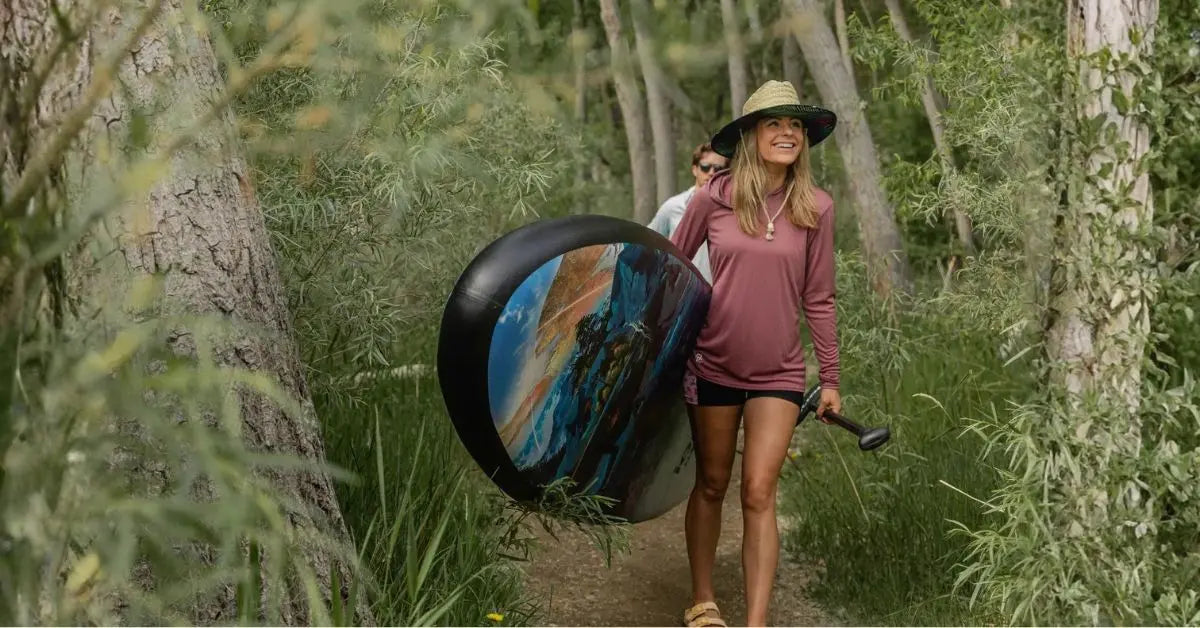
An inflatable board can pack into a carry bag with the pump, fin, paddle, leash, and repair kit. That makes it much easier to bring your board to a cottage, campground, lake house, marina, rental property, or road trip stop.
Inflatable boards are especially practical if you:
- Drive a smaller car or SUV
- Do not want to install roof racks
- Store gear in a condo, basement, closet, or garage
- Travel between different lakes
- Use an RV, camper, or cottage storage space
- Want one board that can move with your summer plans

Inflatable boards are easier to carry, pack, and transport, especially when you are moving between lakes, cottages, rentals, and road trips.
Why inflatables are easier to store in Canada
Canadian paddling is seasonal for many people. That means storage matters.
A hard board needs a long, safe storage area where it will not be bumped, scratched, frozen against something sharp, or left in direct sun. An inflatable board can be cleaned, dried, deflated, rolled, and stored in its bag for the off-season.
That is a major advantage if you have limited storage or do not want a long board taking up wall space all winter.
Store it in a closet
An inflatable board is realistic for people who do not have a garage, shed, or long storage wall.
Pack it away clean
Deflate and store your board at the end of the season instead of leaving it exposed to weather, pests, or accidental damage.
Save serious space
Inflatable boards make more sense when every inch of vehicle or trailer storage matters.
Protect the gear
Rinse, dry, remove the fin, and store the board somewhere dry, shaded, and protected for winter.
Durability on rocky Canadian shorelines
Canadian paddling often means rocky beaches, uneven cottage shorelines, docks, boat launches, shallow rivers, and kids carrying boards without much patience.
A hard board can paddle beautifully, but dents, cracks, chips, and rail damage are part of the trade-off. An inflatable paddle board is more forgiving during normal recreational use. It can handle bumps and scuffs that might cause more visible damage on a composite hard board.
That does not mean inflatables are indestructible. Sharp metal, dragging over barnacles, broken glass, sharp rocks, and improper storage can still cause damage. But for typical family and cottage use, inflatables are easier to live with.
Durable does not mean careless
Do not drag an inflatable board over sharp rocks, leave it baking in direct sun at high pressure, or roll it up wet for winter. Good care is still what keeps the board ready for years of paddling.
Stability and comfort for beginners
For beginners, stability often matters more than speed. This is another reason inflatable boards are popular with families, kids, dogs, and new paddlers.
Many inflatable paddle boards are built with generous width and volume, which helps the board feel steady underfoot. The deck pad also has a slightly more forgiving feel than a hard composite surface, which is helpful when kneeling, sitting, practicing, or paddling with a dog.
Inflatables are a strong choice for:
- First-time paddlers
- Families sharing one board
- Kids learning on calm water
- Dog paddling
- Cottage guests
- People who want comfort over speed

Inflatable boards are often the easier choice for families, dogs, beginners, and paddlers who want a forgiving platform.
Where hard boards still win
A fair comparison needs to be honest. Hard boards still have advantages for certain paddlers.
A hard board may be the better fit if you are focused on:
- High-performance racing
- Advanced surf performance
- Maximum glide and speed
- Sharp rail-to-rail response
- One dedicated paddling location with easy storage
For most lake paddlers, cottage families, casual fitness paddlers, and travel-focused buyers, those advantages are less important than storage, transport, comfort, and durability.
Real-world buying test: if the board is hard to store, hard to transport, or too stressful to protect, you may use it less. The best board is the one you can actually bring to the water.
Which inflatable board should you choose?
The best inflatable paddle board depends on how you plan to use it. Canadian Board Co. carries boards for beginner stability, solo cruising, family use, dogs, travel, and gear-heavy paddling.
11'6 El Capitan Bomber
Choose the El Capitan if your priority is stability, confidence, kids, dogs, larger riders, cottage guests, or a board that feels forgiving on calm lake water.
- Best for beginners and families
- Great for dogs and kids
- Strong cottage board
- Best when stability matters most
11'0 Yacht Hopper
Choose the Yacht Hopper if you want a responsive all-around board for solo lake cruising, weekend paddles, travel, and relaxed cottage water.
- Great for solo paddlers
- Good lake cruiser
- Easy cottage and road trip board
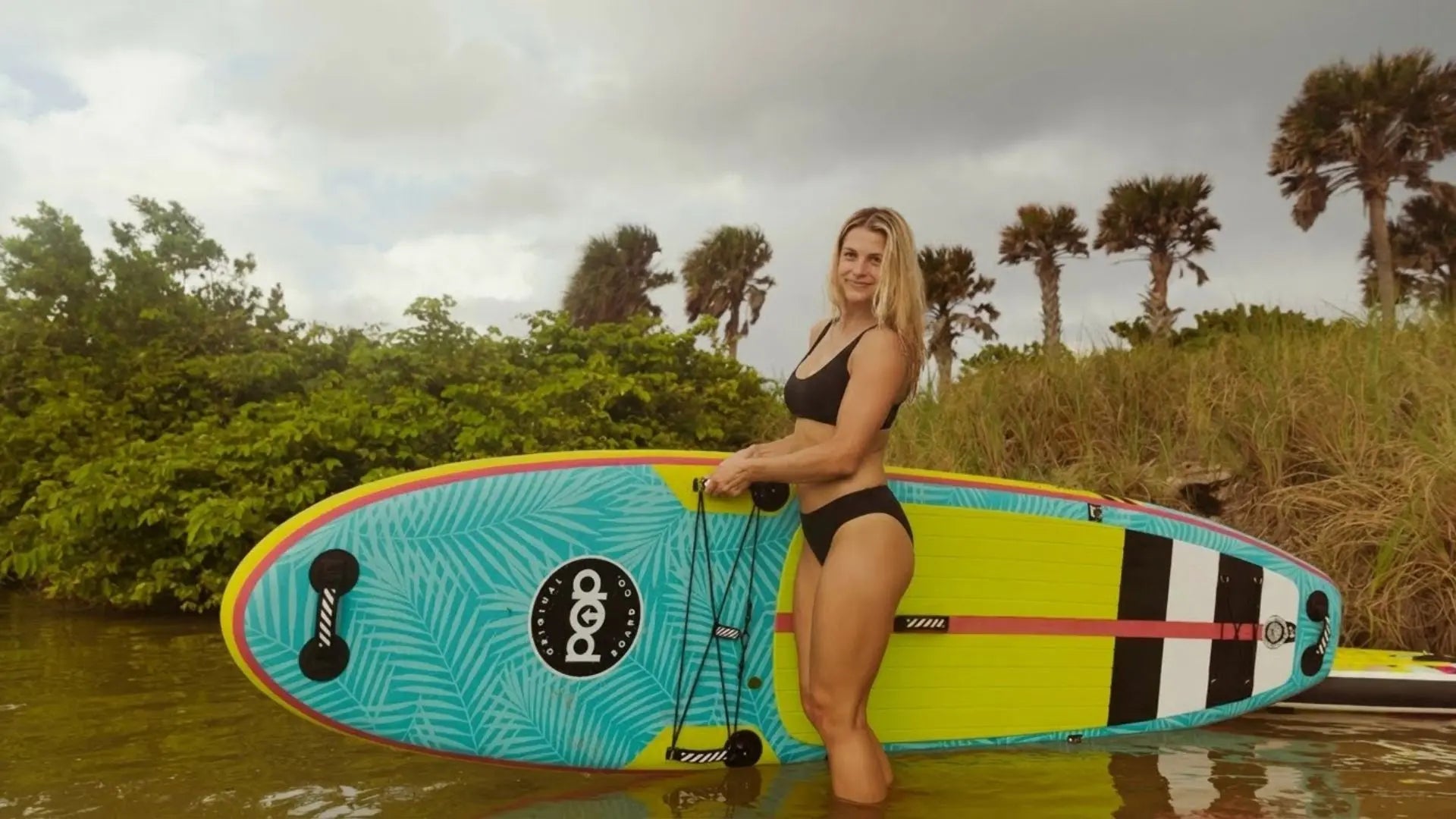
- Available in POP Board Co. designs
10'6 Royal Hawaiian Palm
Choose the Royal Hawaiian if you want a shorter all-around board with a fun, casual feel for calm lake days and lighter recreational paddling.
- Compact 10'6 board
- Good for casual paddling
- Fun all-around feel
- Great complete package option
11'6 Adventure Ark
Choose the Adventure Ark if you want more gear capacity, fishing-friendly features, D-rings, and a board built around longer days and utility use.
- Best for gear-heavy paddling
- Good for fishing setups
- Adventure and utility focused
- Great when storage points matter
Inflatable boards are more versatile
One of the best parts of an inflatable paddle board is how many ways it can be used. The same board can be a family board, travel board, fitness board, dog board, cottage board, or casual touring board depending on the setup.
With the right accessories, an inflatable board can support:
- Dry bag storage
- Kayak seat conversion on compatible boards
- Dog paddling
- Fishing gear
- Cottage cruising
- Travel and camping
- Fitness paddling
- Family lake days
Shop paddleboard accessories here: https://www.canadianboardco.com/collections/paddle-board-accessories.
Shop paddles here: https://www.canadianboardco.com/collections/paddles.
Shop water safety gear here: https://www.canadianboardco.com/collections/water-safety.
What customers notice after switching to inflatables
Reviews are helpful because they show how inflatable boards perform outside the spec sheet. Canadian Board Co. customers often mention stability, easy setup, family use, portability, and helpful support when choosing gear.
“Quality, real sturdy.”
That is exactly what most paddlers want from an inflatable: a board that feels solid enough for real lake use.
“Easy to inflate, deflate, and pack away.”
Portability is the big reason many people choose inflatable boards over hard boards in the first place.
“They help out right away.”
Choosing between boards, paddles, fins, pumps, and safety gear is easier when support is close to home.
Read more Canadian Board Co. customer reviews here: https://www.canadianboardco.com/pages/reviews.
Safety gear still matters
An inflatable board is practical and stable, but it is still a board on open water. Safety gear matters, especially in Canada where water can stay cold even when the weather feels warm.
Transport Canada includes paddleboards under human-powered craft guidance. When a paddleboard is used as a human-powered craft, required safety equipment applies. A properly fitted Canadian-approved lifejacket or PFD is the safest starting point, and wearing it is the better habit for beginners, kids, cold water, windy days, and paddling away from shore.
Do not treat stability as a substitute for safety
A stable inflatable board helps confidence, but it does not replace a properly fitted lifejacket or PFD, a sound device, weather awareness, and paddling within your ability.
Browse water safety gear here: https://www.canadianboardco.com/collections/water-safety.
Care and storage are simple
Inflatable paddle boards are easy to care for when you follow a simple routine.
Rinse when needed
Rinse with fresh water after saltwater, sandy, muddy, or weedy use. Pay attention to the fin box, deck pad, and valve area.
Dry it fully
Do not roll the board wet for long-term storage. Let it dry so moisture does not sit inside the bag.
Store protected
Store in a cool, dry, shaded place away from sharp objects, pests, and long periods of direct sunlight.
Check PSI and hardware
Inflate to the recommended pressure for your model, check the valve, install the fin properly, and inspect the board before use.
Shop paddleboard pumps here: https://www.canadianboardco.com/collections/pumps.
Inflatable vs hard board: which should you buy?
For most Canadian paddlers, the inflatable board is the better choice because it removes the barriers that stop people from getting on the water.
You want easy ownership
- You have limited storage
- You drive a smaller vehicle
- You want a family board
- You paddle different lakes
- You want travel flexibility
- You want better bump forgiveness
You want specialty performance
- You race seriously
- You surf at a higher level
- You have secure storage
- You do not need portability
- You want maximum board response
- You accept more transport care
The bottom line
Inflatable paddle boards are not just the convenient option. For most Canadian paddlers, they are the better everyday option.
They are easier to carry, easier to store, easier to travel with, more forgiving around cottage shorelines, and practical for families, beginners, dogs, and weekend lake days. Hard boards still have a place for racing and high-performance surf, but most people will get more use from a board they can actually bring to the water without a roof rack or storage headache.
Choose the 11'6 El Capitan if stability, kids, dogs, larger riders, and cottage sharing matter most.
Choose the 11'0 Yacht Hopper if you want a responsive solo cruiser for calm lakes, travel, and weekend paddling.
Choose the 10'6 Royal Hawaiian Palm if you want a compact all-around board for casual paddling.
Browse inflatable paddleboards here: https://www.canadianboardco.com/collections/inflatable-paddleboards-canadas-best-isup.
Shop paddleboard accessories here: https://www.canadianboardco.com/collections/paddle-board-accessories.
Shop water safety gear here: https://www.canadianboardco.com/collections/water-safety.
Read the paddleboard size guide here: https://www.canadianboardco.com/blogs/water-sports-guide/what-size-paddleboard-do-i-need-canada.
Read the paddleboard accessories guide here: https://www.canadianboardco.com/blogs/water-sports-guide/best-paddleboard-accessories-canada-2026-complete-guide-to-paddles-safety-gear-storage.
Read the dog paddleboarding guide here: https://www.canadianboardco.com/blogs/water-sports-guide/paddleboarding-with-your-dog-canada.
Warranty details are here: https://www.canadianboardco.com/pages/3-year-warranty.
Call 1-800-399-5260 if you want help choosing the right inflatable paddle board for your lake, cottage, family, dog, road trip, or storage setup.
FAQ
Are inflatable paddle boards better than hard boards?
For most recreational paddlers, yes. Inflatable boards are easier to transport, store, and use around cottages, lakes, road trips, and family setups. Hard boards still win for racing, advanced surf, and maximum performance.
Are inflatable paddle boards stable enough for beginners?
Yes. Many inflatable boards are built with width, volume, and forgiving deck pads that help beginners feel more confident on calm water.
Do inflatable paddle boards last?
They can last for many seasons with proper care. Rinse when needed, dry before storage, avoid sharp objects, store out of direct sun, and check the valve, fin box, and seams regularly.
What are the disadvantages of inflatable paddle boards?
The main trade-offs are setup time, pressure checks, and slightly less high-performance response than a hard board. You need to inflate before use and dry the board before long-term storage.
Can inflatable paddle boards handle rocky Canadian shorelines?
They are more forgiving than hard boards around normal bumps and scuffs, but you should still avoid dragging them over sharp rocks, broken glass, metal, barnacles, or rough concrete.
What inflatable paddle board is best for beginners?
The El Capitan is the better CBC option for beginners, larger riders, dogs, kids, and cottage guests because stability is the priority.
What inflatable paddle board is best for solo cruising?
The Yacht Hopper is a strong option for solo lake cruising, calm water paddling, travel, and weekend cottage use.
Do I need safety gear on an inflatable paddle board in Canada?
Yes. Transport Canada includes paddleboards under human-powered craft guidance when used as a vessel, and required safety equipment applies. A properly fitted Canadian-approved lifejacket or PFD is the safest starting point.

Leave a comment
All comments are moderated before being published.
This site is protected by hCaptcha and the hCaptcha Privacy Policy and Terms of Service apply.