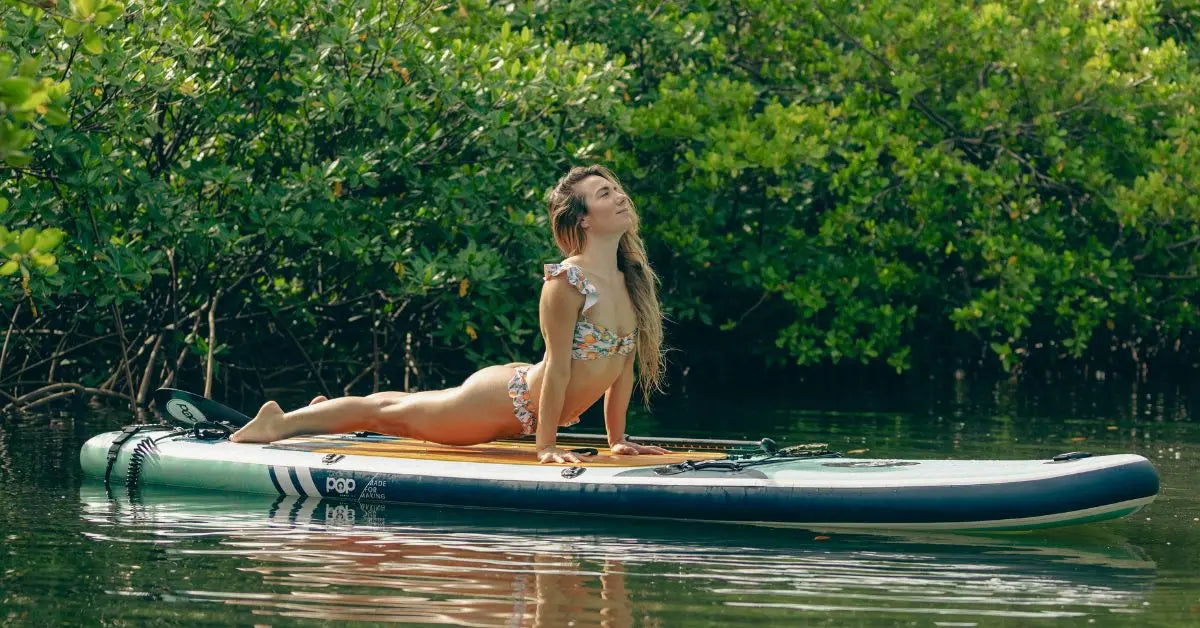
Paddle boarding feels like one of the most natural ways to connect with Canada's wild places — and it is. But every board, every paddle stroke, and every launch site visit leaves a mark on the ecosystems we love. The good news is that with the right awareness and habits, paddlers can explore Canada's lakes, rivers, and coastlines while actively protecting them. This guide covers the real environmental impact of paddle boarding, how to paddle responsibly, how to protect wildlife and habitat, and how choosing durable, long-lasting gear is one of the most meaningful environmental choices you can make.
Understanding Paddle Boarding's Environmental Footprint
Paddle boarding's environmental impact comes from three main sources: the materials used to manufacture boards and gear, the way paddlers behave on the water, and what gets left behind. Understanding each of these helps you identify where your choices make the biggest difference.
Manufacturing is the largest single contributor. Boards made from PVC, fibreglass, and epoxy resins require significant energy and raw materials to produce. Inflatable boards have a meaningful advantage here — their compact deflated size means lower shipping volume and fuel consumption compared to rigid hardboards, which require large crates and dedicated freight. A board that lasts 8–10 years with proper care also means fewer boards manufactured overall, which is why durability and repairability matter as much as materials.
On-water behaviour is the second factor — and the one entirely within your control. How you launch, where you paddle, how close you get to wildlife, and what you leave behind all have direct consequences for the ecosystems you're moving through.

How Paddle Boarding Affects Water Quality and Ecosystems
Paddle boarding can affect water quality in ways that aren't immediately obvious. Boards and leashes made with standard plastics can shed microplastic fragments into the water over time, particularly as materials age and degrade. Scientific research has documented the toxicity of microplastics on early fish development, swimming behaviour, and genetic integrity — effects that ripple through aquatic food chains well beyond the individual fish affected.
Repeated paddling in shallow areas can stir up sediment, reducing water clarity and hindering the photosynthesis that aquatic plants depend on. Sunscreens, insect repellents, and cleaning agents that wash off boards and paddlers can disrupt the microbial communities that keep freshwater ecosystems balanced. These are small individual impacts that compound significantly across thousands of paddlers on a busy Canadian lake in summer.
The practical response is straightforward: choose reef-safe, biodegradable sunscreen and insect repellent, rinse your board with fresh water before and after outings to prevent spreading contaminants between water bodies, and avoid cleaning your board with detergent-based products near the water's edge.

Wildlife and Habitat: Paddling with Awareness
Canada's waterways are home to extraordinary wildlife — loons, herons, beavers, otters, osprey, and countless fish and amphibian species that depend on undisturbed shoreline habitat. Paddle boarding, despite being quiet and non-motorised, can still cause significant disturbance when paddlers get too close to nesting sites, feeding areas, or resting spots.
Research on non-motorised watercraft disturbance has documented that kayaks and paddleboards can cause seals, waterfowl, and other wildlife to flee their resting or nesting locations — increasing energy expenditure, predation risk, and in some cases causing nest abandonment. The fact that a paddleboard is quiet doesn't make it invisible to wildlife.
Practical Wildlife Guidelines for Canadian Paddlers
- Stay at least 30 metres from nesting birds and resting marine mammals — if an animal changes its behaviour because of your presence, you're too close.
- Paddle slowly and steadily near wildlife — sudden movements and splashing are more disruptive than a calm, consistent approach.
- Avoid sensitive areas during breeding and nesting seasons — in Canada, this typically means May through July for most shoreline-nesting birds.
- Never feed wildlife — it disrupts natural foraging behaviour and creates dependency.
- Observe, don't pursue — if wildlife is moving away from you, give it space rather than following.
The goal isn't to avoid wild places — it's to move through them as a respectful guest. Canada's wilderness is worth exploring deeply; it just asks that you pay attention.
Leave No Trace on Canadian Waterways
Leave No Trace principles were developed for land-based recreation but apply equally to paddle boarding. On Canadian lakes, rivers, and coastal waters, they translate into a clear set of habits that protect the places you paddle.
- Plan ahead and prepare: Research access rules, seasonal restrictions, and sensitive areas before you launch. Know whether you're paddling in a provincial park, a conservation area, or Crown land — each has different rules.
- Launch from durable surfaces: Use established access points, boat ramps, or rocky shorelines rather than vegetated banks. Repeated launching from the same soft bank causes erosion and destroys shoreline vegetation that stabilises the bank and provides habitat.
- Pack out everything: Every piece of waste — food scraps, fishing line, packaging, even tiny bits of tape or plastic — comes back with you. Fishing line is particularly dangerous to waterfowl and fish.
- Leave what you find: Driftwood, shells, stones, and aquatic plants are part of the ecosystem. Leave them where they are.
- Minimise campfire and cooking impacts: If you're on a multi-day paddle, use a camp stove rather than a fire where possible, and follow provincial fire regulations.
- Respect other users: Give anglers, canoeists, and wildlife watchers space. Paddle boarding's growing popularity means shared waterways require shared courtesy.
Canadian Waterways Worth Protecting
Canada holds roughly 20% of the world's fresh water — a responsibility that falls on every person who uses it. Some of the country's most iconic paddling destinations are also among its most ecologically sensitive.
The Great Lakes Basin is the largest freshwater system on Earth and faces ongoing threats from microplastic contamination, invasive species, and shoreline development. Paddlers on Lakes Ontario, Erie, Huron, Superior, and Georgian Bay are moving through a system that supplies drinking water to millions of Canadians. The Okanagan Lake system in BC is home to the endangered Kokanee salmon and native trout species that depend on cold, clear water and undisturbed spawning habitat. The Nahanni River in the Northwest Territories is a UNESCO World Heritage Site — one of Canada's most remote and pristine wilderness paddling routes, with sensitive riparian zones that have no tolerance for human waste or disturbance.
Closer to home, the cottage lakes of Muskoka and the Kawarthas, the river systems of Quebec's Laurentians, and the tidal inlets of the Maritimes all support ecosystems that are directly affected by how paddlers behave on and around the water.
How to Get Involved in Canadian Conservation
Paddle boarding connects you to waterways in a way that few other activities do — and that connection is a powerful starting point for conservation involvement. Canadian paddlers have real opportunities to contribute beyond their own responsible behaviour.
- Shoreline and river clean-ups: Groups like Clean Foundation and local conservation authorities organise regular clean-up events on waterways across Canada. Showing up with your board and a bag makes a tangible difference.
- Citizen science: Programs through NatureWatch and provincial wildlife agencies allow paddlers to log wildlife sightings, water quality observations, and invasive species reports that contribute to real scientific datasets.
- Invasive species awareness: Clean, drain, and dry your board and gear between water bodies to prevent spreading invasive species like zebra mussels, Eurasian watermilfoil, and round gobies — one of the most impactful things any paddler can do.
- Support conservation organisations: Groups like the Canadian Parks and Wilderness Society (CPAWS) work to protect the wild places you paddle. Membership and donations directly fund habitat protection across Canada.
Choosing Gear That Lasts: The Most Honest Environmental Choice
The most environmentally responsible gear decision you can make isn't about finding a board made from recycled materials — it's about buying a board you won't need to replace. A high-quality inflatable paddleboard that lasts 8–10 years with proper care represents a fraction of the manufacturing impact of two or three cheaper boards that wear out and end up in landfill over the same period.
Canadian Board Company's inflatable paddleboards are built with military-grade PVC drop-stitch construction specifically because durability is the foundation of responsible gear ownership. Every board in the lineup includes a repair kit — because a board that can be fixed is a board that doesn't get thrown away. The compact deflated size of an inflatable also means lower shipping volume and fuel consumption compared to rigid hardboards, a genuine reduction in transport emissions that compounds across every board sold.
Beyond the board itself, the habits that extend gear life are the same habits that reduce environmental impact: rinse with fresh water after every use, dry completely before storage, store away from UV exposure and extreme temperatures, and repair minor damage promptly rather than letting it worsen. A well-maintained board is both a better-performing board and a more environmentally responsible one.
Explore the full inflatable paddleboard range and accessories built to last on Canadian waters.
Frequently Asked Questions
Is paddle boarding bad for the environment?
Paddle boarding has a relatively low environmental footprint compared to motorised water sports, but it's not impact-free. Manufacturing, on-water behaviour, and what gets left behind all matter. The biggest factors within a paddler's control are choosing durable gear, paddling responsibly near wildlife, and following Leave No Trace principles.
How do I avoid disturbing wildlife while paddle boarding in Canada?
Stay at least 30 metres from nesting birds and resting wildlife, paddle slowly and steadily near animals, avoid sensitive areas during breeding season (May–July for most shoreline species), and always give wildlife the right of way. If an animal is reacting to your presence, you're too close.
What is the Clean, Drain, Dry rule for paddleboards?
Clean all visible plant material, mud, and debris from your board and gear before leaving a water body. Drain all water from the board, pump, and accessories. Dry everything completely before launching in a different water body. This prevents the spread of invasive species like zebra mussels and Eurasian watermilfoil between Canadian lakes and rivers.
Are inflatable paddleboards more environmentally friendly than hardboards?
In terms of shipping and transport, yes — inflatables pack into a fraction of the volume of rigid boards, reducing freight emissions. In terms of longevity, a high-quality inflatable that lasts 8–10 years with proper care and repair is more environmentally responsible than a cheaper board that needs replacing every few years. The most important factor is buying quality and maintaining it well.
How can I get involved in waterway conservation as a paddler in Canada?
Join shoreline clean-up events through local conservation authorities, participate in citizen science programs through NatureWatch, practice and share the Clean, Drain, Dry protocol for invasive species prevention, and support organisations like CPAWS that protect Canada's wild waterways. Your presence on the water is an asset to conservation — use it.
What sunscreen should I use when paddle boarding?
Choose reef-safe, biodegradable mineral sunscreens (zinc oxide or titanium dioxide based) rather than chemical sunscreens, which contain compounds harmful to aquatic life. Apply before you get to the water's edge and allow it to absorb fully before launching. The same applies to insect repellent — choose DEET-free, biodegradable formulas where possible.

Leave a comment
All comments are moderated before being published.
This site is protected by hCaptcha and the hCaptcha Privacy Policy and Terms of Service apply.