
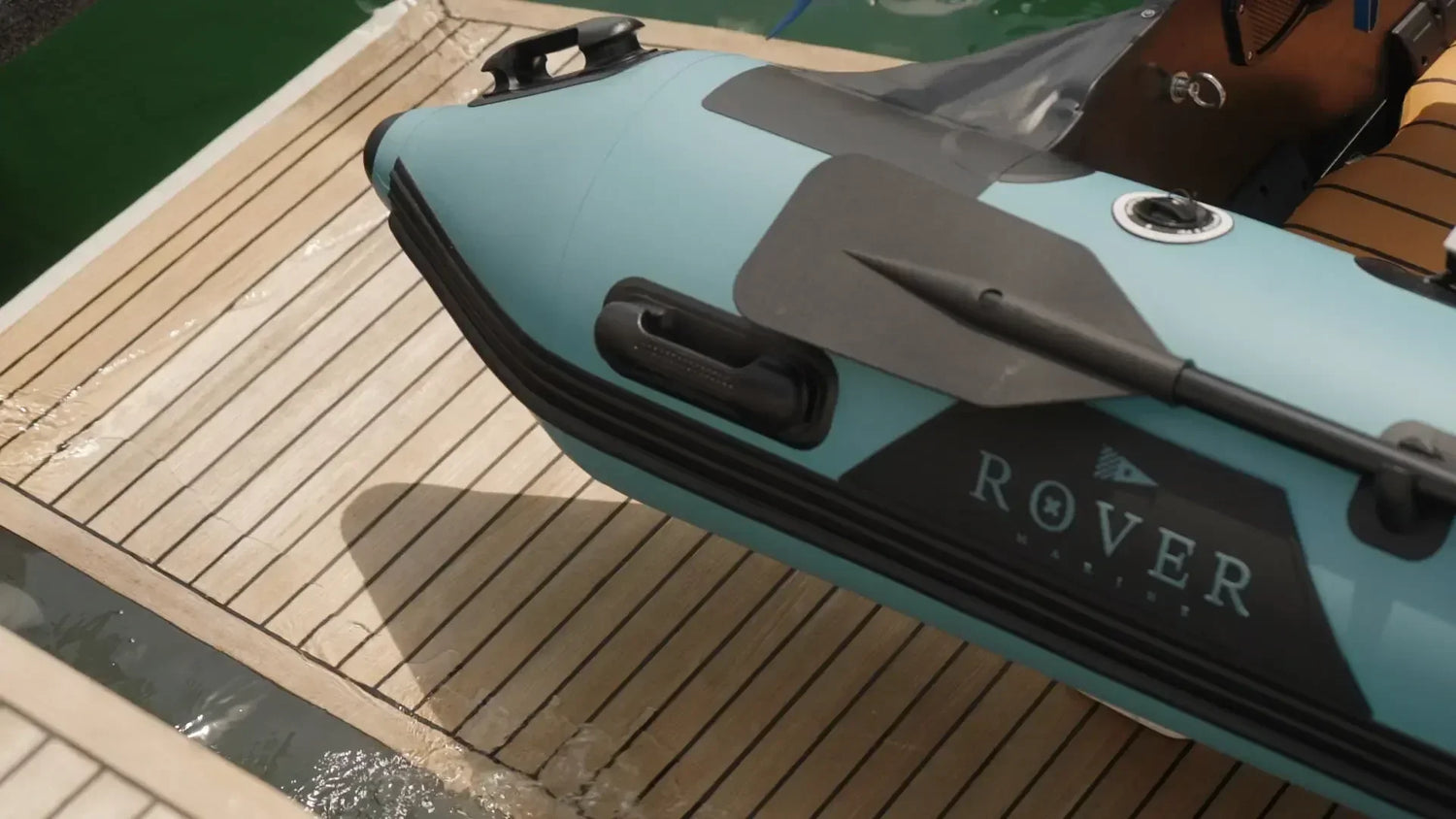
The short answer: store an inflatable boat clean, completely dry, lightly protected, and away from sun, freezing moisture, rodents, sharp tools, and heavy pressure points. For most Canadian boaters, the best storage routine is rinse, wash, dry, inspect, deflate with care, roll loosely, bag it, and keep it in a cool dry place until spring.
Inflatable boats are popular because they make boating easier for cottages, marinas, RV trips, fishing days, and yacht tender use. A model like the Rover Marine Battle Boat can pack down for storage, while the Rover Marine Battle Cat gives a wider twin-pontoon feel for people who want more stability. But the storage habit matters. The way the boat is put away in October often decides how easy your first May launch feels.
This 2026 update replaces the old generic storage advice with a more practical Canadian routine. It also corrects one important point: do not treat every inflatable boat the same. A boat with a high-pressure drop-stitch floor, transom, valves, D-rings, seats, oars, and motor hardware needs a more careful inspection than a simple pool float or beach toy.

A clean, dry, covered inflatable boat is much easier to inspect, protect, and relaunch next season.
Start with a clean boat before you let the air out
Cleaning is not just about looks. Dirt, sand, sunscreen, fish residue, salt, fuel mist, leaf stains, and lake grime can sit in seams and hardware all winter. That moisture and residue can lead to mildew, smell, staining, stiff material, and avoidable wear.
Rinse first
Use fresh water to rinse tubes, floor, handles, D-rings, oar locks, seats, transom hardware, and the underside. Rinsing is especially important after saltwater or silty river use.
Wash gently
Use mild soap and a soft cloth or brush. Avoid harsh solvents, aggressive degreasers, abrasive pads, and anything that can damage PVC, glue, seams, or traction surfaces.
Flush hardware
Pay attention to valves, oar locks, drain plugs, transom edges, floor seams, and under-seat contact points. Small debris trapped here can rub during storage.
Dry fully
Open the boat out of direct sun and let it dry before folding. Moisture in folds is one of the easiest ways to create mildew during long Canadian winters.
Simple rule: if you would not put it away in a sealed closet wet, do not roll it into a storage bag wet. Dry the boat, seats, pump, paddles, repair kit, and cover before long-term storage.
Inspect the boat before storage
The best time to catch damage is before the boat disappears into a shed. Inflate it enough to hold shape, then check the areas that work the hardest during a season.
- Run your hands along the tubes to feel for cuts, stiff patches, scuffs, or bubbling.
- Check valves for grit and make sure caps seal properly.
- Inspect seams and floor edges for lifting, soft spots, or slow leaks.
- Look at the transom for loose hardware, corrosion, cracks, or water intrusion.
- Check oars, seats, pump hose, carry bag, and repair kit before you forget what needs replacing.
- Make a note of anything you need from boating accessories or pumps before spring.
Deflate without forcing the material
Once the boat is clean and dry, release air through the valves and let the chambers soften naturally. Avoid jumping on tubes or crushing the floor to speed up the process. Pressure and sharp folds can stress seams, especially when the material is cold.
Fold or roll the boat according to its floor style and storage bag. A loose roll is usually better than a tight, hard crease. If the boat has a removable floor, seats, oars, or a separate accessory kit, pack them so they do not press sharp edges into the tubes.

A cover helps reduce dust, UV exposure, and casual scuffing, but the boat still needs to be dry before storage.
Where to store an inflatable boat in Canada
The best storage space is dry, shaded, clean, and protected from rodents. A heated garage, basement, cottage storage room, or dry utility space is usually better than an exposed boathouse corner or outdoor tarp setup.
Indoor dry storage
A garage, basement, closet, RV storage bay, or cottage utility room keeps the boat away from UV, snow, standing water, and most freeze-thaw damage.
Protected shed storage
A clean shed can work if it stays dry and pest controlled. Keep the boat off concrete floors and away from sharp tools, fuel, solvents, and lawn equipment.
Boathouse storage
Boathouses can be damp and attractive to rodents. If you store there, lift the bag off the floor, use a breathable cover, and inspect mid-winter if possible.
Outdoor winter storage
Outdoor tarps can trap moisture, collapse under snow, flap in wind, and rub the boat. If outdoor storage is your only option, protect it carefully and check it often.
Protect against rodents and pressure points
Rodents can damage tubes, bags, straps, wiring, and soft gear. Keep food, bait, fish scent, and snack wrappers out of the storage bag. Store the boat off the floor on a shelf or platform if possible. Avoid stacking heavy boxes on top because pressure can create hard creases in the material.
Do not store beside chemicals
Keep inflatable boats away from gasoline, solvents, paints, pesticides, oils, battery acid, and strong cleaners. Chemical vapours and spills can damage boat material, adhesives, coatings, and accessories.
Store the motor, battery, and safety gear separately
If you use an electric or gas outboard, do not just leave it mounted and forget about it. Remove the motor, follow the manufacturer’s storage instructions, and store batteries according to their manual. Canadian Board Co. carries electric outboard motors and water safety gear, but motor care depends on the exact model.
Before the next season, use Transport Canada’s safe boating resources to review proof of competency, required safety equipment, weather checks, and trip planning. Start with Transport Canada’s maintaining a safe pleasure craft page and check current marine conditions through Environment and Climate Change Canada marine forecasts.
Battle Boat and Battle Cat storage notes
Rover Marine Battle Boat
The Battle Boat is the single-hull inflatable dinghy choice for tender runs, cottage cruising, light fishing, and compact storage. Current listings show 8 ft, 10 ft, and 12 ft size options with short-shaft motor compatibility.
Rover Marine Battle Cat
The Battle Cat uses a twin-pontoon catamaran layout for a wider platform feel. It is a strong fit for people who care about stability, fishing space, relaxed cruising, and cottage use.
Customer feedback: practical ownership matters
For inflatable boats, useful customer feedback usually comes down to portability, easy setup, stable footing, and whether the boat fits the owner’s actual storage space. Those are the details that make a boat easy to use more than once.
“Stable on the water.”
A steady inflatable boat makes fishing, tender runs, and family cruising feel more controlled in calm, protected conditions.
“Easy to store.”
Portability is one of the biggest reasons people choose a Battle Boat or Battle Cat instead of a trailer boat.
“Great setup for the cottage.”
The right size boat can handle short runs, fishing gear, shoreline exploring, and light family cruising without needing a permanent slip.
Read more Canadian Board Co. customer reviews here: https://www.canadianboardco.com/pages/reviews.
The bottom line
Good inflatable boat storage is simple, but it is not optional. Clean it, dry it, inspect it, deflate it without forcing hard creases, protect it from pests and chemicals, and store it somewhere dry. That routine helps your boat stay easier to inflate, safer to inspect, and more reliable when boating season returns.
Browse inflatable boats here: https://www.canadianboardco.com/collections/boats.
Shop the Battle Boat here: https://www.canadianboardco.com/products/rover-marine-battle-boat-inflatable-boat.
Shop the Battle Cat here: https://www.canadianboardco.com/products/rover-marine-battle-cat-inflatable-catamaran.
Warranty details are here: https://www.canadianboardco.com/pages/3-year-warranty.
Call 1-800-399-5260 if you want help choosing the right boat, pump, motor, or storage setup.
FAQ
Can I store an inflatable boat folded all winter?
Yes, many inflatable boats can be stored deflated and rolled, but the boat should be clean, completely dry, and loosely packed without heavy objects stacked on top.
Should I leave some air in the boat during storage?
If you have indoor space, light inflation can help reduce hard folds. If you need compact storage, deflate and roll carefully according to the boat style and bag.
Can I store an inflatable boat outside in winter?
Indoor dry storage is better. Outdoor storage exposes the boat to moisture, UV, snow load, wind rub, pests, and freeze-thaw cycles.
How do I prevent mold during storage?
Wash the boat with mild soap, rinse it, dry every seam and fold, and store it in a dry ventilated place. Do not roll it wet.
Do I need to remove the motor before storing the boat?
Yes. Remove the motor and follow the motor manufacturer’s storage instructions. Batteries should also be stored according to their manual.
What should I inspect before storing an inflatable boat?
Check valves, seams, tubes, floor, transom, D-rings, oars, seats, pump, bag, and repair kit. Fix small issues before spring.
Can I use a tarp to cover an inflatable boat?
A breathable protective cover is better than a tarp that traps moisture. If you use a tarp, keep air flow and avoid contact points that rub in wind.
Where can I buy storage accessories?
Start with CBC boating accessories here: https://www.canadianboardco.com/collections/boating-accessories.

Leave a comment
All comments are moderated before being published.
This site is protected by hCaptcha and the hCaptcha Privacy Policy and Terms of Service apply.