
Paddle boarding is one of the easiest ways to make movement feel like a lake day instead of a workout. It can support balance, core strength, outdoor time, social connection, and stress relief, while staying approachable for beginners, families, cottage guests, and casual paddlers.
Not everyone wants a gym routine. Some people want fresh air, water, a reason to move, and a way to spend time with friends or family. That is where paddle boarding fits so well.
Health Canada notes that regular physical activity can support physical and mental health, including mood, energy, sleep, heart and lung health, balance, coordination, and overall well-being. Paddle boarding is not a medical treatment, but it can be a fun way to add more movement to summer life.

Paddle boarding can be calm, playful, social, or fitness-focused depending on the board, water, and paddler.
Why paddle boarding feels different than a workout
When you paddle, you are moving without staring at a clock. Your legs, core, back, shoulders, and balance all work together, but the focus is usually the water, the view, and staying relaxed.
Small muscles wake up
Even calm paddling asks your feet, ankles, legs, and core to make small adjustments as the board moves.
Full-body movement
Paddling uses your core, back, shoulders, arms, and legs without needing a complicated routine.
Water changes the mood
Fresh air, sunlight, quiet water, and a simple route can make movement feel less forced and more restorative.
Make it fun, not intimidating
The best paddle session is the one you actually want to repeat. Start short. Choose calm water. Paddle with a friend. Bring a dry bag with water and snacks. Take breaks. Sit, kneel, stand, or float. It all counts.
Pick easy water
Beginners should start on calm, protected water close to shore. Skip strong wind, current, cold exposure, and busy boat traffic.
Twenty minutes is enough
A short success is better than an exhausting first paddle. Build time slowly as balance and confidence improve.
Make it social
Paddle with a friend, family member, partner, or cottage guest. Social paddles are often the ones people remember.
Use the right accessories
A PFD, leash where appropriate, dry bag, water bottle, sun protection, and a comfortable paddle make the session easier.
Best CBC boards for wellness-focused paddling
11'6 El Capitan
Choose El Capitan if you want confidence, stability, room to kneel or sit, and a board that works for mixed ability levels.
- Great for beginners and families
- Wide platform for balance practice
- Better for dogs or kids
11' Yacht Hopper
Choose Yacht Hopper if you want a lighter, responsive all-around board for calm lake cruising and solo wellness paddles.
- Good for confident beginners
- Fun recreational feel
- Available in Mint and Neon styles
10'6 Royal Hawaiian
Choose Royal Hawaiian if you are a lighter rider who wants a compact board for calm, casual, low-pressure paddles.
- Smaller board feel
- Easy casual lake sessions
- Complete package
POPUP AquaNet
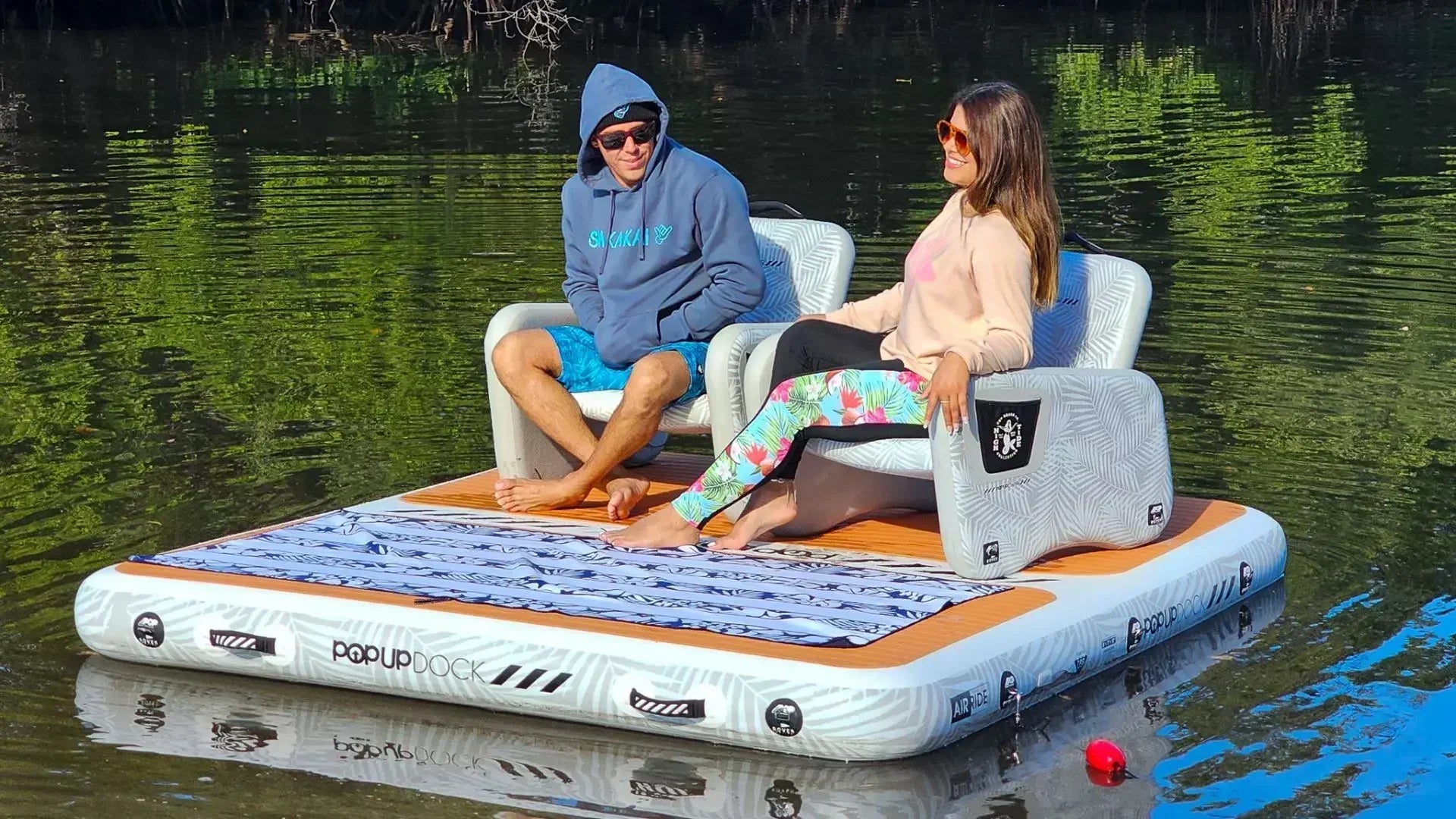
If the day is more about floating than paddling, AquaNet gives you a mesh lounge for relaxing at the lake, pool, or calm shoreline.
- 8 ft x 7 ft x 8 in water net
- Currently listed around 700 lb capacity
- Great for lounging and cooling off

Wellness on the water can be as simple as a quiet float, a short paddle, or a relaxed evening session.
Safety makes it easier to relax
A calm paddle feels better when the basics are handled. Check weather, stay close to shore when learning, wear a properly fitted PFD, bring water, and avoid pushing through wind, cold water, or fatigue.
PFD reminder
When a stand-up paddleboard is used as a human-powered vessel for a trip or circuit in Canada, Transport Canada requires a Canadian-approved lifejacket or PFD on board and immediately available. Wearing one is the best choice for beginners, kids, cold water, and paddling away from shore. Read more here: https://tc.canada.ca/en/marine-transportation/marine-safety/boating-safety/choosing-lifejackets-personal-flotation-devices-pfds.
Wellness does not need to be serious
The best part of paddle boarding is that it can be whatever you need that day. A slow lap around the bay. A dock-to-dock family paddle. A dog ride. A sunrise solo cruise. A floating chat with a friend. A balance challenge. A quiet sit on the board with your feet in the water.
That flexibility is what makes it easier to repeat. And repeated movement is where the real benefit usually comes from.
Read Canada's physical activity guidance here: https://www.canada.ca/en/public-health/services/being-active/physical-activity-your-health.html.
The bottom line
Paddle boarding can help make movement feel fun, social, and connected to the outdoors. Start with the right board, keep the first sessions easy, use proper safety gear, and let the water do some of the motivation for you.
Shop paddle boards here: https://www.canadianboardco.com/collections/inflatable-paddleboards-canadas-best-isup.
Shop water safety here: https://www.canadianboardco.com/collections/water-safety.
Shop AquaNet here: https://www.canadianboardco.com/products/popup-aquanet-8-x-7-x-8.
Read first-time paddleboarder tips here: https://www.canadianboardco.com/blogs/water-sports-guide/first-time-paddleboarder-learn-weekend-canada-2026.
FAQ
Is paddle boarding good exercise?
Yes, paddle boarding can be a helpful form of physical activity because it uses balance, core, legs, back, shoulders, and arms. Intensity depends on pace, wind, distance, and conditions.
Is paddle boarding good for beginners?
Yes, if beginners start on calm protected water, use a stable board, stay close to shore, and choose short first sessions.
Which board is best for relaxed wellness paddling?
The El Capitan is best when stability matters most. The Yacht Hopper is a good all-around option for confident solo paddlers.
Can paddle boarding help with stress?
Time outside, gentle movement, water, and social connection can support a better mood for many people. It should not replace medical care, but it can be a healthy outdoor habit.
Do I need to stand the whole time?
No. You can sit, kneel, stand, float, or take breaks. Beginners often feel better when they kneel during launch, landing, or windy moments.
What should I bring for a wellness paddle?
Bring a PFD, water, sun protection, leash where appropriate, dry bag, phone protection, and a route that matches your ability level.
What if I want to relax instead of paddle?
The POPUP AquaNet is a good option when you want a floating mesh lounge for cooling off and relaxing in calm water.

Leave a comment
All comments are moderated before being published.
This site is protected by hCaptcha and the hCaptcha Privacy Policy and Terms of Service apply.